
Safety
General information, not medical advice
Your prescriber and the leaflet in your pack know your situation. This page does not.
- Follow your prescriber and the leaflet
- Don't start, stop, or change a dose on your own
- Doses and warnings differ by country and product
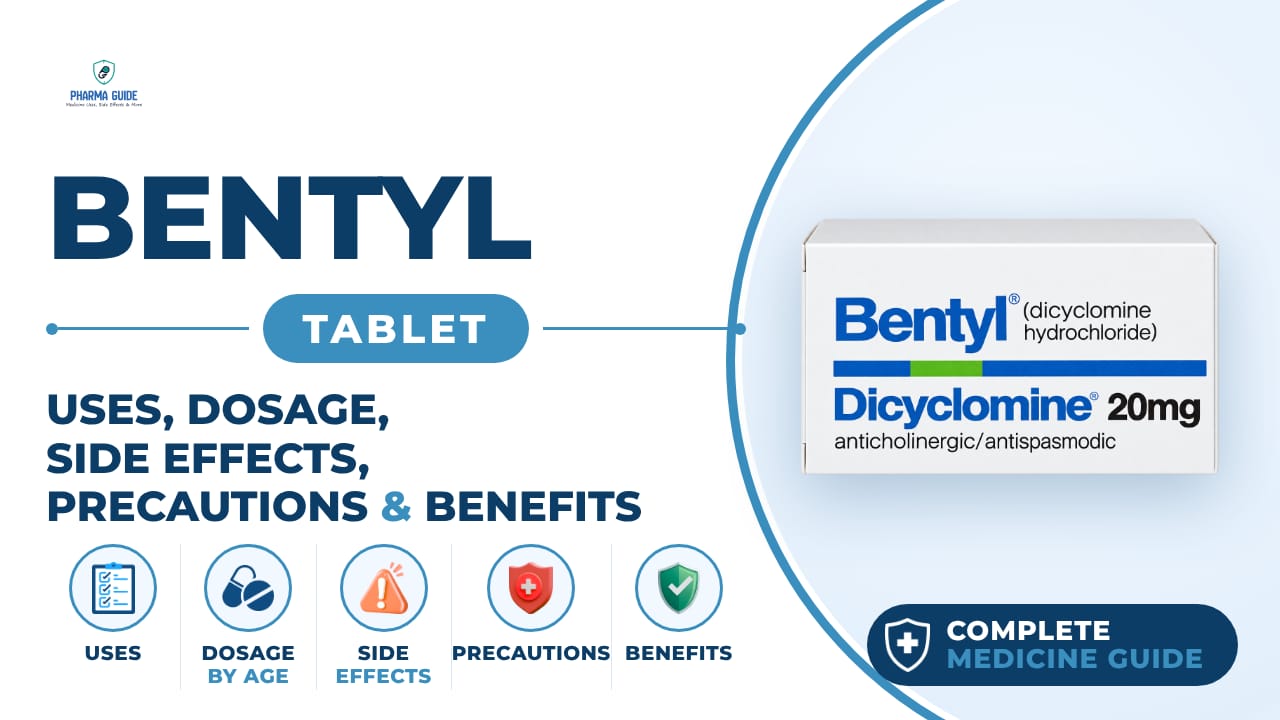
Bentyl Tablet: Uses, Dosage, Side Effects, Precautions and Alternates
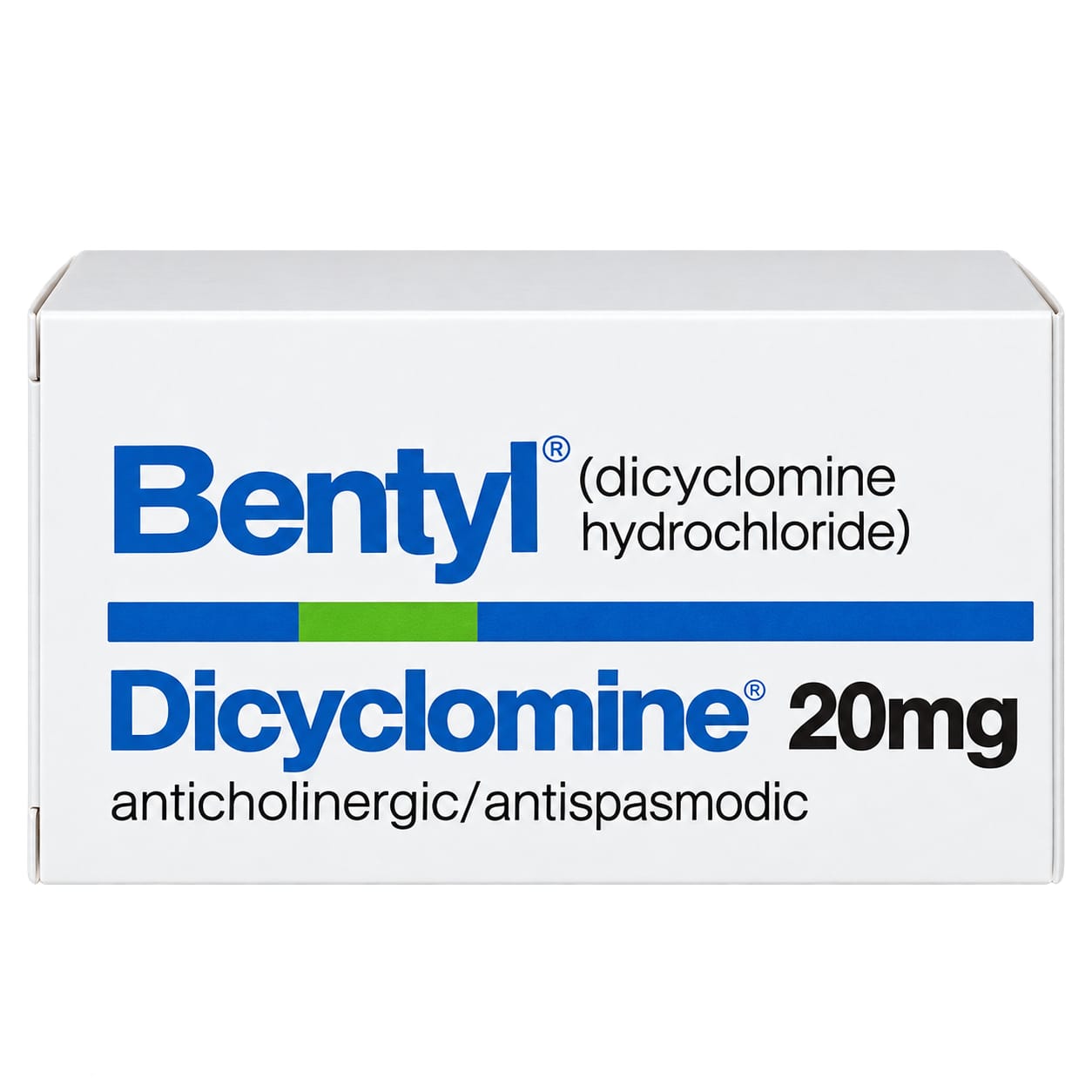
| Generic name | dicyclomine |
|---|---|
| Drug class | Anticholinergics / antispasmodics (IBS Agents) |
| Forms | Tablet, Capsule, Syrup, Injection |
Quick overview
Bentyl Tablet contains dicyclomine, a medicine belonging to the anticholinergic and antispasmodic drug class used as an IBS agent. It is a prescription medicine used to treat irritable bowel syndrome by relaxing spasms in the muscles of the stomach and intestines. It works by blocking a nerve signal chemical called acetylcholine and by acting directly on the gut muscle. Common side effects include dry mouth, dizziness, and drowsiness, while certain serious side effects and precautions also apply.
What is Bentyl Tablet
Bentyl is a prescription medicine that contains dicyclomine. It is an anticholinergic and antispasmodic medicine used to treat irritable bowel syndrome (IBS).
Bentyl Tablet uses
- Functional bowel/irritable bowel syndrome
- Abdominal pain
- Abdominal cramps
Benefits of Bentyl Tablet
- Can relieve involuntary muscle spasms and cramping in the gut
- May help improve abdominal pain, gut tenderness, bowel function, and overall IBS symptoms
- Many people feel relief within hours of taking it
How Bentyl Tablet works
Bentyl relaxes spasms in the muscles of the stomach and intestines. It works in two ways: by blocking a nerve signal chemical called acetylcholine, and by acting directly on the gut muscle to calm it.
Bentyl Tablet dosage
Bentyl Tablet is taken by mouth, usually several times a day, as directed by your doctor. It can be taken either with food or on an empty stomach. If using the liquid form, measure the dose with the supplied syringe or a dose-measuring device, not a kitchen spoon. Your doctor may start you on a lower dose and gradually increase it while watching for side effects. If a dose is missed, skip it and take the next dose at the regular time; do not take two doses at once. The injectable form is given into a muscle only, and only for a day or two if you cannot take it by mouth. Call your doctor if your symptoms do not improve after two weeks of treatment.
| Age group | Dose |
|---|---|
| Under 18 years | Not recommended |
| 18–64 years | 20 mg, 4 times/day |
| 65+ years | 20 mg, 4 times/day |
Available forms and strengths
- Tablet
- Capsule
- Syrup
- Injection
Side effects of Bentyl Tablet
Common
- Dry mouth
- Blurred vision
- Dizziness
- Drowsiness/sleepiness
- Weakness
- Nervousness
- Nausea
- Headache
- Dry eyes
- Lightheadedness
- Flushing
- Vomiting
- Rash
- Stuffy nose
- Abdominal bloating
- Constipation
Serious
- Severe constipation or worsening of bowel symptoms
- Inability to urinate or trouble urinating
- Feeling very thirsty or hot, heavy sweating, hot or dry skin (signs of heatstroke)
- Confusion, agitation, hallucinations, or unusual thoughts or behavior
- Problems with memory or speech
- Problems with balance or muscle movement
- Fast, slow, or pounding heartbeats, or fluttering in the chest
- Sudden vision loss, tunnel vision, eye pain or swelling, or seeing halos around lights
- Severe headache, confusion, slurred speech, arm or leg weakness, trouble walking, loss of coordination, very stiff muscles, high fever, profuse sweating, or tremors
- Trouble swallowing
- Bruising, swelling, or pain where an injection was given
- Signs of an allergic reaction: hives, difficulty breathing, swelling of the face, lips, tongue, or throat
- Signs of dehydration: dizziness, confusion, feeling very thirsty, less urination or sweating
Warnings and precautions
- This medicine should not be given to infants younger than 6 months old, as it has been linked to serious breathing problems, seizures, and other dangerous effects in infants.
- This medicine can cause heat stroke because it reduces sweating, which the body needs to cool down. Be careful in hot weather or during exercise, and tell your doctor if you develop a fever.
- This medicine should not be used by people with glaucoma, a bladder or digestive tract blockage, severe ulcerative colitis, reflux disease (GERD), certain serious heart conditions with active bleeding, or myasthenia gravis.
- People with certain bowel conditions, such as a bowel blockage or infection caused by Salmonella, should not take this medicine, as it can make the condition dangerously worse.
- This medicine should be used carefully in people with heart problems, as it can speed up the heart rate and worsen some heart conditions.
- Older adults may be more sensitive to the side effects of this medicine, including confusion and mood changes, and should be treated with extra caution.
- Do not use antacids at the same time as this medicine, since antacids can reduce how well your body absorbs it.
- This medicine must only be given as an injection into a muscle. Giving it any other way, such as into a vein, can cause serious harm.
- Studies have not fully tested this medicine in pregnant women at the usual treatment doses. Animal studies did not show harm to the baby, but this medicine should be used during pregnancy only if clearly needed. Tell your doctor if you are pregnant.
- This medicine should not be used while breastfeeding, because it passes into breast milk and can seriously harm a nursing baby.
- This medicine is removed from the body mainly by the kidneys, so people with kidney problems may be at greater risk of side effects. It should be used carefully in people with kidney disease, and kidney function may need to be checked.
- This medicine should be used carefully in people with liver problems.
- Avoid alcohol while taking this medicine. Alcohol can make side effects like drowsiness worse, reduce how well the medicine works, and increase the risk of dehydration and stomach irritation.
- This medicine can cause drowsiness, dizziness, or blurred vision. Do not drive or do activities that need alertness until you know how it affects you.
Storage
- Store at room temperature, preferably below 86°F (30°C)
- Bentyl tablets: avoid exposure to direct sunlight to prevent fading
- Bentyl syrup: protect from excessive heat
- Bentyl injection: protect from freezing
- Store away from moisture and heat
- Keep out of the reach of children
When to see a doctor
- Get emergency help right away if you notice signs of a severe allergic reaction, such as hives, trouble breathing, or swelling of the face, lips, tongue, or throat.
- Call your doctor right away if you have fast, slow, or pounding heartbeats, fluttering in your chest, confusion, agitation, hallucinations, unusual behavior, memory or speech problems, balance or muscle movement problems, diarrhea or severe constipation, trouble swallowing, or signs of dehydration.
- If you think you have taken too much of this medicine, get emergency medical help right away. Signs of overdose include nausea, vomiting, widened pupils, weakness or inability to move part of the body, trouble swallowing, fainting, or seizures.
- If you feel very hot, confused, or notice your skin is dry and hot with little sweating, this could be heat stroke. Stop the medicine and contact a doctor right away.
Alternatives
- Peppermint oil
- Drotaverine
- Mebeverine
Watch the video
FAQs
What is Bentyl Tablet used for?
Bentyl Tablet is used to treat irritable bowel syndrome (IBS), including abdominal pain and cramps, by relaxing spasms in the muscles of the stomach and intestines.
How does Bentyl Tablet work?
It works in two ways: by blocking a nerve signal chemical called acetylcholine, and by acting directly on the gut muscle to calm spasms.
What is the dosage of Bentyl Tablet for adults?
For adults aged 18-64 and those 65 and older, the typical dose is 20 mg, 4 times a day, as directed by a doctor.
What are the common side effects of Bentyl Tablet?
Common side effects include dry mouth, blurred vision, dizziness, drowsiness, weakness, nervousness, nausea, headache, dry eyes, flushing, vomiting, rash, stuffy nose, bloating, and constipation.
Can Bentyl Tablet be used during pregnancy or breastfeeding?
It should be used during pregnancy only if clearly needed, as it hasn't been fully studied in pregnant women. It should not be used while breastfeeding because it passes into breast milk and can seriously harm a nursing baby.
General information, not medical advice
Your prescriber and the leaflet in your pack know your situation. This page does not.
- Follow your prescriber and the leaflet
- Don't start, stop, or change a dose on your own
- Doses and warnings differ by country and product
Sources
Video
Related medicines

Injectafer Injection: Uses, Dosage, Side Effects, Precautions and Alternates
Iron products
Injectafer (ferric carboxymaltose) treats iron deficiency anemia and heart failure-related iron deficiency via IV. Learn uses, dosage, side effects, and

Gliclazide Tablet: Uses, Dosage, Side Effects, Precautions and Alternates
Sulfonylurea (hypoglycemic/antidiabetic agent)
Gliclazide Tablet is a sulfonylurea for type 2 diabetes that boosts insulin release. Learn about dosage, side effects, warnings, and precautions.