
Safety
General information, not medical advice
Your prescriber and the leaflet in your pack know your situation. This page does not.
- Follow your prescriber and the leaflet
- Don't start, stop, or change a dose on your own
- Doses and warnings differ by country and product
BenzaClin Gel: Uses, Dosage, Side Effects, Precautions and Alternates
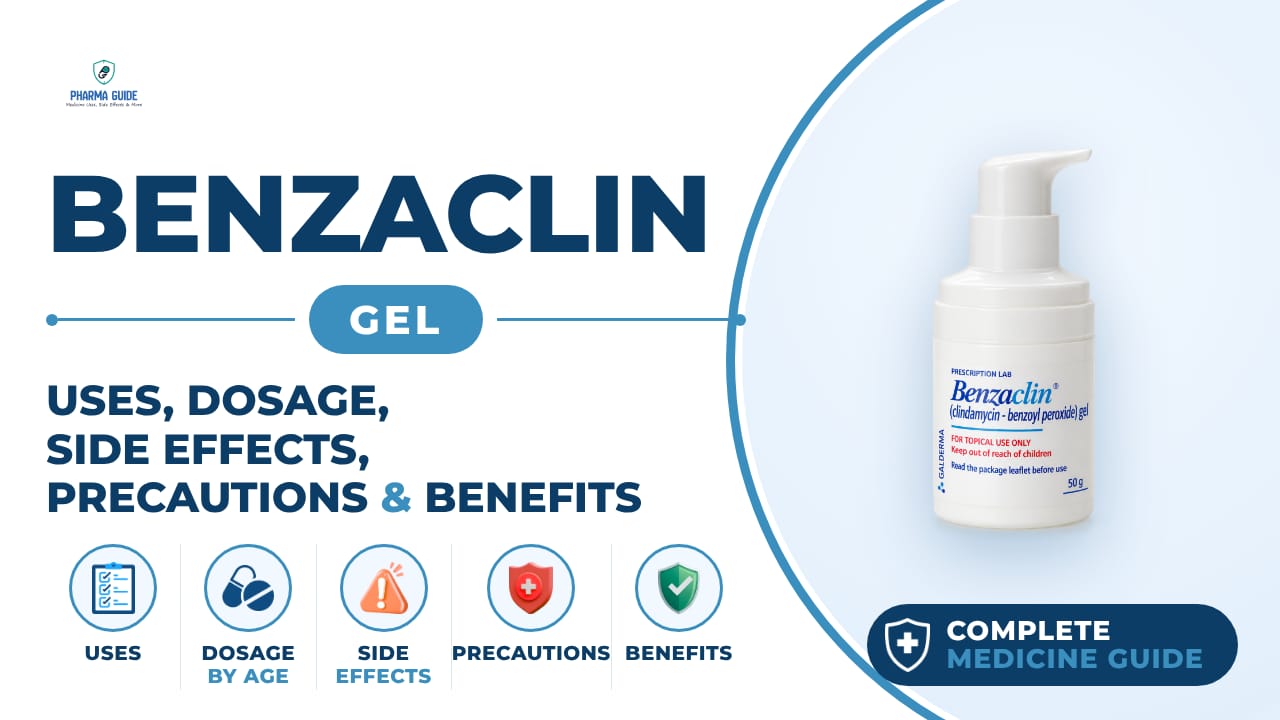
| Generic name | clindamycin phosphate and benzoyl peroxide |
|---|---|
| Drug class | Topical acne agent |
| Forms | Topical gel |
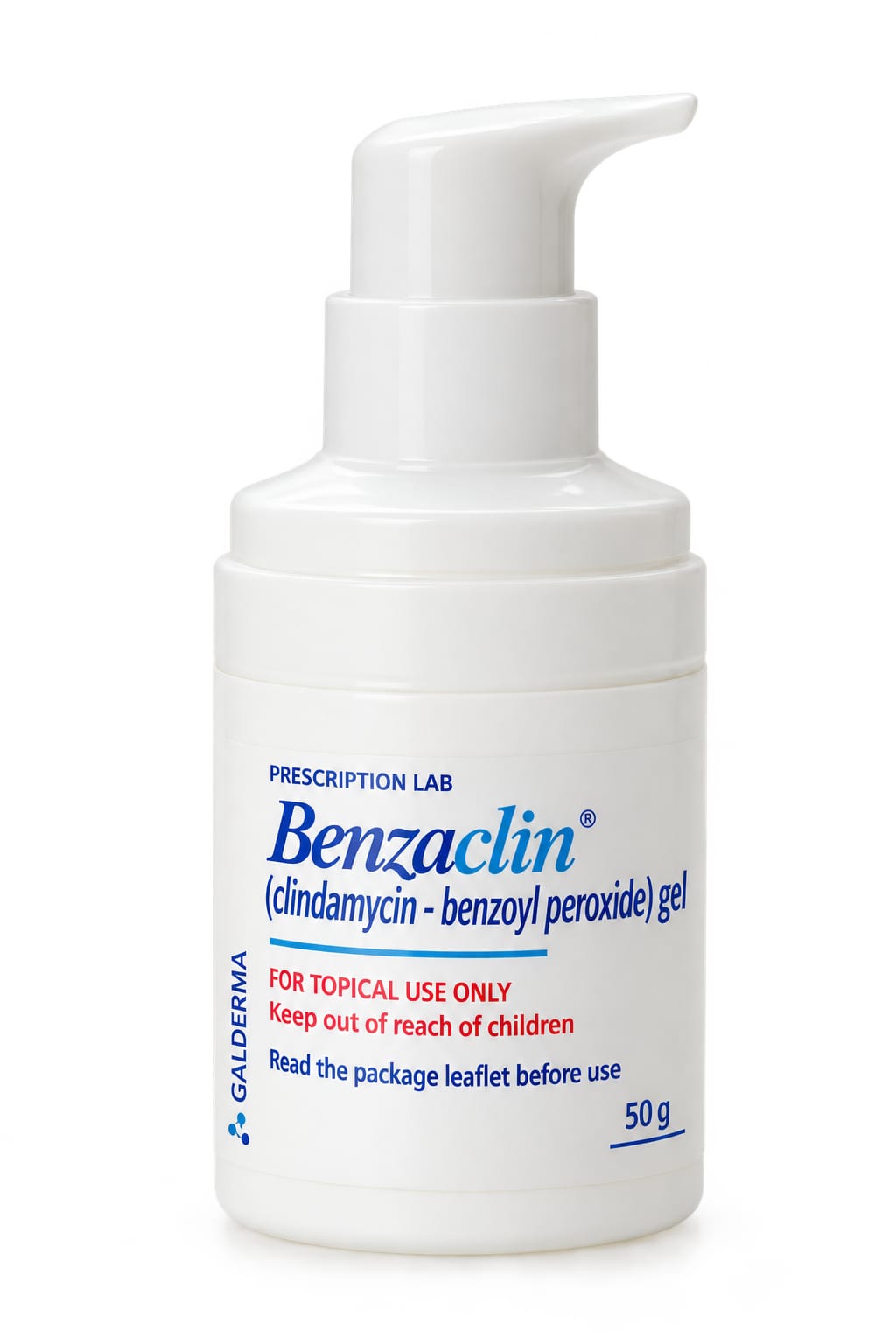
Quick overview
BenzaClin Gel is a prescription topical gel that combines clindamycin, an antibiotic, with benzoyl peroxide, which has antibacterial and mild drying effects. It is applied to the skin to treat acne vulgaris, including blackheads, whiteheads, and inflamed pimples. The gel works by reducing acne-causing bacteria and helping to clear blocked pores and reduce inflammation.
What is BenzaClin Gel
BenzaClin Gel is a prescription topical gel that combines two medicines: clindamycin, an antibiotic, and benzoyl peroxide, which has antibacterial and mild drying effects. It is used on the skin to treat acne.
BenzaClin Gel uses
- Topical treatment of acne vulgaris (moderate acne with blackheads, whiteheads, and inflamed pimples)
- Treats acne vulgaris
- Reduces acne-causing bacteria
- Helps reduce inflammatory pimples
- Helps clear blocked pores
- Reduces acne-related inflammation
Benefits of BenzaClin Gel
- Combines an antibiotic and benzoyl peroxide in one gel
- Treats both inflammatory and non-inflammatory acne
- Benzoyl peroxide helps reduce development of bacterial resistance
- Provides localized treatment directly to affected skin
How BenzaClin Gel works
Clindamycin and benzoyl peroxide both work against the bacteria that cause acne, and benzoyl peroxide also helps remove dead skin cells and excess oil.
BenzaClin Gel dosage
Wash your hands before and after applying the gel. Wash the affected area gently with a mild, non-medicated soap, rinse with warm water, and pat dry before applying. Apply a thin layer to the entire affected area, not just individual pimples, in the morning and evening, or as directed by your doctor. Wash your hands after applying.
A moisturizer may be used if the skin becomes too dry. Avoid getting the gel in your eyes, mouth, nose, or on your lips; rinse with water if this happens. Do not apply to sunburned, windburned, dry, chapped, irritated, or broken skin. Do not use other topical acne products or medicated skin products unless your doctor tells you to. Minimize exposure to sunlight and tanning beds, and use sun protection.
It may take several weeks to months before improvement is seen; continue using as directed even if acne starts to improve. If you miss a dose, apply it when you remember unless it is almost time for the next dose; do not double up.
| Age group | Dose |
|---|---|
| Under 12 years | Safety and effectiveness are not established |
| 12–17 years | Apply a thin layer to affected acne areas as prescribed, typically once or twice daily depending on the specific formulation/label |
| 18–39 years | Apply a thin layer to affected areas, according to the prescribed product directions |
| 40–64 years | Same adult topical dosing; adjust according to skin irritation and response |
Available forms and strengths
- Topical gel
Side effects of BenzaClin Gel
Common
- Dry skin
- Itching or tingling feeling
- Redness or other irritation
- Mild burning or stinging
- Peeling of treated skin
- Sunburn (increased sun sensitivity)
Serious
- Severe allergic reaction: hives, swelling of face, lips, tongue, or throat, difficulty breathing
- Severe redness, burning, stinging, or peeling of treated skin
- Watery or bloody diarrhea, severe abdominal cramps, which may signal colitis
Warnings and precautions
- Although applied to the skin, enough of the antibiotic may be absorbed into the body to cause serious bowel problems, including severe colitis, which can be life-threatening.
- Do not use this medicine if you have had bowel inflammation, ulcerative colitis, or colitis caused by antibiotics in the past.
- Using other acne treatments or irritating skin products at the same time may increase skin irritation.
- Avoid contact with eyes and mucous membranes.
- This medicine can increase sensitivity to sunlight, so sun exposure should be minimized and sun protection used.
- The gel may bleach hair or colored fabric, so avoid contact with these.
- Do not use this medicine together with erythromycin-containing products, as they can work against each other.
- It is not known whether this medicine can harm an unborn baby. Tell your doctor if you are pregnant or planning to become pregnant.
- It is not known if this medicine passes into breast milk. You should not breastfeed while using it.
- No routine kidney-specific dose adjustment is required because treatment is topical. No routine liver-specific adjustment is established. No important direct alcohol interaction is expected. BenzaClin does not normally affect driving ability.
Storage
- Can be stored at room temperature up to 25°C (77°F) for 3 months after mixing
- Do not freeze
- Keep tightly closed
- Keep out of the reach of children
- Discard any unused product after 3 months
When to see a doctor
- Stop using the medicine and get emergency help right away if you have signs of a severe allergic reaction, such as hives, swelling of the face, lips, or throat, or trouble breathing.
- Stop using the medicine and call your doctor right away if you develop watery or bloody diarrhea, or severe abdominal cramps, which could be signs of a serious bowel problem.
- Contact your doctor if you develop severe swelling or shortness of breath, or notice any unusual skin reactions.
Alternatives
- Duac
- Onexton
- Clindamycin topical
- Adapalene
Watch the video
FAQs
What is BenzaClin Gel used for?
BenzaClin Gel is a prescription topical gel used to treat acne vulgaris, including blackheads, whiteheads, and inflamed pimples, by reducing acne-causing bacteria and helping clear blocked pores.
How do you apply BenzaClin Gel?
Wash the affected area with a mild soap, rinse, and pat dry, then apply a thin layer to the entire affected area (not just individual pimples) in the morning and evening, or as directed by your doctor.
What are the common side effects of BenzaClin Gel?
Common side effects include dry skin, itching or tingling, redness or irritation, mild burning or stinging, peeling of treated skin, and increased sun sensitivity.
How long does it take for BenzaClin Gel to work?
It may take several weeks to months before improvement is seen, so it's important to continue using the gel as directed even if acne starts to improve.
Can BenzaClin Gel cause serious side effects?
Yes, it can cause serious bowel problems like colitis, signaled by watery or bloody diarrhea or severe abdominal cramps, as well as severe allergic reactions or severe skin irritation.
General information, not medical advice
Your prescriber and the leaflet in your pack know your situation. This page does not.
- Follow your prescriber and the leaflet
- Don't start, stop, or change a dose on your own
- Doses and warnings differ by country and product
Sources
Video
Related medicines
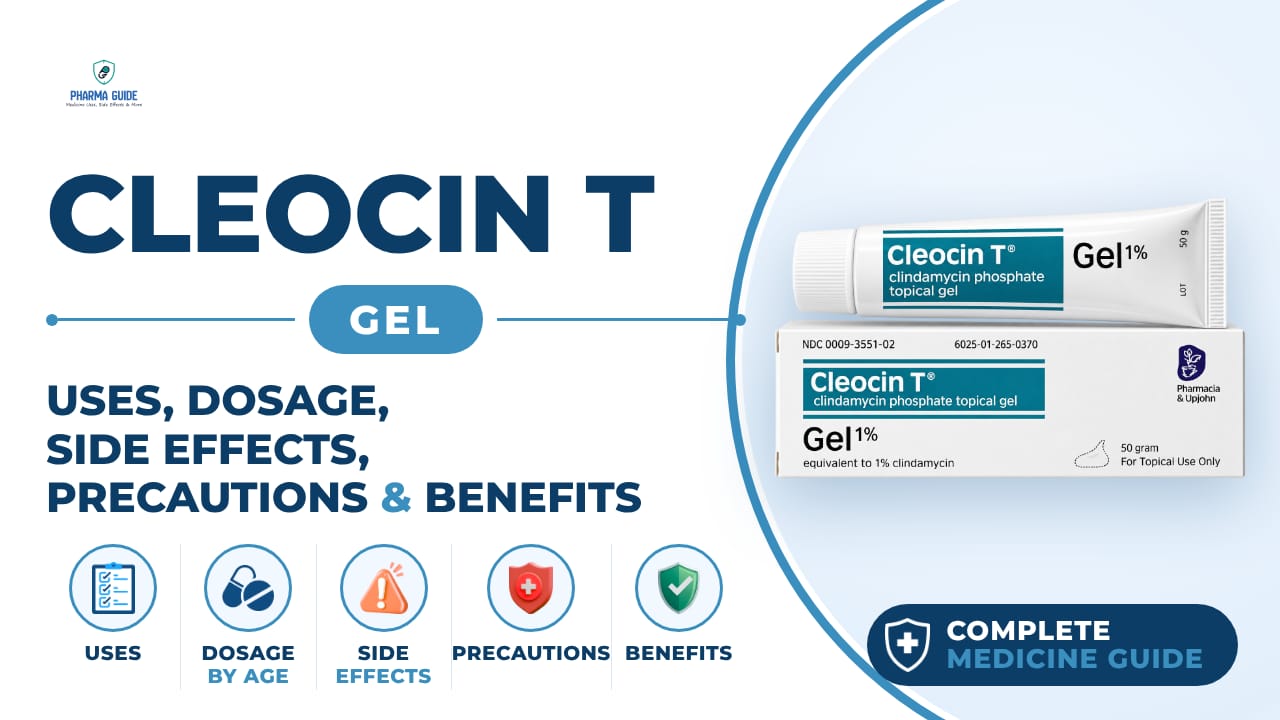
Cleocin T Gel: Uses, Dosage, Side Effects, Precautions and Alternates
Topical acne agent
Cleocin T Gel (clindamycin phosphate) treats acne vulgaris by reducing bacteria and inflammation. Learn dosage, side effects, warnings, and precautions.
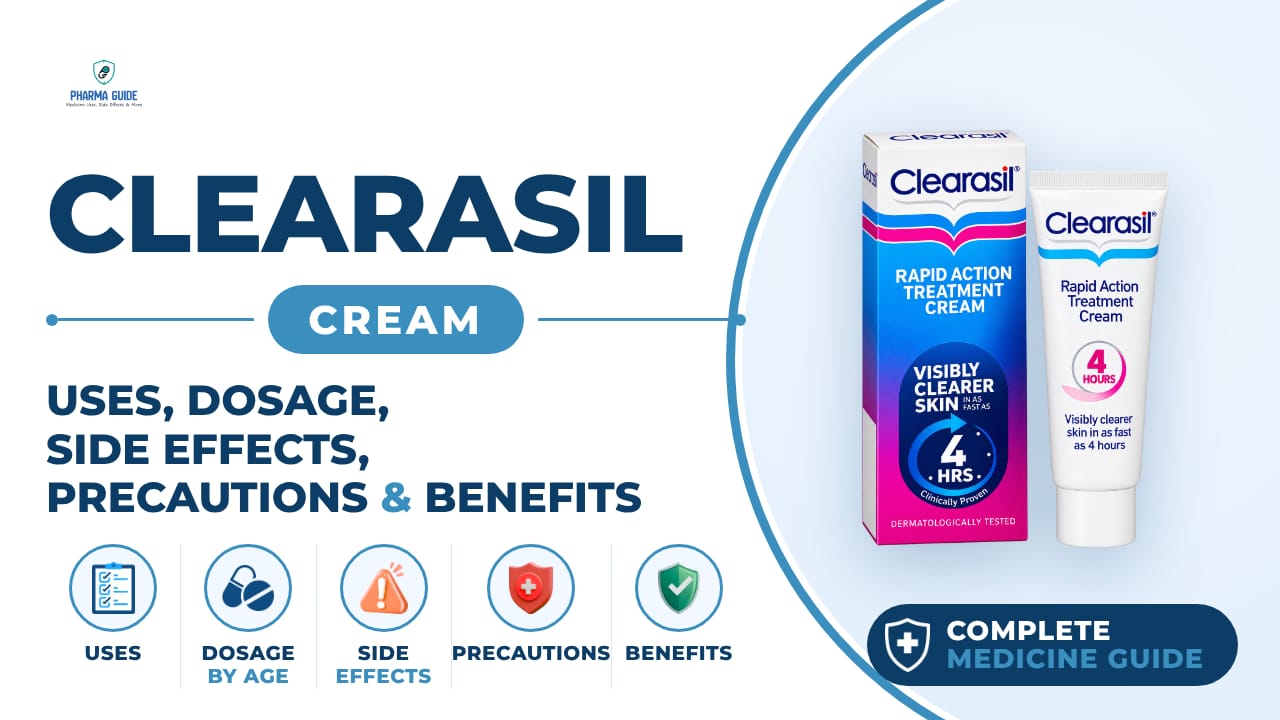
Clearasil Cream: Uses, Dosage, Side Effects, Precautions and Alternates
Topical acne agent
Clearasil Cream (Benzoyl Peroxide) treats acne, pimples, blackheads, and whiteheads by fighting bacteria and clearing pores. Learn uses, dosage, and side