
Safety
General information, not medical advice
Your prescriber and the leaflet in your pack know your situation. This page does not.
- Follow your prescriber and the leaflet
- Don't start, stop, or change a dose on your own
- Doses and warnings differ by country and product
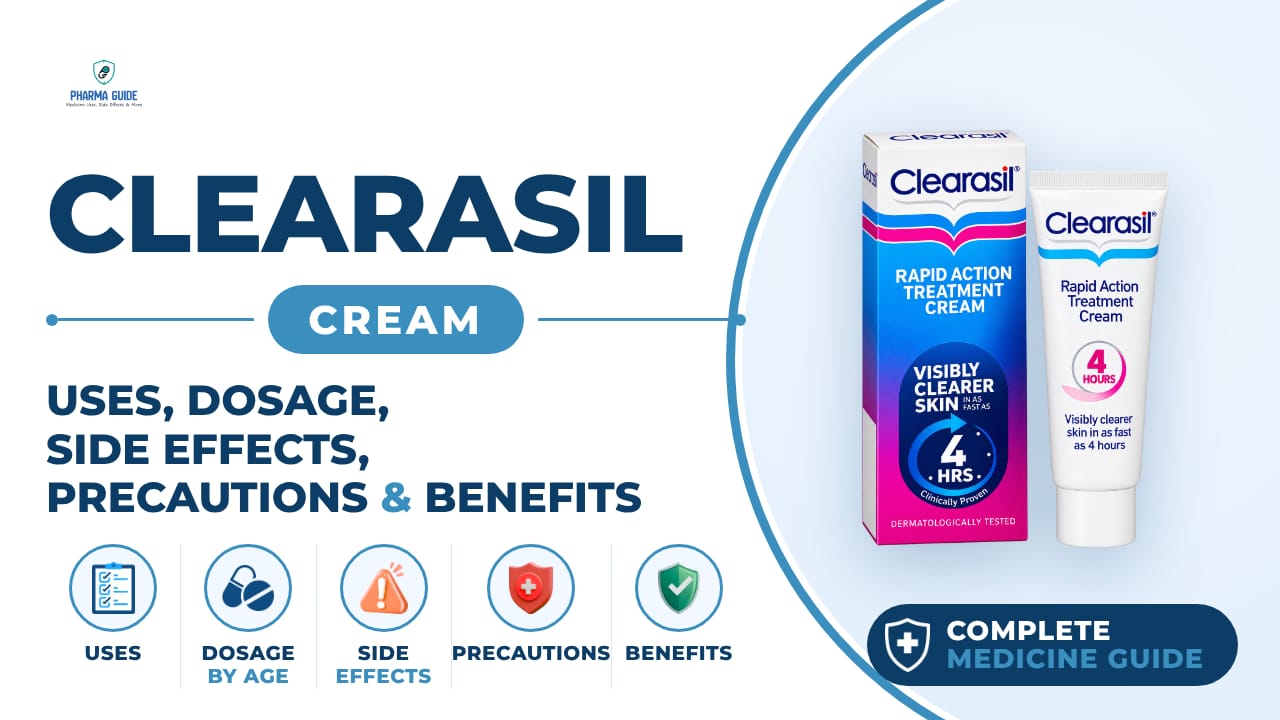
Clearasil Cream: Uses, Dosage, Side Effects, Precautions and Alternates
| Generic name | Benzoyl Peroxide |
|---|---|
| Drug class | Topical acne agent |
| Forms | Cream |
Quick overview
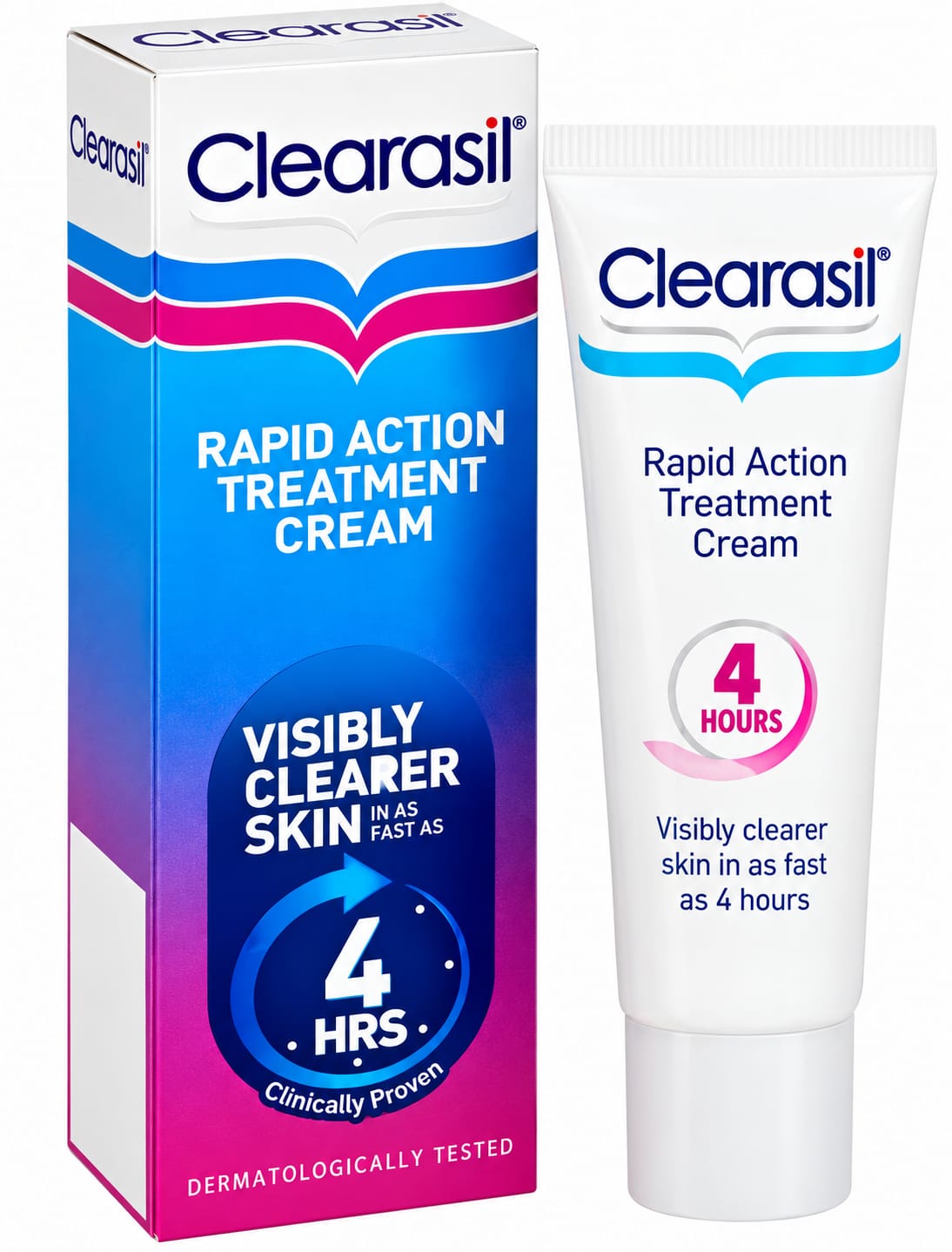
Clearasil Cream (Benzoyl Peroxide) is an over-the-counter topical antiseptic cream belonging to the topical acne agent class. It is used to treat acne, including pimples, blackheads, and whiteheads on the face, back, and chest. The cream works by stopping the growth of acne-causing bacteria on the skin, helping keep pores clean. It is applied externally as a thin layer, with frequency adjusted based on skin tolerance.
What is Clearasil Cream
Clearasil Cream is an over-the-counter topical antiseptic cream used to treat acne, including pimples, blackheads, and whiteheads on the face, back, and chest.
Clearasil Cream uses
- Treatment of acne vulgaris (pimples, blackheads, and whiteheads)
- Treats acne
- Helps reduce acne-causing bacteria
- Helps clear pimples
- Helps reduce clogged pores
Benefits of Clearasil Cream
- Kills pimple-causing bacteria and clears blocked pores
- Absorbs excess surface oil
- Helps break down dead skin cells to prevent new breakouts
- Can visibly reduce the size and redness of individual spots, with some rapid-action formulas working in as little as four hours
How Clearasil Cream works
The cream works by stopping the growth of acne-causing bacteria on the skin, which helps keep pores clean and the skin healthy.
Clearasil Cream dosage
For external use only; avoid contact with the eyes, lips, mouth, nostrils, and broken or sensitive skin. Clean the skin thoroughly before applying, then cover the entire affected area with a thin layer. Start with one application a day and gradually increase to two or three times a day if needed, to reduce the chance of excessive dryness. If bothersome dryness or peeling occurs, reduce how often you apply it. Let the cream dry completely before applying sunscreen or going outside. Avoid using other topical acne products at the same time, as this can increase dryness or irritation. Wash your hands after applying, and avoid contact with hair, dyed fabrics, carpet, and clothing, as the product may bleach them. This cream is not recommended for children under 12 years of age unless directed by a doctor.
If you miss an application, apply it as soon as you remember; do not apply extra to make up for a missed one. Finish the full course of treatment even if symptoms improve after a few days. Usage does not depend on food timings.
| Age group | Dose |
|---|---|
| 12–17 years | Apply a thin layer to the affected acne area, usually starting once daily |
| 18–39 years | Apply a thin layer 1–3 times daily, depending on skin tolerance |
| 40–64 years | Same topical regimen: 1–3 times daily, starting once daily if irritation is a concern |
Available forms and strengths
- Cream
Side effects of Clearasil Cream
Common
- Dry or peeling skin
- Redness of the skin
- Itching
- Burning or stinging sensation at the application site
- Feeling of warmth
Serious
- Severe skin irritation, blistering, crusting, or swelling
- Skin rash
- Signs of a severe allergic reaction, such as hives, swelling of the face, lips, tongue, or throat, or difficulty breathing
Warnings and precautions
- This product is for external use only; avoid contact with the eyes, mucous membranes, lips, mouth, or open wounds.
- The cream may cause skin irritation and peeling the first few times it's used; this is usually not harmful and goes away in a few days.
- Do not use if you have very sensitive skin or are sensitive to benzoyl peroxide, since it can make irritation worse.
- Not recommended for children under 12 because there isn't enough safety information for this age group.
- This medicine can make your skin more sensitive to the sun. Limit sun exposure, avoid tanning beds and sunlamps, use sunscreen, and wear protective clothing.
- This product can bleach hair or colored fabrics, so use it carefully and avoid contact with hair, clothing, and furnishings.
- Using another topical acne medicine at the same time can increase skin dryness or irritation. If this happens, use only one product unless your doctor tells you otherwise.
- This cream is generally considered safe during pregnancy and is not known to harm the baby, but it should only be used if your doctor recommends it, since some sources say it should be avoided unless the benefits outweigh the risks.
- It is not known whether this medicine passes into breast milk. Talk to your doctor before using it while breastfeeding, and avoid applying it near or on the breasts.
- No kidney-specific dose adjustment is generally required for topical use. No routine liver-specific adjustment is established.
- It isn't known how this medicine interacts with alcohol, so check with your doctor before drinking.
- This medicine is not known to cause sleepiness.
Storage
- Keep tightly closed
- Store at room temperature (20-25°C / 68-77°F)
- Keep out of the reach of children
- Do not dispose of medications in wastewater or household garbage; ask your pharmacist how to dispose of medicine that is no longer needed or expired
When to see a doctor
- Get medical help right away if you have signs of a serious allergic reaction, such as a rash, hives, itching or swelling of the face, tongue, or throat, severe dizziness, or trouble breathing.
- Stop using the cream and see a doctor if skin irritation becomes severe.
- If the product is swallowed, get medical help or contact a poison control center right away.
- Contact your doctor immediately if you take too much of this medicine, since an overdose can cause a severe allergic reaction like serious skin irritation or rash.
Alternatives
- Adapalene
- Azelaic acid
- Salicylic acid
Watch the video
FAQs
What is Clearasil Cream used for?
It is used to treat acne vulgaris, including pimples, blackheads, and whiteheads on the face, back, and chest, by stopping the growth of acne-causing bacteria and helping keep pores clean.
How should I apply Clearasil Cream?
Clean the skin thoroughly, then apply a thin layer to the entire affected area. Start with one application a day and gradually increase to two or three times a day if needed, to reduce the chance of excessive dryness.
What are the common side effects of Clearasil Cream?
Common side effects include dry or peeling skin, redness, itching, a burning or stinging sensation at the application site, and a feeling of warmth.
Can children use Clearasil Cream?
It is not recommended for children under 12 years of age unless directed by a doctor, as there isn't enough safety information for this age group.
Is Clearasil Cream safe to use during pregnancy?
It is generally considered safe during pregnancy and is not known to harm the baby, but it should only be used if your doctor recommends it, since some sources say it should be avoided unless the benefits outweigh the risks.
General information, not medical advice
Your prescriber and the leaflet in your pack know your situation. This page does not.
- Follow your prescriber and the leaflet
- Don't start, stop, or change a dose on your own
- Doses and warnings differ by country and product
Sources
Video
Related medicines
Cleocin T Gel: Uses, Dosage, Side Effects, Precautions and Alternates
Topical acne agent
Cleocin T Gel (clindamycin phosphate) treats acne vulgaris by reducing bacteria and inflammation. Learn dosage, side effects, warnings, and precautions.
BenzaClin Gel: Uses, Dosage, Side Effects, Precautions and Alternates
Topical acne agent
BenzaClin Gel combines clindamycin and benzoyl peroxide to treat acne vulgaris. Learn how it works, dosage, side effects, and precautions before use.