
Safety
General information, not medical advice
Your prescriber and the leaflet in your pack know your situation. This page does not.
- Follow your prescriber and the leaflet
- Don't start, stop, or change a dose on your own
- Doses and warnings differ by country and product
Cleocin T Gel: Uses, Dosage, Side Effects, Precautions and Alternates
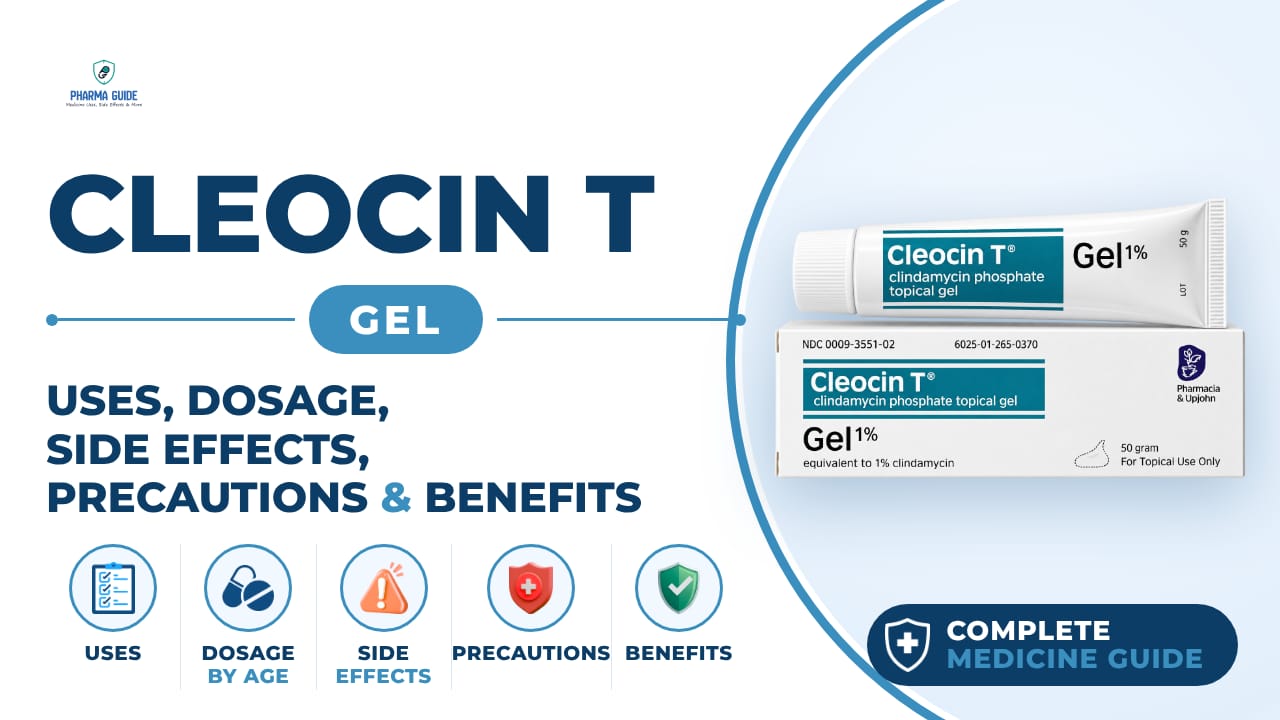
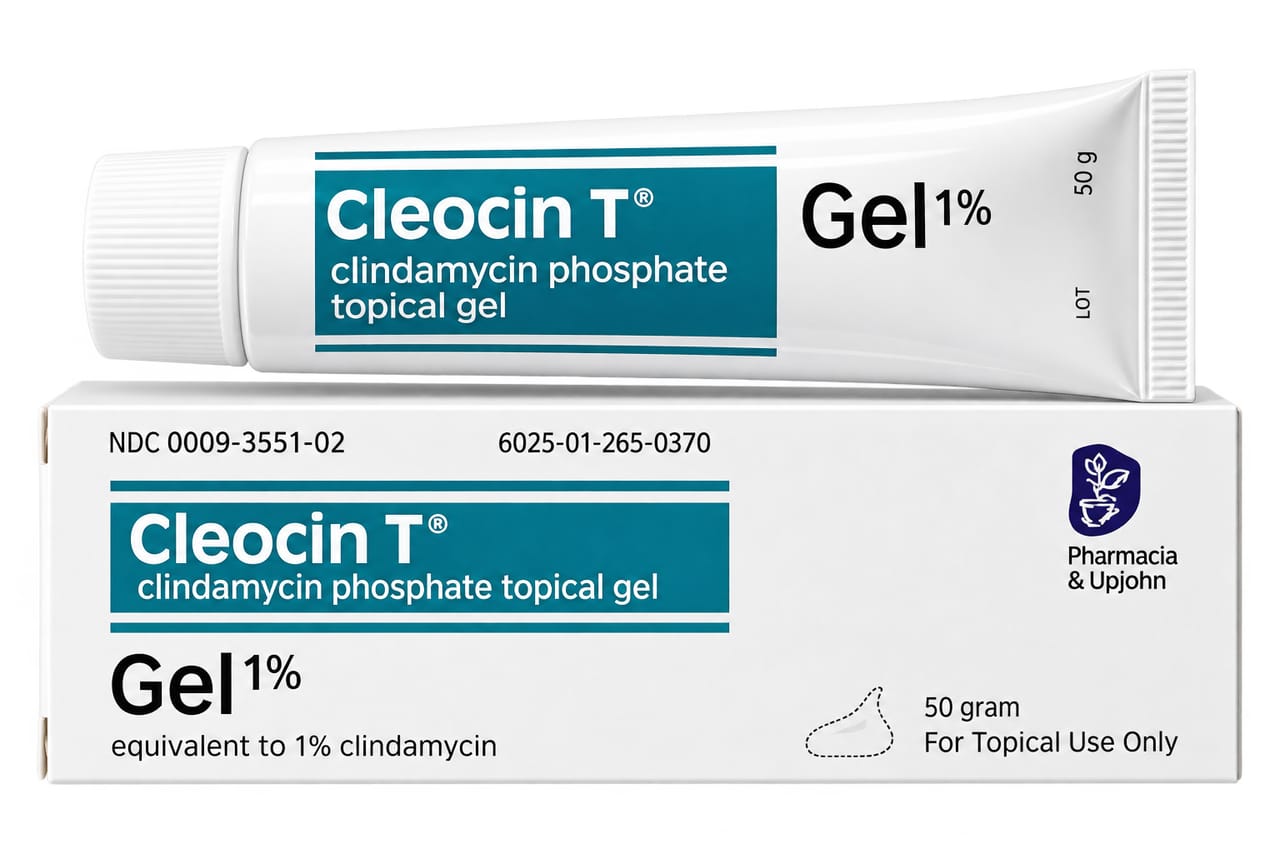
| Generic name | clindamycin phosphate |
|---|---|
| Drug class | Topical acne agent |
| Forms | Topical solution, Topical gel, Topical lotion, Pledget (medicated pad) applicator |
Quick overview
Cleocin T Gel contains clindamycin phosphate, a topical antibiotic used to treat acne vulgaris in adults and children at least 12 years old. It comes as a gel, solution, or lotion and works by reducing acne-causing bacteria and inflammatory acne lesions. It is applied directly to the skin, typically twice daily, and carries some warnings related to skin irritation and bowel inflammation.
What is Cleocin T Gel
Cleocin T is a prescription topical antibiotic medicine used on the skin to treat acne. It comes as a gel, solution, or lotion containing clindamycin phosphate.
Cleocin T Gel uses
- Treatment of acne vulgaris (inflammatory acne with red, swollen pimples and pustules)
- Used to treat severe acne in adults and children at least 12 years old
- Treats acne vulgaris
- Helps reduce acne-causing bacteria
- Helps reduce inflammatory acne lesions
- Helps control pimples and acne-related inflammation
Benefits of Cleocin T Gel
- Targets acne-causing bacteria directly at the application site
- Helps reduce acne lesions and improve skin appearance
- Can be combined with other topical acne treatments if your doctor directs it
How Cleocin T Gel works
Clindamycin phosphate itself does not work against bacteria, but once it's absorbed into the skin, the body converts it into active clindamycin, which stops the growth of the bacteria that cause acne. The exact way it helps acne is not fully known.
Cleocin T Gel dosage
Apply to the affected area as a thin film, generally twice daily, or as your doctor directs. This medicine is for use on the skin only; do not swallow it. Do not use on open wounds, or on sunburned, windburned, dry, or irritated skin. Wash and dry the affected area before applying.
Shake the lotion well immediately before each use. If using a pledget (medicated pad), remove it from its foil wrapper just before use, do not use if the seal is broken, and throw it away after a single use—more than one pledget may be needed. Wash your hands before and after applying this medicine. Keep liquid forms in tightly closed containers.
Call your doctor if your symptoms don't improve or get worse. If you miss a dose, apply it as soon as you remember, but skip it if it's almost time for your next dose—do not apply two doses at once.
| Age group | Dose |
|---|---|
| Under 12 years | Safety and effectiveness are not established |
| 12–17 years | Apply a thin film to the affected area twice daily |
| 18–64 years | Apply a thin film twice daily |
Available forms and strengths
- Topical solution
- Topical gel
- Topical lotion
- Pledget (medicated pad) applicator
Side effects of Cleocin T Gel
Common
- Burning
- Itching
- Dryness
- Redness (erythema)
- Peeling
- Oily skin
Serious
- Severe redness, itching, or dryness of treated skin areas
- Severe stomach pain, watery or bloody diarrhea (even if it happens months after your last dose)
- Signs of a serious allergic reaction: hives, difficulty breathing, swelling of the face, lips, tongue, or throat
- Severe colitis (bowel inflammation), which has occurred with oral and injected clindamycin and rarely with topical use
Warnings and precautions
- This medicine can be absorbed into the body through the skin and, like oral or injectable forms of clindamycin, has been linked to serious bowel inflammation (colitis) that can even be fatal. Watery or bloody diarrhea, along with stomach cramps, can be signs of this problem.
- Do not use this medicine if you have a history of allergy to clindamycin or lincomycin, or if you have had ulcerative colitis, enteritis (bowel inflammation), or antibiotic-related colitis in the past.
- If you get significant diarrhea while using this medicine, stop using it and contact your doctor, since it could be a sign of bowel inflammation.
- Diarrhea and bowel inflammation can start even several weeks after you stop using this medicine.
- The topical solution form contains alcohol and can burn or irritate the eyes. If it accidentally gets into your eyes, abraded skin, or mucous membranes, rinse well with cool tap water.
- Use this medicine cautiously if you have eczema or other skin conditions (atopic individuals), since it may cause more irritation.
- The topical solution form is flammable, so avoid fire, flames, and smoking during and right after applying it.
- This medicine is not approved for children younger than 12 years old, since its safety and effectiveness in that age group have not been established.
- Avoid using other irritating skin products while on this medicine, such as harsh soaps, hair removers, or products containing alcohol, unless your doctor approves.
- Do not use anti-diarrhea medicine if you develop diarrhea while using this product, unless your doctor tells you to, since it may make the condition worse.
- It is not known whether this medicine will harm an unborn baby. Tell your doctor if you are pregnant or planning to become pregnant. During the first three months of pregnancy, it should only be used if clearly needed.
- It is not known if this medicine passes into breast milk, but related forms taken by mouth or injection have been found in breast milk. Watch nursing infants for diarrhea, thrush, or diaper rash, and avoid applying the medicine to areas, like the chest, where a baby could accidentally swallow it.
- No routine kidney-specific dose adjustment is generally required for topical use.
- Systemic absorption is relatively limited, but significant liver disease should still be discussed with a clinician.
- No important direct alcohol interaction is expected with topical clindamycin.
- Cleocin T Gel does not normally affect driving.
Storage
- Store at controlled room temperature 20° to 25°C (68° to 77°F)
- Protect from freezing
- Store at room temperature away from moisture and heat
When to see a doctor
- Get emergency help right away if you have signs of a serious allergic reaction, such as hives, trouble breathing, or swelling of your face, lips, tongue, or throat.
- Stop using this medicine and call your doctor right away if you have severe redness, itching, or dryness of treated skin, or severe stomach pain with watery or bloody diarrhea—even if this happens months after your last dose.
- If you think you have used too much and absorbed it through your skin, seek emergency medical help, especially if you have watery or bloody diarrhea.
Alternatives
- Clindamycin topical solution
- Clindamycin topical lotion
- Benzoyl peroxide
- Adapalene
Watch the video
FAQs
What is Cleocin T Gel used for?
It is a prescription topical antibiotic used to treat acne vulgaris, including severe acne, in adults and children at least 12 years old by reducing acne-causing bacteria and inflammatory lesions.
How do you use Cleocin T Gel?
Apply a thin film to the affected area, generally twice daily, after washing and drying the skin. It is for skin use only and should not be swallowed or applied to open wounds, sunburned, or irritated skin.
What are the side effects of Cleocin T Gel?
Common side effects include burning, itching, dryness, redness, peeling, and oily skin. Serious effects include severe skin irritation, severe stomach pain, watery or bloody diarrhea, signs of allergic reaction, and rarely, severe colitis.
Can Cleocin T Gel cause bowel problems?
Yes, it can be absorbed through the skin and has been linked to serious bowel inflammation (colitis), which can occur even months after stopping use and may be signaled by watery or bloody diarrhea with stomach cramps.
Is Cleocin T Gel safe during pregnancy or breastfeeding?
It is not known if it harms an unborn baby, so it should only be used during the first three months of pregnancy if clearly needed. It's unknown if it passes into breast milk, so nursing infants should be watched for diarrhea, thrush, or diaper rash.
General information, not medical advice
Your prescriber and the leaflet in your pack know your situation. This page does not.
- Follow your prescriber and the leaflet
- Don't start, stop, or change a dose on your own
- Doses and warnings differ by country and product
Sources
Video
Related medicines
Clearasil Cream: Uses, Dosage, Side Effects, Precautions and Alternates
Topical acne agent
Clearasil Cream (Benzoyl Peroxide) treats acne, pimples, blackheads, and whiteheads by fighting bacteria and clearing pores. Learn uses, dosage, and side
BenzaClin Gel: Uses, Dosage, Side Effects, Precautions and Alternates
Topical acne agent
BenzaClin Gel combines clindamycin and benzoyl peroxide to treat acne vulgaris. Learn how it works, dosage, side effects, and precautions before use.