
Safety
General information, not medical advice
Your prescriber and the leaflet in your pack know your situation. This page does not.
- Follow your prescriber and the leaflet
- Don't start, stop, or change a dose on your own
- Doses and warnings differ by country and product
Benzocaine Gel: Uses, Dosage, Side Effects, Precautions and Alternates
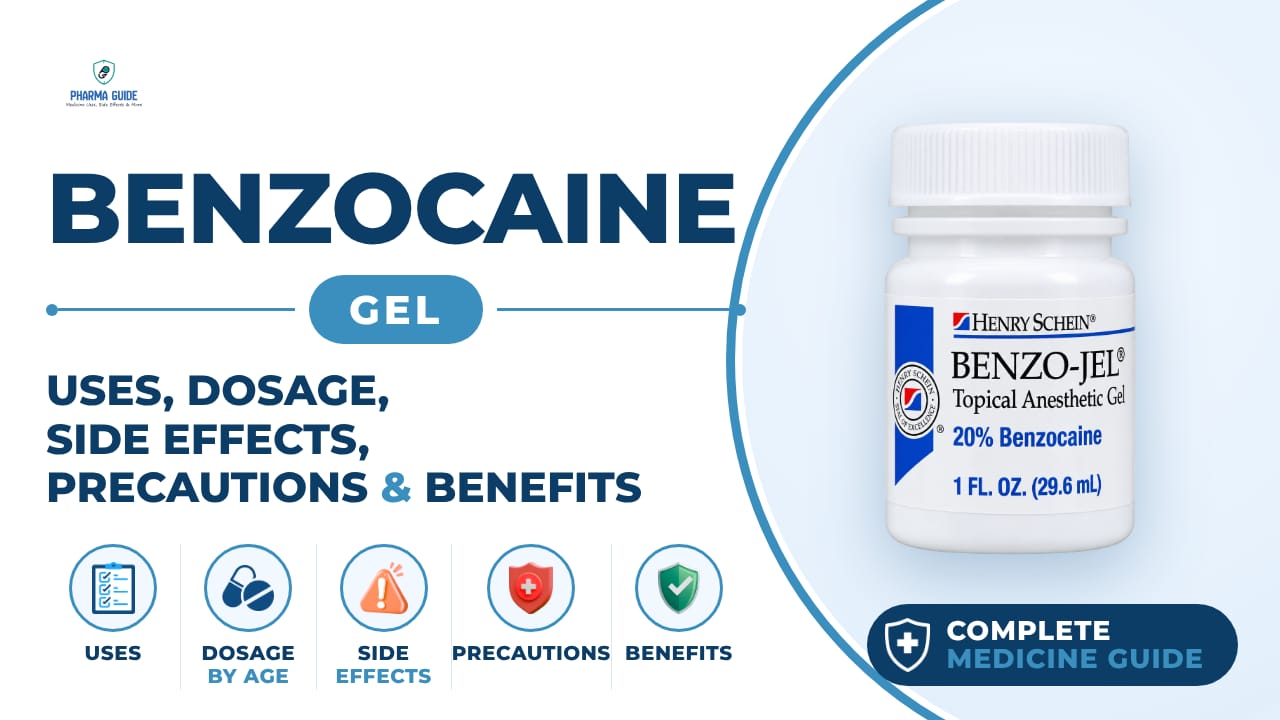
| Generic name | Benzocaine |
|---|---|
| Drug class | Local anesthetic (numbing medication) |
| Forms | Mucous membrane lozenge, Topical cream, Topical gel, Topical spray, Rectal ointment, Topical ointment, Topical liquid, Mucous membrane spray, Mucous membrane gel, Mucous membrane swab, Mucous membrane liquid, Compounding powder, Rectal suppository, Topical lotion, Mucous membrane paste, Mucous membrane tablet disintegrating, Topical swab, Mucous membrane powder for reconstitution, Topical stick |
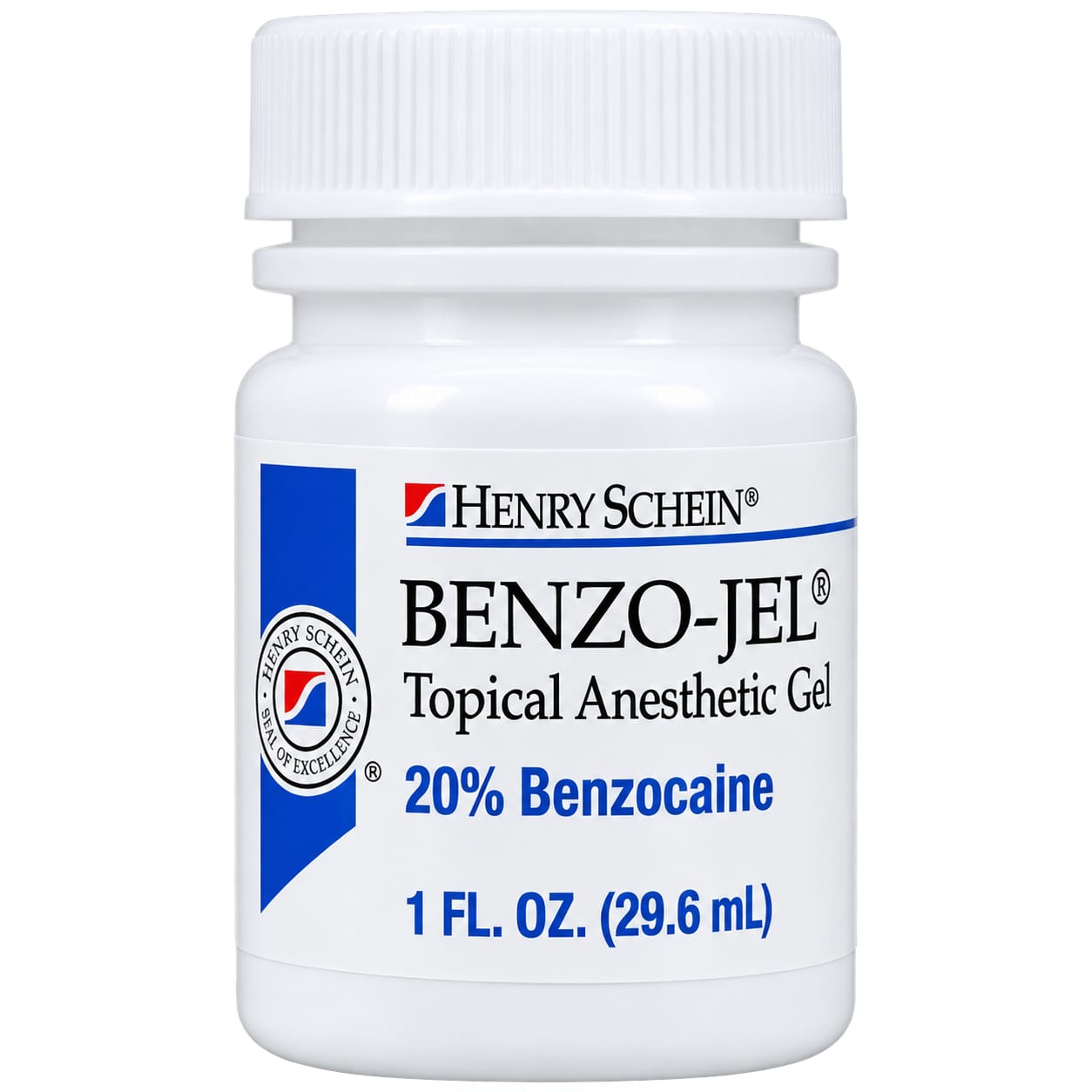
Quick overview
Benzocaine Gel (generic name: benzocaine) is a local anesthetic used to numb minor pain on the skin or on surfaces inside the mouth, nose, throat, vagina, or rectum. It works by blocking nerve signals that carry pain messages, producing temporary, localized numbness. It is available in gel and several other forms, and is used for minor skin irritation, sore throat, toothaches, and similar discomforts. It should be used exactly as directed, with the smallest effective amount applied.
What is Benzocaine Gel
Benzocaine topical is a local anesthetic (numbing medication) that comes in gel and other forms. It is used on the skin or inside the mouth, nose, throat, vagina, or rectum to numb pain.
Benzocaine Gel uses
- Reduce pain or discomfort from minor skin irritations, sore throat, sunburn, vaginal or rectal irritation, ingrown toenails, hemorrhoids, and other minor pain on the surface of the body
- Numb the skin or surfaces inside the mouth, nose, throat, vagina, or rectum to lessen the pain of inserting a medical instrument such as a tube or speculum
- Toothaches, sore gums, mouth sores, and discomfort from new teeth coming in
Benefits of Benzocaine Gel
- Provides quick, temporary relief from minor pain without the need for an injection
- Numbing effect is localized, so it doesn't affect the rest of the body
- Acts directly at the painful area
- Available in topical oral-gel formulations
- Can provide temporary relief from minor mouth pain
How Benzocaine Gel works
Benzocaine works by blocking nerve signals that carry pain messages, which numbs the area where it is applied.
Benzocaine Gel dosage
Use exactly as directed on the label or as prescribed by your doctor, and read all instruction sheets. Clean and dry the affected area before applying. Apply only a thin layer to the affected area, using the smallest amount needed to numb the skin or relieve pain.
Do not use on large skin areas or deep puncture wounds, and avoid raw or blistered skin such as a severe burn or abrasion. Do not cover treated areas with a bandage or plastic wrap, and do not apply heat to treated areas unless told to by a doctor, since this can increase absorption and risk of side effects.
If using a spray, hold the container 6 to 12 inches away from the skin; do not spray onto the face — spray into your hands first and then rub it on, avoiding the eyes. Wash your hands before and after use, unless you are treating the hands themselves. Avoid getting the product in your eyes, nose, or mouth; rinse right away with water if this happens.
For a rectal suppository: wash your hands before and after, do not take it by mouth, lie on your back with knees toward your chest, and gently insert it about 1 inch; stay lying down for a few minutes while it melts and avoid using the bathroom for at least an hour.
Avoid eating within 1 hour after using benzocaine on your gums or inside your mouth, and do not swallow the gel, liquid, or ointment when applying to the gums or inside the mouth. Do not use this medicine on a child younger than 2 years old.
Benzocaine is used as needed, so you may not be on a fixed schedule; skip a missed dose if it is almost time for the next one.
| Age group | Dose |
|---|---|
| Under 2 years | Do not use OTC benzocaine oral gel, including for teething |
| 2–11 years | Apply a small/pea-size amount to the affected area, up to 4 times daily; adult supervision is recommended |
| 12–64 years | Apply a small/pea-size amount to the affected area, up to 4 times daily |
Available forms and strengths
- Mucous membrane lozenge
- Topical cream
- Topical gel
- Topical spray
- Rectal ointment
- Topical ointment
- Topical liquid
- Mucous membrane spray
- Mucous membrane gel
- Mucous membrane swab
- Mucous membrane liquid
- Compounding powder
- Rectal suppository
- Topical lotion
- Mucous membrane paste
- Mucous membrane tablet disintegrating
- Topical swab
- Mucous membrane powder for reconstitution
- Topical stick
Side effects of Benzocaine Gel
Common
- Mild stinging, burning, or itching where the medicine is applied
- Skin tenderness or redness
- Dry white flakes where the medicine was applied
- Numbness that lasts longer than expected
Serious
- Severe burning, stinging, or sensitivity where the medicine is applied
- Swelling, warmth, or redness
- Oozing, blistering, or any signs of infection
- Signs of an allergic reaction: hives, difficult breathing, swelling of the face, lips, tongue, or throat
- Slow/shallow breathing, slow/irregular heartbeat, seizures
- Methemoglobinemia: headache, tired feeling, confusion, fast heart rate, feeling light-headed or short of breath, with a pale, blue, or gray appearance of the skin, lips, or fingernails
Warnings and precautions
- Using benzocaine in the mouth can cause a rare but potentially fatal condition where the oxygen in your body tissues becomes dangerously low, called methemoglobinemia. Do not use it if you have ever had this condition.
- Using too much of this numbing medicine can cause fatal side effects if too much is absorbed through your skin into your blood. Always use the smallest amount needed.
- Do not use this medicine on a child younger than 2 years old.
- Fatal overdoses have happened when numbing medicines were used without a doctor's advice, such as during cosmetic procedures like laser hair removal.
- Ask a doctor or pharmacist before using if you have a personal or family history of methemoglobinemia or a related enzyme deficiency, asthma or other breathing problems, heart disease, or if you smoke.
- Your body can absorb more of this medicine if you use too much, apply it over large areas, or cover treated skin with heat, bandages, or plastic wrap; broken or irritated skin can also absorb more than healthy skin.
- Ask a doctor before using this medicine if you are pregnant. It should be used only when clearly needed, and there isn't enough research in women to fully know the risk.
- Ask a doctor before using this medicine if you are breastfeeding. It is not known if it passes into breast milk, so avoid applying it on or near the nipple to prevent a nursing infant from swallowing it.
- No routine kidney-specific dose adjustment is generally required for topical oral use.
- No routine liver-specific adjustment is generally established.
- This medicine may interact with alcohol by changing how the drug works or increasing the risk of serious side effects, so discuss this with your doctor or pharmacist before use.
- Proper topical use does not usually impair driving.
Storage
- Store at room temperature away from moisture and heat
- Do not freeze
- Best stored away from direct light and moisture; do not store in the bathroom or freezer
- Do not flush down the toilet or pour down a drain unless instructed to do so; properly discard when expired or no longer needed
When to see a doctor
- Get emergency medical help if you notice signs of methemoglobinemia: headache, tiredness, confusion, fast heartbeats, feeling light-headed or short of breath, or a pale, blue, or gray appearance of the skin, lips, or fingernails.
- Get emergency help if you have signs of an allergic reaction, such as hives, difficulty breathing, or swelling of the face, lips, tongue, or throat.
- Stop using the medicine and call your doctor right away if you have severe burning, stinging, or sensitivity where it was applied, swelling, warmth, redness, or any oozing, blistering, or signs of infection.
- Seek emergency medical help if you suspect an overdose, which can cause life-threatening effects such as uneven heartbeats, seizures, coma, slowed breathing, or breathing that stops.
- Call your doctor if your symptoms do not improve, get worse within the first 7 days of use, or if they clear up and then come back.
- If treating a sore throat, call your doctor if the pain is severe or lasts longer than 2 days, especially with fever, headache, rash, swelling, nausea, vomiting, cough, or breathing problems.
Alternatives
- Lidocaine
- Dyclonine
- Pramoxine
- Menthol
Watch the video
FAQs
What is Benzocaine Gel used for?
It's used to numb minor pain on the skin or inside the mouth, nose, throat, vagina, or rectum, including sore throat, toothaches, sunburn, hemorrhoids, and ingrown toenails.
How does Benzocaine Gel work?
It works by blocking nerve signals that carry pain messages, producing temporary, localized numbness in the area where it's applied.
Can Benzocaine Gel be used on children?
No, it should not be used on a child younger than 2 years old, including for teething. Children 2–11 years can apply a small, pea-size amount up to 4 times daily with adult supervision.
What are the serious side effects of Benzocaine Gel?
Serious side effects include severe burning or sensitivity at the application site, swelling, allergic reactions like hives or difficulty breathing, slow or irregular heartbeat, seizures, and methemoglobinemia, a rare but potentially fatal condition causing low oxygen in body tissues.
How should I apply Benzocaine Gel safely?
Clean and dry the area first, apply only a thin layer using the smallest amount needed, avoid covering it with a bandage or plastic wrap, and don't apply heat to the treated area since this increases absorption and side effect risk.
General information, not medical advice
Your prescriber and the leaflet in your pack know your situation. This page does not.
- Follow your prescriber and the leaflet
- Don't start, stop, or change a dose on your own
- Doses and warnings differ by country and product
Sources
Video
Related medicines

Injectafer Injection: Uses, Dosage, Side Effects, Precautions and Alternates
Iron products
Injectafer (ferric carboxymaltose) treats iron deficiency anemia and heart failure-related iron deficiency via IV. Learn uses, dosage, side effects, and

Gliclazide Tablet: Uses, Dosage, Side Effects, Precautions and Alternates
Sulfonylurea (hypoglycemic/antidiabetic agent)
Gliclazide Tablet is a sulfonylurea for type 2 diabetes that boosts insulin release. Learn about dosage, side effects, warnings, and precautions.