
Safety
General information, not medical advice
Your prescriber and the leaflet in your pack know your situation. This page does not.
- Follow your prescriber and the leaflet
- Don't start, stop, or change a dose on your own
- Doses and warnings differ by country and product
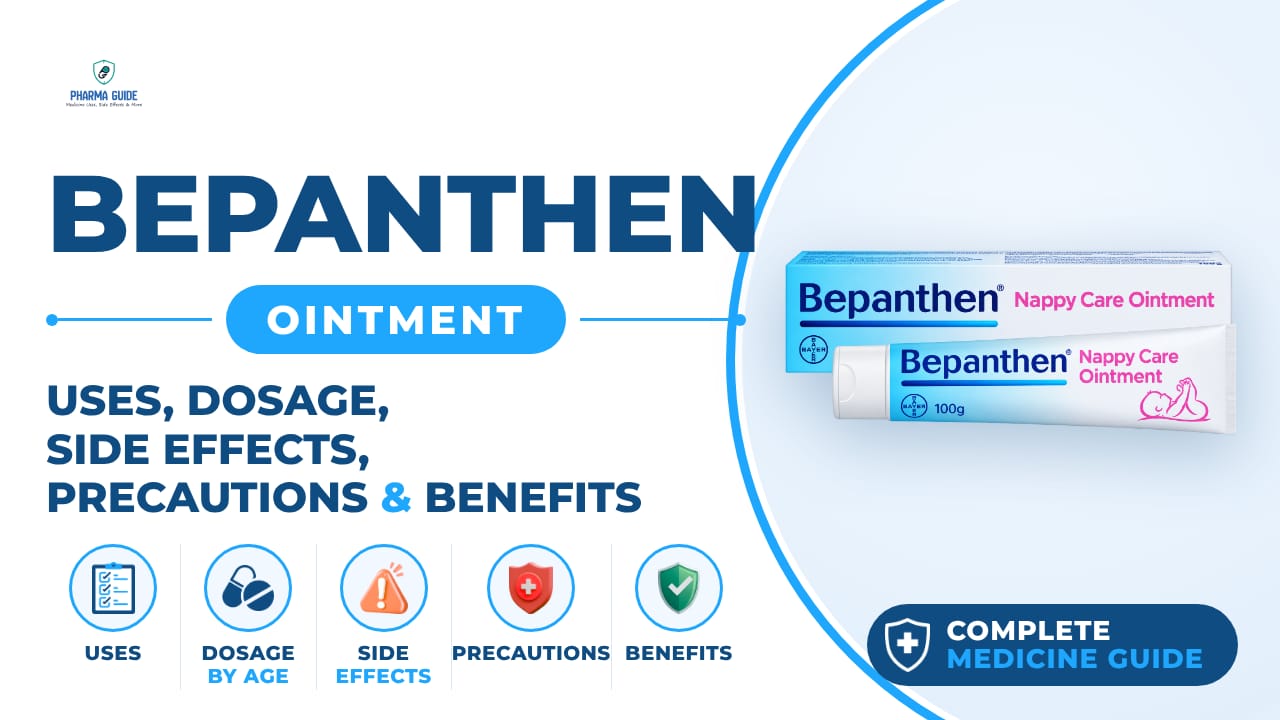
Bepanthen Ointment: Uses, Dosage, Side Effects, Precautions and Alternates
| Generic name | Dexpanthenol |
|---|---|
| Drug class | Skin protector |
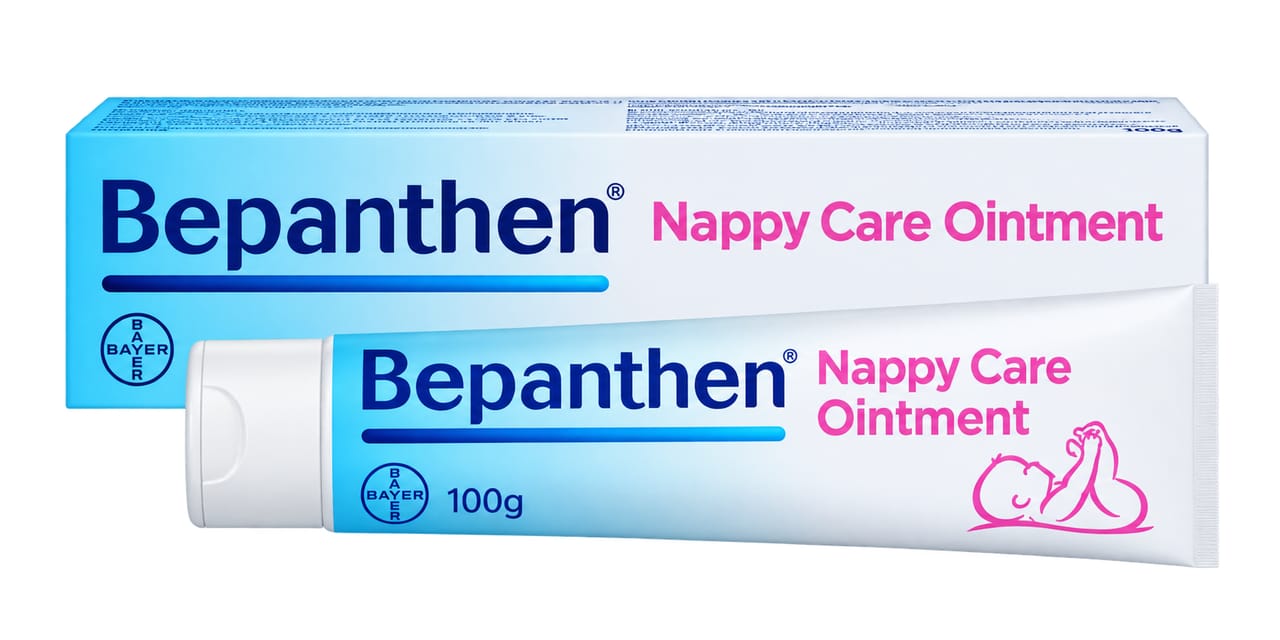
| Forms | Ointment, Tube of 3.5 g, 30 g, 80 g or 100 g, Also available in pack sizes of 30g, 100g and 200g |
Quick overview
Bepanthen Ointment is a skin protectant containing dexpanthenol, used to help treat and prevent skin irritation such as nappy rash, sore skin, and chapped or dry skin. It works by supporting the skin's natural repair process and forming a protective barrier against moisture and irritants. It is applied to the skin only, with use for babies, breastfeeding mothers, children, and adults.
What is Bepanthen Ointment
Bepanthen Ointment is a skin protectant containing dexpanthenol, used to help treat and prevent skin irritation such as nappy rash, sore skin, and chapped or dry skin.
Bepanthen Ointment uses
- Treating and preventing nappy rash, soreness, and skin redness in babies
- Protection against wet nappies
- Care of the breasts while breastfeeding and treating sore nipples
- Prevention and treatment of sore and chapped skin
- Treatment of dry skin
- Treatment of skin irritation, particularly diaper rash (red bottoms) in infants
Benefits of Bepanthen Ointment
- Helps protect and soothe dry, irritated, or sensitive skin.
- Commonly used to help prevent and manage nappy rash in babies.
- Forms a breathable protective barrier against moisture and irritants.
- Contains dexpanthenol (provitamin B5), which supports the skin's natural repair process.
- Helps keep the skin soft, moisturized, and supple.
- Can help soothe minor skin irritation, chafing, and redness.
How Bepanthen Ointment works
The ointment contains dexpanthenol, which the skin converts into a vitamin (pantothenic acid) that helps the skin recover and regenerate. It also forms a breathable barrier that helps protect the skin and keep in natural moisture.
Bepanthen Ointment dosage
Apply with a gentle massage once or several times a day. Apply to the child's bottom after each diaper change. This ointment is for use on the skin only (dermal route) and contact with the eyes should be avoided, as this may be irritating. If applying on the breasts, clean the skin before each feeding.
| Age group | Dose |
|---|---|
| Newborns | Apply a thin layer to clean, dry skin at each nappy change |
| Infants | Apply a thin protective layer after each nappy change |
| Children | Apply a thin layer to affected or irritated skin as required |
| Adults | Apply a thin layer once or several times daily as needed, depending on the product and skin condition |
Available forms and strengths
- Ointment
- Tube of 3.5 g, 30 g, 80 g or 100 g
- Also available in pack sizes of 30g, 100g and 200g
Side effects of Bepanthen Ointment
Common
- Side effects are uncommon
- Mild skin irritation
- Redness or itching
- Rash or other unusual skin reaction
Serious
- Allergic skin reaction
- Severe or spreading rash
- Swelling of the face, lips, or throat
- Difficulty breathing
Warnings and precautions
- Do not use if you are allergic to any of the ingredients.
- Do not use on infected or oozing skin.
- This medicine contains lanolin (wool fat), which may cause skin reactions such as eczema.
- Avoid contact with the eyes, as this may cause irritation.
- This ointment may be used during pregnancy, though another source advises using it with caution and asking a doctor or pharmacist for advice. Bepanthen ointment may be used during breastfeeding.
- If applying on the breasts, clean the skin before each feeding.
- No specific kidney-related precautions or dose adjustments are normally required with topical use. No specific liver-related precautions or dose adjustments are normally required with topical use.
- There is no known interaction with drinking alcohol, and no expected effect on driving or operating machinery.
Storage
- Store below 25°C (77°F) or as stated on the product label.
- Keep in a cool, dry place away from excessive heat.
- Protect from direct sunlight and extreme temperatures.
- Keep the tube tightly closed after each use.
- Do not freeze and avoid very hot or humid storage areas.
- Keep out of reach and sight of children.
When to see a doctor
- If there is no improvement after 5 days despite following the health advice, consult a doctor or pharmacist.
- If you notice any unusual skin reactions, tell your doctor or pharmacist.
- If you notice any side effects not listed in the leaflet, tell your doctor, pharmacist, or druggist.
Alternatives
- E45 Cream
- Aquaphor Healing Ointment
- Zinc Oxide Cream
- Sudocrem
- Metanium Ointment
Watch the video
FAQs
What is Bepanthen Ointment used for?
It is used to treat and prevent nappy rash, sore skin, chapped or dry skin, and to care for sore nipples during breastfeeding.
How does Bepanthen Ointment work?
It contains dexpanthenol, which the skin converts into pantothenic acid to support skin repair, while also forming a breathable barrier that protects against moisture and irritants.
How often should Bepanthen Ointment be applied?
Apply a thin layer to clean, dry skin once or several times a day, such as after each nappy change for babies or before feeding if used on the breasts.
Can Bepanthen Ointment be used during pregnancy or breastfeeding?
It may be used during pregnancy, though caution and medical advice are suggested by one source, and it may also be used during breastfeeding, cleaning the skin before each feeding if applied to the breasts.
What are the side effects of Bepanthen Ointment?
Common side effects include mild skin irritation, redness, itching, or rash, while serious effects can include allergic reactions, severe rash, or swelling of the face, lips, or throat.
General information, not medical advice
Your prescriber and the leaflet in your pack know your situation. This page does not.
- Follow your prescriber and the leaflet
- Don't start, stop, or change a dose on your own
- Doses and warnings differ by country and product
Sources
Video
Related medicines

Injectafer Injection: Uses, Dosage, Side Effects, Precautions and Alternates
Iron products
Injectafer (ferric carboxymaltose) treats iron deficiency anemia and heart failure-related iron deficiency via IV. Learn uses, dosage, side effects, and

Gliclazide Tablet: Uses, Dosage, Side Effects, Precautions and Alternates
Sulfonylurea (hypoglycemic/antidiabetic agent)
Gliclazide Tablet is a sulfonylurea for type 2 diabetes that boosts insulin release. Learn about dosage, side effects, warnings, and precautions.