
Safety
General information, not medical advice
Your prescriber and the leaflet in your pack know your situation. This page does not.
- Follow your prescriber and the leaflet
- Don't start, stop, or change a dose on your own
- Doses and warnings differ by country and product
Bepotastine Eye Drops: Uses, Dosage, Side Effects, Precautions and Alternates
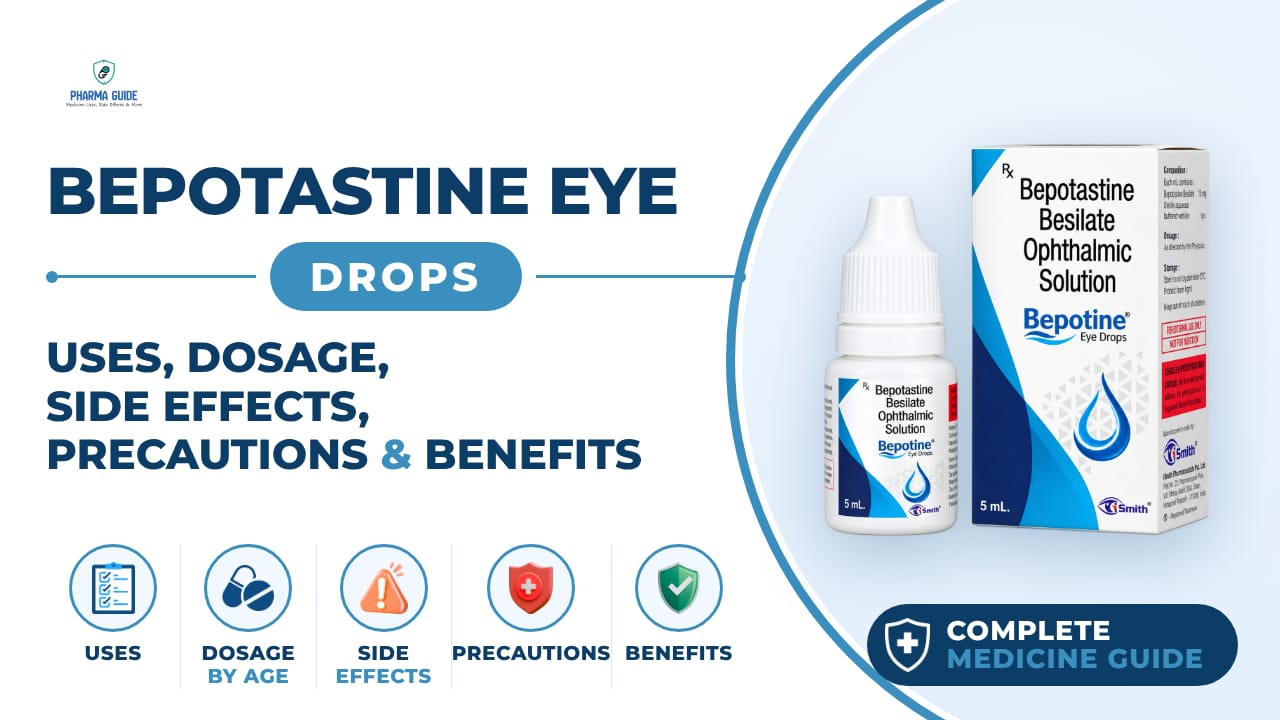
| Generic name | bepotastine, bepotastine besilate, bepotastine ophthalmic |
|---|---|
| Drug class | ophthalmic antihistamine/mast cell stabilizer |
| Forms | Solution (eye drops) |
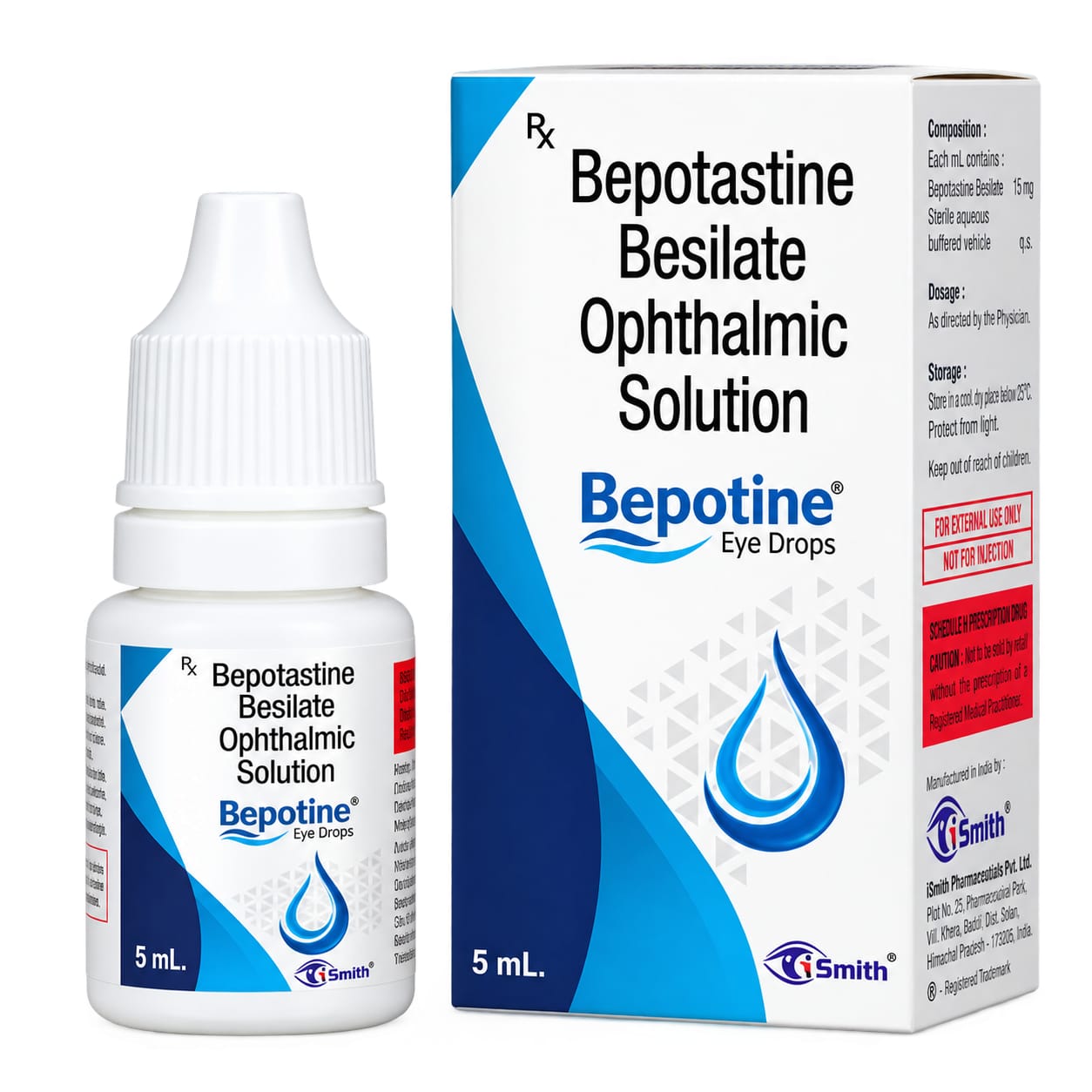
Quick overview
Bepotastine Eye Drops (bepotastine besilate) is a prescription ophthalmic antihistamine and mast cell stabilizer used to treat itchy, red eyes caused by allergies, including allergic conjunctivitis. It works by blocking histamine and preventing certain eye cells from releasing other inflammatory substances. It is typically used twice daily and is available as an eye drop solution.
What is Bepotastine Eye Drops
Bepotastine is a prescription eye drop medicine used to treat itchy, red eyes caused by allergies. It belongs to a group of medicines called antihistamines, and it also works as a mast cell stabilizer.
Bepotastine Eye Drops uses
- Treats itching of the eye caused by allergic conjunctivitis
- Used for red, itchy eyes caused by allergies such as pollen, ragweed, grass, dust, or animal hair and dander
- Relieves itchy eyes from allergies
- Treats allergic conjunctivitis
- Helps reduce eye irritation caused by allergens
Benefits of Bepotastine Eye Drops
- Reduces eye itching
- Reduces redness and swelling of the eye
- Reduces tearing associated with allergic conjunctivitis
- Works directly in the eyes
- Provides antihistamine activity
- Also helps stabilize mast cells
- Usually requires only twice-daily dosing
How Bepotastine Eye Drops works
Bepotastine blocks histamine, a substance in the body that causes allergy symptoms, and it also stops certain cells in the eye from releasing other inflammatory substances. This reduces itching and swelling in the eye.
Bepotastine Eye Drops dosage
This medication is only for use in the eye. Wash your hands before and after use. Tilt your head back slightly and pull the lower eyelid down to form a pouch, then place the drop into the pouch. Try not to touch the tip of the dropper to your eye, fingertips, or other surfaces. Close your eye gently to spread the drops; your vision may blur for a few minutes.
Use your doses at regular, evenly spaced intervals and do not use more often than directed. If you use other eye medications, use them at least 10 minutes before or after this one; eye ointments should be applied last. First shake the closed bottle upside down one time before use, then remove the cap while still holding the bottle upside down. Keep the eye closed for 1 to 2 minutes after applying the drop to let the medicine cover the eye. If you think the drop missed your eye, you can repeat with another drop.
Remove contact lenses before using the drops and wait at least 10 minutes before putting them back in; do not wear contacts if your eyes are red. Do not use this medicine for eye irritation caused by contact lenses. Special care may be needed in young children, and dosing for children younger than 2 years should be determined by a doctor.
| Age group | Dose |
|---|---|
| Under 2 years | Safety and effectiveness are not established |
| 2–64 years | 1 drop in the affected eye(s) twice daily |
| 65–74 years | Same adult dosing; no routine age-based adjustment |
Available forms and strengths
- Solution (eye drops)
Side effects of Bepotastine Eye Drops
Common
- Mild or unusual taste in the mouth
- Eye irritation or itching
- Headache
- Runny or stuffy nose
- Infection in the nose or throat or common cold symptoms
- Blurry vision
- Fever
- Muscle aches
- Sore throat
- Unusual tiredness or weakness
Serious
- Severe allergic reaction: breathing problems or wheezing, racing heart, fever or general ill feeling, swollen lymph nodes, swelling of the face, lips, mouth, tongue, or throat, trouble swallowing or throat tightness
- Skin rash, itching, or hives
- Nausea or vomiting
- Dizziness, feeling lightheaded, or fainting
- Stomach cramps
- Joint pain
- New or worsening eye pain, redness, irritation, or discharge
- Red, sore eyes
Warnings and precautions
- Do not use bepotastine for eye irritation caused by contact lenses, and do not wear contact lenses if your eye is red.
- This medicine should only be applied to the surface of the eye. Do not let the dropper tip touch your eye, finger, or any other surface, and keep the bottle tightly closed when not in use.
- If you wear soft contact lenses, the preservative in the drops can be absorbed by the lenses, so wait at least ten minutes after using the drops before putting your contacts back in.
- This medicine is not meant for long-term use, and safety and effectiveness have not been established in children younger than 2 years old.
- Do not share this medicine with other people, even if they have the same condition, as it may harm them.
- It is not known if or how bepotastine could affect pregnancy or harm an unborn baby. Tell your health care provider if you are pregnant or plan to become pregnant.
- It is not known if bepotastine passes into breast milk. There are no adequate studies in women for determining infant risk when using this medication during breastfeeding, so the potential benefits should be weighed against potential risks.
- No routine kidney-specific dose adjustment is required. No routine liver-specific dose adjustment is required.
- There are no known interactions between bepotastine and alcohol.
- Temporary blurred vision may occur after application; wait until vision clears before driving.
Storage
- Store between 15 and 25 degrees C (59 and 77 degrees F)
- Do not freeze
- Keep out of the reach of children and pets
- Throw away any unused medication after the expiration date
- Keep the container tightly closed when not in use
When to see a doctor
- Stop using bepotastine and get help right away if you have signs of a serious allergic reaction, such as breathing problems or wheezing, a racing heart, fever, swollen lymph nodes, swelling of the face, lips, mouth, tongue, or throat, trouble swallowing, throat tightness, hives, nausea or vomiting, dizziness, feeling lightheaded, fainting, stomach cramps, or joint pain.
- Call your doctor right away if you feel dizzy, lightheaded, or faint while using bepotastine.
- Contact your doctor if your symptoms do not improve within a few days or if they get worse.
- If you think you or someone else has used too much of this medicine, get medical help right away, such as by contacting a poison control center or going to an emergency room.
- Tell your care team right away if you notice new or worsening eye pain, redness, irritation, or discharge.
Alternatives
- Olopatadine eye drops
- Ketotifen eye drops
- Azelastine eye drops
- Epinastine eye drops
Watch the video
FAQs
What is Bepotastine Eye Drops used for?
It is a prescription eye drop used to treat itching of the eye caused by allergic conjunctivitis, including red, itchy eyes from allergens like pollen, ragweed, grass, dust, or animal hair and dander.
How often should Bepotastine Eye Drops be used?
For ages 2 to 64, the typical dose is 1 drop in the affected eye(s) twice daily. Dosing for children younger than 2 years should be determined by a doctor, as safety and effectiveness are not established.
Can I wear contact lenses while using Bepotastine Eye Drops?
You should remove contact lenses before using the drops and wait at least 10 minutes before putting them back in. Do not wear contacts if your eyes are red, and do not use this medicine for eye irritation caused by contact lenses.
What are the common side effects of Bepotastine Eye Drops?
Common side effects include mild or unusual taste in the mouth, eye irritation or itching, headache, runny or stuffy nose, blurry vision, fever, muscle aches, sore throat, and unusual tiredness or weakness.
Is it safe to drive after using Bepotastine Eye Drops?
Temporary blurred vision may occur after application, so you should wait until your vision clears before driving.
General information, not medical advice
Your prescriber and the leaflet in your pack know your situation. This page does not.
- Follow your prescriber and the leaflet
- Don't start, stop, or change a dose on your own
- Doses and warnings differ by country and product
Sources
Video
Related medicines

Injectafer Injection: Uses, Dosage, Side Effects, Precautions and Alternates
Iron products
Injectafer (ferric carboxymaltose) treats iron deficiency anemia and heart failure-related iron deficiency via IV. Learn uses, dosage, side effects, and

Gliclazide Tablet: Uses, Dosage, Side Effects, Precautions and Alternates
Sulfonylurea (hypoglycemic/antidiabetic agent)
Gliclazide Tablet is a sulfonylurea for type 2 diabetes that boosts insulin release. Learn about dosage, side effects, warnings, and precautions.