
Safety
General information, not medical advice
Your prescriber and the leaflet in your pack know your situation. This page does not.
- Follow your prescriber and the leaflet
- Don't start, stop, or change a dose on your own
- Doses and warnings differ by country and product
Besifloxacin Eye Drops: Uses, Dosage, Side Effects, Precautions and Alternates
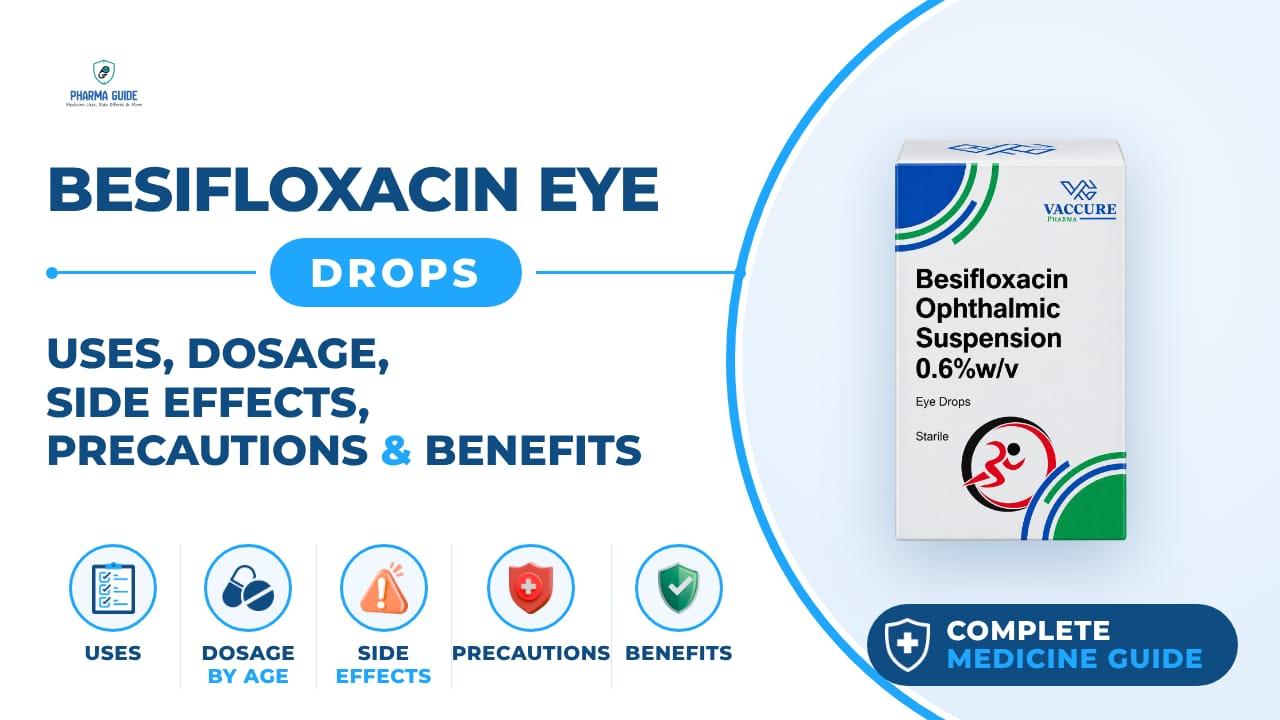
| Generic name | Besifloxacin |
|---|---|
| Drug class | Fluoroquinolone antibiotic (ophthalmic anti-infective) |
| Forms | Ophthalmic suspension (eye drops) |
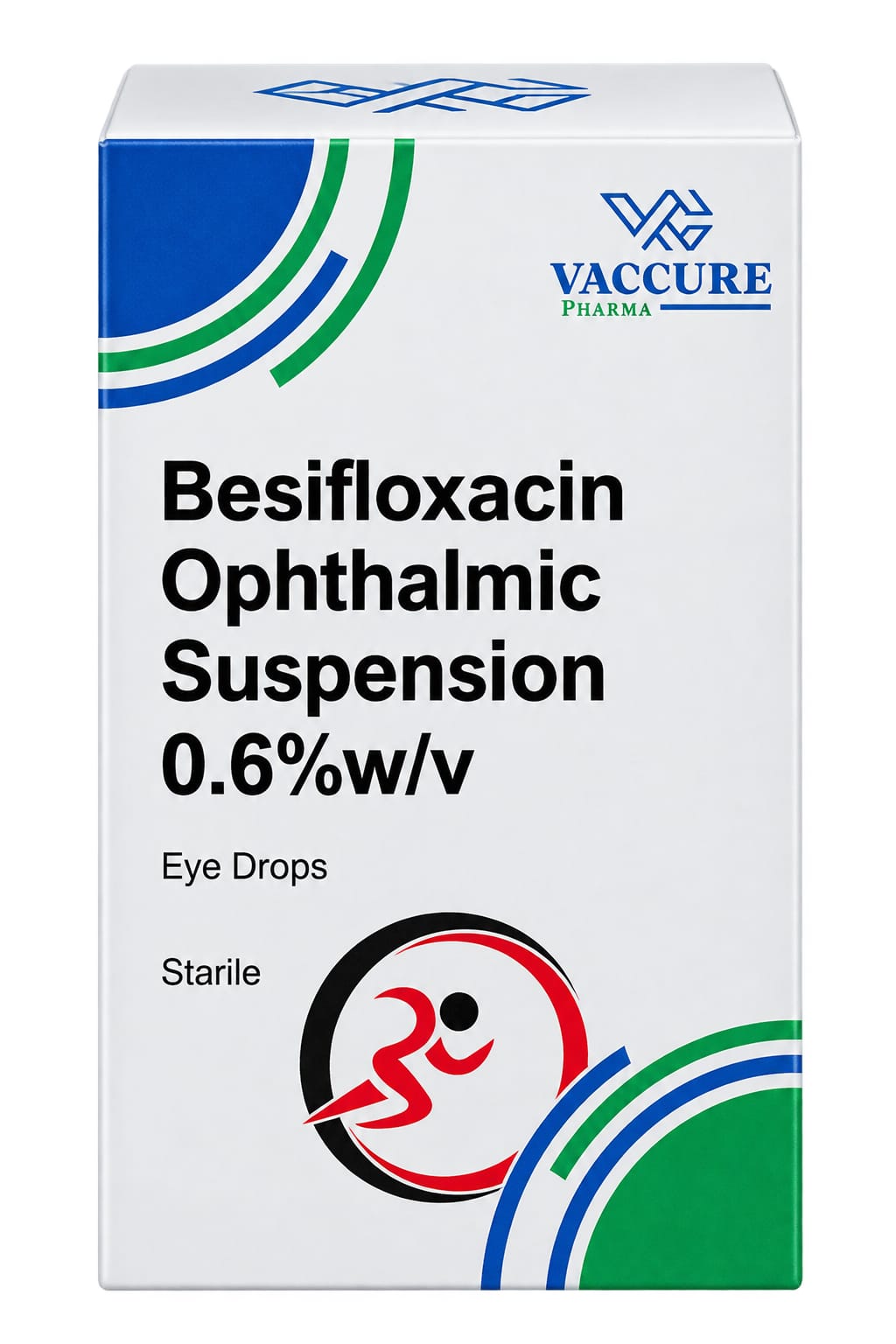
Quick overview
Besifloxacin Eye Drops (besifloxacin) is a fluoroquinolone antibiotic eye medicine used to treat bacterial infections of the eye, especially bacterial conjunctivitis (pinkeye). It is applied directly to the eye as a suspension and works by killing the bacteria causing the infection. It comes as an ophthalmic suspension and is typically used three times daily for seven days as directed by a doctor.
What is Besifloxacin Eye Drops
Besifloxacin ophthalmic is an antibiotic eye medicine used to treat bacterial infections of the eye, especially bacterial conjunctivitis (pinkeye). It comes as eye drops (a suspension) that you apply directly to the eye.
Besifloxacin Eye Drops uses
- Treatment of bacterial conjunctivitis (pinkeye)
- Other bacterial eye infections as determined by your doctor
Benefits of Besifloxacin Eye Drops
- Effective against a broad range of bacteria
- Rapid relief from eye infection symptoms
- Topical application minimizes systemic side effects
- Helps prevent complications from untreated infections
How Besifloxacin Eye Drops works
Besifloxacin is an antibiotic that works by killing the bacteria causing the eye infection, stopping them from multiplying so the infection can clear up.
Besifloxacin Eye Drops dosage
Apply to the affected eye(s) at around the same times every day, spaced several hours apart as directed by your doctor. Follow the prescription label directions carefully and ask your doctor or pharmacist to explain anything you don't understand.
Use the drops exactly as directed; do not use more, less, or more often than prescribed. Finish the entire prescribed course even if your symptoms improve, so the infection is fully treated and bacteria don't become resistant.
Wash your hands thoroughly before using the eye drops. Do not let the dropper tip touch your eye, fingers, or any surface to avoid contaminating the drops. Shake the bottle once before each use.
Do not wear soft contact lenses while using this medicine, because a preservative in the drops could permanently stain the lenses; wait a period of time after using the drops before inserting contact lenses. If you need more than one drop in the same eye, wait several minutes before instilling the next drop.
If you miss a dose, use it as soon as you remember, but skip it if it is almost time for your next dose; do not double up doses.
| Age group | Dose |
|---|---|
| Under 1 year | Safety and effectiveness not established |
| 1–17 years | 1 drop in affected eye(s) 3 times daily for 7 days |
| 18–64 years | 1 drop in affected eye(s) 3 times daily for 7 days |
| 65+ years | 1 drop in affected eye(s) 3 times daily for 7 days |
Available forms and strengths
- Ophthalmic suspension (eye drops)
Side effects of Besifloxacin Eye Drops
Common
- Red, itchy, or irritated eyes
- Eye pain
- Blurred vision
- Headache
- Eye redness
- Watery eyes
Serious
- Rash
- Hives
- Itching
- Difficulty breathing or swallowing
- Swelling of the face, throat, tongue, lips, eyes, hands, feet, ankles, or lower legs
- Drainage or crusting of the eye
- Severe eye irritation after using the eye drops
- Feeling like there is something in your eye
- Severe eye redness or swelling
- Fever, or any signs of a new infection
Warnings and precautions
- Tell your doctor if you are pregnant, plan to become pregnant, or are breast-feeding before using this medicine. Human pregnancy data are limited, and it is not known whether besifloxacin enters human milk.
- For topical eye use only. Do not inject into the eye or use it by another route. Do not wear contact lenses while you have signs/symptoms of bacterial conjunctivitis or during treatment, since a preservative in the drops can permanently stain soft contact lenses.
- Do not use longer than prescribed. Prolonged use may allow resistant bacteria or fungi to grow. If a superinfection develops, treatment should be stopped and appropriate alternative therapy started under medical advice.
- Avoid contaminating the dropper tip by touching it to the eye, fingers, or other surfaces. Contaminated eye drops can cause serious eye damage or loss of vision.
- Shake the closed bottle once before each use because it is an ophthalmic suspension.
- Bacterial conjunctivitis is easily spread; wash your hands often, especially after touching your eyes, and replace or wash any eye makeup or contact lenses that touched the infected eye once the infection clears.
- Stopping the medicine too soon or skipping doses may leave the infection incompletely treated and could lead to antibiotic-resistant bacteria.
- Children under 1 year: Safety and effectiveness have not been established.
Storage
- Keep this medication in the container it came in, tightly closed, and out of reach of children.
- Store it at room temperature and away from light, excess heat, and moisture (not in the bathroom).
- Store this medicine in an upright position at room temperature. Protect from light and do not freeze.
- Dispose of unneeded medications in a way so that pets, children, and other people cannot take them. Do not flush this medication down the toilet. Use a medicine take-back program if available.
When to see a doctor
- Call your doctor right away if you develop rash, hives, itching, difficulty breathing or swallowing, or swelling of the face, throat, tongue, lips, eyes, hands, feet, ankles, or lower legs.
- Get emergency medical help if you have signs of an allergic reaction such as hives, difficulty breathing, or swelling of your face, lips, tongue, or throat.
- Call your doctor at once if you notice drainage or crusting of the eye, severe eye irritation after using the drops, a feeling like something is in your eye, severe eye redness or swelling, or fever or signs of a new infection.
- Call your doctor if your symptoms do not go away, get worse, or if you develop other eye problems during treatment.
Alternatives
- Moxifloxacin 0.5% Eye Drops
- Ciprofloxacin 0.3% Eye Drops
- Levofloxacin 0.5% Eye Drops
Watch the video
FAQs
What is Besifloxacin Eye Drops used for?
It is an antibiotic eye medicine used to treat bacterial infections of the eye, especially bacterial conjunctivitis (pinkeye), and other bacterial eye infections as determined by your doctor.
How often should Besifloxacin Eye Drops be used?
The typical dosage is 1 drop in the affected eye(s) 3 times daily for 7 days, as directed by your doctor, for ages 1 year and older.
Can I wear contact lenses while using Besifloxacin Eye Drops?
No, you should not wear soft contact lenses during treatment because a preservative in the drops can permanently stain the lenses. Wait as directed after using the drops before inserting contact lenses.
What are the common side effects of Besifloxacin Eye Drops?
Common side effects include red, itchy, or irritated eyes, eye pain, blurred vision, headache, eye redness, and watery eyes.
What should I do if I miss a dose of Besifloxacin Eye Drops?
Use the missed dose as soon as you remember, but skip it if it is almost time for your next dose. Do not double up doses.
General information, not medical advice
Your prescriber and the leaflet in your pack know your situation. This page does not.
- Follow your prescriber and the leaflet
- Don't start, stop, or change a dose on your own
- Doses and warnings differ by country and product
Sources
- https://www.medlineplus.gov/druginfo/meds/a610011.html
- https://www.drugs.com/besifloxacin.html
- Ophthalmol Ther. 2016 Mar 24;5(1):1–20. doi: 10.1007/s40123-016-0046-6
- Zeelab Pharmacy - Besifloxacin
Video
Related medicines
Vigamox Eye Drops: Uses, Dosage, Side Effects, Precautions and Alternates
Fluoroquinolone antibiotic (ophthalmic anti-infective)
Vigamox Eye Drops contain moxifloxacin to treat bacterial eye infections like conjunctivitis. Learn uses, dosage, side effects, and precautions.

Injectafer Injection: Uses, Dosage, Side Effects, Precautions and Alternates
Iron products
Injectafer (ferric carboxymaltose) treats iron deficiency anemia and heart failure-related iron deficiency via IV. Learn uses, dosage, side effects, and