
Safety
General information, not medical advice
Your prescriber and the leaflet in your pack know your situation. This page does not.
- Follow your prescriber and the leaflet
- Don't start, stop, or change a dose on your own
- Doses and warnings differ by country and product
Vigamox Eye Drops: Uses, Dosage, Side Effects, Precautions and Alternates
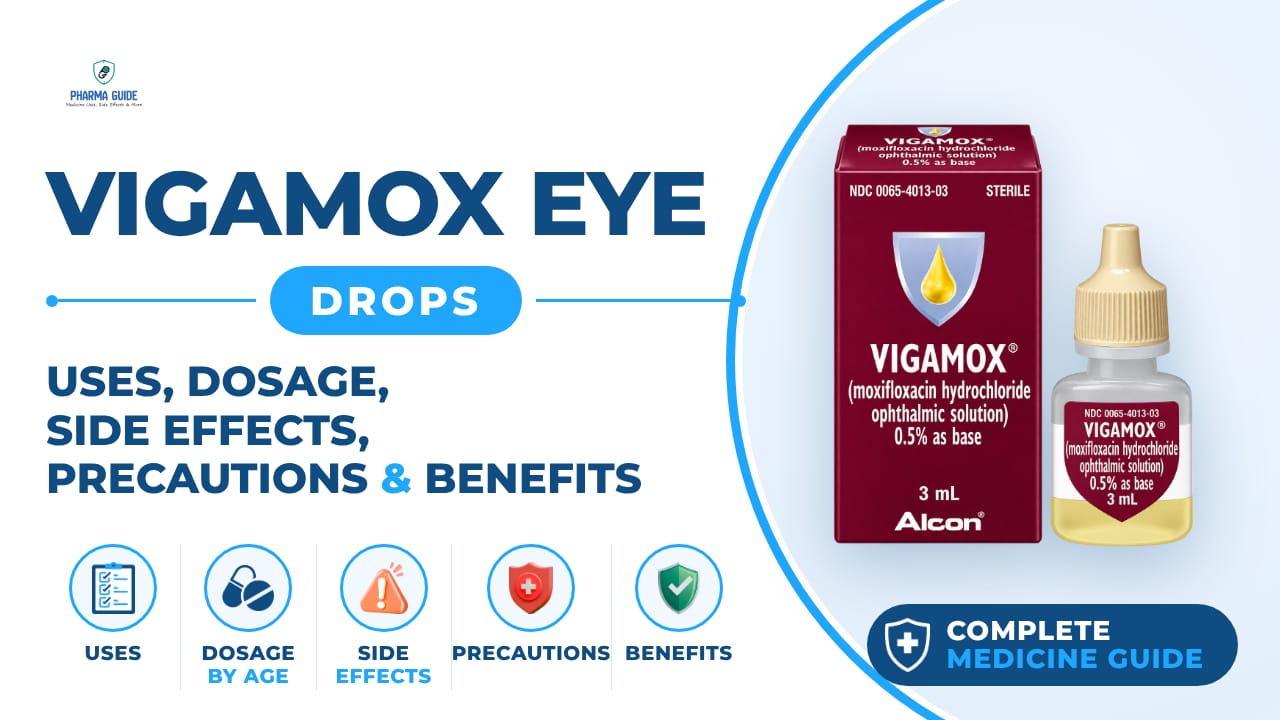
| Generic name | moxifloxacin hydrochloride |
|---|---|
| Drug class | Fluoroquinolone antibiotic (ophthalmic anti-infective) |
| Forms | Eye drops (ophthalmic solution) |
Quick overview
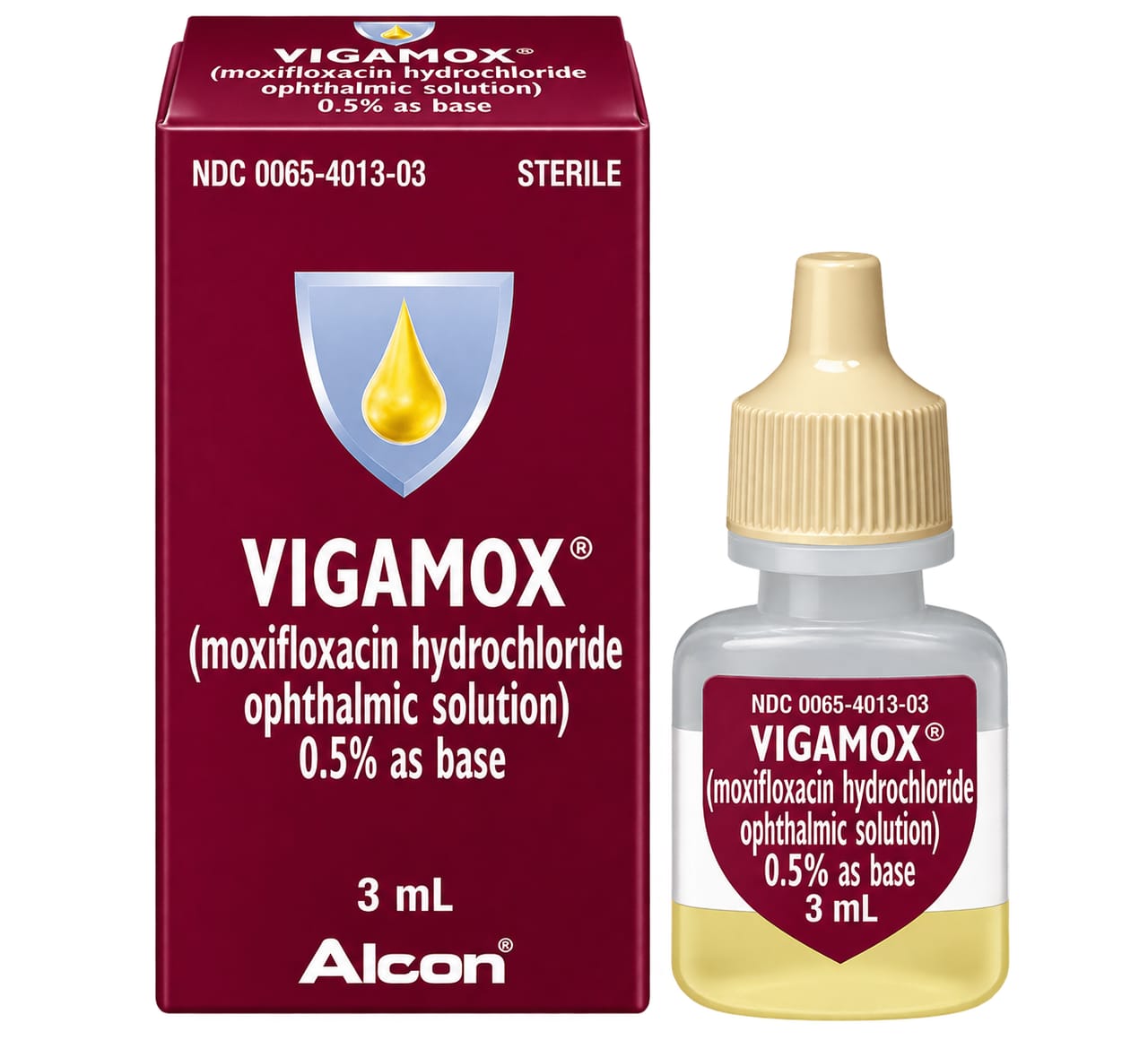
Vigamox Eye Drops contain moxifloxacin hydrochloride, a fluoroquinolone antibiotic used to treat bacterial infections of the eye. They are a prescription medicine that helps clear infections such as bacterial conjunctivitis by stopping the bacteria from multiplying. Vigamox is for use in the eye only and is typically used for a short, defined course of treatment.
What is Vigamox Eye Drops
Vigamox is a prescription eye drop that contains moxifloxacin, an antibiotic used to treat bacterial infections of the eye.
Vigamox Eye Drops uses
- Bacterial conjunctivitis (pink eye)
- Bacterial keratitis
- Pre-operative eye infections
- Post-operative eye infection prevention
- Corneal ulcers from bacterial infection
Benefits of Vigamox Eye Drops
- Helps reduce redness, discharge, irritation, and discomfort caused by susceptible bacteria.
- Provides direct antibiotic treatment at the site of infection.
- Can help clear the infection and support faster symptom improvement when used as prescribed.
How Vigamox Eye Drops works
Vigamox contains moxifloxacin, a type of antibiotic that stops bacteria from copying their DNA, which kills the bacteria causing the eye infection.
Vigamox Eye Drops dosage
Use exactly as prescribed by your doctor and follow all directions on your prescription label. Keep using the medicine even if your symptoms improve quickly; stopping early could let the infection come back or become resistant to treatment. This medicine will not treat a viral infection.
Wash your hands before using the eye drops. To apply, tilt your head back, pull down the lower eyelid to make a small pocket, and place a drop into it. Look downward and gently close your eyes for one to two minutes without blinking or rubbing the eye. Pressing gently at the corner of the eye near the nose can help keep the medicine from draining away.
Do not touch the dropper tip to your eye, fingers, or any surface to avoid contaminating it. Do not rinse the dropper. If using other eye medicines, wait at least five minutes between applying each one. Wait several minutes for your vision to clear before driving or using machinery.
Try to use the drops at the same times each day to help you remember. Continue using the medicine for the full time prescribed, even if symptoms go away after a few days. Tell your doctor if your condition does not improve within about a week.
Remove contact lenses before using the drops and ask your doctor how long to wait before putting them back in. If you miss a dose, use it as soon as you remember, but skip it if it is almost time for the next dose. Do not use two doses at once.
| Age group | Dose |
|---|---|
| Newborns <1 month | Use only when specifically prescribed by a clinician |
| Infants 1–12 months | 1 drop in affected eye(s) 3 times daily for 7 days |
| Children 1–11 years | 1 drop in affected eye(s) 3 times daily for 7 days |
| 12–17 years | 1 drop in affected eye(s) 3 times daily for 7 days |
| Adults & 65+ years | 1 drop in affected eye(s) 3 times daily for 7 days |
Available forms and strengths
- Eye drops (ophthalmic solution)
Side effects of Vigamox Eye Drops
Common
- Dry or watery eyes
- Eye pain, redness, or discomfort
- Blurred vision
- Cough
- Sore throat
- Runny nose
- Skin rash
- Itching
Serious
- Severe burning, stinging, or irritation after using the eye drops
- Signs of eye infection such as swelling, redness, severe discomfort, crusting, or drainage
- Reduced visual acuity
- Subconjunctival hemorrhage
- Eye redness (conjunctival hyperemia)
- Fever
- Ear infection (acute bacterial otitis media)
- Signs of a serious allergic reaction such as hives, difficulty breathing, or swelling of the face, lips, tongue, or throat
Warnings and precautions
- Do not use Vigamox if you have a viral or fungal eye infection, including herpes simplex — it only works against bacterial infections.
- Do not use this medicine if you've had an allergic reaction to it or similar antibiotics in the past.
- This medicine is for use in the eye only — it should never be injected.
- Serious and sometimes life-threatening allergic reactions have happened with this type of antibiotic, sometimes after just one dose. Stop using it and get medical help right away if you notice a rash or signs of an allergic reaction.
- Avoid wearing contact lenses while you have signs of a bacterial eye infection.
- Using this medicine for a long time may lead to new infections from germs that are not killed by it, including fungi.
- There isn't enough human data on using this medicine during pregnancy. Your doctor should weigh the benefits against possible risks to the baby before you use it.
- It isn't known how much of this medicine passes into breast milk, so caution is advised if you are breastfeeding.
- Your vision may be blurry for a short time after using the drops, so wait until your vision clears before driving or operating machinery.
Storage
- Store at 2–25°C (36–77°F) according to the product labeling.
- Keep the bottle tightly closed when not in use.
- Protect from excessive heat and direct sunlight.
- Do not freeze, and avoid touching the dropper tip to prevent contamination.
- Keep out of reach and sight of children and pets.
When to see a doctor
- Get emergency medical help if you have signs of a serious allergic reaction, such as hives, trouble breathing, or swelling of the face, lips, tongue, or throat.
- Stop using the drops and call your doctor right away if you have severe burning, stinging, or irritation, or signs of eye infection like swelling, redness, severe discomfort, crusting, or drainage.
- Contact your doctor if your symptoms don't improve or get worse, or if they haven't improved within about 7 days.
- If someone accidentally swallows this medicine, seek emergency medical attention or call your local poison control center.
- Stop use immediately and contact your doctor at the first sign of a rash or allergic reaction.
Alternatives
- Ciloxan (Ciprofloxacin) Eye Drops
- Ocuflox (Ofloxacin) Eye Drops
- Besivance (Besifloxacin) Eye Drops
- Tobramycin Eye Drops
Watch the video
FAQs
What is Vigamox Eye Drops used for?
Vigamox is a prescription eye drop used to treat bacterial infections of the eye, including bacterial conjunctivitis, bacterial keratitis, corneal ulcers, and pre- or post-operative eye infections.
How do you use Vigamox Eye Drops?
Wash your hands, tilt your head back, pull down the lower eyelid, and place one drop into the pocket. Close your eyes gently for one to two minutes without blinking or rubbing, and avoid touching the dropper tip to any surface.
What is the typical dosage for Vigamox Eye Drops?
For infants, children, teens, and adults, the typical dose is 1 drop in the affected eye(s) 3 times daily for 7 days, as prescribed by a doctor.
Can I wear contact lenses while using Vigamox?
You should remove contact lenses before using the drops and avoid wearing them while you have signs of a bacterial eye infection. Ask your doctor how long to wait before reinserting your lenses.
What are the serious side effects of Vigamox Eye Drops?
Serious side effects include severe burning, stinging, or irritation, signs of eye infection like swelling or crusting, reduced visual acuity, subconjunctival hemorrhage, and signs of a serious allergic reaction such as hives or difficulty breathing.
General information, not medical advice
Your prescriber and the leaflet in your pack know your situation. This page does not.
- Follow your prescriber and the leaflet
- Don't start, stop, or change a dose on your own
- Doses and warnings differ by country and product
Sources
- https://www.drugs.com/vigamox.html
- https://www.healio.com/clinical-guidance/drugs/vigamox
- https://www.marham.pk/medicines/vigamox-eye-drops
- DailyMed - VIGAMOX moxifloxacin hydrochloride solution label
Video
Related medicines
Besifloxacin Eye Drops: Uses, Dosage, Side Effects, Precautions and Alternates
Fluoroquinolone antibiotic (ophthalmic anti-infective)
Besifloxacin Eye Drops treat bacterial conjunctivitis by killing infection-causing bacteria. Learn dosage, side effects, contact lens precautions, and storage

Injectafer Injection: Uses, Dosage, Side Effects, Precautions and Alternates
Iron products
Injectafer (ferric carboxymaltose) treats iron deficiency anemia and heart failure-related iron deficiency via IV. Learn uses, dosage, side effects, and