
Safety
General information, not medical advice
Your prescriber and the leaflet in your pack know your situation. This page does not.
- Follow your prescriber and the leaflet
- Don't start, stop, or change a dose on your own
- Doses and warnings differ by country and product
Besivance Eye Drops: Uses, Dosage, Side Effects, Precautions and Alternates
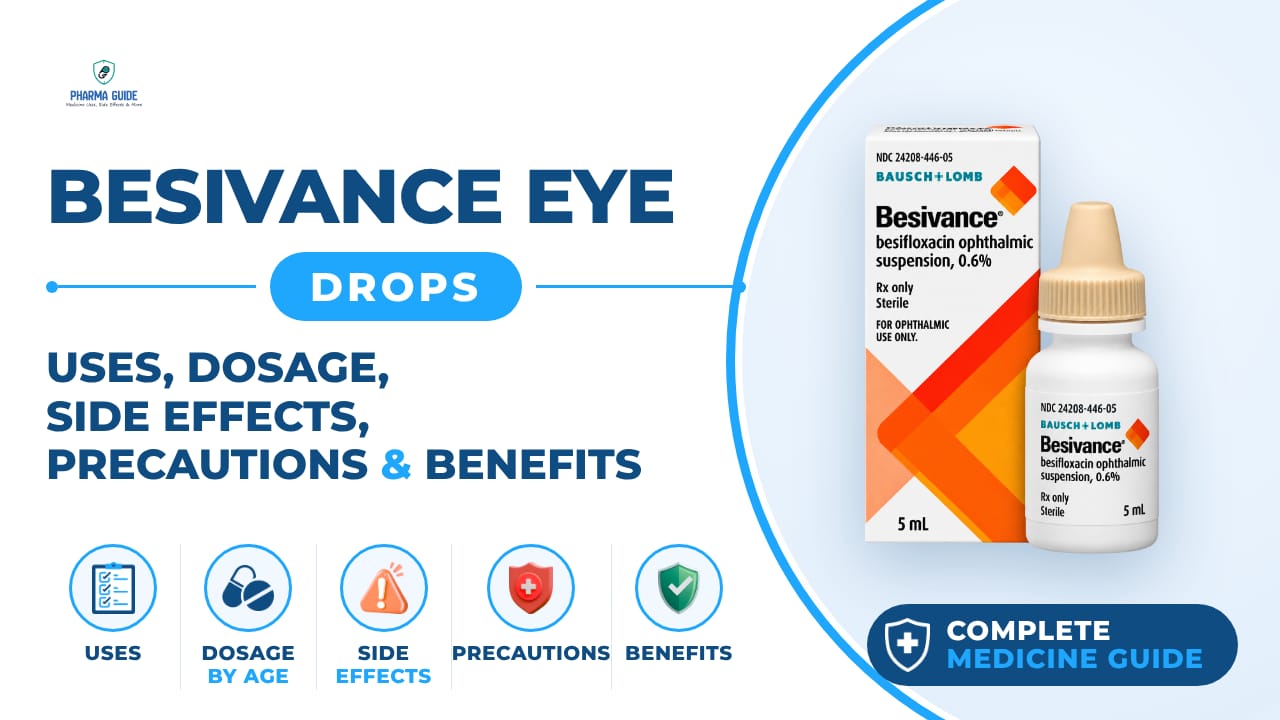
| Generic name | besifloxacin (besifloxacin HCl, besifloxacin hydrochloride, besifloxacin ophthalmic) |
|---|---|
| Drug class | Fluoroquinolone ophthalmic antibiotic (ophthalmic anti-infective) |
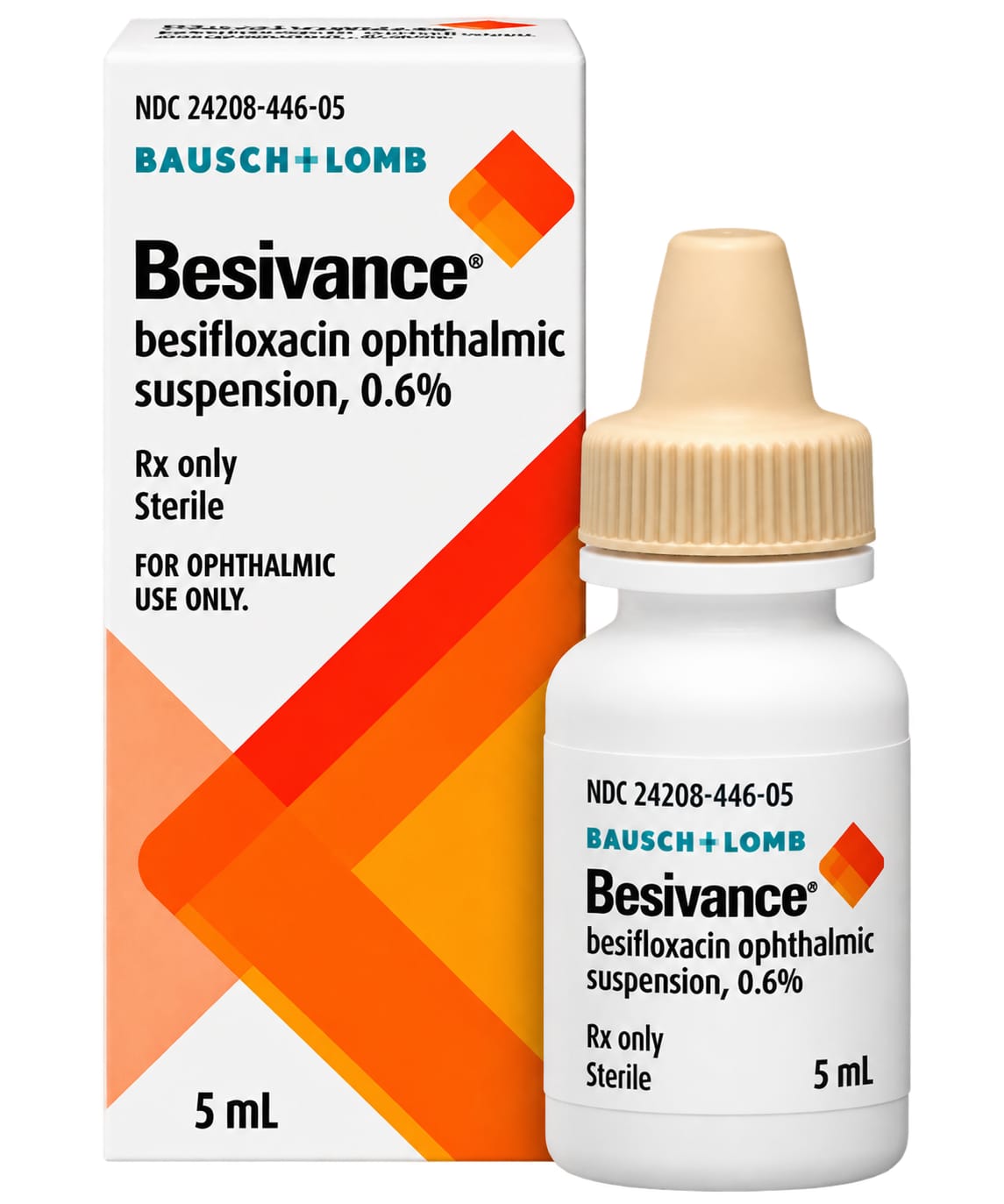
| Forms | 0.6% ophthalmic suspension (eye drops) |
Quick overview
Besivance Eye Drops contain besifloxacin, a fluoroquinolone ophthalmic antibiotic. They are a prescription medicine used to treat certain bacterial infections of the eye, such as bacterial conjunctivitis (pink eye), and are approved for people 1 year of age and older. Besivance works by stopping bacteria from creating and repairing their DNA, which blocks their growth and eventually kills them.
What is Besivance Eye Drops
Besivance is a prescription antibiotic eye drop used to treat certain bacterial infections of the eye, such as bacterial conjunctivitis (pink eye). It is approved for people 1 year of age and older. The generic name is besifloxacin (besifloxacin HCl, besifloxacin hydrochloride, besifloxacin ophthalmic), and it belongs to the fluoroquinolone ophthalmic antibiotic (ophthalmic anti-infective) drug class.
Besivance Eye Drops uses
- Treats bacterial conjunctivitis (pink eye), a condition where part of the eye is inflamed, often due to bacteria
- May be used for other conditions as determined by your healthcare provider
Benefits of Besivance Eye Drops
- Offers flexible dosing that can be given anywhere from 4 to 12 hours apart, which may be more convenient than a strict hourly schedule
- Designed to help the active ingredient stay on the surface of the eye to fight bacteria for up to 12 hours
How Besivance Eye Drops works
Besivance kills certain bacteria by stopping them from being able to create and repair their DNA, which blocks their growth and multiplication and eventually causes the bacteria to die.
Besivance Eye Drops dosage
Wash your hands before using the eye drops. Turn the closed bottle upside down and shake it once before each use. Tilt your head back, look up, and pull down your lower eyelid to make a small pocket, then place a drop into the pocket without letting the dropper tip touch your eye, fingers, or any other surface.
After placing the drop, look down and gently close your eyes for a minute or two, and press a finger gently at the inside corner of your eye near the nose to stop the medicine draining away. Do not touch the dropper tip to your eye or any surface, and do not inject the drops into the eye.
Do not wear contact lenses while your eye infection is being treated; ask your healthcare provider when it is safe to start wearing them again. If using other eye medicines, wait at least 5 minutes between products, and use drops before ointments.
Use the medicine for the full length of time prescribed, even if your symptoms improve or go away, to reduce the risk of the infection coming back or becoming resistant to treatment. If you miss a dose, use it as soon as you remember; if it is almost time for your next dose, skip the missed dose and do not double up.
This medicine has been studied for use in adults and in children 1 year of age and older; safety and effectiveness in infants under 1 year have not been established. No overall differences in safety have been seen between older adults and younger adults using this medicine.
| Age group | Dose |
|---|---|
| Under 1 year | Safety and effectiveness not established |
| 1–17 years | 1 drop in affected eye(s) 3 times daily for 7 days |
| 18–64 years | 1 drop in affected eye(s) 3 times daily for 7 days |
| 65+ years | 1 drop in affected eye(s) 3 times daily for 7 days |
Available forms and strengths
- 0.6% ophthalmic suspension (eye drops)
Side effects of Besivance Eye Drops
Common
- Eye redness
- Blurry vision
- Eye pain or irritation
- Eye itching
- Headache
- Swelling of the eye or eyelid
Serious
- Signs of a severe allergic reaction, such as breathing problems or wheezing, racing heart, fever or feeling generally unwell, swollen lymph nodes, swelling of the face, lips, mouth, tongue, or throat, trouble swallowing or throat tightness, itching, skin rash or hives, nausea or vomiting, dizziness or fainting, stomach cramps, or joint pain
- Drainage or crusting of the eye
- Severe eye irritation after using the drops
- Feeling like there is something in your eye
- Severe eye redness or swelling
- Fever or any signs of a new infection, which can happen with prolonged use as it may lead to infection with other germs such as fungi
Warnings and precautions
- Do not use Besivance unless it has been prescribed to you. Use it exactly as prescribed, and do not use it in larger amounts or for longer than recommended.
- Do not share this medicine with other people, even if they have the same condition, as it may harm them.
- Keep this medicine out of the reach of children.
- Only use this medicine on the surface of the eye. Do not let the dropper tip touch your eye, your finger, or any other surface, and do not inject it into the eye.
- Do not wear contact lenses while your eye infection is being treated with this medicine. Ask your healthcare provider when it is safe to start wearing them again.
- If the dropper tip becomes contaminated, it could cause an eye infection that may lead to vision loss or serious eye damage.
- Do not use this medicine without medical need, as unnecessary use or misuse of antibiotics can make the medicine less effective and increase the risk of bacteria becoming drug-resistant.
- It is not known if or how Besivance could affect pregnancy or harm an unborn baby. Tell your healthcare provider if you are or plan to become pregnant, so the benefits and risks can be discussed.
- It is not known if Besivance passes into breast milk. Tell your healthcare provider if you are breastfeeding or plan to breastfeed so they can advise you.
- There are no known interactions between Besivance and alcohol, but heavy drinking can slow your immune response and make it harder for your body to fight infection.
- This medicine may cause blurred vision or dizziness in some people. Do not drive or operate machinery if you experience these symptoms, and wait several minutes for your vision to clear before driving.
Storage
- Store at room temperature, between 59 F to 77 F (15 C to 25 C)
- Store in a cool, dry place
- Protect the medicine from light
- Store this medicine in an upright position away from moisture and heat
- Keep the bottle tightly closed when not in use
- Keep out of the reach of children and pets
- Do not flush medications down the toilet or pour them into a drain unless instructed to do so; properly discard this product when expired or no longer needed
When to see a doctor
- Stop using this medicine and get help right away if you notice signs of a serious allergic reaction, such as breathing trouble, wheezing, racing heart, fever, swelling of the face or throat, trouble swallowing, hives, or dizziness.
- Get emergency medical help if you notice hives, difficulty breathing, or swelling of your face, lips, tongue, or throat.
- Call your doctor right away if you have eye drainage or crusting, severe eye irritation, a feeling of something in your eye, severe eye redness or swelling, fever, or any signs of a new infection.
- Call your healthcare provider if your eye infection does not improve or gets worse.
- If someone accidentally uses too much of this medicine or swallows it, get emergency medical help right away or contact a poison control center.
Alternatives
- Tobramycin Eye Drops
- Moxifloxacin Eye Drops
- Ciprofloxacin Eye Drops
Watch the video
FAQs
What is Besivance Eye Drops used for?
Besivance is a prescription antibiotic eye drop used to treat bacterial conjunctivitis (pink eye) and may be used for other conditions as determined by your healthcare provider.
What is the dosage for Besivance Eye Drops?
For people 1 year and older, including adults and older adults, the typical dose is 1 drop in the affected eye(s) 3 times daily for 7 days. Safety and effectiveness have not been established in infants under 1 year.
Can I wear contact lenses while using Besivance?
No, you should not wear contact lenses while your eye infection is being treated with Besivance. Ask your healthcare provider when it is safe to start wearing them again.
What are the common side effects of Besivance Eye Drops?
Common side effects include eye redness, blurry vision, eye pain or irritation, eye itching, headache, and swelling of the eye or eyelid.
How should Besivance Eye Drops be stored?
Store at room temperature between 59 F to 77 F (15 C to 25 C) in a cool, dry place, upright and away from moisture, heat, and light, with the bottle tightly closed.
General information, not medical advice
Your prescriber and the leaflet in your pack know your situation. This page does not.
- Follow your prescriber and the leaflet
- Don't start, stop, or change a dose on your own
- Doses and warnings differ by country and product
Sources
- WebMD: Besivance (besifloxacin) - Uses, Side Effects, and More
- Drugs.com: Besivance Eye Drops
- Besivance.com - Bausch + Lomb official site
- Healio Drug Lookup: Besivance
- Practo Medicine Info: Besivance Eye Drops
Video
Related medicines

Injectafer Injection: Uses, Dosage, Side Effects, Precautions and Alternates
Iron products
Injectafer (ferric carboxymaltose) treats iron deficiency anemia and heart failure-related iron deficiency via IV. Learn uses, dosage, side effects, and

Gliclazide Tablet: Uses, Dosage, Side Effects, Precautions and Alternates
Sulfonylurea (hypoglycemic/antidiabetic agent)
Gliclazide Tablet is a sulfonylurea for type 2 diabetes that boosts insulin release. Learn about dosage, side effects, warnings, and precautions.