
Safety
General information, not medical advice
Your prescriber and the leaflet in your pack know your situation. This page does not.
- Follow your prescriber and the leaflet
- Don't start, stop, or change a dose on your own
- Doses and warnings differ by country and product
Betacap Tablet: Uses, Dosage, Side Effects, Precautions and Alternates
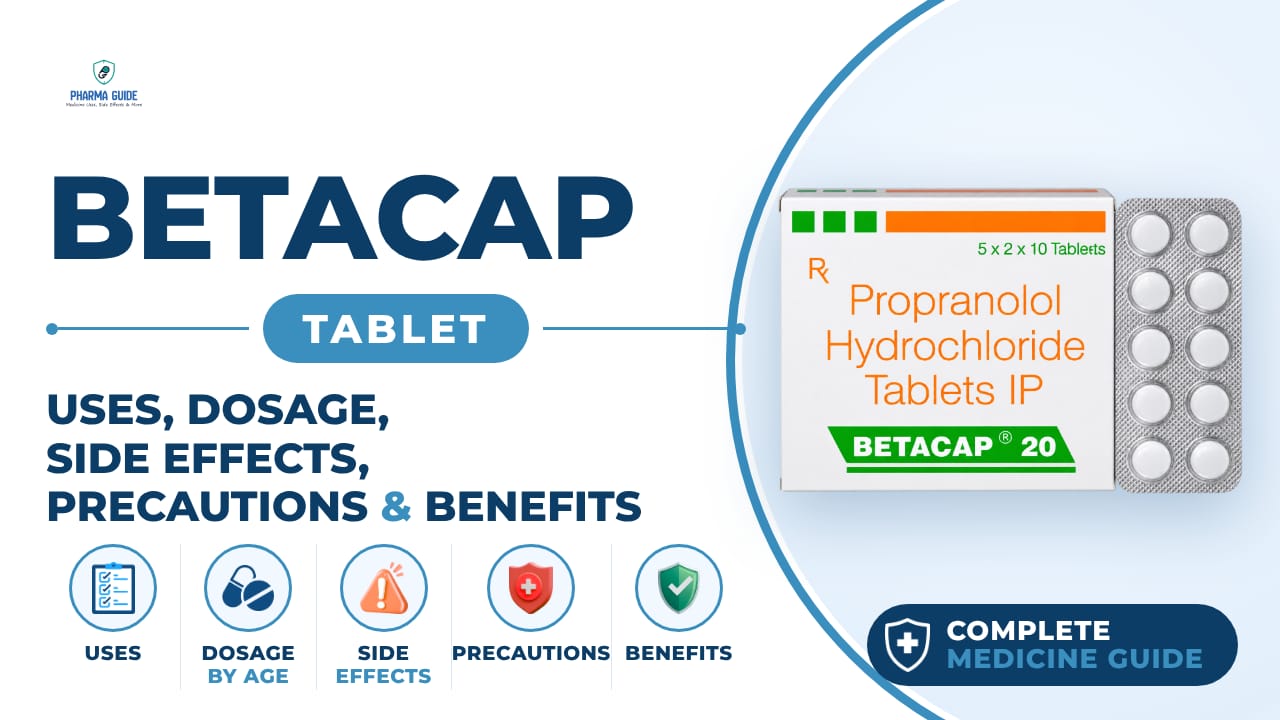
| Generic name | Propranolol |
|---|---|
| Drug class | Non-selective beta-blocker |
| Forms | Tablet, Capsule (sustained release/TR) |

Quick overview
Betacap Tablet contains propranolol, a non-selective beta-blocker used mainly for heart-related conditions and high blood pressure. It helps regulate heart rate, blood pressure, and blood vessel function, and is also used for conditions like migraine prevention, tremor, and anxiety symptoms. As with all medicines, it carries possible side effects and precautions, so it should be used exactly as prescribed by a doctor.
What is Betacap Tablet
Betacap is a tablet containing propranolol, a non-selective beta-blocker used mainly for heart and blood pressure conditions.
Betacap Tablet uses
- Hypertension (high blood pressure)
- Angina (chest pain)
- Cardiac arrhythmias (irregular heartbeats)
- Prevention of migraine
- Essential tremor
- Anxiety symptoms (such as performance anxiety)
- Prevention of bleeding from oesophageal varices
- Adjunct treatment in hyperthyroidism/thyrotoxicosis
- Pheochromocytoma
- Hypertrophic subaortic stenosis
- Improving survival after a heart attack
Benefits of Betacap Tablet
- Lowers high blood pressure
- Reduces chest pain due to angina
- Helps control fast or irregular heartbeats
- Prevents migraine attacks
- Reduces tremors and physical symptoms of anxiety
- Improves exercise tolerance
How Betacap Tablet works
Propranolol blocks beta receptors in the heart and blood vessels. This slows the heart rate, reduces the force of heart contractions, relaxes blood vessels, and lowers blood pressure. It also stabilizes the heart's electrical activity to help control irregular heartbeats, and reduces renin release from the kidneys, which further helps lower blood pressure.
Betacap Tablet dosage
Take exactly as your doctor prescribed; do not change the dose or stop early on your own. Swallow the tablet whole with a glass of water; do not crush or chew it. Try to take your doses at the same time each day to keep a steady level of medicine in your body.
It may be taken with or without food, but take it the same way each time for consistency. Some sources advise taking it on an empty stomach or before meals, so follow your doctor's specific instructions.
Do not stop taking this medicine suddenly without talking to your doctor, as this can make your condition worse or cause your heart rate or blood pressure to rise sharply.
If you miss a dose, take it as soon as you remember; if it is almost time for your next dose, skip the missed one and continue your regular schedule. Do not double up on doses.
| Age group | Dose |
|---|---|
| Children | Dose based on body weight and medical condition (as prescribed) |
| Adults (18–64 Years) | 20 mg once or twice daily, adjusted according to condition |
| Older Adults (65+ Years) | 10–20 mg once daily initially, adjusted based on response |
Available forms and strengths
- Tablet
- Capsule (sustained release/TR)
Side effects of Betacap Tablet
Common
- Fatigue
- Dizziness
- Slow heart rate (bradycardia)
- Low blood pressure
- Cold hands or feet
- Nausea or vomiting
- Diarrhoea
- Sleep disturbances
- Vivid dreams
- Stomach pain or indigestion
- Weight gain
Serious
- Difficulty breathing or wheezing
- Skin blistering
- Irregular heartbeat
- Swelling of the face or lips
- Rash
Warnings and precautions
- This medicine should not be used by people with asthma or COPD with bronchospasm, a very slow heartbeat, certain heart block disorders, cardiogenic shock, or uncontrolled heart failure unless a specialist advises it.
- It may hide the warning signs of low blood sugar in people with diabetes, so blood sugar should be checked regularly.
- Use caution if you have peripheral vascular disease, depression, thyroid disorders, or a tendency toward bronchospasm.
- Do not stop this medicine suddenly, as it can worsen chest pain or trigger irregular heartbeats.
- Tell your doctor you are taking this medicine before any surgery or anaesthesia.
- Do not take this medicine if you have a known allergy to it, a very slow heart rate, certain heart block disorders, uncontrolled heart failure, or severe asthma.
- This medicine is not recommended for people with congestive heart failure, cardiogenic shock, or severe bradycardia because it can worsen these conditions.
- Children under 18 should only be given this medicine under medical supervision.
- Older adults should use this medicine under medical supervision, as they may be more sensitive to its side effects, especially those affecting the liver and kidneys.
- Use this medicine with caution during pregnancy and only after talking to your doctor, as it may affect the baby's development.
- This medicine can pass into breast milk, so talk to your doctor about the risks and benefits before breastfeeding.
- Use with caution if you have kidney problems, since the medicine is removed from the body through urine and could build up.
- Use with caution if you have liver problems, since this medicine is broken down in the liver.
- Avoid alcohol while taking this medicine, as it can add to the blood-pressure-lowering effect and cause headaches, dizziness, fainting, or changes in heart rate.
- This medicine may cause dizziness or tiredness, so avoid driving or operating machinery until you know how it affects you.
Storage
- Store below 25°C in a cool, dry place away from moisture and direct light.
- Keep out of reach of children.
- Some sources advise storing below 30°C and protecting from light and moisture.
- Use the medicine before the expiry date on the pack.
When to see a doctor
- Stop the medicine and get medical help right away if you develop a rash, swelling of the face or lips, wheezing, or trouble breathing.
- Tell your doctor if you notice increased swelling in your legs or ankles, sudden weight gain, or sudden shortness of breath, since these could be signs of heart failure.
- If you take too much of this medicine, do not wait for symptoms — go to the nearest emergency department right away and bring the medicine pack with you.
- Seek emergency medical care if you suspect you have taken too much of this medicine.
Alternatives
- Atenolol
- Bisoprolol
- Nebivolol
Watch the video
FAQs
What is Betacap Tablet used for?
Betacap Tablet, containing propranolol, is used for hypertension, angina, cardiac arrhythmias, migraine prevention, essential tremor, anxiety symptoms, and several other heart-related conditions.
How does Betacap Tablet work?
Propranolol blocks beta receptors in the heart and blood vessels, slowing the heart rate, reducing the force of heart contractions, relaxing blood vessels, lowering blood pressure, and stabilizing the heart's electrical activity.
What is the dose of Betacap Tablet for adults?
Adults aged 18-64 years are typically given 20 mg once or twice daily, adjusted according to the condition being treated, as prescribed by a doctor.
Can I stop taking Betacap Tablet suddenly?
No, you should not stop taking this medicine suddenly without talking to your doctor, as this can worsen your condition or cause your heart rate or blood pressure to rise sharply.
What are the common side effects of Betacap Tablet?
Common side effects include fatigue, dizziness, slow heart rate, low blood pressure, cold hands or feet, nausea or vomiting, diarrhoea, sleep disturbances, and weight gain.
General information, not medical advice
Your prescriber and the leaflet in your pack know your situation. This page does not.
- Follow your prescriber and the leaflet
- Don't start, stop, or change a dose on your own
- Doses and warnings differ by country and product
Sources
- Manufacturer labeling/pack insert, established medical literature, standard pharmacology texts
- Indian drug information resources
- Central Drugs Standard Control Organisation (CDSCO), Ministry of Health & Family Welfare, Government of India, approved drug and schedule listings.
- National List of Essential Medicines (NLEM) 2022, Government of India.
- Manufacturer's package insert / prescribing information for Betacap 20 Tablet.
- World Health Organization, ATC/DDD classification and Model Formulary for the active ingredient.
- NHS UK. Propranolol.
- U.S. Food and Drug Administration. Propranolol Hydrochloride Label FDA.
- Propranolol. DrugBank Online.
Video
Related medicines

Injectafer Injection: Uses, Dosage, Side Effects, Precautions and Alternates
Iron products
Injectafer (ferric carboxymaltose) treats iron deficiency anemia and heart failure-related iron deficiency via IV. Learn uses, dosage, side effects, and

Gliclazide Tablet: Uses, Dosage, Side Effects, Precautions and Alternates
Sulfonylurea (hypoglycemic/antidiabetic agent)
Gliclazide Tablet is a sulfonylurea for type 2 diabetes that boosts insulin release. Learn about dosage, side effects, warnings, and precautions.