
Safety
General information, not medical advice
Your prescriber and the leaflet in your pack know your situation. This page does not.
- Follow your prescriber and the leaflet
- Don't start, stop, or change a dose on your own
- Doses and warnings differ by country and product
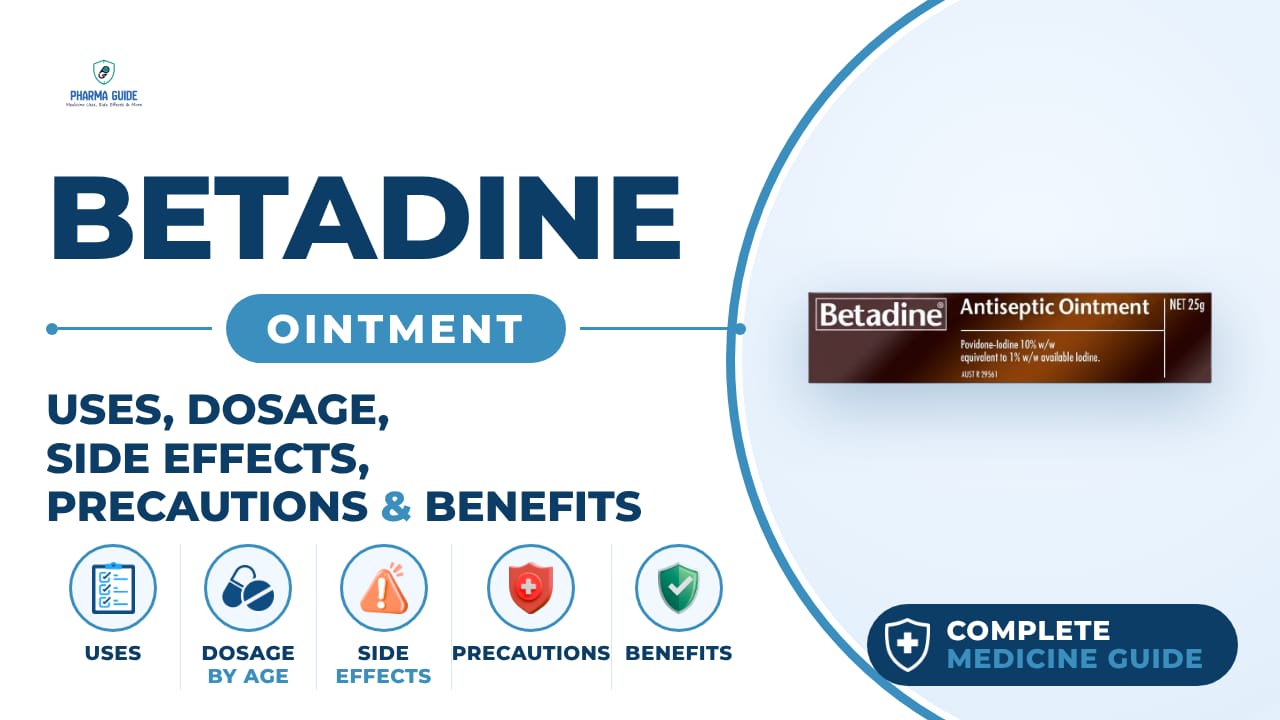
Betadine Ointment: Uses, Dosage, Side Effects, Precautions and Alternates
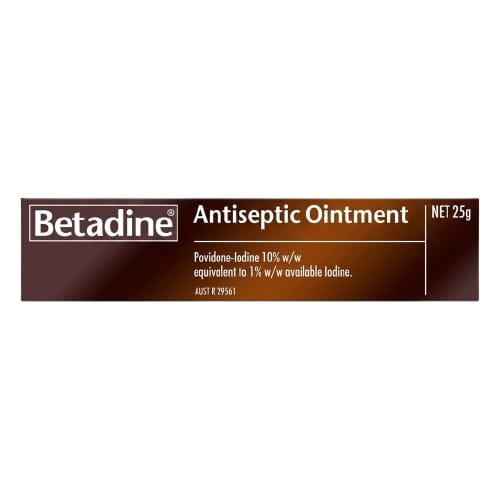
| Generic name | Povidone Iodine |
|---|---|
| Drug class | Antiseptic and germicides |
| Forms | Ointment, Liquid, Aerosol powder, Cream, Spray, Swab, Soap |
Quick overview
Betadine Ointment (Povidone Iodine) is a topical antiseptic from the antiseptic and germicide drug class. It is used on the skin to treat and prevent infection in minor wounds, cuts, and burns. It works by killing germs on the skin to help stop infection from spreading.
What is Betadine Ointment
Betadine Ointment is a topical antiseptic used on the skin to treat and prevent infection in minor wounds, cuts, and burns.
Betadine Ointment uses
- Treating and preventing infection from minor wounds and cuts
- Treating common skin infections such as infections of the skin around the nails
- Preventing infection in minor burns, cuts and abrasions
- Helping prevent infection and promote healing in skin wounds, pressure sores, or surgical incisions
Benefits of Betadine Ointment
- Helps prevent infection in minor wounds
- Kills many bacteria and fungi
- Helps protect cuts and abrasions from infection
- Supports wound care for minor burns
How Betadine Ointment works
Betadine Ointment is an antiseptic that works by killing germs on the skin, which helps stop infection from spreading.
Betadine Ointment dosage
For use on the skin only, not for internal use. Clean and dry the affected area before applying. Apply a small, even layer of the ointment to the affected area as instructed by your doctor or the product label. The treated area may be covered with a dressing or bandage. Avoid direct contact with the eyes and nose; rinse thoroughly with water if this happens by accident. Do not apply more or less than the amount recommended on the label. Avoid using over large areas of skin or for a long period of time, as this can increase the risk of side effects. Do not use on deep wounds, large areas of broken skin, or severe burns. Do not heat the ointment before applying it. Usage does not depend on food timings.
| Age group | Dose |
|---|---|
| Under 18 years | Not recommended |
| 18–64 years | Apply 1–2 times/day |
| 65+ years | Apply 1–2 times/day |
Available forms and strengths
- Ointment
- Liquid
- Aerosol powder
- Cream
- Spray
- Swab
- Soap
Side effects of Betadine Ointment
Common
- Burning sensation, redness, or irritation at the site of application
- Red or inflamed skin
- Peeling skin
- Dry skin
- Skin discolouration
Serious
- Skin rash, itching or swelling especially of the face, tongue, or throat
- Severe dizziness or breathing difficulty (signs of allergic reaction)
- Swelling, pain, warmth, redness, oozing, or other signs of infection
- Blistering or crusting
- Severe irritation, itching, or burning
- Kidney problems, including difficulty urinating, thirst, dry mouth, and back pain
- Thyroid disorders, with symptoms such as weight loss, increased appetite, sweating, lack of energy, weight gain, or a racing pulse
- Increased acid in the blood, with symptoms like shortness of breath, confusion, and lethargy
Warnings and precautions
- Do not use this ointment if you have ever had a thyroid problem, such as goitre or Hashimoto's thyroiditis, without checking with your doctor, since large amounts of iodine can affect thyroid function.
- Do not use this ointment on large burn areas.
- Do not use in children younger than 2 years old.
- Do not use if the tube seal is broken or after the expiry date.
- Avoid using this ointment over a large area of skin or for a long period of time, since this raises the risk of side effects.
- Do not use on deep wounds, large areas of broken skin, or severe burns.
- If you take lithium, avoid using this ointment at the same time, as it can affect thyroid function.
- It is not known if this medicine is safe to use during pregnancy, so check with your doctor before using it.
- This medicine is not recommended while breastfeeding unless your doctor says it is necessary. If breastfeeding, avoid applying it to areas that may touch the baby's mouth.
- If you have ever had a kidney problem, check with your doctor first, since this product may cause too much iodine to be absorbed into your blood.
- It is not known how this medicine interacts with alcohol, so it's best to check with your doctor before drinking alcohol while using it.
- This medicine does not affect your ability to drive or use machines.
Storage
- Keep your medicine in a place where the temperature stays below 25°C
- Store it in a cool dry place away from moisture, heat or sunlight; for example, do not store it in the bathroom or near a sink, or in the car or on window sills
- Keep it where young children cannot reach it
- Medicines should not be disposed of via wastewater or household waste
- If you no longer need to use this medicine or it is out of date, take it to any pharmacy for safe disposal
- Do not use this medicine after the expiry date
When to see a doctor
- Get medical help right away if you notice signs of an allergic reaction, such as skin rash, itching or swelling of the face, tongue, or throat, severe dizziness, or trouble breathing.
- Stop using the ointment and call your doctor right away if you notice swelling, pain, warmth, redness, oozing, blistering, crusting, or severe irritation, itching, or burning.
- Seek emergency medical help if this ointment is accidentally swallowed, even if there are no symptoms.
- Talk to your doctor if you notice redness, peeling, dryness, or discoloration of the skin that worries you.
Alternatives
- Neosporin Ointment
- Fucidin Ointment
- Bactroban Ointment
Watch the video
FAQs
What is Betadine Ointment used for?
It is used to treat and prevent infection in minor wounds, cuts, and burns, including skin infections around the nails and helping promote healing in pressure sores or surgical incisions.
How does Betadine Ointment work?
It is an antiseptic that works by killing germs on the skin, which helps stop infection from spreading.
How should Betadine Ointment be applied?
Clean and dry the affected area, then apply a small, even layer as instructed by your doctor or the product label. The area may be covered with a dressing, and it should be applied 1-2 times a day for adults and elderly users.
What are the common side effects of Betadine Ointment?
Common side effects include a burning sensation, redness or irritation at the application site, red or inflamed skin, peeling, dryness, and skin discolouration.
Who should not use Betadine Ointment?
It should not be used by children younger than 2 years old, on deep wounds, large areas of broken skin, or severe burns, and people with thyroid or kidney problems should check with their doctor first.
General information, not medical advice
Your prescriber and the leaflet in your pack know your situation. This page does not.
- Follow your prescriber and the leaflet
- Don't start, stop, or change a dose on your own
- Doses and warnings differ by country and product
Sources
Video
Related medicines

Injectafer Injection: Uses, Dosage, Side Effects, Precautions and Alternates
Iron products
Injectafer (ferric carboxymaltose) treats iron deficiency anemia and heart failure-related iron deficiency via IV. Learn uses, dosage, side effects, and

Gliclazide Tablet: Uses, Dosage, Side Effects, Precautions and Alternates
Sulfonylurea (hypoglycemic/antidiabetic agent)
Gliclazide Tablet is a sulfonylurea for type 2 diabetes that boosts insulin release. Learn about dosage, side effects, warnings, and precautions.