
Safety
General information, not medical advice
Your prescriber and the leaflet in your pack know your situation. This page does not.
- Follow your prescriber and the leaflet
- Don't start, stop, or change a dose on your own
- Doses and warnings differ by country and product
Betahistine Dihydrochloride Tablet: Uses, Dosage, Side Effects, Precautions and Alternates
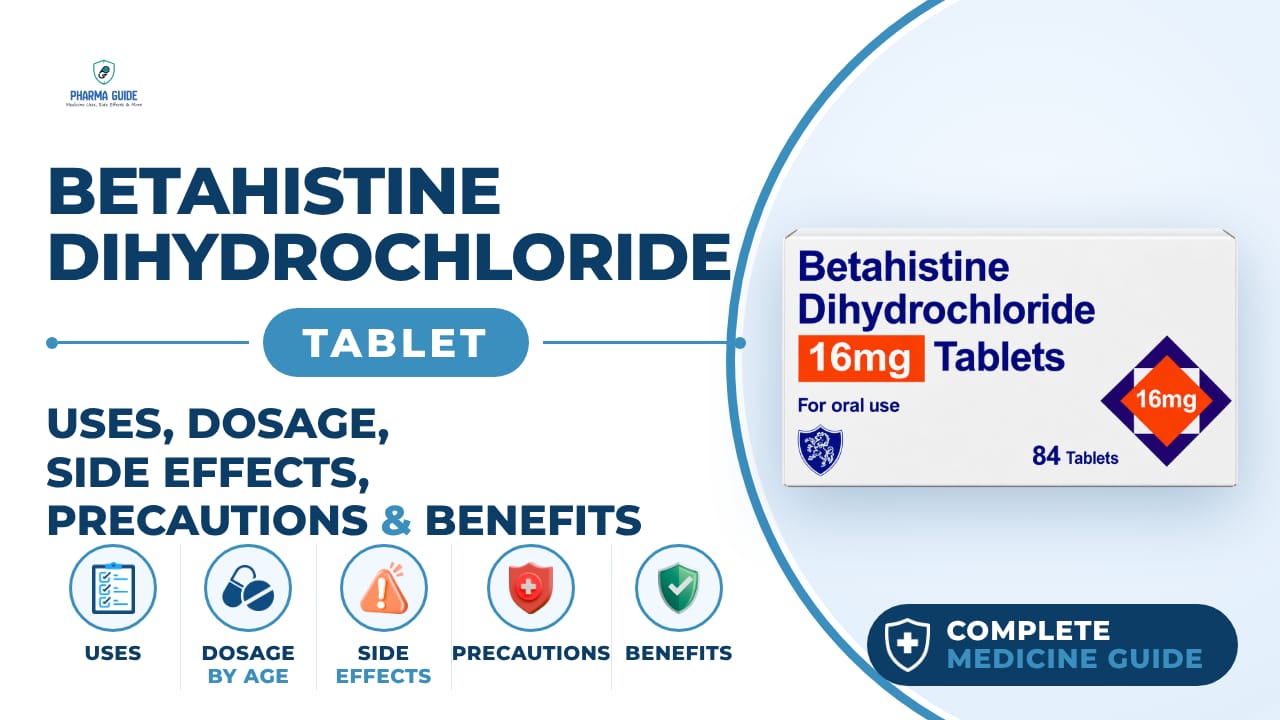
| Generic name | Betahistine Dihydrochloride |
|---|---|
| Drug class | Anti-vertigo Agent |
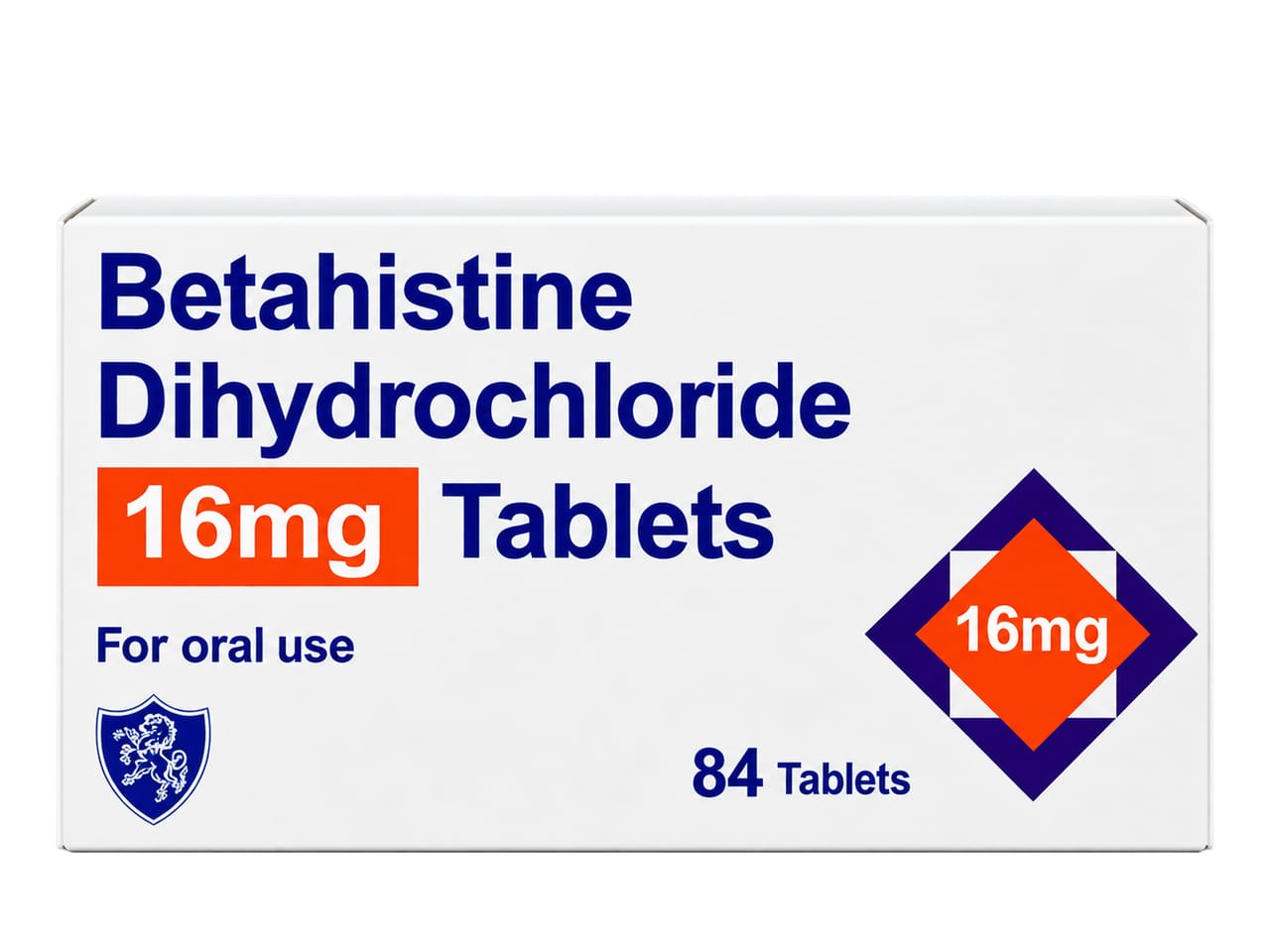
| Forms | Tablets (8 mg, 16 mg, and 24 mg) |
Quick overview
Betahistine Dihydrochloride Tablet is a prescription anti-vertigo medicine used to reduce the vertigo, dizziness, ringing in the ears, hearing loss, and nausea associated with Ménière's disease. It is a histamine-analogue medicine thought to work by improving blood flow in the inner ear. It is taken by mouth, usually several times a day, and is not recommended for use in children under 18 years of age.
What is Betahistine Dihydrochloride Tablet
Betahistine is a prescription tablet used to reduce vertigo (dizziness) episodes linked to Ménière's disease. It is described as a histamine-analogue medicine that helps improve blood flow in the inner ear.
Betahistine Dihydrochloride Tablet uses
- Reducing the episodes of recurrent vertigo associated with Ménière's disease
- Managing dizziness (vertigo), ringing in the ears (tinnitus), hearing loss, and nausea linked to inner ear problems
- Sometimes used to support recovery and manage dizziness after inner ear surgery
- Treats vertigo associated with Ménière's syndrome
- Helps reduce tinnitus
Benefits of Betahistine Dihydrochloride Tablet
- Helps reduce how often vertigo attacks happen and how severe they are
- May help quiet ringing or buzzing in the ears
- Supports inner ear balance mechanisms, helping with daily stability
- Helps reduce recurring vertigo symptoms
- May decrease the frequency and severity of Ménière's attacks
- Provides oral treatment with divided daily dosing
- Generally does not cause significant sedation
How Betahistine Dihydrochloride Tablet works
Betahistine is thought to work by improving blood flow in the inner ear, which lowers the build-up of pressure. This pressure build-up is thought to cause the dizziness, nausea, ringing in the ears, and hearing problems seen in Ménière's disease.
Betahistine Dihydrochloride Tablet dosage
Take the medicine exactly as your doctor has instructed, at about the same time every day. It can be taken with or without food; if it causes an upset stomach, take it with meals. Swallow the tablet whole with a full glass of water; do not chew, crush, or break it. If you miss a dose, skip it and take your next dose at the usual time — do not take a double dose to make up for a missed one. This medicine is not recommended for use in children below 18 years of age, and caution is advised in elderly patients, though a dosage adjustment is unlikely to be needed.
| Age group | Dose |
|---|---|
| Under 17 years | Not recommended; safety and effectiveness are not established |
| 18–39 years | Usually 8–16 mg three times daily |
| 40–64 years | Usually 8–16 mg three times daily |
Available forms and strengths
Tablets (8 mg, 16 mg, and 24 mg)
Side effects of Betahistine Dihydrochloride Tablet
Common
- Nausea
- Dyspepsia (indigestion)
- Headache
- Mild stomach pain or discomfort
- Bloating or abdominal distension
- Vomiting
Serious
- Severe allergic reaction: rash, hives, itching, swelling of the face, lips, tongue, or throat, difficulty swallowing or breathing
- Signs of worsening asthma, such as difficulty breathing or wheezing
- Severe stomach pain or signs of a stomach ulcer
- Drowsiness, heart palpitations, or light-headedness/faintness/dizziness from a drop in blood pressure (reported after marketing, relationship to the drug unclear)
Warnings and precautions
- Do not take this medicine if you are allergic to betahistine or any of its ingredients, have a peptic (stomach) ulcer or a history of one, or have a rare adrenal gland tumor called pheochromocytoma.
- Use with caution if you have asthma, since some patients with bronchial asthma have shown intolerance to this medicine.
- People with a history of peptic ulcers have experienced worsening of symptoms while using this medicine.
- This medicine is not recommended for children and adolescents under 18 years old because of insufficient safety and effectiveness data.
- Antihistamine allergy medicines may reduce the effect of this medicine, and this medicine may reduce the effect of antihistamines.
- Medicines used for depression or Parkinson's disease called MAO inhibitors may increase the amount of this medicine in your bloodstream, and your doctor may need to change your dose.
- The safety of this medicine during pregnancy has not been established. It should not be used during pregnancy unless the potential benefits to the mother outweigh the potential risks to the baby.
- There are no human studies on whether this medicine passes into breast milk. The importance of the drug to the mother should be weighed against the benefits of nursing and potential risks to the child.
- No data are available on the effects of this medicine in people with kidney problems, so caution is advised.
- Because this medicine is processed mainly by the liver, caution is advised in people with liver problems, since no data are available in this group.
- There is no specific restriction on alcohol with this medicine, though some patients have reported improvement in their Ménière's disease symptoms after stopping alcohol.
- This medicine itself is not likely to affect your ability to drive, but the vertigo condition being treated can make you feel dizzy or sick and can affect your ability to drive or use machines. Do not drive or do hazardous activities if you have these symptoms.
Storage
- Store tablets at controlled room temperature (15 to 30 °C)
- Keep in a safe place out of the reach and sight of children
When to see a doctor
- Get immediate medical help and stop taking the drug if you notice signs of a severe allergic reaction, such as rash, hives, itching, swelling of the face, lips, tongue, or throat, or difficulty swallowing or breathing.
- If you think you or someone you are caring for has taken too much of this medicine, contact a healthcare professional or hospital emergency department immediately, even if there are no symptoms.
- Tell your doctor if any mild side effects affect you severely.
Alternatives
- Cinnarizine
- Prochlorperazine
- Meclizine
Watch the video
FAQs
What is Betahistine Dihydrochloride Tablet used for?
It is used to reduce recurrent vertigo, dizziness, tinnitus, hearing loss, and nausea associated with Ménière's disease, and sometimes to manage dizziness after inner ear surgery.
How does Betahistine Dihydrochloride Tablet work?
It is thought to work by improving blood flow in the inner ear, which lowers pressure build-up believed to cause dizziness, nausea, ringing in the ears, and hearing problems in Ménière's disease.
What is the usual dosage of Betahistine Dihydrochloride Tablet?
For adults aged 18 to 64, the usual dose is 8–16 mg three times daily. It is not recommended for anyone under 18 years of age.
What are the common side effects of Betahistine Dihydrochloride Tablet?
Common side effects include nausea, indigestion, headache, mild stomach pain or discomfort, bloating, and vomiting.
Who should not take Betahistine Dihydrochloride Tablet?
It should not be taken by people allergic to betahistine, those with a peptic ulcer or history of one, or those with a rare adrenal gland tumor called pheochromocytoma, and it is not recommended for children under 18.
General information, not medical advice
Your prescriber and the leaflet in your pack know your situation. This page does not.
- Follow your prescriber and the leaflet
- Don't start, stop, or change a dose on your own
- Doses and warnings differ by country and product
Sources
Video
Related medicines

Injectafer Injection: Uses, Dosage, Side Effects, Precautions and Alternates
Iron products
Injectafer (ferric carboxymaltose) treats iron deficiency anemia and heart failure-related iron deficiency via IV. Learn uses, dosage, side effects, and

Gliclazide Tablet: Uses, Dosage, Side Effects, Precautions and Alternates
Sulfonylurea (hypoglycemic/antidiabetic agent)
Gliclazide Tablet is a sulfonylurea for type 2 diabetes that boosts insulin release. Learn about dosage, side effects, warnings, and precautions.