
Safety
General information, not medical advice
Your prescriber and the leaflet in your pack know your situation. This page does not.
- Follow your prescriber and the leaflet
- Don't start, stop, or change a dose on your own
- Doses and warnings differ by country and product
Betaloc Tablet: Uses, Dosage, Side Effects, Precautions and Alternates
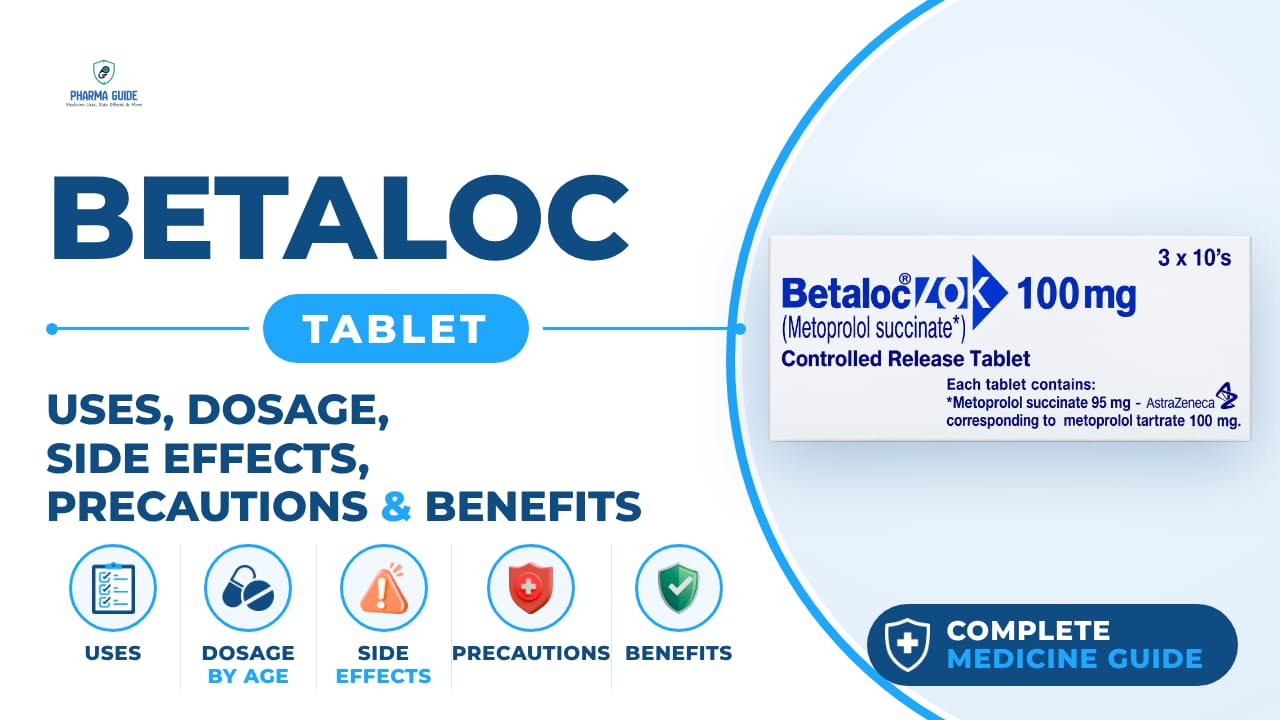
| Generic name | Metoprolol tartrate |
|---|---|
| Drug class | Beta-blocker (cardioselective beta blocker) |
| Forms | Tablet (50 mg), Tablet (100 mg), Tablet (25 mg), Injection |
Quick overview
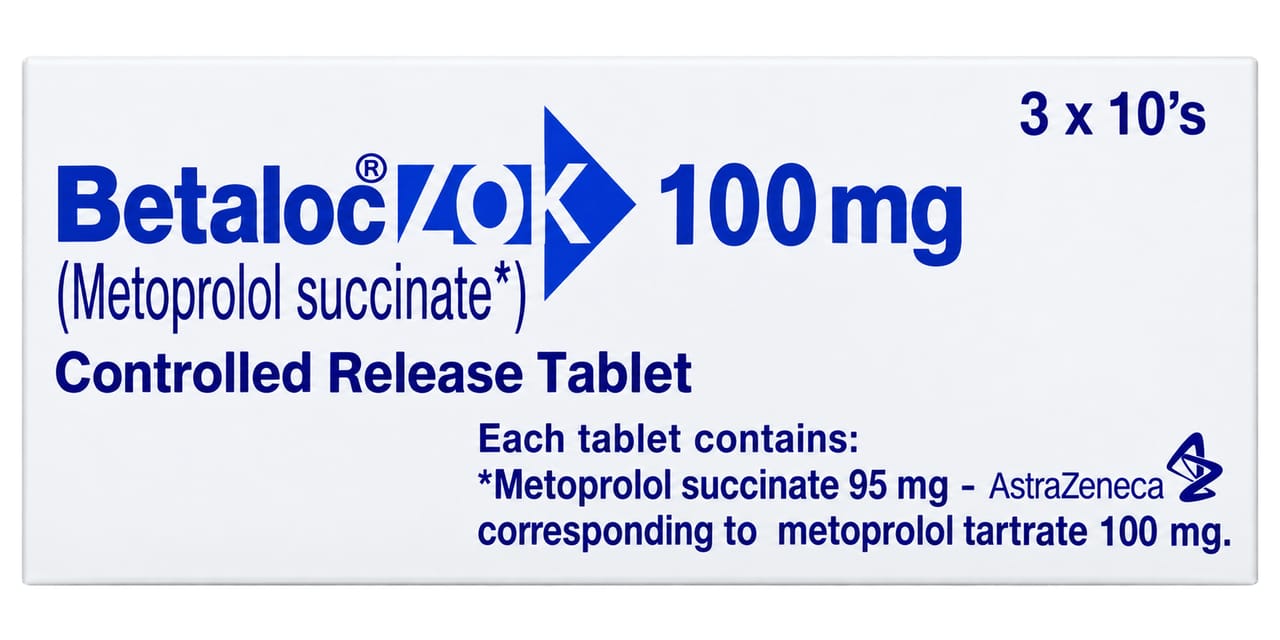
Betaloc Tablet contains metoprolol tartrate, a cardioselective beta-blocker used to treat heart and blood pressure conditions. It is used to lower high blood pressure, prevent angina, manage irregular heart rhythms, support heart failure treatment, prevent migraine, and help after a heart attack. It works by slowing the heart rate and reducing the heart's workload. It is available as 25 mg, 50 mg, and 100 mg tablets, as well as an injection.
What is Betaloc Tablet
Betaloc tablets contain the active ingredient metoprolol tartrate, a medicine that belongs to a group called beta-blockers. It is used to treat heart and blood pressure conditions and comes in 50 mg and 100 mg tablets.
Betaloc Tablet uses
- Lower high blood pressure (hypertension)
- Prevent angina (chest pain)
- Treat or prevent heart attacks, or reduce the risk of heart complications after a heart attack
- Prevent migraine headaches
- Treat certain types of irregular or fast heart rhythms (arrhythmias)
- Support management of heart failure
- Manage symptoms of an overactive thyroid gland (thyrotoxicosis)
Benefits of Betaloc Tablet
- Helps reduce blood pressure and lower the risk of stroke, heart attack, and other heart or kidney problems
- Reduces the frequency and severity of angina chest pain and may improve ability to exercise
- Helps stabilize heart rate and normalize abnormal heart rhythms
- May lower the risk of death after a heart attack
- Reduces the frequency of migraine attacks
How Betaloc Tablet works
Betaloc works by affecting how the body responds to certain nerve signals, especially in the heart. This slows the heart rate, makes the heart beat with less force, reduces the heart's need for oxygen, and helps widen blood vessels, which lowers blood pressure and helps the heart beat more regularly.
Betaloc Tablet dosage
Swallow the tablet with a glass of fluid. Take your medicine at about the same time each day, before or after food, to help you remember and get the best effect. Tablets can be taken with or without food. Do not crush or mix the tablet with other substances; swallow it whole. Keep taking the medicine even if you feel well, since it controls the condition but does not cure it. Do not stop taking this medicine suddenly without checking with your doctor; the dose usually needs to be reduced gradually over one to two weeks. If you miss a dose, skip it if it is almost time for your next dose, otherwise take it as soon as you remember, and do not take a double dose. Not recommended for use in children or adolescents.
| Age group | Dose |
|---|---|
| Under 18 years | Routine dosing depends on formulation/indication; specialist guidance required |
| 18–64 years | Hypertension: commonly 50–100 mg/day, once daily or divided depending on formulation |
| 65+ years | Usually start at the lower end of the adult range and titrate cautiously |
Available forms and strengths
- Tablet (50 mg)
- Tablet (100 mg)
- Tablet (25 mg)
- Injection
Side effects of Betaloc Tablet
Common
- Headache, tiredness, drowsiness, weakness, or lack of energy
- Aches and pains, painful joints
- Nausea, vomiting
- Stomach upset, diarrhoea or constipation, weight gain
- Dry mouth, changes in taste sensation
- Difficulty sleeping, nightmares
- Mood changes
- Confusion, short-term memory loss, inability to concentrate
- Increased sweating, runny or blocked nose
- Hair loss
- Slow heart rate, cold hands and feet, palpitations
- Dizziness, fatigue
- Shortness of breath on exertion
- Abdominal pain
Serious
- Dizziness, lightheadedness or fainting especially on standing up, which may be due to low blood pressure
- Tingling or pins and needles
- Coldness, burning, numbness or pain in the arms and/or legs
- Skin rash or worsening of psoriasis
- Sunburn happening more quickly than usual
- Abnormal thinking or hallucinations
- Buzzing or ringing in the ears, deafness
- Irritated eyes or blurred vision
- Sexual problems
- Constant flu-like symptoms with tiredness or lack of energy
- Unusual bleeding or bruising
- Shortness of breath, being less able to exercise
- Swelling of the ankles, feet or legs
- Chest tightness, wheezing, noisy breathing, difficulty breathing
- Chest pain, changes in heart rate or palpitations
- Swelling of the face, lips, tongue or throat which may cause difficulty swallowing or breathing
- Yellowing of the skin or eyes (jaundice), generally feeling unwell
Warnings and precautions
- Do not use if you are allergic to metoprolol or any ingredient, have asthma or other lung problems, have a history of allergies including hayfever, have low blood pressure, have a very slow heartbeat, have certain other heart conditions, have an untreated adrenal gland tumor (phaeochromocytoma), have severe circulation problems in the arms and legs, or are being treated for shock or severely low blood pressure.
- Do not stop taking this medicine suddenly, as this can make your condition worse; your doctor will tell you how to reduce the dose gradually.
- Sudden stopping of this medicine in patients with angina may lead to a heart attack, severe irregular heartbeat, or sudden death.
- This medicine is not recommended for children, as its safety and effectiveness in children have not been established.
- Do not use this medicine if you have severe asthma or COPD, uncontrolled heart failure, cardiogenic shock, second- or third-degree heart block, Prinzmetal's angina, sick sinus syndrome, severe Raynaud's phenomenon or peripheral artery disease, or an untreated pheochromocytoma.
- If you have diabetes, this medicine can mask signs of low blood sugar and change how well your diabetes is controlled, so check your blood sugar regularly.
- This medicine contains lactose, so people with certain rare hereditary conditions affecting sugar processing should not use it.
- Check with your doctor if you are pregnant or intend to become pregnant. Beta-blockers like Betaloc are generally not recommended during pregnancy.
- Talk to your doctor if you are breastfeeding, since the active ingredient passes into breast milk and could affect a breastfed baby. It is not recommended for breastfeeding women.
- No dose adjustment is generally required for kidney problems, but tell your doctor if you have kidney problems.
- Careful dose adjustment may be needed in people with liver problems, especially severe liver dysfunction; tell your doctor if you have liver problems.
- Tell your doctor if you drink alcohol, since it can make dizziness or light-headedness worse and can lower blood pressure drastically.
- Be careful before driving or using machines until you know how this medicine affects you, since it can cause dizziness, light-headedness, tiredness, or drowsiness.
Storage
- Store it in a cool dry place where the temperature stays below 30°C, away from moisture, heat or sunlight
- Do not store in the bathroom or near a sink, or in the car or on window sills
- Keep your tablets in the blister pack until it is time to take them, as it will not keep well outside the pack
- Keep it where young children cannot reach it
- Do not use if the expiry date has passed or if the packaging is torn or shows signs of tampering
- If it has expired or is damaged, return it to your pharmacist for disposal
- If you no longer need to use this medicine or it is out of date, take it to any pharmacy for safe disposal
When to see a doctor
- Get urgent medical attention if you think you have taken too much of this medicine, even if you feel fine, as it can cause dangerously low blood pressure, fainting, slow heart rate, nausea, vomiting, and convulsions.
- Call your doctor right away if you become pregnant while taking this medicine or if you have a severe allergic reaction to foods, medicines, or insect stings.
- Go to the emergency department or call your doctor immediately if you notice serious side effects such as fainting, severe rash, hallucinations, ringing in the ears, or unusual bleeding.
- Seek emergency care right away for very serious side effects such as difficulty breathing, chest pain or palpitations, swelling of the face or throat, or yellowing of the skin or eyes, as these may need urgent medical attention or hospital care.
- If you notice symptoms of an allergic reaction such as difficulty breathing, swelling of the face, lips or tongue, or skin rash and itching, seek medical help.
Alternatives
- Carvedilol
- Losartan
- Amlodipine
- Lisinopril
- Bisoprolol
Watch the video
FAQs
What is Betaloc Tablet used for?
Betaloc Tablet is used to lower high blood pressure, prevent angina, treat or prevent heart attacks, prevent migraine headaches, treat irregular or fast heart rhythms, support heart failure management, and manage symptoms of an overactive thyroid gland.
How does Betaloc Tablet work?
It affects how the body responds to certain nerve signals, especially in the heart, slowing the heart rate, making the heart beat with less force, reducing the heart's oxygen demand, and helping widen blood vessels to lower blood pressure and regulate heart rhythm.
Can I stop taking Betaloc Tablet suddenly?
No, you should not stop taking this medicine suddenly, as it can make your condition worse. The dose usually needs to be reduced gradually over one to two weeks under your doctor's guidance.
What are the common side effects of Betaloc Tablet?
Common side effects include headache, tiredness, drowsiness, nausea, stomach upset, dry mouth, difficulty sleeping, mood changes, slow heart rate, cold hands and feet, dizziness, fatigue, and shortness of breath on exertion.
Is Betaloc Tablet safe during pregnancy or breastfeeding?
Beta-blockers like Betaloc are generally not recommended during pregnancy, and you should check with your doctor. It is also not recommended for breastfeeding women since the active ingredient passes into breast milk.
General information, not medical advice
Your prescriber and the leaflet in your pack know your situation. This page does not.
- Follow your prescriber and the leaflet
- Don't start, stop, or change a dose on your own
- Doses and warnings differ by country and product
Sources
Video
Related medicines
Metoprolol Tablet: Uses, Dosage, Side Effects, Precautions and Alternates
Beta blocker (cardioselective beta blocker)
Metoprolol Tablet treats high blood pressure, angina, and heart failure, and improves survival after a heart attack. Learn uses, dosage, and side effects.
Tenormin Tablet: Uses, Dosage, Side Effects, Precautions and Alternates
Beta-blocker (cardioselective beta blocker)
Tenormin Tablet (atenolol) treats high blood pressure, angina, and irregular heart rhythms. Learn its uses, dosage, side effects, and precautions here.