
Safety
General information, not medical advice
Your prescriber and the leaflet in your pack know your situation. This page does not.
- Follow your prescriber and the leaflet
- Don't start, stop, or change a dose on your own
- Doses and warnings differ by country and product
Metoprolol Tablet: Uses, Dosage, Side Effects, Precautions and Alternates
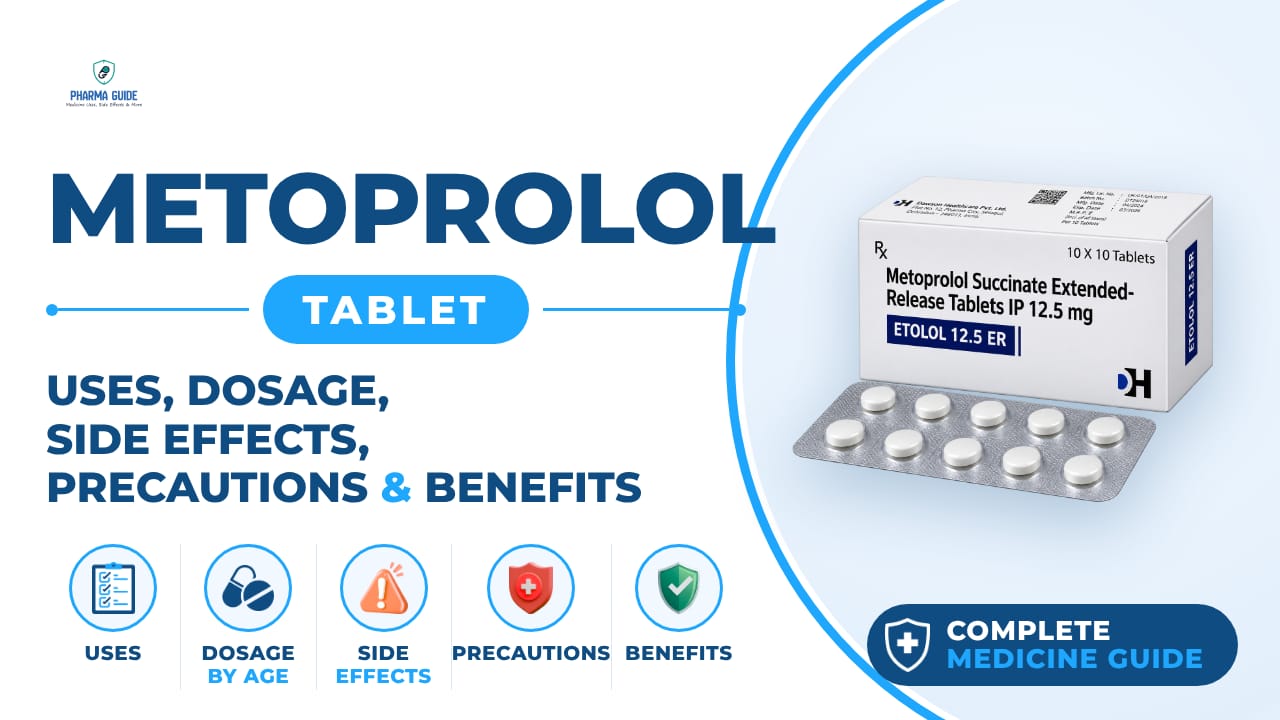
| Generic name | Metoprolol tartrate |
|---|---|
| Drug class | Beta blocker (cardioselective beta blocker) |
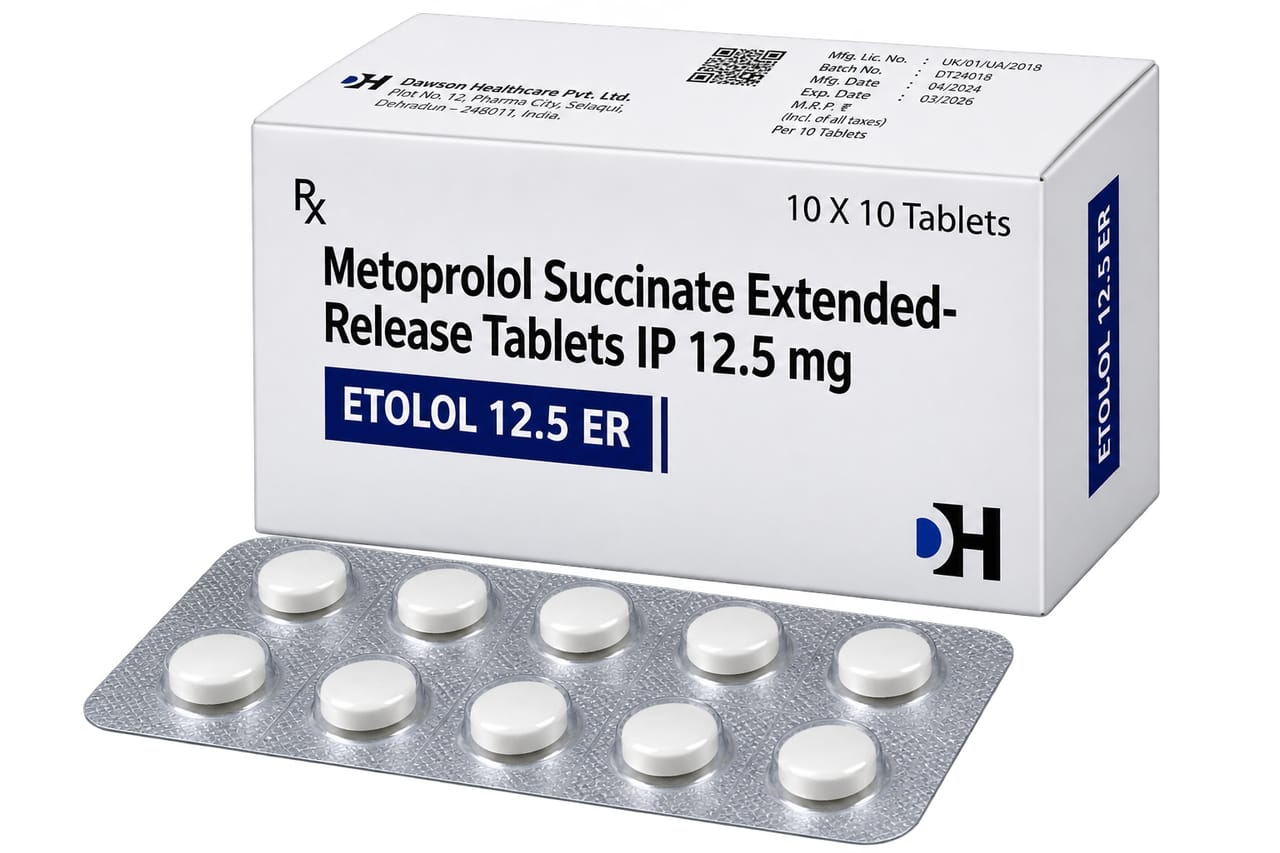
| Forms | Tablet, Extended-release (long-acting) tablet, Extended-release capsule, Injection (given into a vein in a medical setting) |
Quick overview
Metoprolol tartrate is a cardioselective beta blocker used to treat high blood pressure, angina, and heart failure, and to improve survival after a heart attack. It works by relaxing blood vessels and slowing the heart rate, which lowers blood pressure and reduces how hard the heart has to work. It is available as tablets, extended-release tablets or capsules, and an injection. As with all medicines, it can cause side effects and requires certain precautions, so it should be used exactly as prescribed.
What is Metoprolol Tablet
Metoprolol is a medicine used to treat high blood pressure, chest pain (angina), and heart failure. It also helps improve survival after a heart attack. It belongs to a group of medicines called beta blockers.
Metoprolol Tablet uses
- Treats high blood pressure (hypertension)
- Treats angina (chest pain)
- Prevents further damage or complications after a heart attack
- Helps treat heart failure and lowers the risk of death or hospital stays from it
- Sometimes used to treat certain irregular heartbeats
- Sometimes used to help prevent migraine headaches
Benefits of Metoprolol Tablet
- Lowers blood pressure and heart rate, making it easier for the heart to pump blood
- Can reduce the risk of death or hospitalization from heart failure
- May lower the risk of death after a heart attack
How Metoprolol Tablet works
Metoprolol works by relaxing blood vessels and slowing the heart rate, which improves blood flow and lowers blood pressure. It also reduces how hard the heart has to work and helps it beat more regularly.
Metoprolol Tablet dosage
Take by mouth with water or a glass of fluid, at the same time every day. You can take it with or without food, but it is best taken with a meal or right after a meal. Keep taking it the same way each time and do not stop unless your doctor tells you to.
Swallow extended-release tablets or capsules whole; do not chew or crush them. An extended-release tablet may be split in half if your doctor says so, but each half should be swallowed whole without chewing or crushing. If you cannot swallow the extended-release capsule, it can be opened and sprinkled on soft food like applesauce, pudding, or yogurt, and swallowed right away.
Do not stop taking this medicine suddenly, as this can make your condition worse or increase the risk of side effects. Special care may be needed for use in children; talk to your care team. Elderly patients especially need to be monitored to prevent blood pressure from falling too much.
| Age group | Dose |
|---|---|
| Under 6 years | Not established |
| 6–17 years | 1 mg/kg once daily, max initial dose 50 mg |
| 18–64 years | 25–100 mg once daily |
| 65+ years | Usually start cautiously; dose individualized |
Available forms and strengths
- Tablet
- Extended-release (long-acting) tablet
- Extended-release capsule
- Injection (given into a vein in a medical setting)
Side effects of Metoprolol Tablet
Common
- Dizziness or lightheadedness
- Tiredness
- Diarrhea
- Dry mouth
- Rash or itching
- Headache
- Change in sex drive or performance
- Depression
- Confusion
- Memory problems
- Nightmares
- Trouble sleeping
Serious
- Allergic reactions: skin rash, itching, hives, swelling of the face, lips, tongue, or throat, difficulty breathing
- Signs of heart failure: shortness of breath, swelling of the ankles, feet, or hands, sudden weight gain, unusual weakness or fatigue
- Signs of low blood pressure: dizziness, feeling faint or lightheaded, blurry vision
- Raynaud's symptoms: cool, numb, or painful fingers or toes that may change color
- Slow heartbeat: dizziness, feeling faint, confusion, trouble breathing, unusual weakness or fatigue
- Worsening mood or feelings of depression
- Very slow heartbeat or fainting
- Rapid, pounding, or irregular heartbeat
- Cold feeling in hands and feet
Warnings and precautions
- Do not use metoprolol if you have a serious heart problem such as heart block, sick sinus syndrome, or a very slow heart rate, severe circulation problems, severe heart failure, or a history of slow heartbeats that caused fainting.
- Do not suddenly stop taking this medication, as this may increase the risk of chest pain and heart attack. Your doctor will lower the dose slowly if you need to stop.
- Metoprolol may affect blood sugar levels and can hide the usual warning signs of low blood sugar, such as rapid heartbeat and tremors.
- If you have allergic reactions to other substances, those reactions may be worse while using metoprolol, and may not respond to the usual dose of epinephrine.
- If you are having surgery, including dental surgery, tell your doctor or dentist that you are taking metoprolol.
- Tell your doctor if you are pregnant or planning to become pregnant. It is not known whether metoprolol will harm an unborn baby, but treating high blood pressure may still be important for your health.
- Ask your doctor before using this medicine if you are breastfeeding. Metoprolol can pass into breast milk and may cause dry skin, dry mouth, diarrhea, constipation, or slow heartbeats in your baby.
- Tell your doctor if you have kidney problems or liver disease before taking this medicine.
- Drinking alcohol with this medication can increase the risk of dizziness and other side effects.
- This medication may affect your coordination, reaction time, or judgment. Do not drive or operate machinery until you know how it affects you.
Storage
- Store at room temperature between 20 and 25 degrees C (68 and 77 degrees F)
- Store away from moisture and heat
- Keep the medication in the container it came in, tightly closed, and out of reach of children and pets
- Get rid of any unused medication after the expiration date
- Take unneeded or expired medication to a take-back program; check with your pharmacy or law enforcement for a location
- If a take-back program is not available, check the label to see if it can be thrown in the garbage; if so, mix it with cat litter, dirt, or coffee grounds, seal it in a bag, and put it in the trash
- Do not flush this medication down the toilet unless told to do so
When to see a doctor
- Get emergency help right away if you have signs of an allergic reaction, such as hives, difficulty breathing, or swelling of your face, lips, tongue, or throat.
- Call your doctor right away if you have a very slow heartbeat, feel like you might pass out, have shortness of breath even with mild activity, swelling, rapid weight gain, or cold hands and feet.
- Get emergency medical help if you think you have taken too much of this medicine.
- If someone has collapsed, had a seizure, has trouble breathing, or cannot be woken up after an overdose, get emergency help immediately.
Alternatives
- Propranolol
- Nebivolol
- Carvedilol
- Bisoprolol
- Atenolol
Watch the video
FAQs
What is Metoprolol Tablet used for?
It treats high blood pressure, angina, and heart failure, and improves survival after a heart attack. It is also sometimes used for certain irregular heartbeats and to help prevent migraines.
How should I take Metoprolol Tablet?
Take it by mouth with water at the same time every day, with or without food, though it is best taken with a meal. Swallow extended-release tablets or capsules whole without chewing or crushing, unless your doctor says a tablet can be split.
Can I stop taking Metoprolol suddenly?
No, you should not stop taking it suddenly, as this can worsen your condition or increase the risk of chest pain and heart attack. Your doctor will lower the dose slowly if you need to stop.
What are the common side effects of Metoprolol Tablet?
Common side effects include dizziness, tiredness, diarrhea, dry mouth, rash or itching, headache, depression, confusion, memory problems, nightmares, and trouble sleeping.
What forms does Metoprolol come in?
It is available as a regular tablet, extended-release tablet, extended-release capsule, and an injection given into a vein in a medical setting.
General information, not medical advice
Your prescriber and the leaflet in your pack know your situation. This page does not.
- Follow your prescriber and the leaflet
- Don't start, stop, or change a dose on your own
- Doses and warnings differ by country and product
Sources
Video
Related medicines
Betaloc Tablet: Uses, Dosage, Side Effects, Precautions and Alternates
Beta-blocker (cardioselective beta blocker)
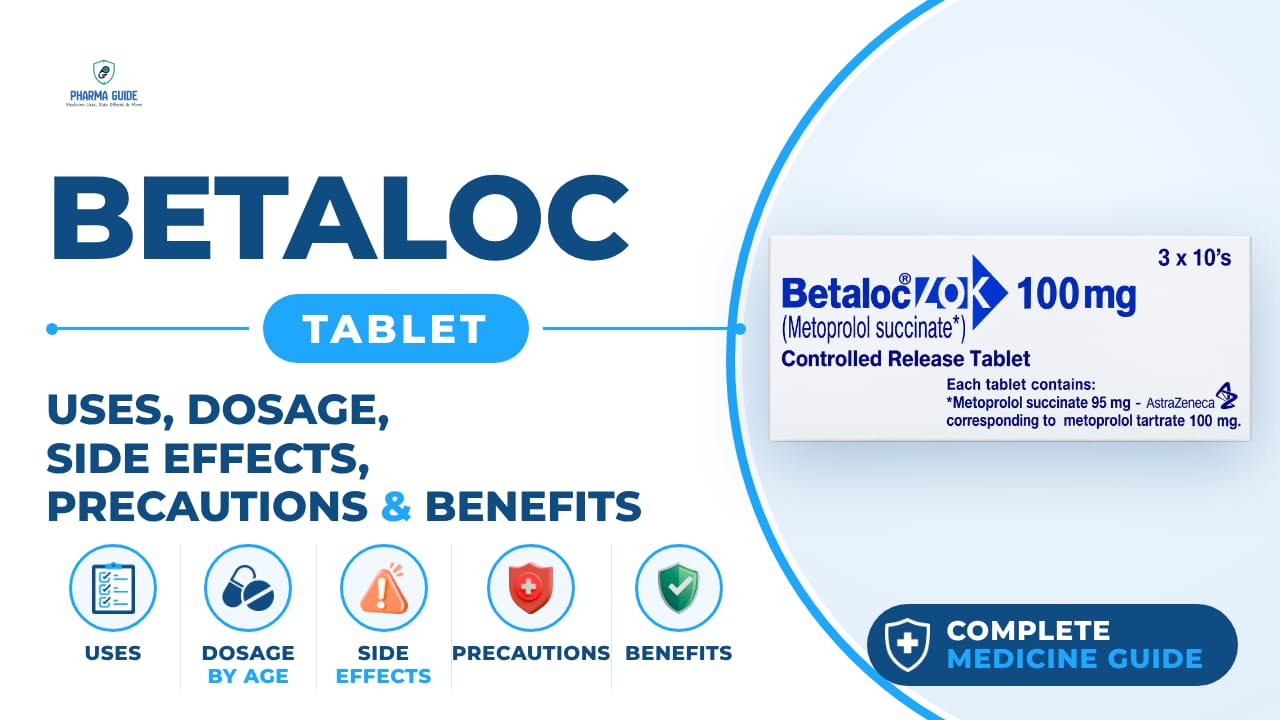
Betaloc Tablet contains metoprolol tartrate, a beta-blocker used for high blood pressure, angina, irregular heart rhythms, heart failure, and migraine
Tenormin Tablet: Uses, Dosage, Side Effects, Precautions and Alternates
Beta-blocker (cardioselective beta blocker)
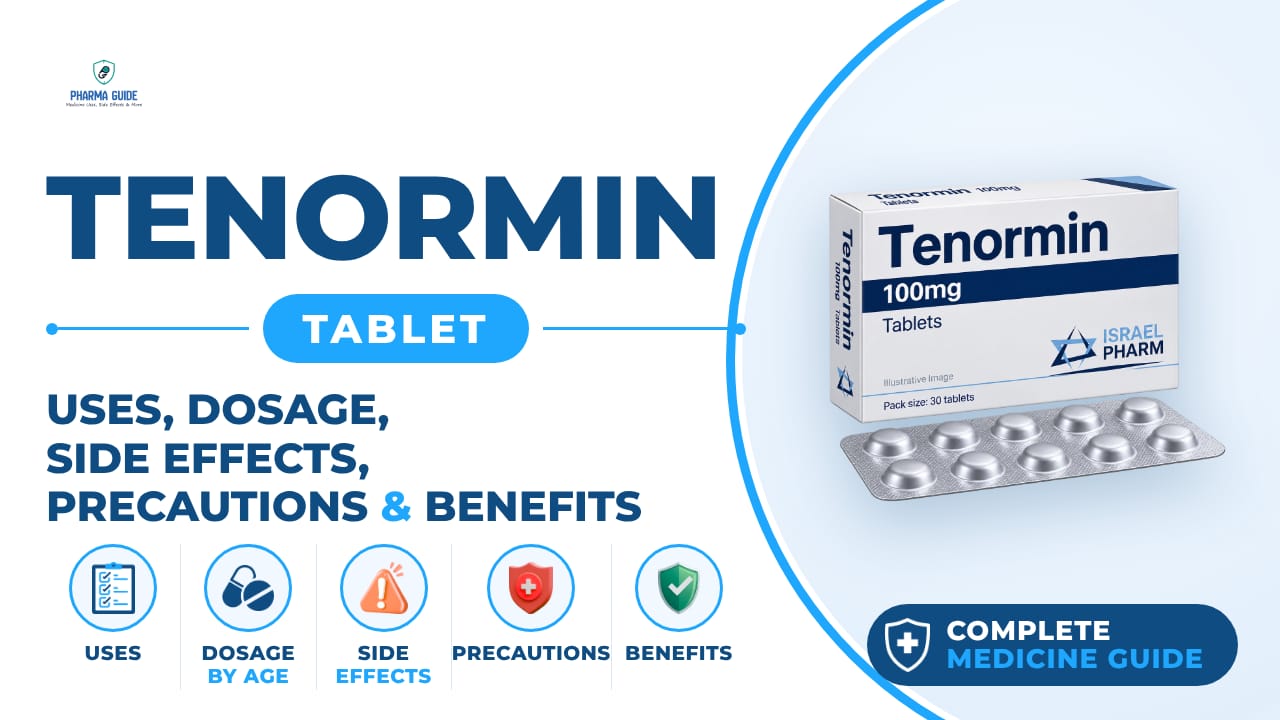
Tenormin Tablet (atenolol) treats high blood pressure, angina, and irregular heart rhythms. Learn its uses, dosage, side effects, and precautions here.