
Safety
General information, not medical advice
Your prescriber and the leaflet in your pack know your situation. This page does not.
- Follow your prescriber and the leaflet
- Don't start, stop, or change a dose on your own
- Doses and warnings differ by country and product
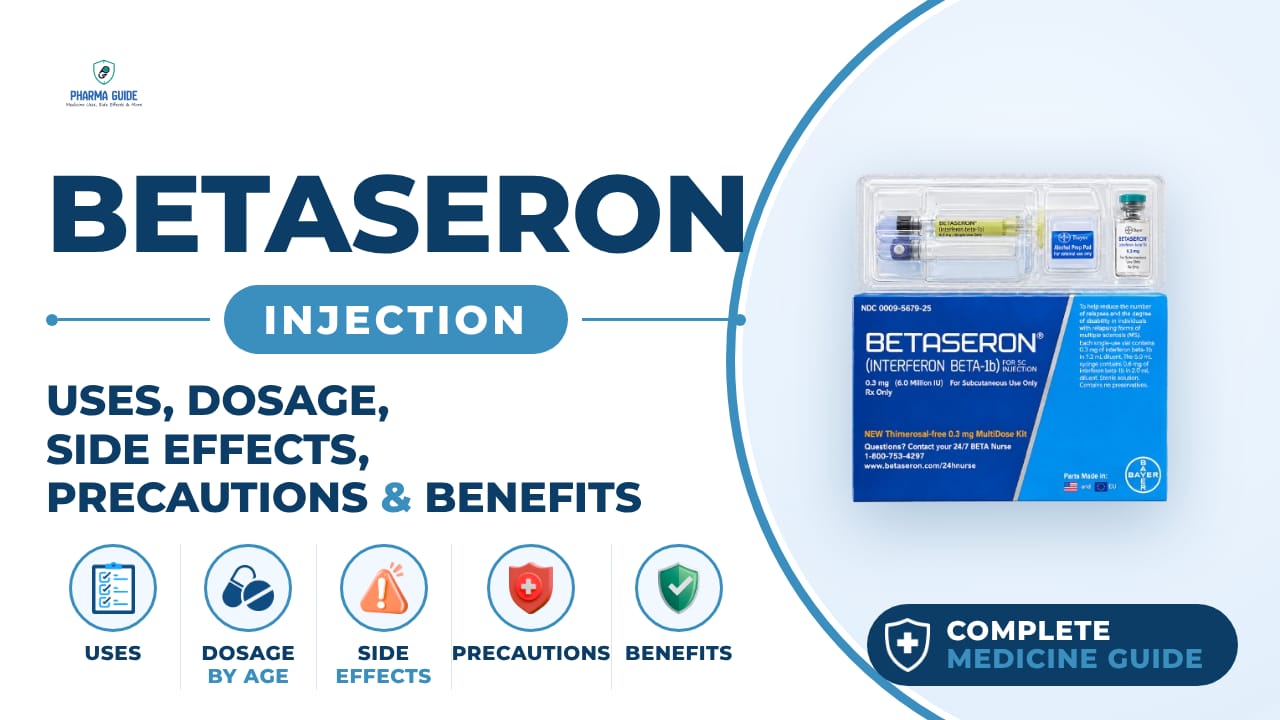
Betaseron Injection: Uses, Dosage, Side Effects, Precautions and Alternates
| Generic name | interferon beta-1b |
|---|---|
| Drug class | immunomodulator (interferon) |
| Forms | Injection |
Quick overview
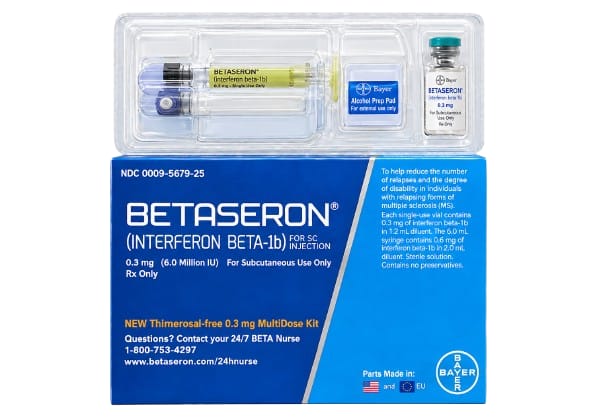
Betaseron Injection (interferon beta-1b) is a brand-name prescription biologic used to treat certain relapsing forms of multiple sclerosis in adults. It is given as an injection under the skin every other day and works by calming an overactive immune response to help reduce nerve damage. As a biologic, there is no generic or biosimilar version available.
What is Betaseron Injection
Betaseron is a brand-name prescription injection used to treat certain relapsing forms of multiple sclerosis (MS). It contains interferon beta-1b, a lab-made version of a protein your body naturally produces. It is a biologic drug, so there is no generic or biosimilar version available.
Betaseron Injection uses
- Relapsing forms of multiple sclerosis in adults, including clinically isolated syndrome
- Relapsing-remitting MS
- Active secondary progressive MS
Benefits of Betaseron Injection
- Helps slow the worsening of MS over time
- Can reduce the number of damaged areas (lesions) that form in the brain
- Can reduce the number of relapses (flare-ups)
- Can slow the development of disabilities such as difficulty walking
How Betaseron Injection works
Betaseron is a man-made version of a protein called interferon beta that your body makes naturally. In MS, the immune system mistakenly attacks nerves in the brain and spinal cord. Betaseron may calm this overactive immune response and reduce inflammation, which may help stop or reduce nerve damage, though the exact way it works is not fully understood.
Betaseron Injection dosage
Betaseron is given as an injection under the skin every other day. Taking the injection around the same time every other day helps keep a steady level of the drug in your body. It can be used with or without food since it is given by injection, not swallowed. It is meant to be a long-term treatment if it is working well for you. A healthcare provider can teach you or a caregiver how to prepare and give the injection at home.
Use a different injection site each time, and do not use the same site two times in a row. Only inject into healthy skin — avoid areas that are red, discolored, bruised, infected, swollen, damaged, or painful. If you miss a dose, take it as soon as possible, then wait about 48 hours before your next dose and continue your regular schedule; do not take two doses in a row or extra doses. Prepare the injection only when you are ready to give it, and do not use it if it looks cloudy, has changed color, or has particles in it.
| Age group | Dose |
|---|---|
| Under 18 years | Not recommended |
| 18–64 years | 0.25 mg, once day |
| 65+ years | 0.25 mg, once day |
Available forms and strengths
- Injection
Side effects of Betaseron Injection
Common
- Injection site reactions, such as swelling, discoloration, or pain
- Flu-like symptoms, including fever, chills, sweating, and tiredness
- Muscle pain or stiffness
- Headache
- Difficulty sleeping (insomnia)
- Abdominal pain
- Weakness
- Rash
- Low white blood cell count
- Increases in liver enzymes
- Swelling of the lower legs or feet
- Weight gain
Serious
- Severe skin damage (necrosis) at the injection site, with pain, swelling, breaks in the skin, fluid discharge, or blue-black discoloration
- Liver damage or liver failure, with symptoms such as yellowing of skin or eyes, nausea, vomiting, abdominal pain, itching, or easy bruising/bleeding
- Depression and suicidal thoughts, including new or worsening depression, anxiety, insomnia, aggression, hallucinations, or thoughts of harming yourself
- Congestive heart failure, with swelling of legs or feet, shortness of breath, chest tightness, or rapid weight gain
- Serious allergic reaction (anaphylaxis), with swelling of the face, lips, tongue, or throat, trouble breathing or swallowing, hives, or rash
- Decreased white blood cells, with fever, chills, sore throat, or signs of infection
- Thrombotic microangiopathy (blood clots in small blood vessels), with unusual bruising or bleeding, fatigue, or decreased urination
- Pulmonary arterial hypertension (high blood pressure in the lung arteries), with shortness of breath, fatigue, or dizziness
- Drug-induced lupus, with rash, joint pain, or fingers/toes that turn cold, pale, or numb
- Seizures
Warnings and precautions
- Betaseron can cause serious liver problems, including liver failure. Watch for yellowing of your eyes or skin, itchy skin, nausea or vomiting, feeling very tired, flu-like symptoms, or easy bruising or bleeding, and tell your doctor right away if these occur.
- Serious allergic reactions can occur, sometimes quickly, after your first dose or after many doses. Symptoms include difficulty breathing or swallowing, swelling of the mouth or tongue, rash, itching, or skin bumps.
- Betaseron may cause or worsen depression and suicidal thoughts. Tell your doctor right away about new or worsening depression, anxiety, trouble sleeping, aggression, acting on dangerous impulses, hallucinations, or any other unusual mood or behavior changes.
- Betaseron may cause severe damage to the skin and tissue at the injection site (necrosis). Always rotate your injection sites and avoid injecting into skin that is sore, red, infected, or otherwise unhealthy.
- Betaseron may worsen congestive heart failure. Watch for swollen ankles, shortness of breath, trouble lying flat, chest tightness, or rapid weight gain.
- Do not use Betaseron if you are allergic to interferon beta-1b, another interferon beta, human albumin, or mannitol.
- It isn't known for certain if Betaseron is safe during pregnancy. Animal studies suggest it may cause fetal harm, and it may increase the risk of miscarriage. Tell your doctor right away if you become pregnant or are planning a pregnancy while using Betaseron.
- It isn't known whether Betaseron passes into breast milk or affects a nursing baby. Talk with your doctor to decide whether to use Betaseron or breastfeed, since you should not do both.
- Tell your doctor if you have or have had liver problems before starting Betaseron. The drug can cause liver damage, so your liver function will be checked with regular blood tests during treatment.
- Betaseron is not known to directly interact with alcohol, but both can cause similar side effects like headaches and liver problems, so drinking alcohol may raise your risk of these effects. It's best to avoid alcohol during treatment and to talk with your doctor if you have questions.
Storage
- Before mixing, store Betaseron vials between 36°F to 86°F (2°C to 30°C)
- After mixing, you can refrigerate it for up to 3 hours before using; it must be used within 3 hours of mixing even if refrigerated
- Do not freeze
- Keep Betaseron and all medicines out of the reach of children
- Each vial or prefilled syringe is for one use only — throw it away after one use even if medicine is left inside
- Throw away any unused medicine; do not save it for a future dose
- Use a needle and syringe only once, then place them in a puncture-proof sharps container and follow local laws for disposal
When to see a doctor
- Get emergency help right away for signs of a severe allergic reaction, such as swelling of the face, lips, tongue, or throat, trouble breathing, or hives.
- Call your doctor right away if you notice yellowing of your eyes or skin, itchy skin, nausea or vomiting, extreme tiredness, or easy bruising or bleeding — these can be signs of liver damage.
- Call your doctor right away if you have thoughts about suicide or dying, new or worsening depression or anxiety, trouble sleeping, or unusual changes in mood or behavior.
- Call your doctor right away if an injection site becomes swollen and painful, looks infected, or develops fluid drainage or blue-black skin discoloration — this may be a sign of a serious skin reaction.
- Call your doctor right away if you have symptoms of heart problems, such as swollen ankles, shortness of breath, chest tightness, or trouble lying flat in bed.
- Call your doctor right away if you have a seizure after taking Betaseron, even if you have never had one before.
- If you think you've taken too much Betaseron, contact your doctor or a poison control center, or seek emergency care if symptoms feel severe.
Alternatives
- Plegridy
- Avonex
- Extavia
Watch the video
FAQs
What is Betaseron Injection used for?
Betaseron is used to treat certain relapsing forms of multiple sclerosis in adults, including clinically isolated syndrome, relapsing-remitting MS, and active secondary progressive MS.
How is Betaseron Injection given?
Betaseron is given as an injection under the skin every other day, ideally around the same time each dosing day to keep a steady level of the drug in your body.
What should I do if I miss a dose of Betaseron?
If you miss a dose, take it as soon as possible, then wait about 48 hours before your next dose and continue your regular schedule. Do not take two doses in a row or extra doses.
What are the serious side effects of Betaseron Injection?
Serious side effects include severe skin damage at the injection site, liver damage or failure, depression and suicidal thoughts, congestive heart failure, serious allergic reactions, decreased white blood cells, blood clots in small vessels, pulmonary arterial hypertension, drug-induced lupus, and seizures.
Is there a generic version of Betaseron?
No, Betaseron is a biologic drug, so there is no generic or biosimilar version available.
General information, not medical advice
Your prescriber and the leaflet in your pack know your situation. This page does not.
- Follow your prescriber and the leaflet
- Don't start, stop, or change a dose on your own
- Doses and warnings differ by country and product
Sources
Video
Related medicines

Injectafer Injection: Uses, Dosage, Side Effects, Precautions and Alternates
Iron products
Injectafer (ferric carboxymaltose) treats iron deficiency anemia and heart failure-related iron deficiency via IV. Learn uses, dosage, side effects, and

Gliclazide Tablet: Uses, Dosage, Side Effects, Precautions and Alternates
Sulfonylurea (hypoglycemic/antidiabetic agent)
Gliclazide Tablet is a sulfonylurea for type 2 diabetes that boosts insulin release. Learn about dosage, side effects, warnings, and precautions.