
Safety
General information, not medical advice
Your prescriber and the leaflet in your pack know your situation. This page does not.
- Follow your prescriber and the leaflet
- Don't start, stop, or change a dose on your own
- Doses and warnings differ by country and product
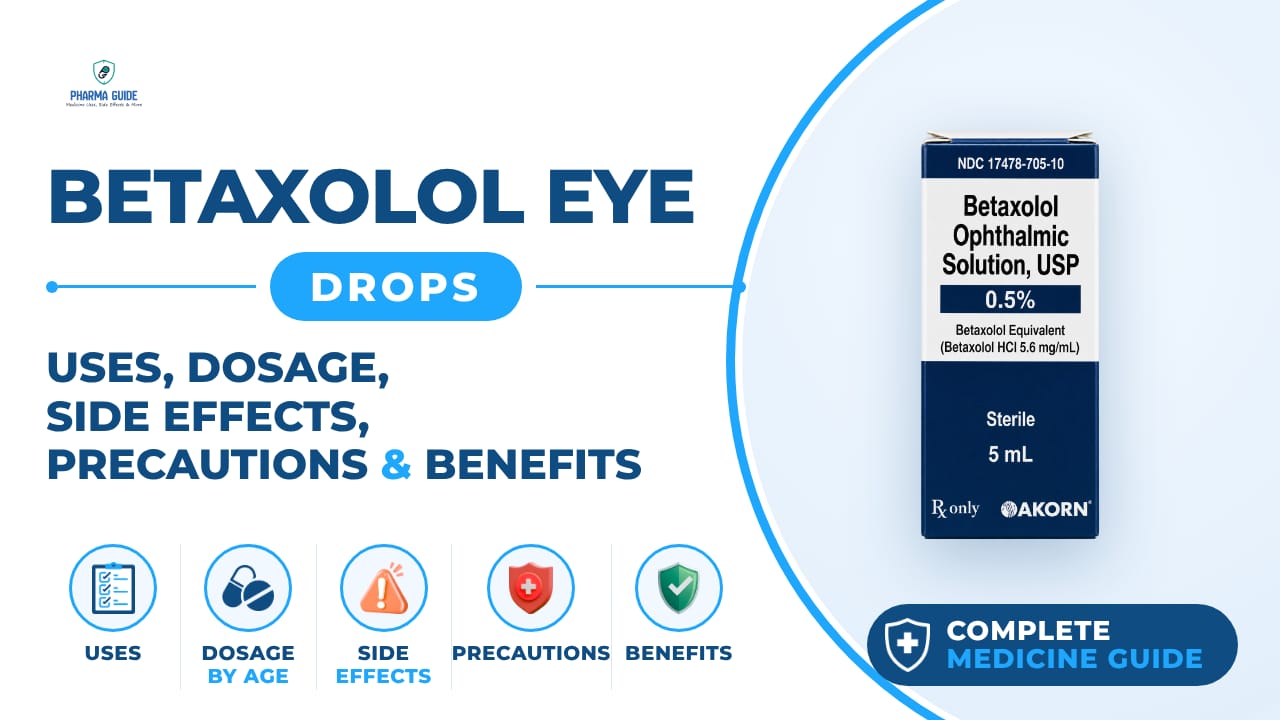
Betaxolol Eye Drops: Uses, Dosage, Side Effects, Precautions and Alternates
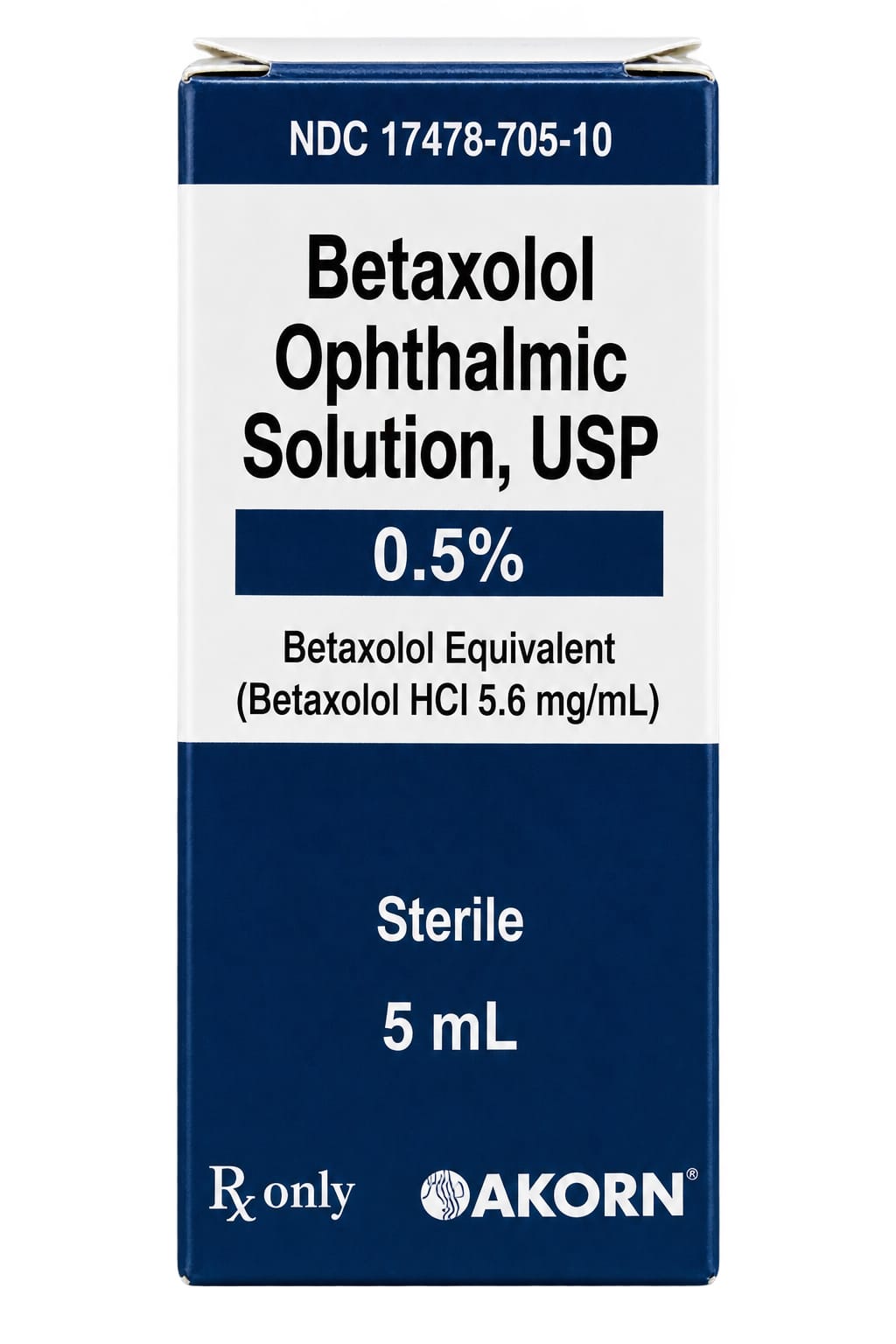
| Generic name | Betaxolol |
|---|---|
| Drug class | Beta blocker (selective beta-1 adrenergic blocker) |
| Forms | Eye drop solution, Eye drop suspension |
Quick overview
Betaxolol Eye Drops contain betaxolol, a selective beta-1 adrenergic blocker, and are a prescription medicine used to lower high pressure inside the eye. They are used for ocular hypertension and open-angle glaucoma, working by reducing the amount of fluid the eye produces. The drops are available as a solution or suspension and are generally used twice daily in the affected eye(s) as directed by a doctor.
What is Betaxolol Eye Drops
Betaxolol eye drops are a prescription medication used to lower high pressure inside the eye. They belong to a group of medicines called beta blockers.
Betaxolol Eye Drops uses
- Lowering high pressure in the eye caused by ocular hypertension
- Treating open-angle glaucoma, the most common type of glaucoma
- Reducing the risk of eye damage and vision loss by decreasing fluid production in the eye
- Long-term management to help prevent optic nerve damage and preserve eyesight
- Helping control eye pressure to slow the progression of glaucoma
- An option for patients who cannot tolerate other glaucoma medications
Benefits of Betaxolol Eye Drops
- Works well at lowering eye pressure
- Can be used together with other pressure-lowering eye drops if needed
- Side effects are not common, aside from temporary eye discomfort right after use
How Betaxolol Eye Drops works
Betaxolol is a beta blocker that reduces the amount of fluid the eye makes. With less fluid inside the eye, the pressure inside the eye goes down.
Betaxolol Eye Drops dosage
Wash your hands before putting the drops in your eyes. Do not let the dropper tip touch your eye or your hands, to avoid contamination and infection.
If you wear contact lenses, take them out before using the drops and wait 15 minutes afterward before putting them back in, since the drops contain a preservative that can damage contact lenses.
After placing a drop in the eye, close your eye and press gently on the inner corner of the eye near the nose for about a minute to help the eye absorb the medicine. If you are using more than one eye drop at a time, wait about 5 minutes between each one.
Your vision may be blurry for a short time after using the drops, so be careful with driving or other tasks until your vision clears. Shake the bottle well before use if you have the suspension form; the solution form does not need shaking.
Tell your eye doctor if you have any eye injury or infection, since you may need to stop use or start a new bottle.
| Age group | Dose |
|---|---|
| Under 18 years | Safety and effectiveness not established for the currently labeled 0.5% solution; specialist use only |
| 18–64 years | 1–2 drops in affected eye(s) twice daily |
| 65 years and older | 1–2 drops in affected eye(s) twice daily |
Available forms and strengths
- Eye drop solution
- Eye drop suspension
Side effects of Betaxolol Eye Drops
Common
- Temporary burning or stinging in the eye after use
- Watery eyes
- Itchy eyes
- Dry eyes
- Crusty eyelashes
- Red eyes
- Eye pain
- Feeling like something is in your eye
- Sensitivity to light
- Blurry vision
- Other changes in vision
- Fatigue and weakness
- Dizziness or lightheadedness
- Slow heart rate
- Shortness of breath
- Depression
- Itching or irritation around the eyes
Serious
- Trouble breathing: shortness of breath, wheezing, chest tightness
- Signs of heart failure: shortness of breath, fatigue, swelling in the legs, ankles, and feet
- Allergic reaction: rash, swelling of the face or throat, trouble breathing
- Chest pain or discomfort
- Lightheadedness, dizziness, or fainting
- Slow or irregular heartbeat
- Cold arms, legs, hands, or feet
Warnings and precautions
- Beta blocker eye drops can hide the signs of low blood sugar in people with diabetes, except for sweating and dizziness. Talk to your doctor about checking your blood sugar more often if you have diabetes.
- This medicine can hide the signs of an overactive thyroid, such as a fast heart rate. Tell your eye doctor if you have thyroid problems before starting treatment.
- This medicine may worsen muscle weakness in people with myasthenia gravis. Tell your care team if your symptoms get worse.
- This medicine is usually not recommended for people with asthma, COPD, or other lung conditions, because it can make breathing airways narrower.
- Use this medicine with caution if you have had heart problems such as heart failure or heart block, since it can have a small effect on heart rate and blood pressure.
- Do not use this medicine if you have a slow heart rate, certain heart block conditions, heart failure, or cardiogenic shock.
- If the eye drop bottle becomes contaminated with bacteria, it can cause a serious corneal infection. Take care to keep the dropper tip clean.
- This medicine is not recommended during pregnancy unless clearly needed. It is unclear if betaxolol is safe to use while pregnant, so talk with your doctor about the risks and benefits.
- This medicine is not recommended while breastfeeding unless clearly needed. Discuss the risks and benefits with your doctor.
- If you have kidney problems, use this medicine with caution, as your dose may need to be adjusted.
- If you have liver problems, use this medicine with caution, as your dose may need to be adjusted.
- Drinking alcohol while using this medicine is not recommended, because it can increase the risk of dizziness, lightheadedness, and fainting.
- This medicine can cause blurred vision, dizziness, or drowsiness in some people. Do not drive or operate machinery if you experience these effects.
Storage
- Store betaxolol eye drops at room temperature
- Do not use the eye drops after the expiration date
- Store in a cool, dry place, protected from direct sunlight and moisture
- Keep the bottle tightly sealed
- Do not store in the refrigerator or freezer, or near heat sources
- If expired, do not use; dispose of it safely and consult your pharmacist or local waste guidelines for proper disposal
- Keep out of reach of children
When to see a doctor
- Get medical help right away if you have trouble breathing, wheezing, or chest tightness.
- Get medical help right away if you notice signs of heart failure, such as shortness of breath, fatigue, or swelling in the legs, ankles, and feet.
- Get medical help right away if you have signs of an allergic reaction, such as rash, swelling of the face or throat, or trouble breathing.
- Get emergency help right away if you notice signs of overdose, such as very slow heartbeat, severe dizziness, confusion, seizures, or loss of consciousness.
- If you think you have used too much of this medicine, seek emergency medical treatment or contact your doctor right away.
Alternatives
- Latanoprost
- Bimatoprost
- Dorzolamide
Watch the video
FAQs
What is Betaxolol Eye Drops used for?
It is used to lower high pressure inside the eye caused by ocular hypertension and to treat open-angle glaucoma, helping prevent optic nerve damage and vision loss.
How does Betaxolol Eye Drops work?
Betaxolol is a beta blocker that reduces the amount of fluid the eye makes, which lowers the pressure inside the eye.
What is the usual dosage of Betaxolol Eye Drops?
For adults 18 years and older, including those 65 and over, the typical dose is 1–2 drops in the affected eye(s) twice daily, as directed by a doctor.
Can contact lens wearers use Betaxolol Eye Drops?
Yes, but contact lenses should be removed before using the drops and not reinserted for at least 15 minutes, since the drops contain a preservative that can damage contact lenses.
What are the common side effects of Betaxolol Eye Drops?
Common side effects include temporary burning or stinging, watery or dry eyes, itchy or red eyes, blurry vision, sensitivity to light, fatigue, and dizziness.
General information, not medical advice
Your prescriber and the leaflet in your pack know your situation. This page does not.
- Follow your prescriber and the leaflet
- Don't start, stop, or change a dose on your own
- Doses and warnings differ by country and product
Sources
Video
Related medicines

Injectafer Injection: Uses, Dosage, Side Effects, Precautions and Alternates
Iron products
Injectafer (ferric carboxymaltose) treats iron deficiency anemia and heart failure-related iron deficiency via IV. Learn uses, dosage, side effects, and

Gliclazide Tablet: Uses, Dosage, Side Effects, Precautions and Alternates
Sulfonylurea (hypoglycemic/antidiabetic agent)
Gliclazide Tablet is a sulfonylurea for type 2 diabetes that boosts insulin release. Learn about dosage, side effects, warnings, and precautions.