
Safety
General information, not medical advice
Your prescriber and the leaflet in your pack know your situation. This page does not.
- Follow your prescriber and the leaflet
- Don't start, stop, or change a dose on your own
- Doses and warnings differ by country and product
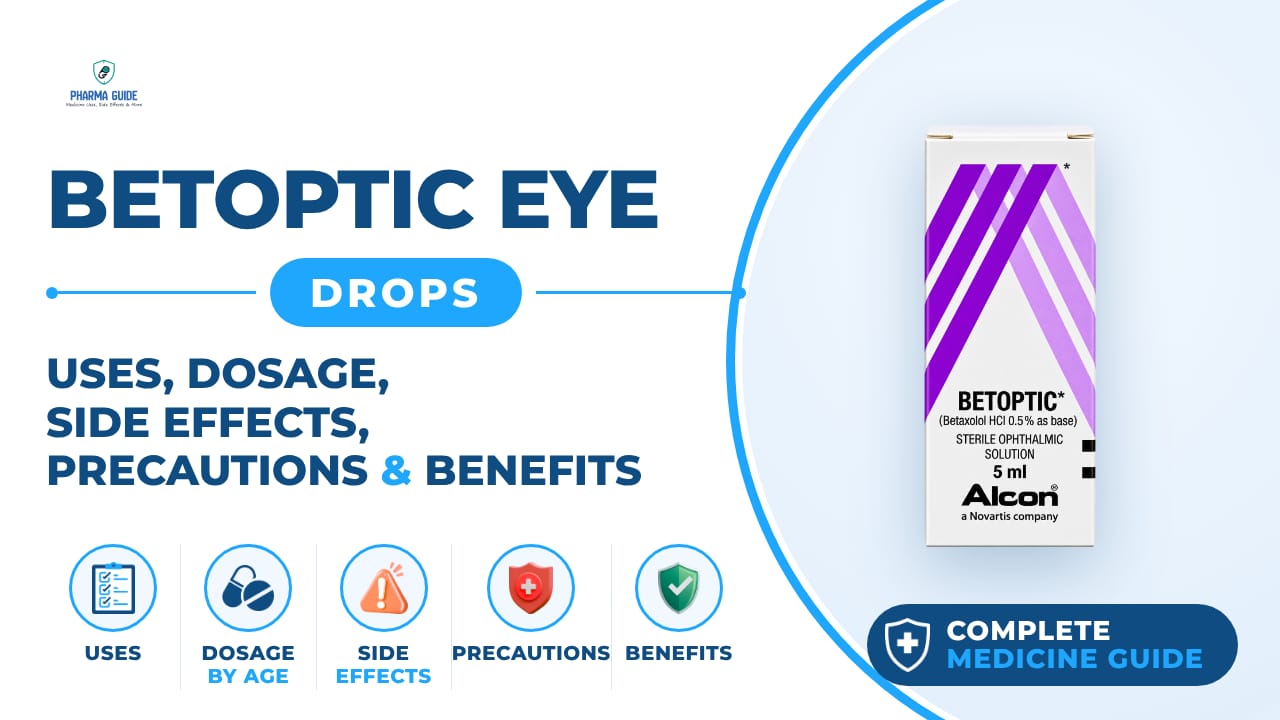
Betoptic Eye Drops: Uses, Dosage, Side Effects, Precautions and Alternates
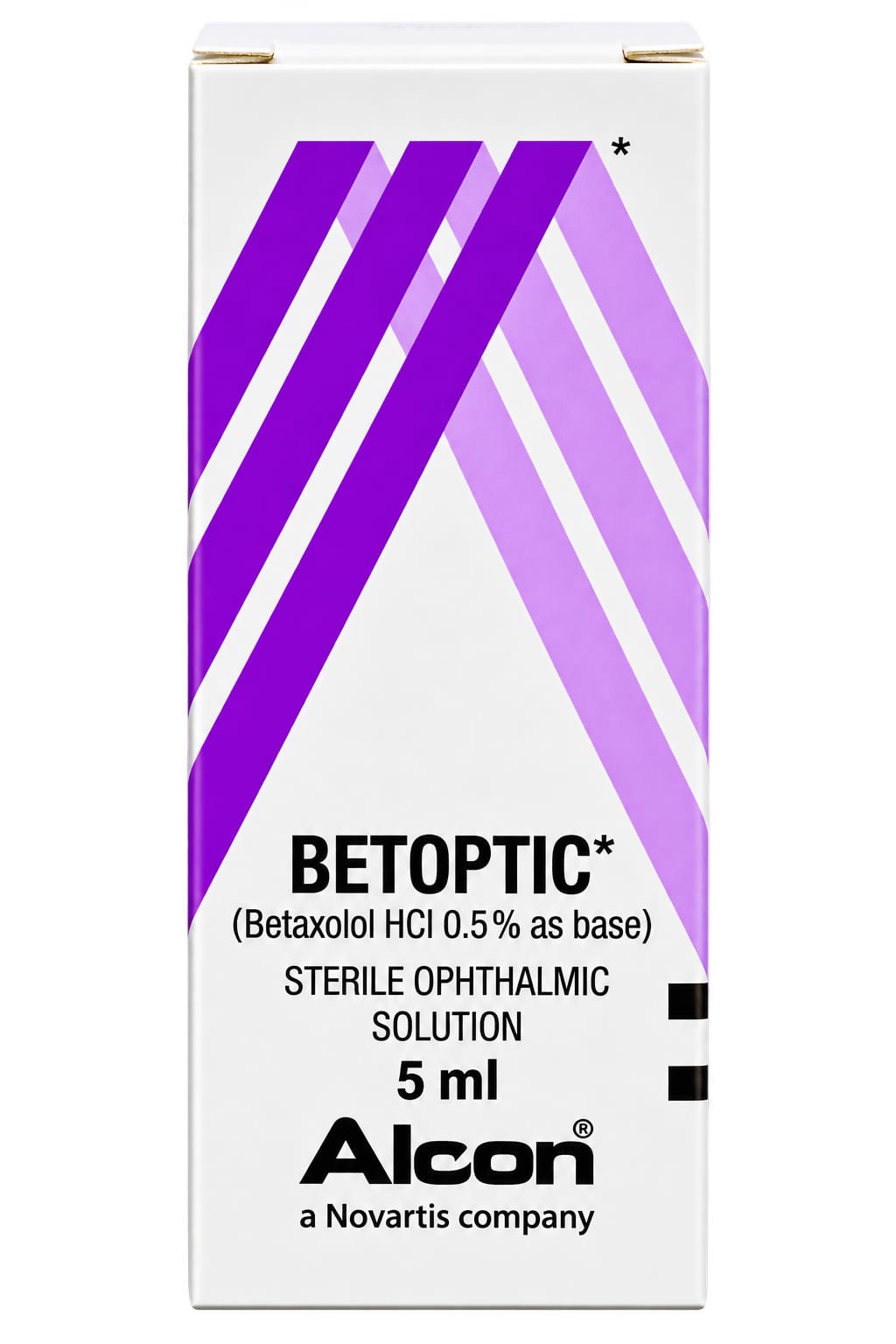
| Generic name | betaxolol (as hydrochloride) |
|---|---|
| Drug class | Beta blocker (ophthalmic glaucoma agent) |
| Forms | Eye drops, solution (Betoptic), Eye drops, suspension (Betoptic S) |
Quick overview
Betoptic Eye Drops contain betaxolol hydrochloride, a beta blocker used to lower high pressure inside the eye. They are used to treat open-angle glaucoma and other causes of high eye pressure (ocular hypertension). Betoptic works by reducing the amount of fluid the eye produces and can be used alone or together with other eye pressure-lowering medicines.
What is Betoptic Eye Drops
Betoptic is an eye drop medicine that belongs to a group of medicines known as beta blockers. It is used to lower high pressure inside the eye.
Betoptic Eye Drops uses
- Treats open-angle glaucoma
- Treats other causes of high pressure inside the eye (ocular hypertension)
Benefits of Betoptic Eye Drops
- Lowers pressure inside the eye, which helps protect the optic nerve and vision
- Can be used alone or together with other eye pressure-lowering medicines
How Betoptic Eye Drops works
Betaxolol is a beta-blocker that lowers the pressure inside the eye by reducing the amount of fluid the eye produces. The effect can start within about 30 minutes and reaches its strongest point about 2 hours after use, with one dose lowering eye pressure for about 12 hours.
Betoptic Eye Drops dosage
Use only in the eye(s). Wash your hands before using the eye drops. Shake the eye drops well just before using them (for the suspension form). Do not wear contact lenses when using this medicine; wait at least 15 minutes after using the drops before putting lenses back in.
Tilt your head back, pull down the lower eyelid to make a small pocket, and place the drop there without touching the dropper tip to your eye or any surface. After putting in the drop, close your eyes and press a finger gently into the inside corner of the eye near the nose for about 1 to 2 minutes to help stop the medicine from spreading through your body.
If you use more than one drop or another eye medicine, wait several minutes between each type of drop. If you miss a dose, use it as soon as you remember, but skip it if it is almost time for your next dose. Do not use a double dose to make up for a missed one.
Tell your doctor if you have any eye injury or eye infection. Tell your surgeon you are using this medicine before any operation, including eye surgery.
| Age group | Dose |
|---|---|
| Under 18 years | Safety and effectiveness not established; specialist-directed use only |
| 18–64 years | 1–2 drops in affected eye(s) twice daily |
| 65 years and older | 1–2 drops in affected eye(s) twice daily |
Available forms and strengths
- Eye drops, solution (Betoptic)
- Eye drops, suspension (Betoptic S)
Side effects of Betoptic Eye Drops
Common
- Eye irritation
- Itchy or watery eyes
- Blurred vision
- Feeling like something is in your eye
- Increased sensitivity to light
- Headache
Serious
- Wheezing, chest tightness, or trouble breathing (bronchospasm)
- Feeling short of breath while lying down
- Chest pain or cough with foamy mucus
- Swelling or rapid weight gain
- Drooping eyelids
- Muscle weakness in arms or legs
- Slow or irregular heartbeat
- Fainting or dizziness
- Signs of an allergic reaction such as hives, difficulty breathing, or swelling of the face, lips, tongue, or throat
Warnings and precautions
- It is not known whether this medicine will harm an unborn baby. Betaxolol is not recommended during pregnancy, and it should only be used if your doctor decides it is clearly needed.
- It is not known for certain if this medicine passes into breast milk in amounts that could harm a nursing baby, but caution is advised. Talk to your doctor before using it while breastfeeding.
- Do not use in sinus bradycardia, significant heart block, cardiogenic shock, or overt heart failure. Use caution in patients with asthma or severe respiratory disease, as bronchospasm and breathing problems can occur.
- May mask symptoms of low blood sugar, particularly in patients using insulin or other diabetes medicines.
- May mask certain signs of hyperthyroidism, such as a rapid heartbeat. Use caution in patients with myasthenia gravis, as beta-blockers may worsen muscle weakness.
- Tell your doctor if you take oral or other beta-blocker medicines because their effects can be additive.
- Tell the anesthesiologist that you use Betoptic before surgery; beta-blockers can affect the heart's response during anesthesia.
- Do not touch the dropper tip to the eye, fingers, or other surfaces. Tell your doctor if you are pregnant, planning pregnancy, or breastfeeding.
- This medicine can cause blurred vision. Be careful driving or doing anything that requires clear eyesight until you know how it affects you.
- Do not use this medicine if you have a serious heart condition, slow heartbeats, heart failure, or certain heart rhythm disorders.
- Tell your doctor if you have asthma or severe COPD, since this medicine can worsen breathing problems.
- Tell your doctor about diabetes, thyroid problems, poor blood circulation, myasthenia gravis, or if you take another beta-blocker medicine, as this drug can affect these conditions or interact with other treatments.
- Do not touch the dropper tip to your eye or any surface, since a contaminated dropper can cause a serious eye infection.
- Tell your surgeon before any operation, including eye surgery, that you use this medicine, since it can affect anesthesia.
Storage
- Store in an upright position at room temperature (below 25°C), away from moisture and heat.
- Do not freeze.
- Keep the bottle tightly closed when not in use.
- Keep the bottle in the outer carton to protect it from light.
- Do not use after the expiry date on the bottle or carton.
- Stop using the bottle 4 weeks after first opening it, to prevent infection.
- Keep out of the sight and reach of children.
- Do not dispose of medicines via waste water or household waste; ask your pharmacist how to dispose of medicines no longer needed.
When to see a doctor
- Get emergency medical help right away if you have signs of a serious allergic reaction, such as hives, difficulty breathing, or swelling of the face, lips, tongue, or throat.
- Stop using this medicine and call your doctor right away if you have wheezing, chest tightness, trouble breathing, shortness of breath while lying down, chest pain, cough with foamy mucus, sudden swelling or weight gain, drooping eyelids, or muscle weakness.
- Get emergency medical help if someone accidentally swallows this medicine.
Alternatives
- Timolol ophthalmic
- Bimatoprost
- Dorzolamide
- Brimonidine
Watch the video
FAQs
What is Betoptic Eye Drops used for?
Betoptic is used to treat open-angle glaucoma and other causes of high pressure inside the eye (ocular hypertension).
How does Betoptic Eye Drops work?
Betaxolol, a beta-blocker, lowers eye pressure by reducing the amount of fluid the eye produces. Its effect can start within about 30 minutes, peak around 2 hours, and last about 12 hours.
What is the usual dosage for Betoptic Eye Drops?
Adults and older adults typically use 1–2 drops in the affected eye(s) twice daily. Safety and effectiveness in children under 18 have not been established.
Can I wear contact lenses while using Betoptic Eye Drops?
No, you should not wear contact lenses while using this medicine. Wait at least 15 minutes after using the drops before putting lenses back in.
What are the serious side effects of Betoptic Eye Drops?
Serious side effects include wheezing, chest tightness or trouble breathing, shortness of breath while lying down, chest pain or cough with foamy mucus, swelling or rapid weight gain, drooping eyelids, muscle weakness, slow or irregular heartbeat, fainting, dizziness, and signs of an allergic reaction.
General information, not medical advice
Your prescriber and the leaflet in your pack know your situation. This page does not.
- Follow your prescriber and the leaflet
- Don't start, stop, or change a dose on your own
- Doses and warnings differ by country and product
Sources
Video
Related medicines

Injectafer Injection: Uses, Dosage, Side Effects, Precautions and Alternates
Iron products
Injectafer (ferric carboxymaltose) treats iron deficiency anemia and heart failure-related iron deficiency via IV. Learn uses, dosage, side effects, and

Gliclazide Tablet: Uses, Dosage, Side Effects, Precautions and Alternates
Sulfonylurea (hypoglycemic/antidiabetic agent)
Gliclazide Tablet is a sulfonylurea for type 2 diabetes that boosts insulin release. Learn about dosage, side effects, warnings, and precautions.