
Safety
General information, not medical advice
Your prescriber and the leaflet in your pack know your situation. This page does not.
- Follow your prescriber and the leaflet
- Don't start, stop, or change a dose on your own
- Doses and warnings differ by country and product
Bexsero Injection: Uses, Dosage, Side Effects, Precautions and Alternates
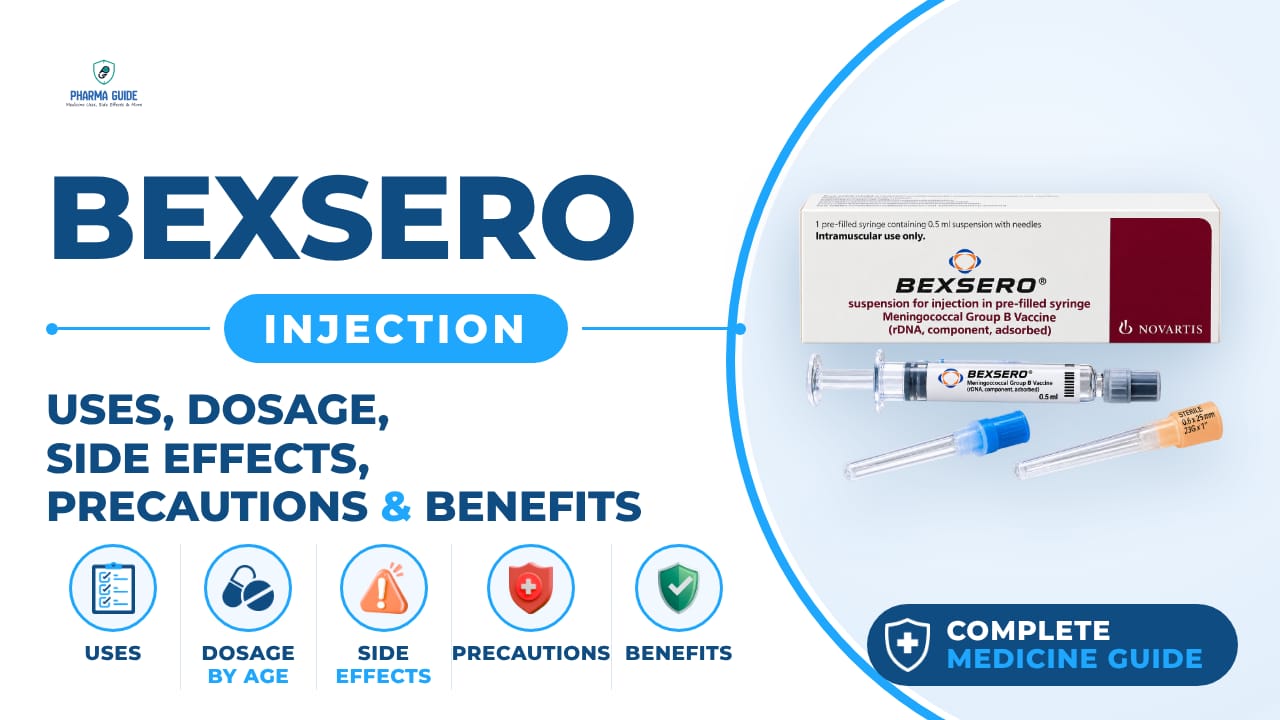
| Generic name | Meningococcal group B vaccine (rDNA, component, adsorbed) |
|---|---|
| Drug class | Meningococcal vaccine |
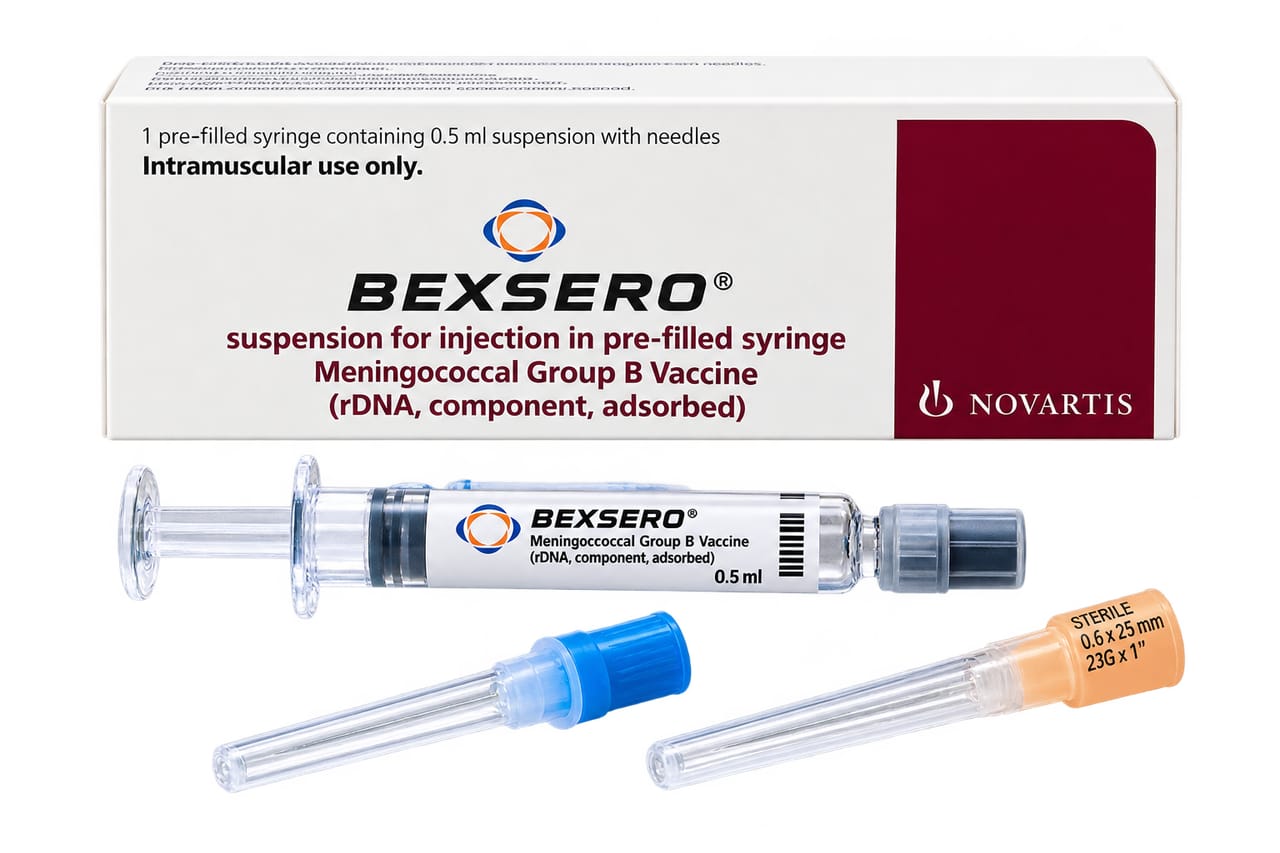
| Forms | Suspension for injection in a pre-filled syringe |
Quick overview
Bexsero Injection is a meningococcal group B vaccine used to protect people from the age of two months against invasive disease caused by Neisseria meningitidis serogroup B, including meningitis and septicaemia. It is given as an injection by a doctor or nurse and works by helping the body produce its own protective antibodies. Common side effects include injection site reactions, fever, and a general feeling of being unwell, while rare but serious reactions such as allergic reactions can occur.
What is Bexsero Injection
Bexsero is a vaccine used to protect people from the age of two months against invasive disease caused by group B of the bacterium Neisseria meningitidis. This disease can cause serious infections such as meningitis and septicaemia (blood infection). Bexsero contains parts of the bacteria N. meningitidis group B.
Bexsero Injection uses
- Active immunisation against invasive disease caused by Neisseria meningitidis serogroup B strains
- Used for immunisation of children from the age of 2 months and older, adolescents and adults to prevent disease caused by Neisseria meningitidis Group B
Benefits of Bexsero Injection
- Helps protect against invasive meningococcal disease caused by serogroup B bacteria.
- Helps prevent meningococcal meningitis, an infection of the lining around the brain and spinal cord.
- Helps reduce the risk of meningococcal bloodstream infection (sepsis).
- Stimulates the immune system to produce protective antibodies against meningococcal group B.
- Helps lower the risk of severe complications such as brain damage, hearing loss, limb loss, or death from meningococcal disease.
- In the U.S., Bexsero is approved for people aged 10 through 25 years.
How Bexsero Injection works
Bexsero works by causing the body to produce its own protection (antibodies) against meningococcal bacteria. It usually takes a few weeks after vaccination for the body to develop protection against Neisseria meningitidis group B. If a vaccinated person comes into contact with the bacteria, the body is usually able to destroy it, though 100% protection cannot be guaranteed.
Bexsero Injection dosage
Bexsero is given as an injection by a doctor or nurse into the upper arm, or for children into the upper thigh muscle. It should not be injected directly into a blood vessel or into or under the skin. More than one dose may be needed; talk to your doctor or nurse for details. If given at the same time as other vaccines, it should be injected into a different arm or leg from the other vaccine. Your doctor or nurse may recommend a fever-lowering medicine after vaccination to help reduce common side effects like fever.
| Age group | Dose |
|---|---|
| 2–5 months | 0.5 mL IM per dose; primary series and booster according to the local vaccination schedule |
| 6–11 months | 0.5 mL IM per dose; usually 2-dose primary series followed by a booster |
| 12–23 months | 0.5 mL IM per dose; usually 2 doses at least 2 months apart, with booster according to schedule |
| 2–10 years | 0.5 mL IM per dose; generally 2-dose series, schedule depending on local guidance |
| 11 years and older | 0.5 mL IM per dose; number and timing of doses depend on current vaccination recommendations and individual risk |
Available forms and strengths
- Suspension for injection in a pre-filled syringe
Side effects of Bexsero Injection
Common
- Pain at the injection site
- Redness at the injection site
- Swelling of the skin at the injection site
- Hardness of skin at the injection site
- Fever
- A general feeling of being unwell
- Feeling irritable
- Unusual crying
- Loss of appetite
- Painful muscles and joints
- Headache
- Nausea
- Vomiting
- Diarrhoea
- Skin rashes
- Sleepiness
Serious
- Allergic reaction (rare) - swelling of the limbs, face, eyes, inside of the nose, mouth or throat; shortness of breath, breathing or swallowing difficulties; hives, itching, reddening of the skin or severe skin reactions; unusual tiredness or weakness that is sudden and severe
- High fever (40°C or higher) in infants, toddlers and children up to 10 years
- Seizures (including febrile seizures due to fever)
- Dry skin, paleness (rare after booster)
- Itchy skin, skin rash
- Kawasaki disease - fever lasting more than 5 days with a rash on the trunk, sometimes followed by peeling skin on hands and fingers, swollen glands in the neck, red eyes, lips, throat, tongue
- Enlarged lymph nodes
- Collapse, sudden onset of muscle floppiness, less responsive than usual or lack of awareness, feeling faint or fainting
- Paleness or bluish skin discolouration in young children
- Extensive swelling of the vaccinated limb, blisters at or around the injection site, hard lump at the injection site (which may persist for more than one month)
Warnings and precautions
- Do not receive Bexsero if you or your child are allergic to Bexsero or any of its ingredients.
- Check with your doctor or nurse if you or your child are allergic to kanamycin (an antibiotic), have had an allergic reaction or become unwell after any other vaccine, or have a severe infection with a high temperature - vaccination may need to be delayed.
- Little is known about how well Bexsero works in people with weakened immunity due to immunosuppressive medicines or genetic immune disorders; effectiveness could be reduced in these people.
- People with certain complement deficiencies, or who receive treatment such as eculizumab that blocks complement activation, could remain at risk of meningococcal group B infection even after vaccination.
- If a baby was born prematurely (before or at 28 weeks gestation), especially with breathing difficulties, tell your doctor, as short pauses or irregular breathing may be more common in the first 3 days after vaccination and the baby may need special monitoring.
- Safety and effectiveness in adults over 50 have not been established, and there is limited data on use in people with chronic medical conditions.
- Fainting can happen following, or even before, any needle injection. Tell the person giving the injection if you or your child have fainted with a previous injection.
- Check with your doctor if you are pregnant or intend to become pregnant. They will discuss the benefits and risks of receiving Bexsero during pregnancy.
- Talk to your doctor if you are breastfeeding or intend to breastfeed. They will discuss the benefits and risks of receiving Bexsero while breastfeeding.
- No specific dose adjustment is generally required for kidney function. People with significant kidney disease or weakened immunity should discuss vaccination with their doctor.
- No specific liver-related dose adjustment is normally required.
- No known direct interaction with alcohol, but avoiding excessive alcohol around vaccination may help if you feel feverish, dizzy, or unwell.
- Be careful before you drive or use machines or tools until you know how Bexsero affects you. No studies on the effects on driving or using machines have been performed.
Storage
- Store refrigerated at 2–8°C (36–46°F).
- Keep in the original package to protect from light.
- Do not freeze; discard if the vaccine has been frozen.
- Keep refrigerated until ready for administration.
- Do not use after the expiry date or if storage conditions have not been maintained.
- Keep securely stored and out of reach of children.
When to see a doctor
- If you think too much Bexsero has been given, you may need urgent medical attention - contact your doctor or go to the Emergency Department even if there are no signs of discomfort.
- If you notice signs of an allergic reaction, such as swelling of the limbs, face, eyes, inside of the nose, mouth or throat, shortness of breath, breathing or swallowing difficulties, hives, itching, reddening of the skin, or sudden severe tiredness or weakness, go to the Emergency Department of the nearest hospital immediately.
- Call your doctor straight away, or go straight to the Emergency Department, if you notice serious side effects such as high fever, seizures, dry skin or paleness, itchy skin or rash, or signs of Kawasaki disease.
Alternatives
- Nimenrix
- Menactra
- Menveo
- MenQuadfi
- Trumenba
Watch the video
FAQs
What is Bexsero Injection used for?
Bexsero is a vaccine used for active immunisation against invasive disease caused by Neisseria meningitidis serogroup B, including meningitis and septicaemia, in people from the age of 2 months.
How does Bexsero Injection work?
Bexsero works by causing the body to produce its own antibodies against meningococcal group B bacteria. It usually takes a few weeks after vaccination for protection to develop.
What are the common side effects of Bexsero Injection?
Common side effects include pain, redness, swelling, and hardness at the injection site, fever, irritability, loss of appetite, headache, muscle and joint pain, nausea, vomiting, diarrhoea, skin rashes, and sleepiness.
How is Bexsero Injection given?
Bexsero is given as an injection by a doctor or nurse into the upper arm, or into the upper thigh muscle for children. More than one dose may be needed depending on age and local vaccination schedules.
Who should avoid Bexsero Injection?
People allergic to Bexsero or any of its ingredients should not receive it, and those allergic to kanamycin or who have had reactions to other vaccines should check with their doctor before vaccination.
General information, not medical advice
Your prescriber and the leaflet in your pack know your situation. This page does not.
- Follow your prescriber and the leaflet
- Don't start, stop, or change a dose on your own
- Doses and warnings differ by country and product
Sources
Video
Related medicines

Injectafer Injection: Uses, Dosage, Side Effects, Precautions and Alternates
Iron products
Injectafer (ferric carboxymaltose) treats iron deficiency anemia and heart failure-related iron deficiency via IV. Learn uses, dosage, side effects, and

Gliclazide Tablet: Uses, Dosage, Side Effects, Precautions and Alternates
Sulfonylurea (hypoglycemic/antidiabetic agent)
Gliclazide Tablet is a sulfonylurea for type 2 diabetes that boosts insulin release. Learn about dosage, side effects, warnings, and precautions.