
Safety
General information, not medical advice
Your prescriber and the leaflet in your pack know your situation. This page does not.
- Follow your prescriber and the leaflet
- Don't start, stop, or change a dose on your own
- Doses and warnings differ by country and product
Bextra Tablet: Uses, Dosage, Side Effects, Precautions and Alternates
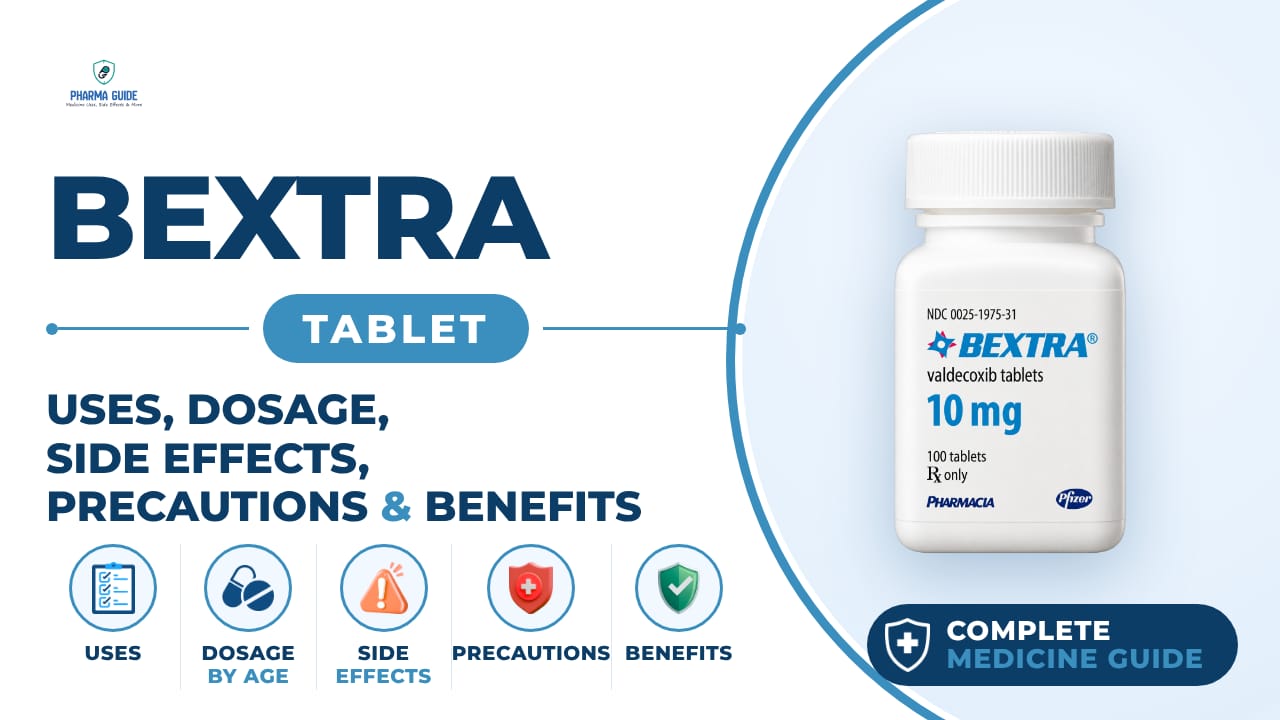
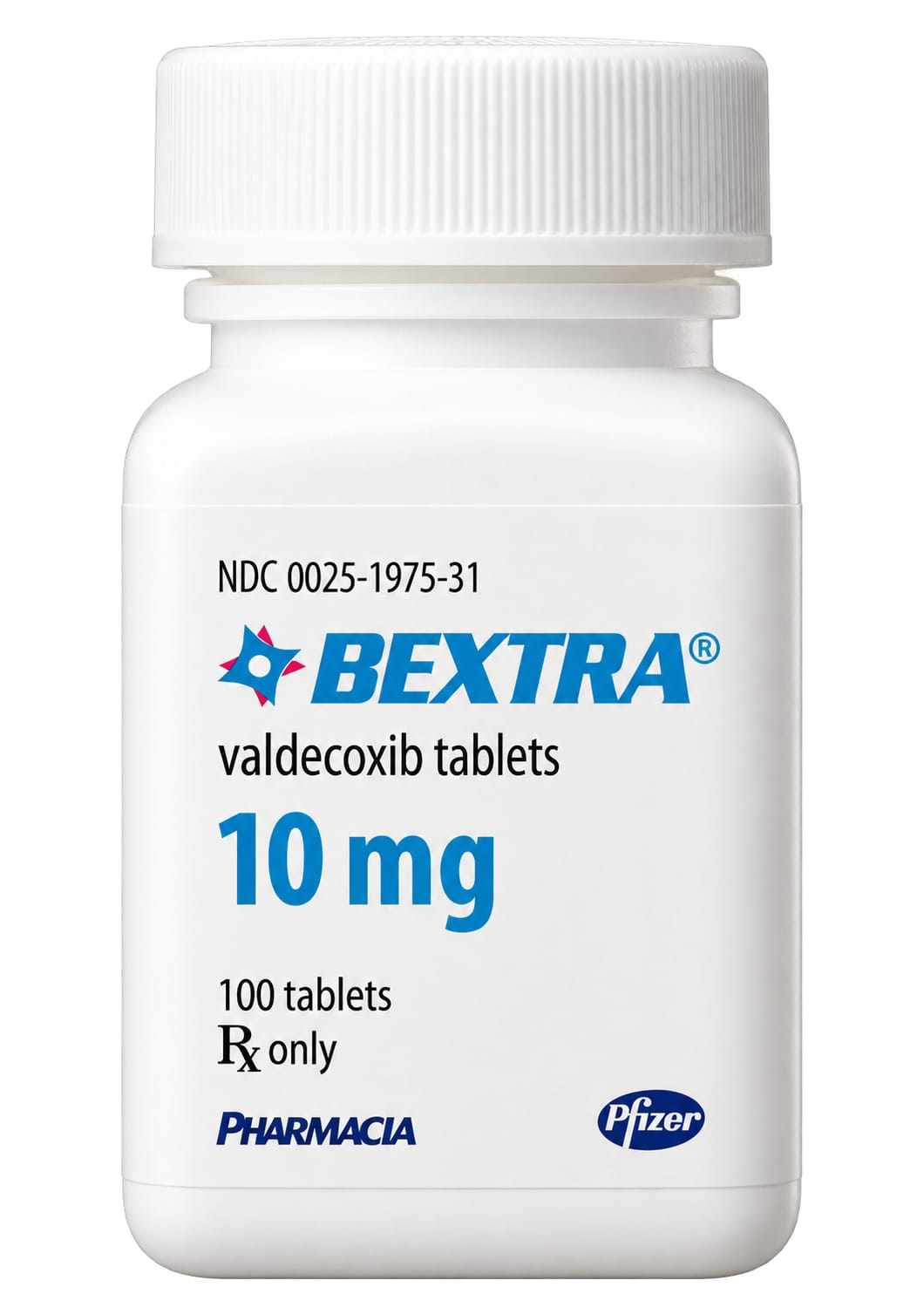
| Generic name | valdecoxib |
|---|---|
| Drug class | Cox-2 inhibitors (NSAID) |
| Forms | Film-coated tablets |
Quick overview
Bextra Tablet (valdecoxib) is a nonsteroidal anti-inflammatory drug (NSAID) and selective COX-2 inhibitor that was used to relieve the pain, swelling, and stiffness of osteoarthritis and adult rheumatoid arthritis, as well as painful menstrual cramps. It was voluntarily withdrawn from the market in 2005 due to safety concerns and is no longer sold in the United States or the European Union. It works by blocking the COX-2 enzyme responsible for pain and swelling while affecting the stomach's protective prostaglandins less than older NSAIDs.
What is Bextra Tablet
Bextra is a nonsteroidal anti-inflammatory drug (NSAID) and selective COX-2 inhibitor that was used to treat arthritis pain and menstrual cramps. It was pulled from the market in 2005 because of safety concerns. It is no longer sold in the United States or the European Union.
Bextra Tablet uses
- Relief of pain, swelling, and stiffness caused by osteoarthritis
- Relief of pain, swelling, and stiffness caused by adult rheumatoid arthritis
- Treatment of painful menstrual cramps (primary dysmenorrhea)
Benefits of Bextra Tablet
- Reduced joint pain, swelling, and stiffness from osteoarthritis and rheumatoid arthritis
- Relief of menstrual pain and cramping
- Studies showed lower rates of stomach ulcers compared to some older NSAIDs at recommended doses
How Bextra Tablet works
The body makes substances called prostaglandins. Some of these cause pain and swelling, while others help protect the stomach lining. Bextra blocks an enzyme called COX-2 that produces the prostaglandins responsible for pain and swelling, without blocking the protective ones in the stomach as much as older NSAIDs do.
Bextra Tablet dosage
Take Bextra exactly as directed by your doctor. Take each dose with a full glass of water. It can be taken with or without food or milk. It is not for use in children; Bextra was intended for adults only. If a dose is missed, take it as soon as remembered, but skip it if it is almost time for the next dose — do not double up.
| Age group | Dose |
|---|---|
| Under 18 years | Safety and effectiveness were not established; no standard pediatric dose |
| 18–39 years | 40–64 years |
| 65–74 years | Historical adult dosing was used cautiously; no specific age-based dose was established |
| 75 years and older | No separate standard geriatric dose; cautious individualized use would have been required |
Available forms and strengths
- Film-coated tablets
Side effects of Bextra Tablet
Common
- Diarrhea
- Nausea or upset stomach
- Headache
- Abdominal pain
- Indigestion/heartburn
- Upper respiratory tract infection
- Gas (flatulence)
- Flu-like symptoms
- Dizziness
- Abdominal fullness
- Sinus infection
- Dry mouth
- Cough
- Sore throat
- Anemia
- Insomnia or sleepiness
- Urinary tract infection
- Swelling of ankles, legs and feet
- Raised blood pressure
Serious
- Serious skin reactions such as rash, blistering, or peeling of the skin (erythema multiforme, Stevens-Johnson syndrome, toxic epidermal necrolysis)
- Signs of allergic reaction: hives, itching, difficulty breathing, swelling of the lips, tongue, or face
- Signs of stomach bleeding: abdominal pain, bloody or black tarry stools, vomiting blood
- Unexplained weight gain or swelling (fluid retention)
- Yellowing of the skin or eyes (jaundice), signs of liver problems
- Fatigue, lethargy, or flu-like symptoms that could signal a serious reaction
- Unusual bruising or bleeding
- Heart attack, stroke, or other cardiovascular events
- Kidney failure
- Pancreatitis
Warnings and precautions
- Bextra was voluntarily withdrawn from the U.S. market in 2005 because of an increased risk of serious cardiovascular problems like heart attack and stroke, and an increased risk of rare but serious skin reactions.
- Do not take Bextra if you have had asthma, hives, or an allergic reaction after taking a sulfa-based medicine, aspirin, or another NSAID — you may have a similar reaction to Bextra.
- Serious skin reactions can occur with Bextra, usually within the first two weeks of treatment, but they can happen at any time.
- Bextra should not be used to treat pain after coronary artery bypass surgery (CABG), since this increased the risk of heart problems, serious infections, and wound healing problems in studies.
- Bextra is not recommended for women who are trying to become pregnant.
- Bextra should not be used by people with an active stomach or intestinal ulcer or bleeding, inflammatory bowel disease, or severe congestive heart failure.
- Bextra should not be used in the last three months of pregnancy, as it may harm the baby's heart development. It should only be used earlier in pregnancy if your doctor decides the benefit outweighs the risk.
- Women who are breastfeeding should not take Bextra, since it is not known whether it passes into human breast milk.
- People with kidney problems should use Bextra with caution, as it may affect kidney function and cause fluid retention, especially in people already prone to these issues.
- People with moderate liver problems should start at the lowest dose and use caution. Bextra should not be used by people with severe liver disease.
- Tell your doctor if you drink alcohol before taking Bextra.
- If you feel dizzy, tired, or drowsy after taking Bextra, avoid driving or using heavy machinery until you feel better.
Storage
- Store at room temperature away from moisture and heat
- Keep out of the reach and sight of children
- There are no special storage instructions
- Do not use after the expiry date on the box, blister strip, or bottle
When to see a doctor
- Stop taking Bextra and contact your doctor immediately if you develop a skin rash, hives, itching, difficulty breathing, or swelling of the lips, tongue, or face.
- Notify your doctor immediately if you have abdominal pain or tenderness, nausea, bloody vomit, bloody or black tarry stools, unexplained weight gain, swelling, fatigue, skin rash, itching, yellowing of the skin or eyes, flu-like symptoms, or unusual bruising or bleeding — these could be early signs of dangerous side effects.
- Seek emergency medical attention if you take too much Bextra. Signs of overdose include drowsiness, nausea, vomiting, and stomach pain.
- If you develop blistering or peeling of the skin, or ulcers in the mouth, eyes, or on the skin, stop taking Bextra and seek medical attention right away.
- Seek immediate emergency help if you have signs of a severe allergic (anaphylactic) reaction.
Alternatives
- Celecoxib
- Naproxen
- Ibuprofen
- Meloxicam
Watch the video
FAQs
What was Bextra Tablet used for?
Bextra was used to relieve pain, swelling, and stiffness from osteoarthritis and adult rheumatoid arthritis, and to treat painful menstrual cramps (primary dysmenorrhea).
Why was Bextra withdrawn from the market?
Bextra was voluntarily withdrawn from the U.S. market in 2005 due to an increased risk of serious cardiovascular problems like heart attack and stroke, along with an increased risk of rare but serious skin reactions.
How does Bextra Tablet work?
Bextra blocks the COX-2 enzyme that produces prostaglandins responsible for pain and swelling, while affecting the stomach's protective prostaglandins less than older NSAIDs.
Who should not take Bextra Tablet?
Bextra should not be taken by people who have had asthma, hives, or an allergic reaction to sulfa-based medicines, aspirin, or other NSAIDs, those with active stomach or intestinal ulcers or bleeding, inflammatory bowel disease, severe congestive heart failure, or severe liver disease, and it should not be used for pain after coronary artery bypass surgery.
Can Bextra be used during pregnancy or breastfeeding?
Bextra should not be used in the last three months of pregnancy due to risks to the baby's heart development, and should only be used earlier in pregnancy if the doctor decides the benefit outweighs the risk. Breastfeeding women should not take Bextra since it is not known whether it passes into breast milk.
General information, not medical advice
Your prescriber and the leaflet in your pack know your situation. This page does not.
- Follow your prescriber and the leaflet
- Don't start, stop, or change a dose on your own
- Doses and warnings differ by country and product
Sources
Video
Related medicines

Injectafer Injection: Uses, Dosage, Side Effects, Precautions and Alternates
Iron products
Injectafer (ferric carboxymaltose) treats iron deficiency anemia and heart failure-related iron deficiency via IV. Learn uses, dosage, side effects, and

Gliclazide Tablet: Uses, Dosage, Side Effects, Precautions and Alternates
Sulfonylurea (hypoglycemic/antidiabetic agent)
Gliclazide Tablet is a sulfonylurea for type 2 diabetes that boosts insulin release. Learn about dosage, side effects, warnings, and precautions.