
Safety
General information, not medical advice
Your prescriber and the leaflet in your pack know your situation. This page does not.
- Follow your prescriber and the leaflet
- Don't start, stop, or change a dose on your own
- Doses and warnings differ by country and product
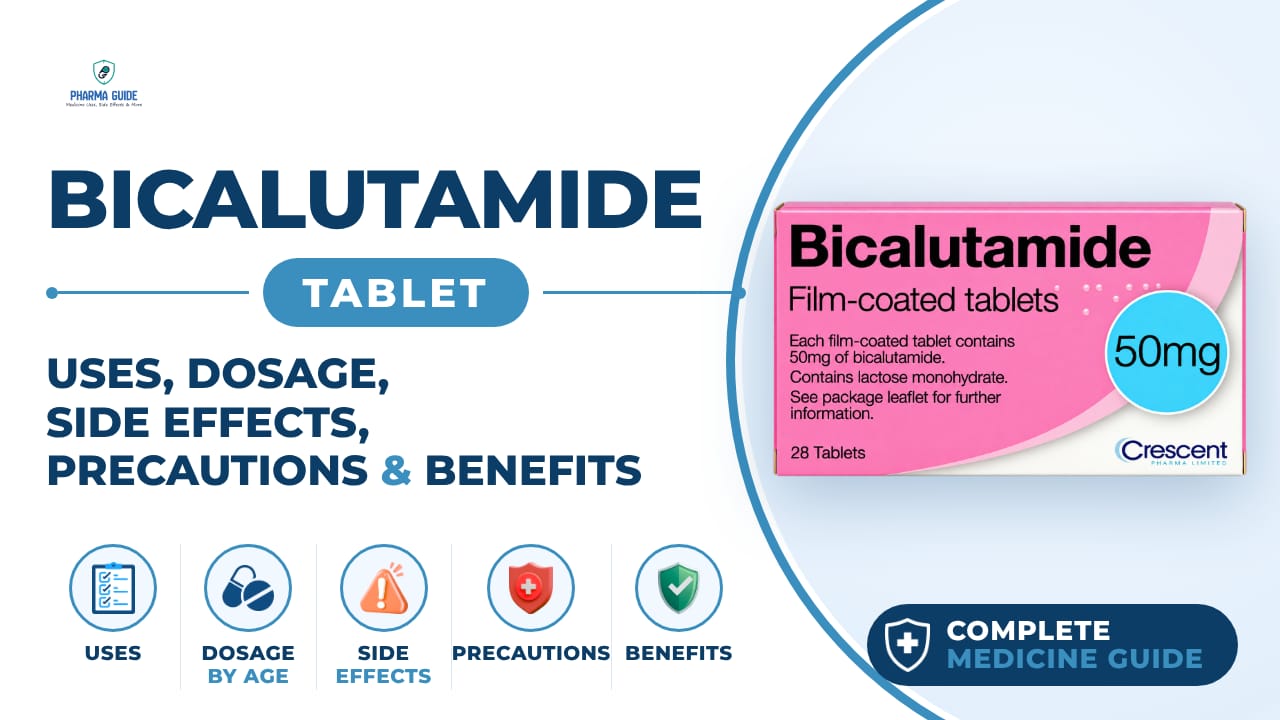
Bicalutamide Tablet: Uses, Dosage, Side Effects, Precautions and Alternates
| Generic name | Bicalutamide |
|---|---|
| Drug class | Non-Steroidal Antiandrogen |
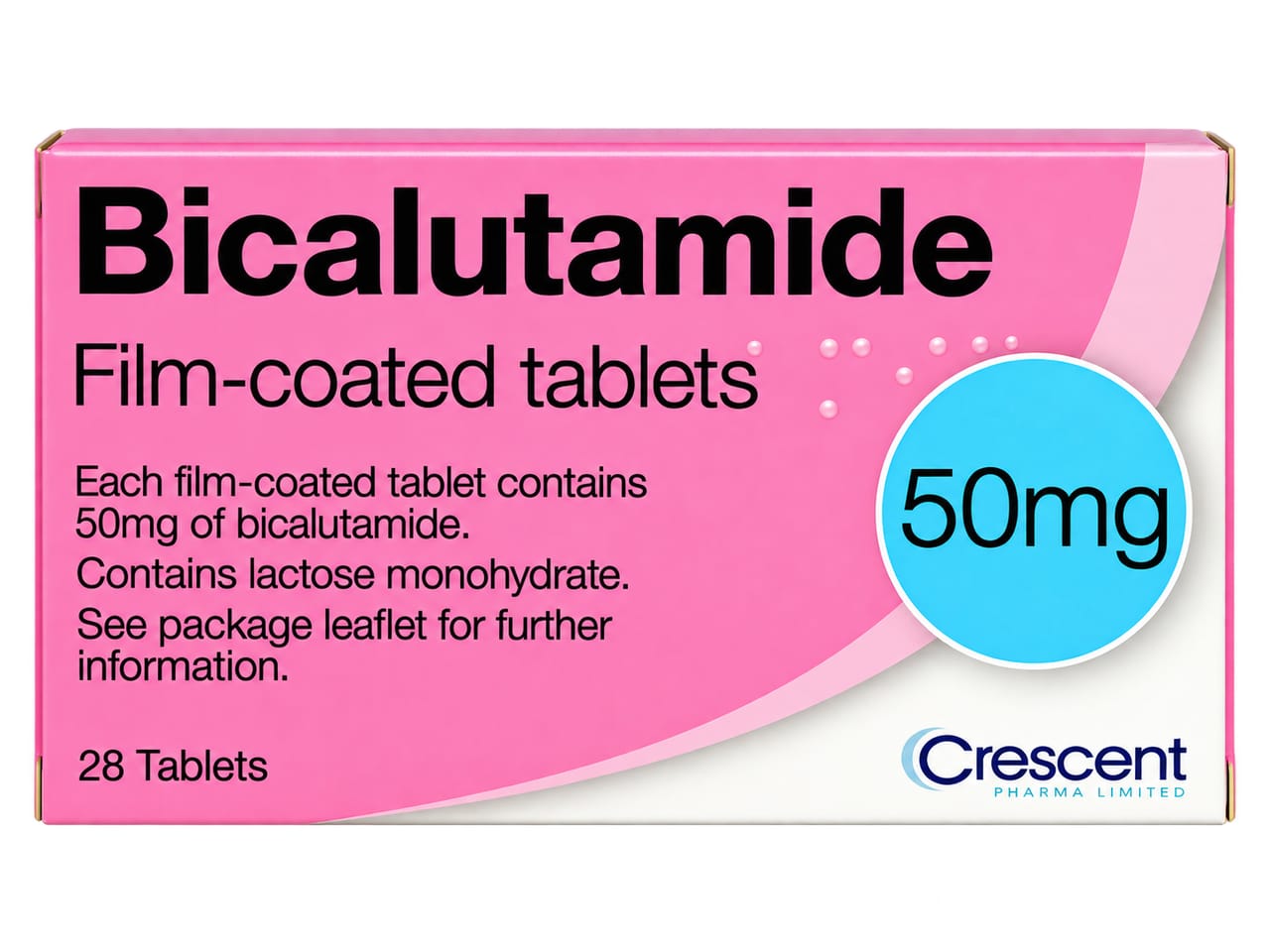
| Forms | Oral tablet (50 mg) |
Quick overview
Bicalutamide Tablet is a non-steroidal anti-androgen used together with other treatments to lower male hormone (androgen) levels in the body. It is used in combination with an LHRH analogue drug or with surgical removal of the testicles to treat advanced (metastatic) prostate cancer. It works by blocking the action of androgens that can drive prostate tumor growth. It is taken as a 50 mg tablet once daily and must not be used by women.
What is Bicalutamide Tablet
Bicalutamide is a non-steroidal anti-androgen tablet. It is used together with other treatments to lower male hormone (androgen) levels in the body, helping to slow or stop the growth of prostate cancer.
Bicalutamide Tablet uses
- Treatment of advanced (metastatic) prostate cancer, used in combination with an LHRH analogue drug or with surgical removal of the testicles (surgical castration)
Benefits of Bicalutamide Tablet
- Combined with LHRH therapy or surgical castration, it helps slow the growth of prostate cancer by blocking the action of male hormones (androgens) that can drive tumor growth
- Treats certain metastatic prostate cancers
- Blocks the effects of androgens on prostate cancer cells
- Helps slow androgen-dependent cancer growth
- Used together with LHRH therapy
- Provides an oral hormonal treatment option
How Bicalutamide Tablet works
Androgens are male hormones that can cause prostate tumors to grow. Bicalutamide blocks some of the actions of androgens, which helps stop the tumor from growing.
Bicalutamide Tablet dosage
Follow your doctor's instructions about when and how to take your tablets. Swallow the tablet whole with a drink of water. Try to take your dose at the same time each day. It can be taken with or without food. If you miss a dose, do not take an extra dose — just resume your usual schedule. Your doctor may monitor your liver function during the first few months of treatment.
| Age group | Dose |
|---|---|
| Under 18 years | Safety and effectiveness have not been established for routine pediatric use |
| 18–64 years | 50 mg once daily, used with an LHRH analog for metastatic prostate cancer |
| 65 years and older | 50 mg once daily, with individualized oncology monitoring |
Available forms and strengths
- Oral tablet (50 mg)
Side effects of Bicalutamide Tablet
Common
- Hot flashes/flushes
- Feeling weak or tired (asthenia)
- Constipation
- Nausea
- Swelling in arms, legs, ankles, or feet (peripheral edema)
- Decreased red blood cell count (anemia)
- Blood in urine (hematuria)
- Abdominal pain
- Dizziness
- Enlarged or tender breast tissue (gynecomastia)
- Rash
- Chest pain
- Erectile dysfunction
- Flatulence
- Indigestion (dyspepsia)
- Decreased appetite
- Weight gain
- Depression
- Dry skin
- Hair loss or hair regrowth
- Itching
- Sleepiness
- Reduced sex drive
- Infection
- Shortness of breath
- Having to urinate a lot at night
Serious
- Rare liver failure, including fatal outcomes
- Uncommon interstitial lung disease (lung inflammation), including fatal outcomes
- Yellow skin and eyes (jaundice), which may be signs of liver damage
- Heart failure (reduced heart function)
- Heart attack (myocardial infarction)
- Severe itching with raised lumps, or swelling of the face, lips, tongue, or throat causing difficulty swallowing
- Serious breathlessness or sudden worsening of breathlessness, possibly with cough or fever
Warnings and precautions
- This medicine should only be prescribed by a doctor who is experienced in treating prostate cancer.
- The 150 mg per day dose should not be used. Rare but serious liver failure has occurred, including deaths. Uncommon but serious lung inflammation (interstitial lung disease) has occurred, including deaths.
- This medicine should not be used in people with early-stage (localized) prostate cancer who are undergoing watchful waiting, because this has been linked to increased risk of death.
- This medicine must not be given to children.
- Combining this medicine with hormone-blocking therapy increases the risk of heart and blood vessel problems, including heart attack, heart failure, and sudden cardiac death.
- This treatment combination can affect heart rhythm (QT interval), which may be risky for people with certain heart conditions or those taking certain other medicines.
- This medicine can make your skin very sensitive to sunlight. Use sunscreen and protective clothing. If taken with blood thinners like warfarin, your doctor should monitor your blood clotting closely, as the dose of the blood thinner may need to change.
- This medicine must not be taken by women, including those who are pregnant, as it can harm an unborn baby. This medicine must not be used by breastfeeding mothers.
- No dose change is needed for people with kidney problems. This medicine should be used carefully in people with moderate to severe liver problems, since the drug may build up more in the body. Tell your doctor if you have liver disease.
- It is not known for certain how alcohol affects this medicine, but drinking alcohol may increase the risk of feeling drowsy while taking it. This medicine may make you feel sleepy. Do not drive or use machines until you know how it affects you.
Storage
- Keep your tablets in the container they came in
- Do not take your tablets after the expiry date on the container; dispose of them in an appropriate way
- Keep your tablets in a safe place where children cannot see or reach them
- Keep your tablets at room temperature (15°C to 30°C)
When to see a doctor
- Get emergency help right away if you have severe itching with raised lumps, or swelling of the face, lips, tongue, or throat that causes trouble swallowing.
- Get emergency help right away if you have serious breathlessness or sudden worsening of breathlessness, possibly with a cough or fever — this could be a sign of lung inflammation.
- Tell your doctor if you notice yellowing of your skin or eyes, as this may be a sign of liver damage.
- Seek medical attention for signs of heart problems, such as heart failure or heart attack symptoms.
- In case of an overdose, contact a health care practitioner, hospital emergency department, or your regional poison control center immediately, even if you have no symptoms.
Alternatives
- Enzalutamide
- Apalutamide
- Darolutamide
Watch the video
FAQs
What is Bicalutamide Tablet used for?
It is used to treat advanced (metastatic) prostate cancer, in combination with an LHRH analogue drug or with surgical removal of the testicles.
How is Bicalutamide Tablet taken?
It is taken as a 50 mg tablet once daily, swallowed whole with water, at the same time each day, with or without food.
Can women take Bicalutamide Tablet?
No, this medicine must not be taken by women, including those who are pregnant or breastfeeding, as it can harm an unborn baby.
What are the serious side effects of Bicalutamide Tablet?
Serious side effects include rare liver failure, lung inflammation, jaundice, heart failure, heart attack, and severe allergic reactions, some of which can be fatal.
Does Bicalutamide Tablet affect the liver?
Yes, rare but serious liver failure has occurred, including deaths, so doctors may monitor liver function during the first few months of treatment.
General information, not medical advice
Your prescriber and the leaflet in your pack know your situation. This page does not.
- Follow your prescriber and the leaflet
- Don't start, stop, or change a dose on your own
- Doses and warnings differ by country and product
Sources
Video
Related medicines

Injectafer Injection: Uses, Dosage, Side Effects, Precautions and Alternates
Iron products
Injectafer (ferric carboxymaltose) treats iron deficiency anemia and heart failure-related iron deficiency via IV. Learn uses, dosage, side effects, and

Gliclazide Tablet: Uses, Dosage, Side Effects, Precautions and Alternates
Sulfonylurea (hypoglycemic/antidiabetic agent)
Gliclazide Tablet is a sulfonylurea for type 2 diabetes that boosts insulin release. Learn about dosage, side effects, warnings, and precautions.