
Safety
General information, not medical advice
Your prescriber and the leaflet in your pack know your situation. This page does not.
- Follow your prescriber and the leaflet
- Don't start, stop, or change a dose on your own
- Doses and warnings differ by country and product
Bidil Tablet: Uses, Dosage, Side Effects, Precautions and Alternates
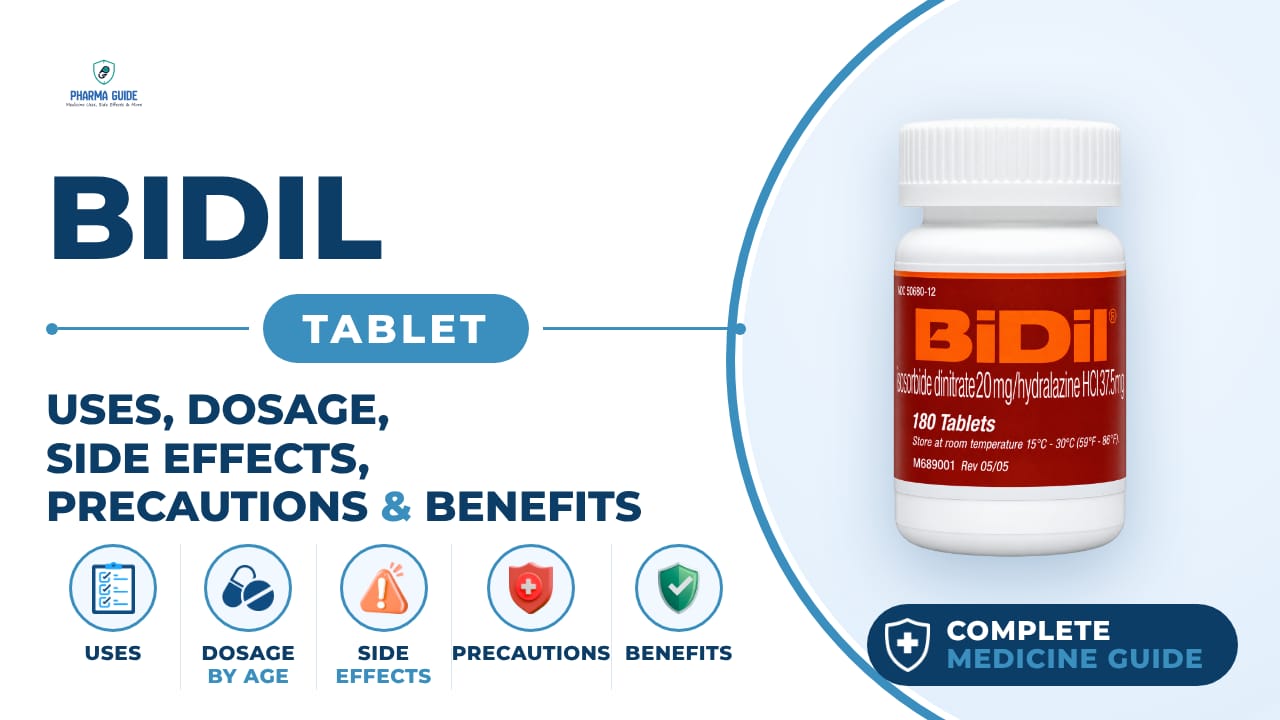
| Generic name | hydralazine hydrochloride and isosorbide dinitrate |
|---|---|
| Drug class | Miscellaneous antihypertensive combinations |
| Forms | Tablet (scored, film-coated) |
Quick overview
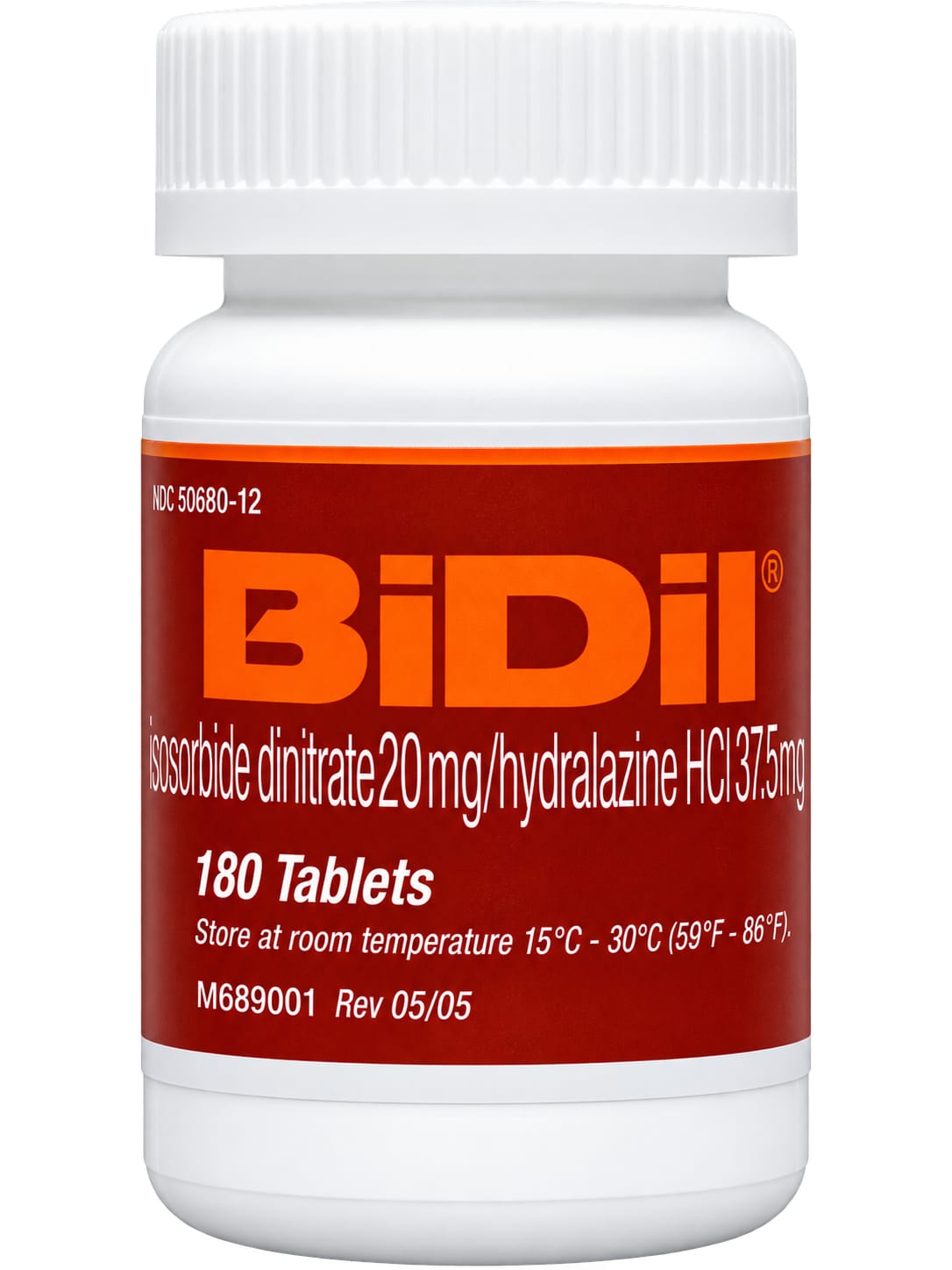
Bidil Tablet combines hydralazine hydrochloride and isosorbide dinitrate, two medicines that work together to relax and widen blood vessels and make it easier for the heart to pump. It is used to treat heart failure with reduced ejection fraction (HFrEF), helping reduce shortness of breath and fatigue while easing the workload on the heart. It may lower the risk of death and hospitalization related to heart failure. It belongs to the miscellaneous antihypertensive combinations drug class.
What is Bidil Tablet
BiDil combines two medicines: hydralazine, which relaxes veins and arteries to make it easier for the heart to pump, and isosorbide dinitrate, a nitrate that widens blood vessels so blood flows more easily and the heart doesn't have to work as hard.
Bidil Tablet uses
- Treats heart failure with reduced ejection fraction (HFrEF)
- Helps reduce shortness of breath and fatigue
- Helps improve exercise tolerance
- Reduces the workload on the heart
Benefits of Bidil Tablet
- Can reduce the chance of dying from heart failure
- Can lower the chance of being hospitalized for heart failure
- Can improve how patients report their daily functioning and quality of life
- Helps relax and widen blood vessels
How Bidil Tablet works
The exact way BiDil helps heart failure is not fully known, but isosorbide dinitrate releases nitric oxide that relaxes blood vessels, while hydralazine relaxes artery walls; together they may help the body use nitric oxide better in black patients.
Bidil Tablet dosage
Take this medicine exactly as your doctor directs, and follow all instructions on your prescription label. Take it regularly and continuously as directed, even if you feel well. Do not stop taking this medicine suddenly, as this may make your condition worse — talk to your doctor first.
Your dose may be raised every few days if you tolerate it well, or lowered if side effects are hard to manage, with the goal of getting back to a higher dose once side effects ease. Headaches are common when starting treatment and usually improve over time; do not stop the medicine because of headache without talking to your doctor. There is no information on whether food affects how this medicine is absorbed.
If you miss a dose, follow your prescription label directions and do not take extra medicine to make up for it.
| Age group | Dose |
|---|---|
| Under 18 years | No established pediatric dose |
| 18–39 years | 20 mg isosorbide dinitrate / 37.5 mg hydralazine, 1 tablet 3 times daily initially |
| 40–64 years | 20 mg / 37.5 mg, 1 tablet 3 times daily initially |
Available forms and strengths
- Tablet (scored, film-coated) — 20 mg isosorbide dinitrate / 37.5 mg hydralazine
Side effects of Bidil Tablet
Common
- Headache
- Dizziness
- Weakness (asthenia)
- Nausea
- Low blood pressure
- Sinus infection symptoms
- Fast heart rhythm (ventricular tachycardia)
- Tingling sensation (paresthesia)
- Vomiting
- Blurred vision
Serious
- Fainting or feeling like you might pass out
- Numbness or tingling in hands or feet
- Joint pain or swelling
- Fever, chest pain, or general ill feeling
- Fast heart rate
- Shortness of breath worse than usual
- Heart attack symptoms such as chest pain or pressure, pain spreading to jaw or shoulder, nausea, sweating
- Allergic reaction: hives, difficulty breathing, swelling of face, lips, tongue, or throat
Warnings and precautions
- Do not take this medicine with erectile dysfunction drugs (such as sildenafil, tadalafil, vardenafil, avanafil) or the pulmonary hypertension drug riociguat, as the combination can cause severe low blood pressure, fainting, or heart problems.
- This medicine can cause low blood pressure, especially when standing up, which may cause dizziness or fainting. This is more likely if you are dehydrated from not drinking enough fluids, sweating, diarrhea, or vomiting.
- One of the ingredients, hydralazine, can cause a lupus-like illness; symptoms usually go away after stopping the medicine.
- This medicine can cause a fast heartbeat and low blood pressure that may lead to reduced blood flow to the heart and chest pain, especially in people with a thickened heart muscle condition (hypertrophic cardiomyopathy).
- This medicine can cause nerve irritation with symptoms of tingling, numbness, and pins-and-needles sensations, which may be treated by adding vitamin B6 (pyridoxine).
- Do not take this medicine if you are allergic to nitrate medicines.
- It isn't known if this medicine could harm an unborn baby. There isn't enough information on the individual ingredients to know the risk of birth defects or miscarriage if used in early pregnancy, though data from later pregnancy use of one ingredient has not shown problems. Tell your doctor if you are pregnant or planning pregnancy.
- It isn't known whether this medicine passes into breast milk or could affect a nursing baby. Tell your doctor if you are breastfeeding so you can weigh the benefits of breastfeeding against your need for this medicine.
- There are no specific studies of this combination medicine in people with kidney problems, but based on the individual ingredients no dose change appears to be needed. Dialysis does not remove isosorbide dinitrate from the body, and it isn't known if it removes hydralazine.
- The effect of liver problems on hydralazine levels is not known. Isosorbide dinitrate levels increase in people with cirrhosis, and there are no specific studies of this combination medicine in people with liver impairment.
- Do not drink alcohol while taking this medicine, as it can add to the blood-vessel-widening effects and cause side effects.
- This medicine may affect your thinking or reactions, and it can cause dizziness. Be careful when driving, operating machinery, or doing anything that requires you to be alert, and avoid these activities if you feel dizzy.
Storage
- Store at room temperature 15°C - 30°C (59°F - 86°F)
- Keep bottles tightly closed
- Protect from light. Dispense in a light-resistant, tight container
- Store away from moisture, heat, and light
- Keep this and all other medicines out of the reach of children
When to see a doctor
- Get emergency help right away if you have signs of an allergic reaction such as hives, trouble breathing, or swelling of your face, lips, tongue, or throat.
- Call your doctor right away if you feel like you might faint, have numbness or tingling in your hands or feet, joint pain or swelling, fever or chest pain, a fast heartbeat, worse-than-usual shortness of breath, or signs of a heart attack like chest pain or pressure spreading to the jaw or shoulder with nausea and sweating.
- If you faint while taking this medicine, stop taking it and contact your doctor as soon as possible.
- If you think you have taken too much of this medicine, seek emergency medical help or contact a poison control center right away.
Alternatives
- Sacubitril/valsartan
- Lisinopril or another ACE inhibitor
- Losartan or another ARB
Watch the video
FAQs
What is Bidil Tablet used for?
It treats heart failure with reduced ejection fraction (HFrEF), helping reduce shortness of breath and fatigue, improve exercise tolerance, and reduce the workload on the heart.
How does Bidil Tablet work?
Isosorbide dinitrate releases nitric oxide that relaxes blood vessels, while hydralazine relaxes artery walls; together they may help the body use nitric oxide better, though the exact mechanism in heart failure isn't fully known.
What are the common side effects of Bidil Tablet?
Common side effects include headache, dizziness, weakness, nausea, low blood pressure, sinus infection symptoms, fast heart rhythm, tingling sensation, vomiting, and blurred vision.
Can Bidil Tablet be taken with erectile dysfunction drugs?
No, it should not be taken with erectile dysfunction drugs like sildenafil, tadalafil, vardenafil, avanafil, or the pulmonary hypertension drug riociguat, as this combination can cause severe low blood pressure, fainting, or heart problems.
Is it safe to drink alcohol while taking Bidil Tablet?
No, alcohol should be avoided while taking this medicine because it can add to the blood-vessel-widening effects and cause side effects.
General information, not medical advice
Your prescriber and the leaflet in your pack know your situation. This page does not.
- Follow your prescriber and the leaflet
- Don't start, stop, or change a dose on your own
- Doses and warnings differ by country and product
Sources
Video
Related medicines
Tribenzor Tablet: Uses, Dosage, Side Effects, Precautions and Alternates
Miscellaneous antihypertensive combinations
Tribenzor Tablet combines amlodipine, hydrochlorothiazide, and olmesartan to treat high blood pressure. Learn how it works, dosage, side effects, and

Injectafer Injection: Uses, Dosage, Side Effects, Precautions and Alternates
Iron products
Injectafer (ferric carboxymaltose) treats iron deficiency anemia and heart failure-related iron deficiency via IV. Learn uses, dosage, side effects, and