
Safety
General information, not medical advice
Your prescriber and the leaflet in your pack know your situation. This page does not.
- Follow your prescriber and the leaflet
- Don't start, stop, or change a dose on your own
- Doses and warnings differ by country and product
Tribenzor Tablet: Uses, Dosage, Side Effects, Precautions and Alternates
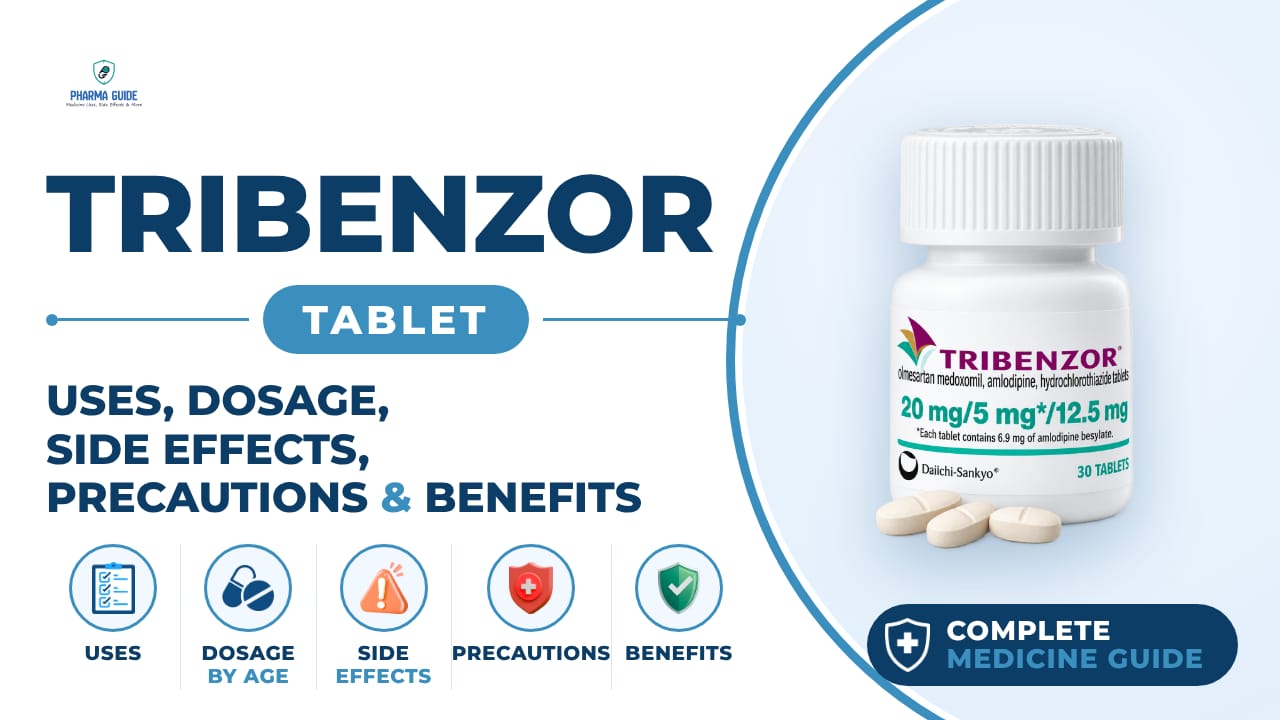
| Generic name | amlodipine, hydrochlorothiazide, and olmesartan |
|---|---|
| Drug class | Miscellaneous antihypertensive combinations |
| Forms | Tablet |
Quick overview
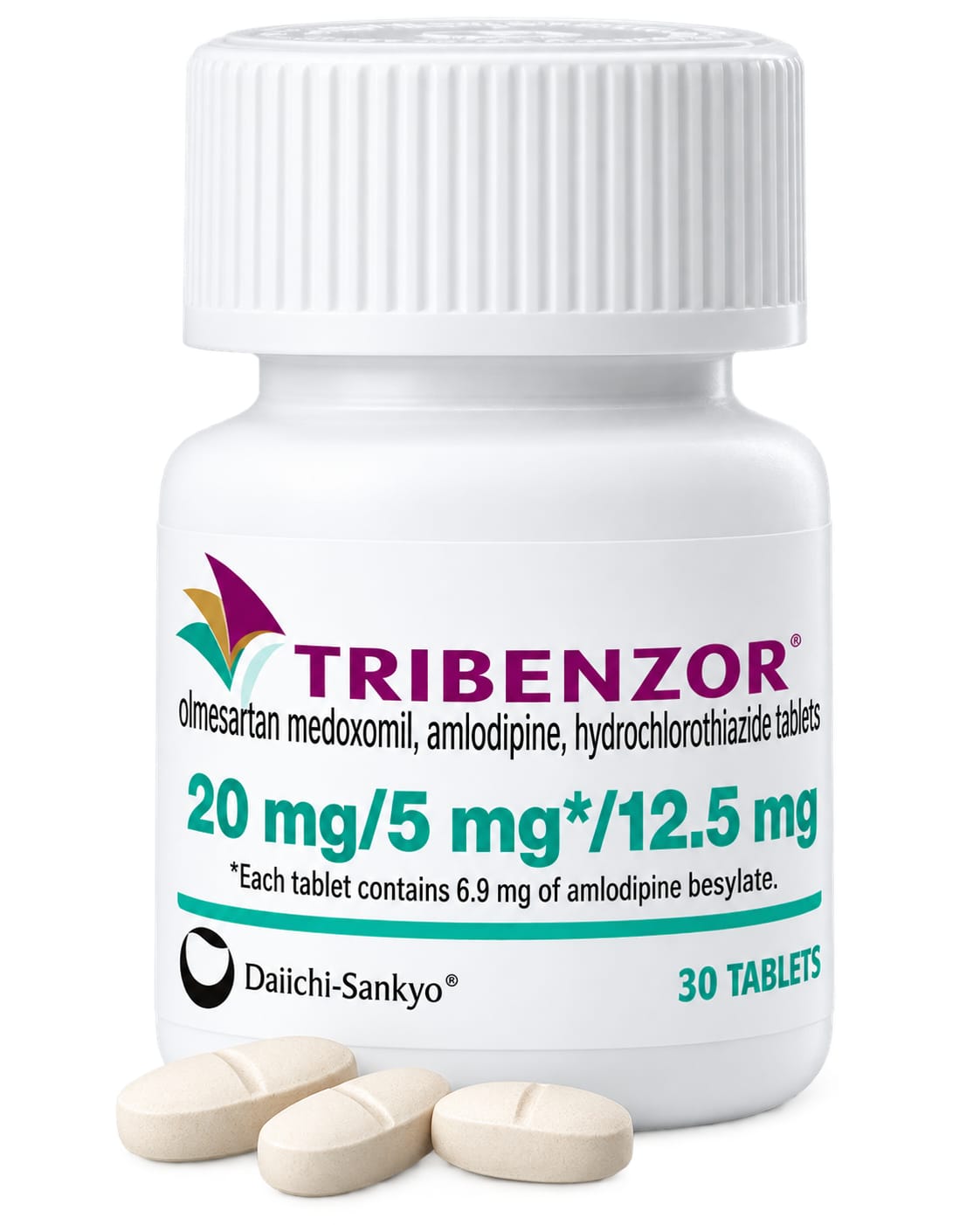
Tribenzor Tablet combines amlodipine, hydrochlorothiazide, and olmesartan, three blood pressure medicines in one tablet. It is used in adults whose high blood pressure is not controlled well enough with two single blood pressure medicines and is not meant to be the first medicine used to treat high blood pressure. It works by relaxing blood vessels, blocking a hormone that narrows blood vessels, and helping the kidneys remove extra salt and water. It is taken once daily as prescribed, with doses based on the individual strength and combination needed.
What is Tribenzor Tablet
Tribenzor is a prescription medicine that combines three different blood pressure drugs into one tablet. It is used in adults whose high blood pressure is not controlled well enough with two single blood pressure medicines, and it is not meant to be the first medicine used to treat high blood pressure.
Tribenzor Tablet uses
- Treats high blood pressure (hypertension) in adults
- Used after other blood pressure medicines have been tried without enough success, as a substitute for two individual blood pressure drugs or as an add-on when two classes of blood pressure medicine are not enough
Benefits of Tribenzor Tablet
- Lowers blood pressure more effectively than any one of its three ingredients alone
- Lowering blood pressure helps reduce the long-term risk of stroke, heart attack, and kidney damage
How Tribenzor Tablet works
Tribenzor combines three medicines that lower blood pressure in different ways. Olmesartan blocks a hormone called angiotensin II that normally narrows blood vessels. Amlodipine relaxes the muscles in blood vessel walls. Hydrochlorothiazide helps the kidneys remove extra salt and water from the body, which reduces fluid in the blood vessels.
Tribenzor Tablet dosage
Take exactly as prescribed; your doctor may change your dose over time. This medicine can be taken with or without food. Take it once a day, at the same time each day, to help you remember. It's best to take it at least 4 hours before bedtime so you don't need to wake up to urinate. Keep taking it even if you feel well, since high blood pressure often has no symptoms. It may take up to 2 weeks to see the full effect on your blood pressure.
Do not stop taking this medicine suddenly without talking to your doctor, as this can cause a dangerous rise in blood pressure. If you also take certain cholesterol-lowering medicines (such as cholestyramine or colestipol), take this medicine at least 4 hours before or 4 to 6 hours after those medicines. Drink plenty of water each day to avoid dehydration, and get up slowly from sitting or lying down to avoid dizziness. Tell your surgeon or dentist that you take this medicine before any surgery or medical procedure.
| Age group | Dose |
|---|---|
| Under 18 years | Safety and effectiveness have not been established; no FDA-approved pediatric dosage |
| 18–39 years | One prescribed combination tablet once daily, with strengths ranging from 20/5/12.5 mg to 40/10/25 mg |
| 40–74 years | One prescribed combination tablet once daily, based on previous treatment and blood-pressure response |
| 75 years and older | No separate geriatric dose; individualized selection of an approved once-daily strength with careful monitoring |
Available forms and strengths
- Tablet
Side effects of Tribenzor Tablet
Common
- Dizziness or lightheadedness
- Swelling of the hands, ankles, or feet
- Headache
- Fatigue or tiredness
- Cold symptoms, stuffy/runny nose, or sore throat
- Muscle spasms or cramps
- Nausea or upset stomach
- Diarrhea
- Urinary tract infections
- Joint swelling
- Painful urination
Serious
- Signs of an allergic reaction: hives, difficulty breathing, swelling of the face, lips, tongue, or throat
- Worsening chest pain or heart attack symptoms
- A light-headed feeling like you might pass out, or fainting
- Unusual skin rash
- Pain or burning when you urinate
- Severe or ongoing diarrhea with weight loss
- Blurred vision, tunnel vision, eye pain, or seeing halos around lights
- Kidney problems: little or no urination, swelling in feet or ankles, feeling tired or short of breath
- Signs of electrolyte imbalance: increased thirst or urination, confusion, vomiting, constipation, muscle pain or weakness, leg cramps, lack of energy, irregular heartbeats, numbness or tingling, loss of movement
Warnings and precautions
- This medicine can cause serious harm or death to an unborn baby. Stop taking it and tell your doctor right away if you become pregnant.
- This medicine can cause dangerously low blood pressure, especially if you are dehydrated or low on salt, which can cause dizziness or fainting.
- Starting this medicine or raising the dose can sometimes cause worsening chest pain or a heart attack, especially in people with severe heart disease.
- This medicine can sometimes cause or worsen kidney problems. Your doctor may need to stop the medicine if your kidney function gets worse.
- This medicine can affect your body's levels of sodium, potassium, and other minerals, and can also affect blood sugar and cholesterol.
- This medicine can cause or worsen lupus, a disease affecting the immune system.
- This medicine can rarely cause a sudden and serious eye problem called angle-closure glaucoma, which can cause permanent vision loss if not treated quickly.
- This medicine can rarely cause a severe, long-term diarrhea condition with major weight loss, sometimes appearing months or years after starting treatment.
- Do not use this medicine if you are pregnant. It can seriously harm or even cause death to an unborn baby. If you become pregnant while taking it, stop the medicine and call your doctor right away.
- You should not breastfeed while taking this medicine, because part of it can pass into breast milk and may harm your baby.
- This medicine should be avoided in people with severely impaired kidney function, and it can worsen kidney function in some people. Tell your doctor if you have kidney disease before starting treatment.
- People with mildly to moderately impaired liver function should use this medicine with caution, and it should be avoided in those with severely impaired liver function.
- Drinking alcohol while taking this medicine can cause side effects, including a drop in blood pressure.
- This medicine can make you dizzy. Avoid driving, using machinery, or doing anything that requires alertness until you know how this medicine affects you.
Storage
- Store Tribenzor at room temperature away from moisture and heat.
- Store at 59°F to 86°F (15°C and 30°C).
- Keep Tribenzor and all medicines out of the reach of children.
- Store at room temperature away from light and moisture. Do not store in the bathroom. Keep all medications away from children and pets.
- Do not flush medications down the toilet or pour them into a drain unless instructed to do so. Properly discard this product when it is expired or no longer needed.
When to see a doctor
- Get emergency help right away if you have signs of a serious allergic reaction, such as hives, trouble breathing, or swelling of your face, lips, tongue, or throat.
- Call your doctor right away if you have worsening chest pain, feel like you might pass out, develop a new skin rash, have pain or burning when urinating, have severe ongoing diarrhea with weight loss, notice vision changes such as blurred vision or seeing halos around lights, or have signs of kidney problems or electrolyte imbalance.
- If you take too much of this medicine, seek emergency medical help or contact a poison control center right away.
Alternatives
- Olmesartan + Amlodipine (Azor)
- Olmesartan + Hydrochlorothiazide (Benicar HCT)
- Valsartan + Amlodipine + Hydrochlorothiazide
Watch the video
FAQs
What is Tribenzor Tablet used for?
Tribenzor is used to treat high blood pressure in adults whose condition is not controlled well enough with two single blood pressure medicines. It is not meant to be the first medicine used to treat high blood pressure.
How does Tribenzor Tablet work?
Tribenzor combines three medicines that lower blood pressure in different ways: olmesartan blocks a hormone that narrows blood vessels, amlodipine relaxes blood vessel muscles, and hydrochlorothiazide helps the kidneys remove extra salt and water.
How should Tribenzor Tablet be taken?
Take it exactly as prescribed, once a day at the same time, with or without food. It's best taken at least 4 hours before bedtime, and it may take up to 2 weeks to see the full effect on blood pressure.
What are the common side effects of Tribenzor Tablet?
Common side effects include dizziness, swelling of the hands or feet, headache, fatigue, cold symptoms, muscle spasms, nausea, diarrhea, urinary tract infections, joint swelling, and painful urination.
Can Tribenzor Tablet be taken during pregnancy?
No, Tribenzor should not be used during pregnancy because it can cause serious harm or death to an unborn baby. If you become pregnant while taking it, stop the medicine and contact your doctor right away.
General information, not medical advice
Your prescriber and the leaflet in your pack know your situation. This page does not.
- Follow your prescriber and the leaflet
- Don't start, stop, or change a dose on your own
- Doses and warnings differ by country and product
Sources
Video
Related medicines
Bidil Tablet: Uses, Dosage, Side Effects, Precautions and Alternates
Miscellaneous antihypertensive combinations
Bidil Tablet combines hydralazine and isosorbide dinitrate to treat heart failure with reduced ejection fraction, easing symptoms and heart workload.

Injectafer Injection: Uses, Dosage, Side Effects, Precautions and Alternates
Iron products
Injectafer (ferric carboxymaltose) treats iron deficiency anemia and heart failure-related iron deficiency via IV. Learn uses, dosage, side effects, and