
Safety
General information, not medical advice
Your prescriber and the leaflet in your pack know your situation. This page does not.
- Follow your prescriber and the leaflet
- Don't start, stop, or change a dose on your own
- Doses and warnings differ by country and product
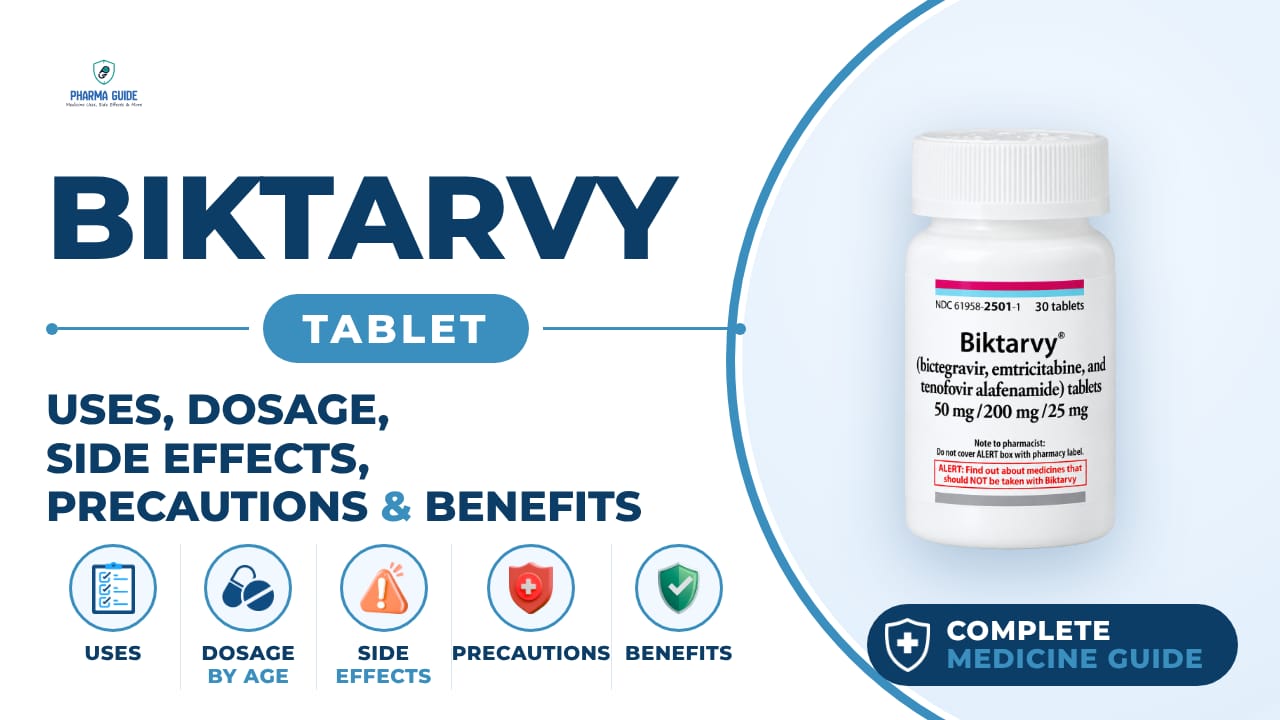
Biktarvy Tablet: Uses, Dosage, Side Effects, Precautions and Alternates
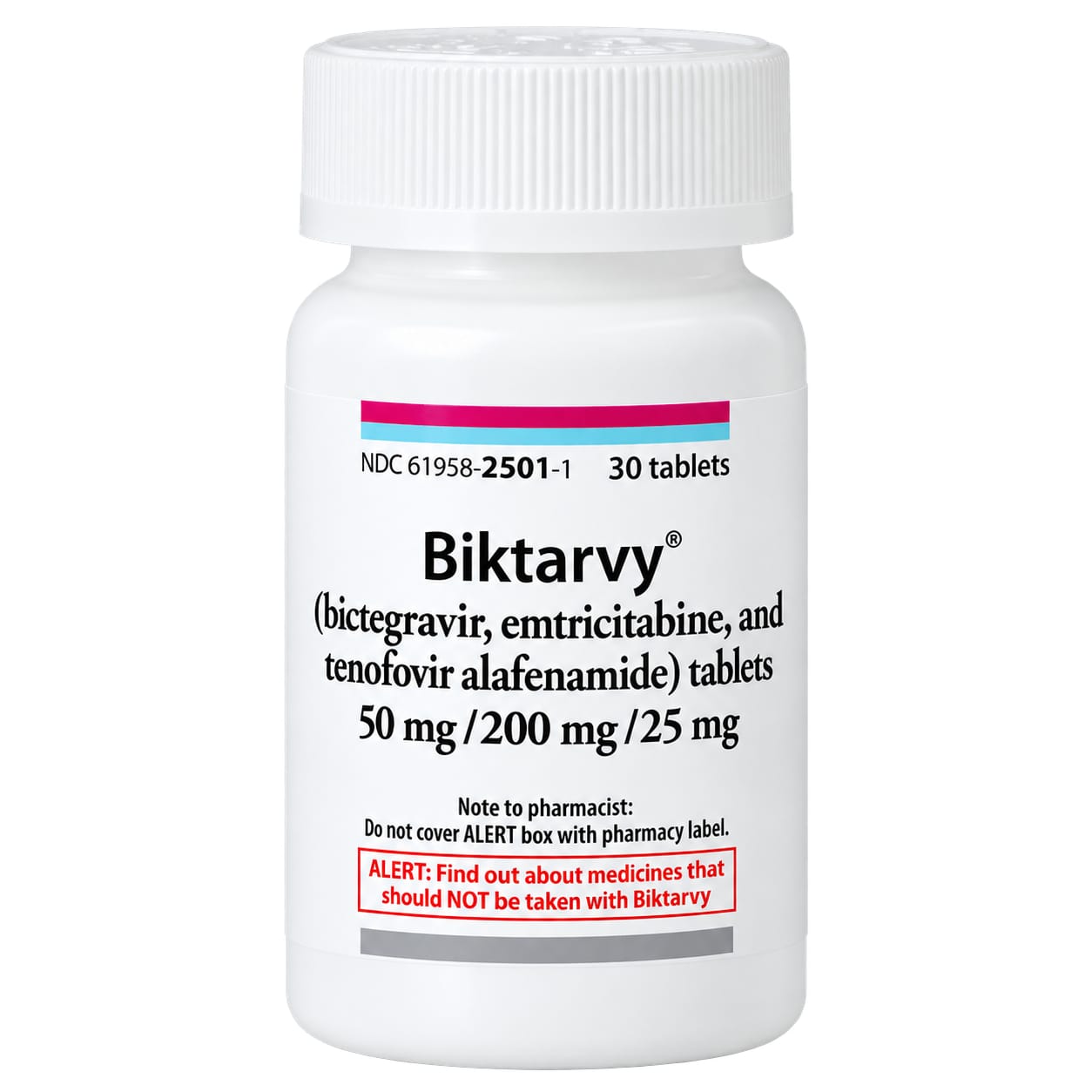
| Generic name | bictegravir/emtricitabine/tenofovir alafenamide |
|---|---|
| Drug class | Antiretroviral agent (antiviral combination) |
| Forms | Tablet |
Quick overview
Biktarvy Tablet is a single-tablet combination of bictegravir, emtricitabine, and tenofovir alafenamide used to treat HIV-1 infection in adults and children weighing at least 25 kg. It works as a complete antiretroviral regimen on its own and should not be combined with other HIV medicines. It is taken once daily and is intended for people whose HIV virus is not resistant to its ingredients.
What is Biktarvy Tablet
Biktarvy is a single tablet containing three medicines that work together to treat HIV-1 infection. It is a complete treatment on its own and should not be combined with other HIV medicines.
Biktarvy Tablet uses
- Treatment of HIV-1 infection in adults and children who weigh at least 25 kg
- For people whose HIV virus is not resistant to the medicines in Biktarvy
Benefits of Biktarvy Tablet
- HIV-1 Treatment: Used as a complete regimen to treat HIV-1 infection.
- Viral Suppression: Helps prevent HIV from multiplying.
- Immune-System Support: Effective treatment helps preserve immune function.
- Single-Tablet Therapy: Combines three antiretroviral medicines in one daily tablet.
How Biktarvy Tablet works
Biktarvy combines three medicines that each block a different step the HIV virus needs to multiply. One part blocks an enzyme called integrase that the virus needs to insert its genetic material into cells, and the other two parts block another viral enzyme called reverse transcriptase, stopping the virus from copying its genetic code.
Biktarvy Tablet dosage
Take one tablet by mouth once a day, with or without food. Try to take the tablet at the same time each day. Do not chew, crush, or split the tablet; children who cannot swallow a whole tablet may have it split in half if both halves are swallowed within about 10 minutes. If you are on dialysis, take your daily dose after your dialysis session. Do not stop taking this medicine without first talking to your doctor, and do not let your supply run out before getting a refill.
If you miss a dose and notice within 18 hours of your usual time, take it as soon as possible and then take the next dose at the regular time. If you notice 18 hours or more after your usual time, skip the missed dose and take the next dose at the usual time. Do not take a double dose to make up for a missed one. If taking antacids or supplements containing magnesium, aluminum, calcium, or iron, space them apart from Biktarvy as directed by your doctor, or take them together with food.
| Age group | Dose |
|---|---|
| 14 kg to <25 kg | 1 tablet once daily: Bictegravir 30 mg + Emtricitabine 120 mg + Tenofovir alafenamide 15 mg |
| ≥25 kg and Adolescents | 1 tablet once daily: Bictegravir 50 mg + Emtricitabine 200 mg + Tenofovir alafenamide 25 mg |
| Adults (18+ Years) | 1 tablet once daily: Bictegravir 50 mg + Emtricitabine 200 mg + Tenofovir alafenamide 25 mg |
Available forms and strengths
- Tablet
- Bictegravir 30 mg + Emtricitabine 120 mg + Tenofovir alafenamide 15 mg
- Bictegravir 50 mg + Emtricitabine 200 mg + Tenofovir alafenamide 25 mg
Side effects of Biktarvy Tablet
Common
- Diarrhea
- Nausea
- Headache
- Tiredness (fatigue)
- Dizziness
- Trouble sleeping (insomnia)
- Abnormal dreams
Serious
- Flare-up (worsening) of hepatitis B infection after stopping the medicine
- Severe skin reactions (Stevens-Johnson syndrome/toxic epidermal necrolysis)
- Lactic acidosis (too much acid in the blood)
- Severe liver problems
- New or worsening kidney problems
- Immune system changes that can trigger inflammation or autoimmune conditions
- Swelling of the face, lips, tongue, or throat (angioedema)
- Hives
- Weight increase
- Suicidal thoughts or behavior (mainly in people with a history of depression or mental illness)
Warnings and precautions
- If you have hepatitis B along with HIV, stopping this medicine can cause your hepatitis B to suddenly flare up and become worse than before. Do not stop taking this medicine without talking to your doctor first, and watch for new symptoms after stopping.
- Do not take this medicine together with dofetilide, rifampin, or St. John's wort, as these combinations can cause serious interactions or make the medicine stop working properly.
- This medicine should not be taken with other medicines used to treat HIV, including other products containing the same or similar active ingredients.
- Serious liver problems, including a buildup of acid in the blood (lactic acidosis) and an enlarged, fatty liver, have occurred with medicines like this one, sometimes leading to death. Stop treatment and get medical help if you notice symptoms.
- This medicine can affect kidney function, especially if you have existing kidney problems or take other medicines that can harm the kidneys, such as certain pain relievers.
- When you start HIV treatment, your immune system may become stronger and react to hidden infections or trigger autoimmune conditions, sometimes months after starting treatment.
- Biktarvy may be used in pregnancy if your doctor decides the benefits outweigh the risks. Tell your doctor right away if you become pregnant while taking this medicine.
- Women with HIV should not breastfeed, since the virus and the medicine's ingredients can pass to the baby through breast milk. Talk to your doctor about the safest way to feed your baby.
- Tell your doctor if you have kidney problems. This medicine is not recommended for people with severe kidney impairment, and your doctor will monitor your kidney function before and during treatment.
- Tell your doctor if you have liver problems, including hepatitis B or C. This medicine is not recommended for people with severe liver impairment.
- No studies have looked at how this medicine affects driving or using machines, so be careful until you know how it affects you, especially if you feel dizzy or drowsy.
Storage
- Store below 30°C (86°F)
- Keep the bottle tightly closed
- Do not use if the seal over the bottle opening is broken or missing
- Dispense and keep only in the original container
- For blister packs, store between 15-30°C (59-86°F) and do not use if the foil over the blister or the seal around the blister card is broken
- Keep this medicine out of reach and sight of children
- Do not use after the expiry date on the bottle or carton
When to see a doctor
- Get medical help right away if you have symptoms of lactic acidosis, such as unusual tiredness or weakness, muscle pain, stomach pain with nausea and vomiting, feeling cold (especially hands and feet), dizziness, or a fast or irregular heartbeat.
- Get medical help right away if you develop a severe skin reaction with blistering or peeling of the skin, mouth, lips, or throat, along with fever and feeling generally unwell.
- Contact your doctor right away if, after stopping this medicine, you notice yellowing of the skin or eyes, dark urine, pale stools, loss of appetite, nausea, or stomach pain, as these may be signs of a hepatitis B flare-up.
- Seek emergency help if you have signs of a severe allergic reaction, such as rash, hives, swelling of the face, lips, mouth or throat, trouble breathing, or fainting.
- If you think you or someone else has taken too much of this medicine, get medical help immediately, even if there are no symptoms.
Alternatives
- Triumeq
- Genvoya
- Dovato
- Odefsey
Watch the video
FAQs
What is Biktarvy Tablet used for?
Biktarvy is used to treat HIV-1 infection in adults and children weighing at least 25 kg whose virus is not resistant to its ingredients.
How should Biktarvy Tablet be taken?
Take one tablet by mouth once a day, with or without food, at the same time each day. Do not chew, crush, or split the tablet, except in certain cases for children who cannot swallow it whole.
What happens if I miss a dose of Biktarvy?
If you notice within 18 hours of your usual time, take it as soon as possible and then continue with your regular schedule. If it's 18 hours or more, skip the missed dose and take the next one as usual. Do not double the dose.
What are the common side effects of Biktarvy?
Common side effects include diarrhea, nausea, headache, tiredness, dizziness, trouble sleeping, and abnormal dreams.
Can Biktarvy be combined with other HIV medicines?
No, Biktarvy is a complete regimen on its own and should not be taken with other HIV medicines, including those with similar active ingredients.
General information, not medical advice
Your prescriber and the leaflet in your pack know your situation. This page does not.
- Follow your prescriber and the leaflet
- Don't start, stop, or change a dose on your own
- Doses and warnings differ by country and product
Sources
- Health Canada Product Monograph, BIKTARVY, Gilead Sciences Canada, Inc., Feb 04, 2025
- BIKTARVY Consumer Medicine Information (CMI), Australia/New Zealand, v10.0, 24 June 2025
- FDA Prescribing Information, BIKTARVY, Gilead Sciences, Inc., 02/2018
Video
Related medicines

Injectafer Injection: Uses, Dosage, Side Effects, Precautions and Alternates
Iron products
Injectafer (ferric carboxymaltose) treats iron deficiency anemia and heart failure-related iron deficiency via IV. Learn uses, dosage, side effects, and

Gliclazide Tablet: Uses, Dosage, Side Effects, Precautions and Alternates
Sulfonylurea (hypoglycemic/antidiabetic agent)
Gliclazide Tablet is a sulfonylurea for type 2 diabetes that boosts insulin release. Learn about dosage, side effects, warnings, and precautions.