
Safety
General information, not medical advice
Your prescriber and the leaflet in your pack know your situation. This page does not.
- Follow your prescriber and the leaflet
- Don't start, stop, or change a dose on your own
- Doses and warnings differ by country and product
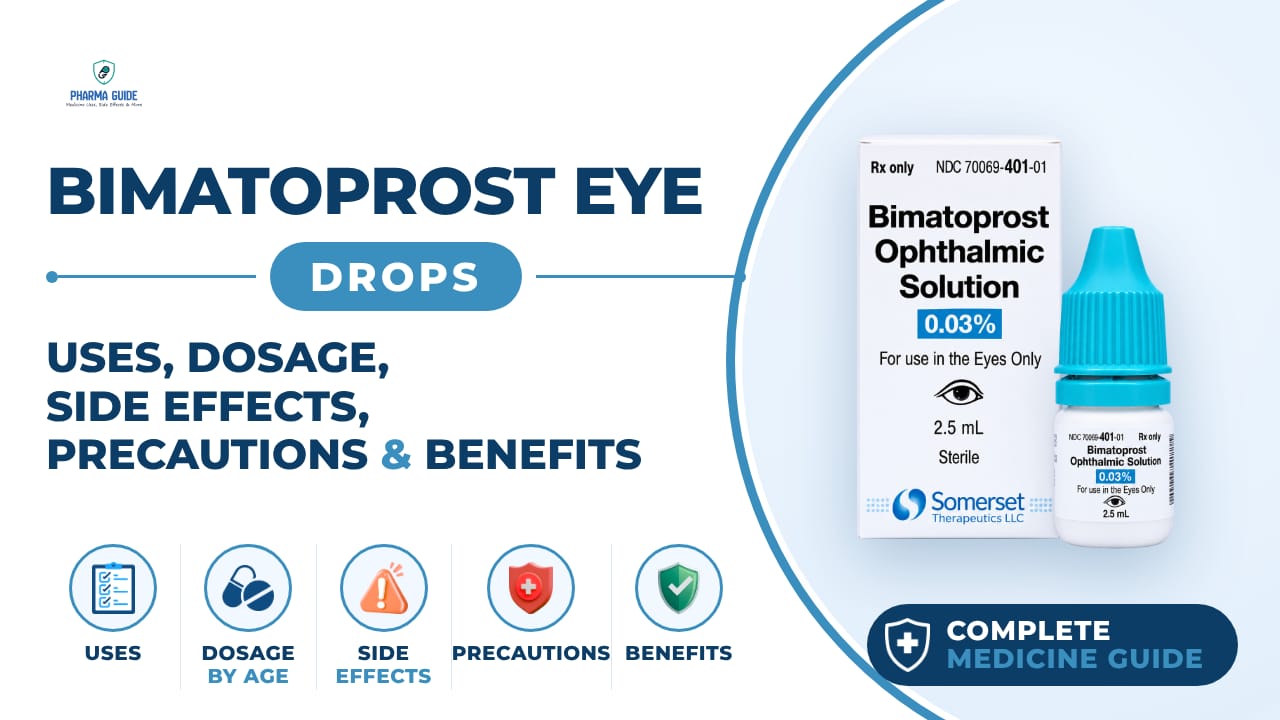
Bimatoprost Eye Drops: Uses, Dosage, Side Effects, Precautions and Alternates
| Generic name | Bimatoprost |
|---|---|
| Drug class | Prostaglandin (prostamide) analog |
| Forms | Solution (eye drops), Implant, Gel/Jelly |
Quick overview
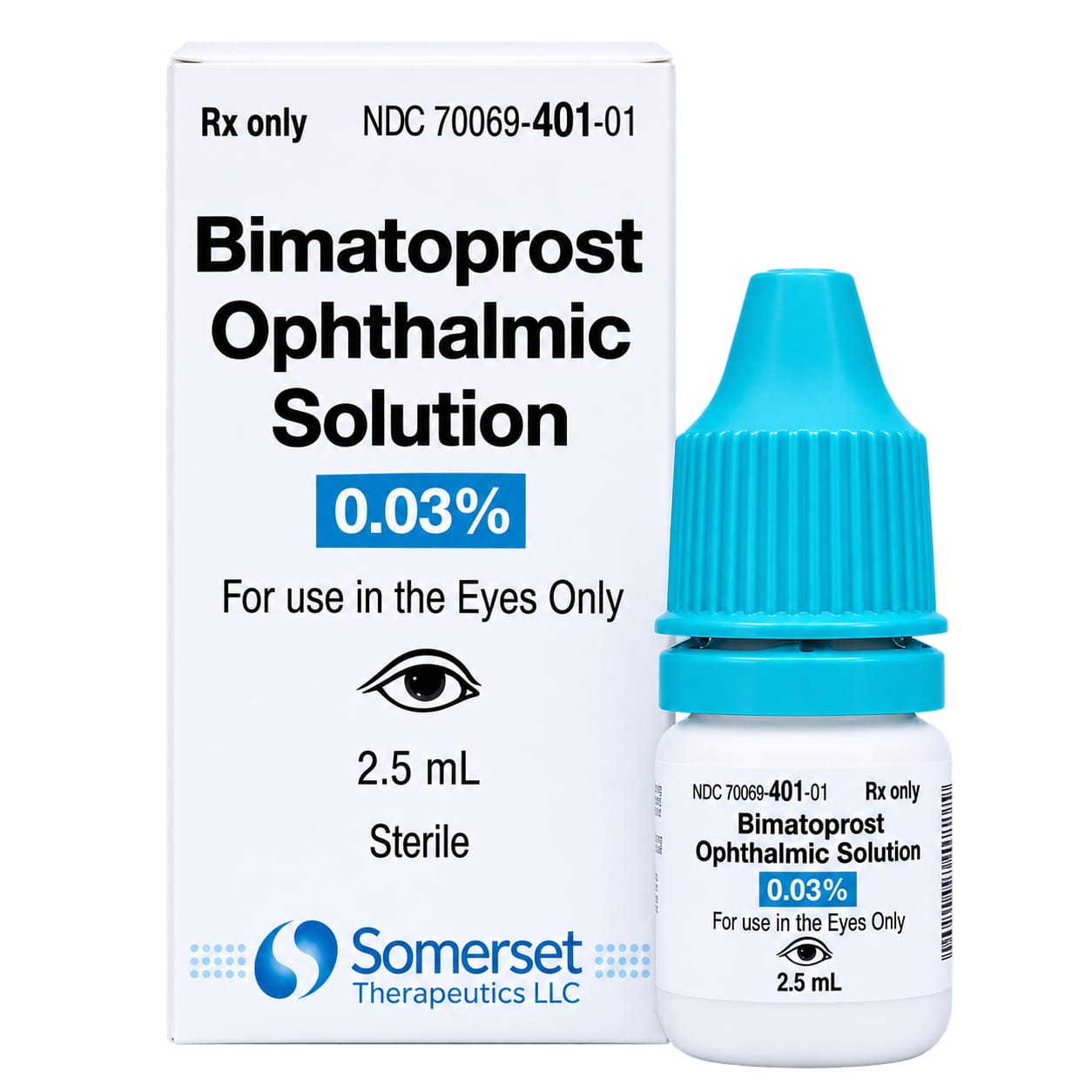
Bimatoprost Eye Drops contain bimatoprost, a prostaglandin (prostamide) analog. They are a prescription medicine used to lower high pressure inside the eye and treat glaucoma, and under different brand names, to help eyelashes grow longer, thicker, and darker. The drops are typically used once daily in the evening. Common effects include eye redness and irritation, while serious effects may involve vision changes or breathing problems.
What is Bimatoprost Eye Drops
Bimatoprost eye drops are a prescription medicine used to lower high pressure inside the eye and to treat glaucoma. It is also used, under different brand names, to help eyelashes grow longer, thicker, and darker.
Bimatoprost Eye Drops uses
- Lowering raised eye pressure caused by open-angle glaucoma or ocular hypertension
- Treating eyelash hypotrichosis (not having enough eyelashes) by helping them grow longer, thicker, and darker
- Treats open-angle glaucoma
- Treats ocular hypertension
- Lowers elevated intraocular pressure
Benefits of Bimatoprost Eye Drops
- Helps fluid drain out of the eye more easily, which lowers eye pressure and can help prevent vision loss from glaucoma
- Can be used alone or together with other eye drops to control eye pressure
- Promotes longer, thicker, and darker eyelashes
- Provides once-daily dosing
- Effectively lowers intraocular pressure
How Bimatoprost Eye Drops works
Bimatoprost lowers eye pressure mainly by helping the fluid inside the eye drain out more easily through the eye's natural drainage pathways. For eyelash growth, it is thought to work by helping more hair follicles enter their growth phase.
Bimatoprost Eye Drops dosage
Use the drops each evening, at about the same time each day. If you use more than one type of eye drop, wait about 5 minutes between each product; if you also use an eye ointment, use that last. Remove soft contact lenses before putting the drops in your eye, and wait about 15 minutes before putting them back in. Wash your hands before and after use, and avoid letting the dropper tip touch your eye, eyelid, or any other surface. For eyelash growth, apply the solution with a clean applicator along the base of the upper eyelid margin only; do not apply to the lower lashes or let it touch other skin. Keep using the medicine every evening unless your doctor tells you to stop, even though it controls the condition rather than curing it. If you forget a dose, use it as soon as you remember unless it is almost time for the next dose; do not use extra to make up for a missed dose.
| Age group | Dose |
|---|---|
| Under 16 years | Not recommended; no standard pediatric dose established |
| 16–17 years | 1 drop in the affected eye(s) once daily in the evening |
| 18–39 years | 1 drop in the affected eye(s) once daily in the evening |
Available forms and strengths
- Solution (eye drops)
- Implant
- Gel/Jelly
Side effects of Bimatoprost Eye Drops
Common
- Red, congested eyes
- Itching or irritation of the eye
- Feeling of something in the eye
- Dry eye
- Growth of eyelashes
- Redness in or around the eye or eyelid
- Watery eyes
- Inflamed eyelids
- Eye discomfort or strain
- Burning of the eye and nearby eyelid
- Darkening of the skin around the eye, eyelashes, and the coloured part of the eye (iris)
- Loss of fat around the eye, leading to a deeper eyelid crease, sunken appearance, or drooping eyelid
- Headache
- Feeling weak and tired
- Cold-like symptoms such as runny or stuffy nose
- Unwanted hair growth where the drop touches the skin
Serious
- Eye discharge or eye pain
- Small spots on the eye surface
- Blurred vision or other vision changes
- Macular edema (fluid build-up at the back of the eye causing blurry vision)
- Spasm of the eyelids with uncontrolled blinking or squeezing
- High blood pressure
- Asthma or worsening of asthma
- Difficulty breathing
- Depression (low mood, feelings of worthlessness)
- Severe allergic reaction, including swelling of the tongue, lips, and throat, and difficulty breathing
Warnings and precautions
- Do not use this medicine if you have had an allergic reaction to bimatoprost or any of its ingredients.
- Tell your doctor before using this if you have had eye inflammation (like uveitis), eye surgery, a missing or artificial eye lens, a torn lens capsule, macular problems, diabetes-related eye disease, low blood pressure or slow heartbeat, lung or airway problems, or liver or kidney problems.
- This medicine can cause permanent changes to your eyes, including loss of fat around the eye leading to a sunken look or drooping eyelid, and darkening of the eyelashes, skin around the eye, and iris.
- Do not use while wearing soft contact lenses, since the preservative can be absorbed by the lenses; remove lenses before using and wait 15 minutes before putting them back in.
- This medicine is not usually used in certain types of glaucoma, such as angle-closure, inflammatory, or neovascular glaucoma.
- Tell your doctor if you are pregnant, plan to become pregnant, and let your doctor know right away if you become pregnant while using this medicine.
- Tell your doctor if you are breastfeeding or intend to breastfeed before using this medicine.
- Tell your doctor if you have or have had problems with your kidneys before using this medicine.
- Tell your doctor if you have or have had problems with your liver before using this medicine.
- There isn't information on how alcohol affects this medicine, so ask your doctor if you have concerns.
- Your vision may be blurred after using the drops, so wait until your vision clears before driving or using machines.
Storage
- Store it in a cool dry place where the temperature stays below 25°C, away from moisture, heat, or sunlight
- Do not store it in the bathroom, near a sink, in the car, or on window sills
- Keep it out of reach of children
- Discard the bottle 28 days after first opening it
- Do not use after the expiry date
- Take unused or expired medicine to a pharmacy for safe disposal
When to see a doctor
- Call your doctor right away if you have any eye injury, vision changes, infection in the eye or eyelid, or are about to have eye surgery.
- Get medical help immediately for serious side effects like breathing problems, or signs of a severe allergic reaction such as swelling of the tongue, lips, or throat, trouble swallowing, or a blistering rash.
- If you think you have used too much of this medicine, rinse your eyes with warm water right away; if it is swallowed, contact your doctor or poison control right away, or go to the emergency department, even if you feel fine.
- Check with your doctor right away if you notice blurred vision or other vision problems, as this can be a sign of eye swelling (macular edema).
Alternatives
- Latanoprost
- Travoprost
- Tafluprost
- Timolol
Watch the video
FAQs
How often should Bimatoprost Eye Drops be used?
They are typically used once daily in the evening, at about the same time each day.
Can I wear contact lenses while using Bimatoprost Eye Drops?
No, you should remove soft contact lenses before using the drops, since the preservative can be absorbed by the lenses, and wait about 15 minutes before putting them back in.
What are the common side effects of Bimatoprost Eye Drops?
Common effects include red, congested eyes, itching or irritation, dry eye, watery eyes, eyelash growth, and headache.
Can Bimatoprost Eye Drops cause permanent changes to the eyes?
Yes, it can cause permanent changes including loss of fat around the eye leading to a sunken look or drooping eyelid, and darkening of the eyelashes, skin around the eye, and iris.
What should I do if I miss a dose of Bimatoprost Eye Drops?
Use it as soon as you remember unless it is almost time for the next dose; do not use extra to make up for a missed dose.
General information, not medical advice
Your prescriber and the leaflet in your pack know your situation. This page does not.
- Follow your prescriber and the leaflet
- Don't start, stop, or change a dose on your own
- Doses and warnings differ by country and product
Sources
Video
Related medicines

Injectafer Injection: Uses, Dosage, Side Effects, Precautions and Alternates
Iron products
Injectafer (ferric carboxymaltose) treats iron deficiency anemia and heart failure-related iron deficiency via IV. Learn uses, dosage, side effects, and

Gliclazide Tablet: Uses, Dosage, Side Effects, Precautions and Alternates
Sulfonylurea (hypoglycemic/antidiabetic agent)
Gliclazide Tablet is a sulfonylurea for type 2 diabetes that boosts insulin release. Learn about dosage, side effects, warnings, and precautions.