
Safety
General information, not medical advice
Your prescriber and the leaflet in your pack know your situation. This page does not.
- Follow your prescriber and the leaflet
- Don't start, stop, or change a dose on your own
- Doses and warnings differ by country and product
Biotene Gel: Uses, Dosage, Side Effects, Precautions and Alternates
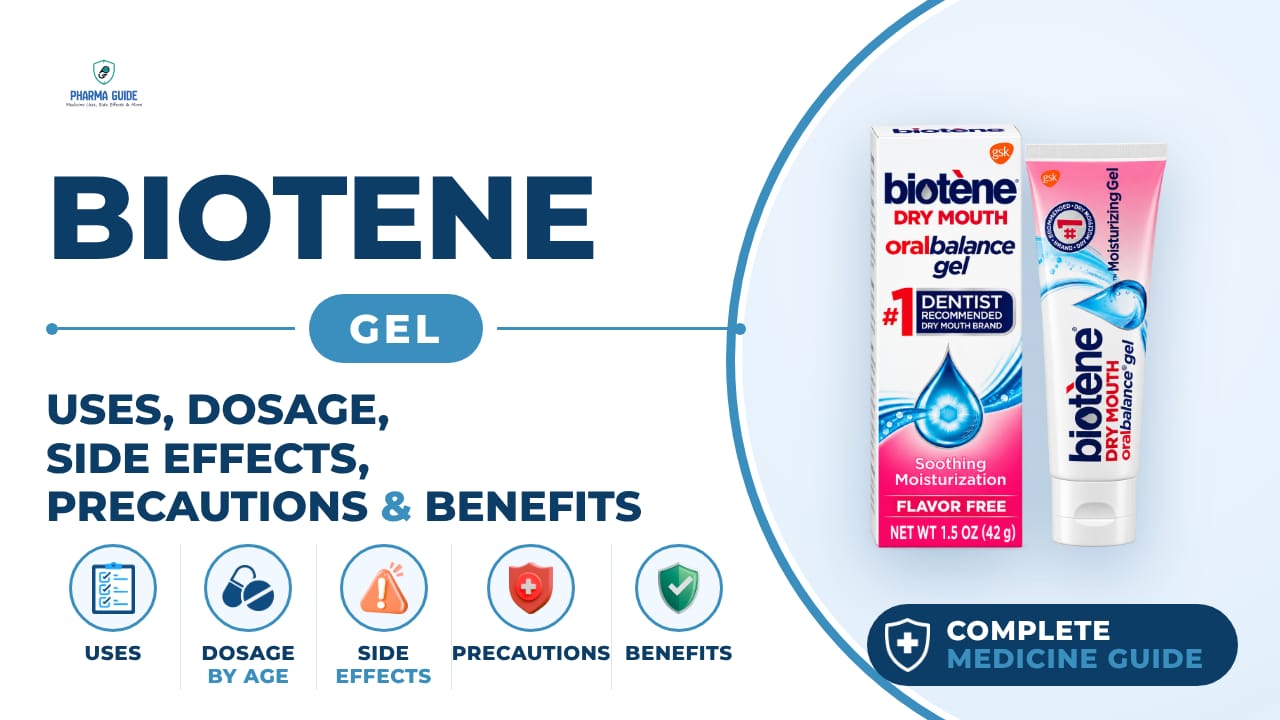
| Generic name | saliva substitutes |
|---|---|
| Drug class | Mouth and throat products |
| Forms | gel, spray, oral rinse, lozenge, toothpaste, oral powder |
Quick overview
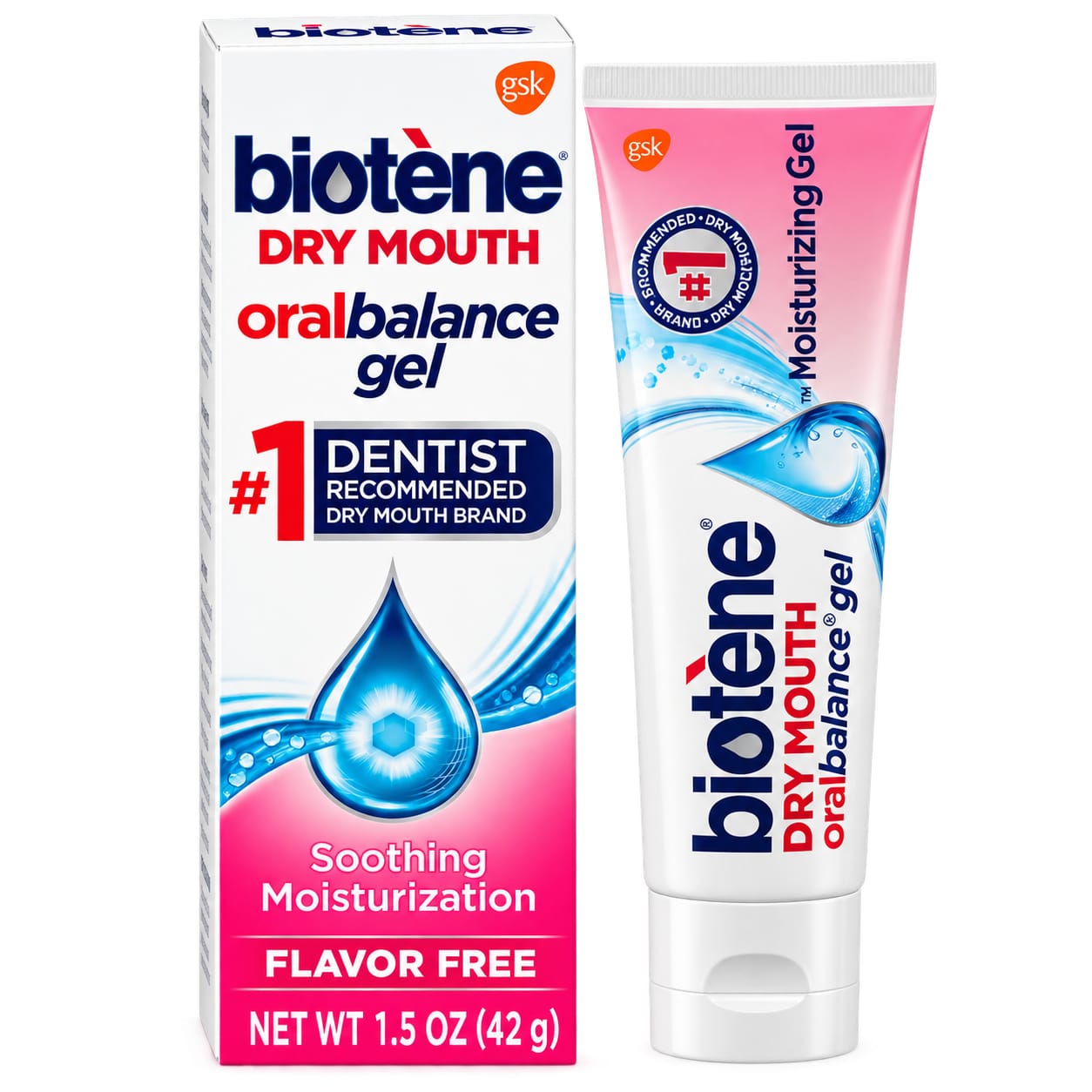
Biotene Gel is a manmade saliva substitute that adds moisture and lubrication to the mouth when the body does not produce enough saliva on its own. It is used to relieve dry mouth (xerostomia) and related discomfort caused by disease conditions, medications, surgery, or chemotherapy and radiation treatments. The gel is sugar-free and alcohol-free, and some formulations contain xylitol. It is available in several forms, including gel, spray, oral rinse, lozenge, toothpaste, and oral powder.
What is Biotene Gel
Biotene Gel is a manmade substitute for saliva. It adds moisture and lubrication to the mouth when the body does not make enough saliva on its own, helping relieve dry mouth (xerostomia).
Biotene Gel uses
- Relieves dryness and pain or discomfort in the mouth or throat caused by certain disease conditions, medications, surgery, or chemotherapy and radiation treatments
- May be used for other purposes not listed in the medication guide
- Relieves dry mouth
- Moisturizes oral tissues
- Helps reduce mouth discomfort from dryness
Benefits of Biotene Gel
- Adds instant, long-lasting moisture to the tongue and inside of the mouth to soothe dryness, burning, or a sticky feeling
- Makes speaking, chewing, swallowing, and wearing dentures more comfortable
- Helps reduce the risk of plaque buildup, gum irritation, and tooth decay that often result from a lack of natural saliva
- Sugar-free and alcohol-free formula that does not dry out the oral tissues further
- Provides localized moisture
- Can be reapplied as needed
- Alcohol-free formulations are generally gentle on dry oral tissues
How Biotene Gel works
Biotene products add moisture and help lubricate the inside of the mouth. Some products contain xylitol, which may help increase the amount of saliva the body makes.
Biotene Gel dosage
Use only inside the mouth; do not get it in your eyes. Use exactly as directed on the label or as prescribed by your doctor. It works inside the mouth and is not meant to be swallowed.
Place a small, dime-sized amount of gel directly on your tongue, then use your tongue to spread the gel thoroughly around your gums, teeth, and the inside of your mouth. It can be used as needed, especially before sleeping or during the night when dry mouth tends to worsen. How often you use it may depend on your condition or treatment schedule. You may need to avoid eating or drinking for about 15 minutes after use. Do not allow a child to use it without adult supervision. It may be only part of a complete treatment plan that includes other oral hygiene methods.
| Age group | Dose |
|---|---|
| 12–17 years | Apply a small amount to the mouth as needed |
| 18–64 years | Apply approximately 1–2 cm of gel to the tongue or inside the mouth as needed, especially before sleep or when dryness occurs |
| 65–74 years | Same adult use; may be applied repeatedly as needed for dry-mouth relief |
Available forms and strengths
- Gel
- Spray
- Oral rinse
- Lozenge
- Toothpaste
- Oral powder
Side effects of Biotene Gel
Common
- Mild mouth irritation
- Taste changes
- Speech changes
Serious
- Severe allergic reaction with breathing problems or wheezing
- Racing heart
- Fever or general ill feeling
- Swollen lymph nodes
- Swelling of the face, lips, mouth, tongue, or throat
- Trouble swallowing or throat tightness
- Itching or skin rash
- Hives
- Nausea or vomiting
- Dizziness, feeling lightheaded, or fainting
- Stomach cramps
- Joint pain
Warnings and precautions
- Do not use this product if you are allergic to any of the ingredients listed on the package.
- If you have mouth irritation while using this product, stop using it and ask your health care provider about other options.
- Keep this product out of the reach of children and pets. Many products contain xylitol, which can be extremely toxic to dogs and other animals even in small amounts, causing vomiting, weakness, shaking, seizures, trouble walking, and coma within as little as 20 minutes.
- If your dry mouth symptoms get worse or do not improve while using this product, tell your health care provider, as other options may be needed.
- Ask a doctor before using this product if you are pregnant. Ask a doctor before using this product if you are breastfeeding. No routine kidney-related dose adjustment is required. No routine liver-related dose adjustment is required.
- It is not known if drinking alcohol will affect this product. This product does not generally affect driving.
Storage
- Store as directed on the product label
- Avoid moisture, heat, and light
- Keep out of the reach of children and pets
When to see a doctor
- Get emergency medical help if you notice signs of an allergic reaction such as hives, difficulty breathing, or swelling of the face, lips, tongue, or throat.
- Stop using the product and get help right away if you have symptoms of a serious allergic reaction, including breathing problems, wheezing, racing heart, fever, swollen lymph nodes, swelling of the face/lips/mouth/tongue/throat, trouble swallowing, throat tightness, itching, rash, hives, nausea, vomiting, dizziness, fainting, stomach cramps, or joint pain.
- Seek emergency medical help if someone has accidentally swallowed a large amount of this product.
Alternatives
- GC Dry Mouth Gel
- SalivaMAX oral rinse
- Mouth Kote
Watch the video
FAQs
What is Biotene Gel used for?
It relieves dryness and discomfort in the mouth or throat caused by disease conditions, medications, surgery, or chemotherapy and radiation treatments, and helps moisturize oral tissues.
How do you use Biotene Gel?
Place a small, dime-sized amount of gel on your tongue and spread it around your gums, teeth, and inside of your mouth. It can be used as needed, especially before sleep, and you may need to avoid eating or drinking for about 15 minutes after use.
Does Biotene Gel contain sugar or alcohol?
No, it is sugar-free and alcohol-free, and some formulations contain xylitol, which may help increase saliva production.
What are the side effects of Biotene Gel?
Common side effects include mild mouth irritation, taste changes, and speech changes. Serious side effects can include allergic reaction symptoms like swelling, trouble breathing, hives, and racing heart.
Is Biotene Gel safe around pets?
No, it should be kept out of reach of pets because many products contain xylitol, which can be extremely toxic to dogs and other animals.
General information, not medical advice
Your prescriber and the leaflet in your pack know your situation. This page does not.
- Follow your prescriber and the leaflet
- Don't start, stop, or change a dose on your own
- Doses and warnings differ by country and product
Sources
Video
Related medicines

Injectafer Injection: Uses, Dosage, Side Effects, Precautions and Alternates
Iron products
Injectafer (ferric carboxymaltose) treats iron deficiency anemia and heart failure-related iron deficiency via IV. Learn uses, dosage, side effects, and

Gliclazide Tablet: Uses, Dosage, Side Effects, Precautions and Alternates
Sulfonylurea (hypoglycemic/antidiabetic agent)
Gliclazide Tablet is a sulfonylurea for type 2 diabetes that boosts insulin release. Learn about dosage, side effects, warnings, and precautions.