
Safety
General information, not medical advice
Your prescriber and the leaflet in your pack know your situation. This page does not.
- Follow your prescriber and the leaflet
- Don't start, stop, or change a dose on your own
- Doses and warnings differ by country and product
Biotin Tablet: Uses, Dosage, Side Effects, Precautions and Alternates
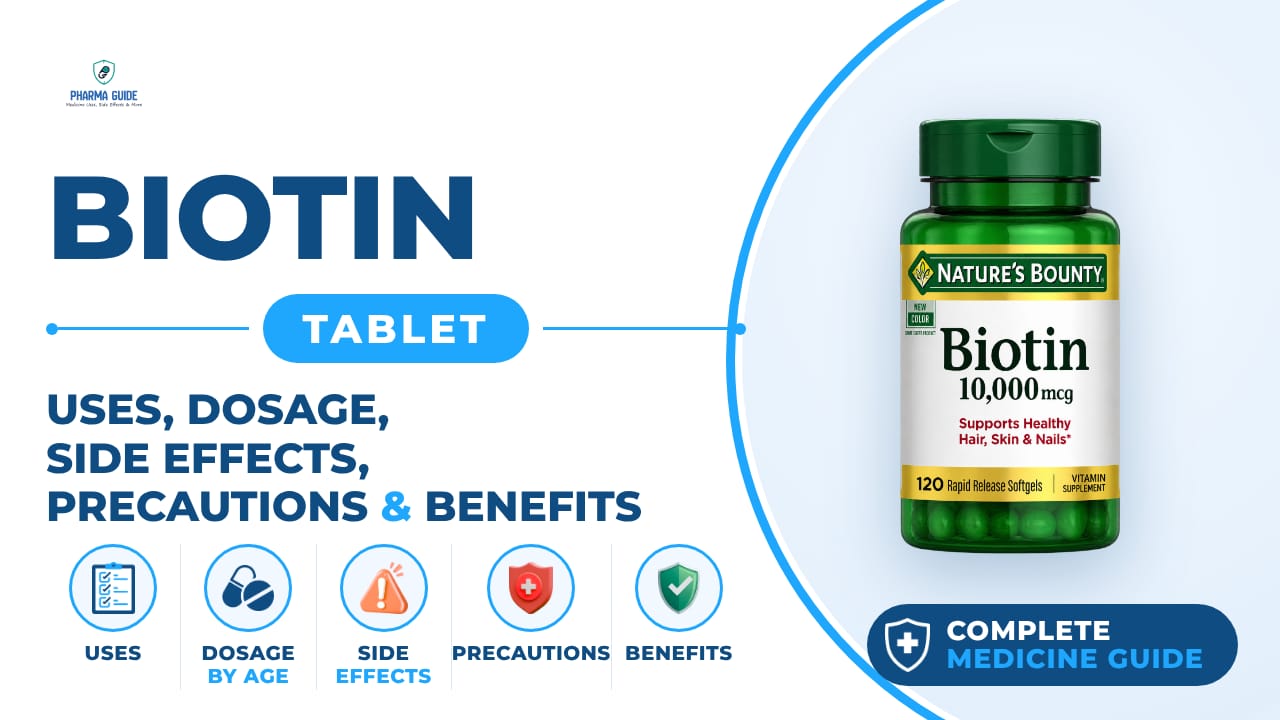
| Generic name | Biotin (Vitamin B7) |
|---|---|
| Drug class | Vitamin Supplement |
| Forms | Tablet, Capsule, Liquid Filled, Tablet, Chewable, Tablet, Disintegrating, Oral strips |
Quick overview
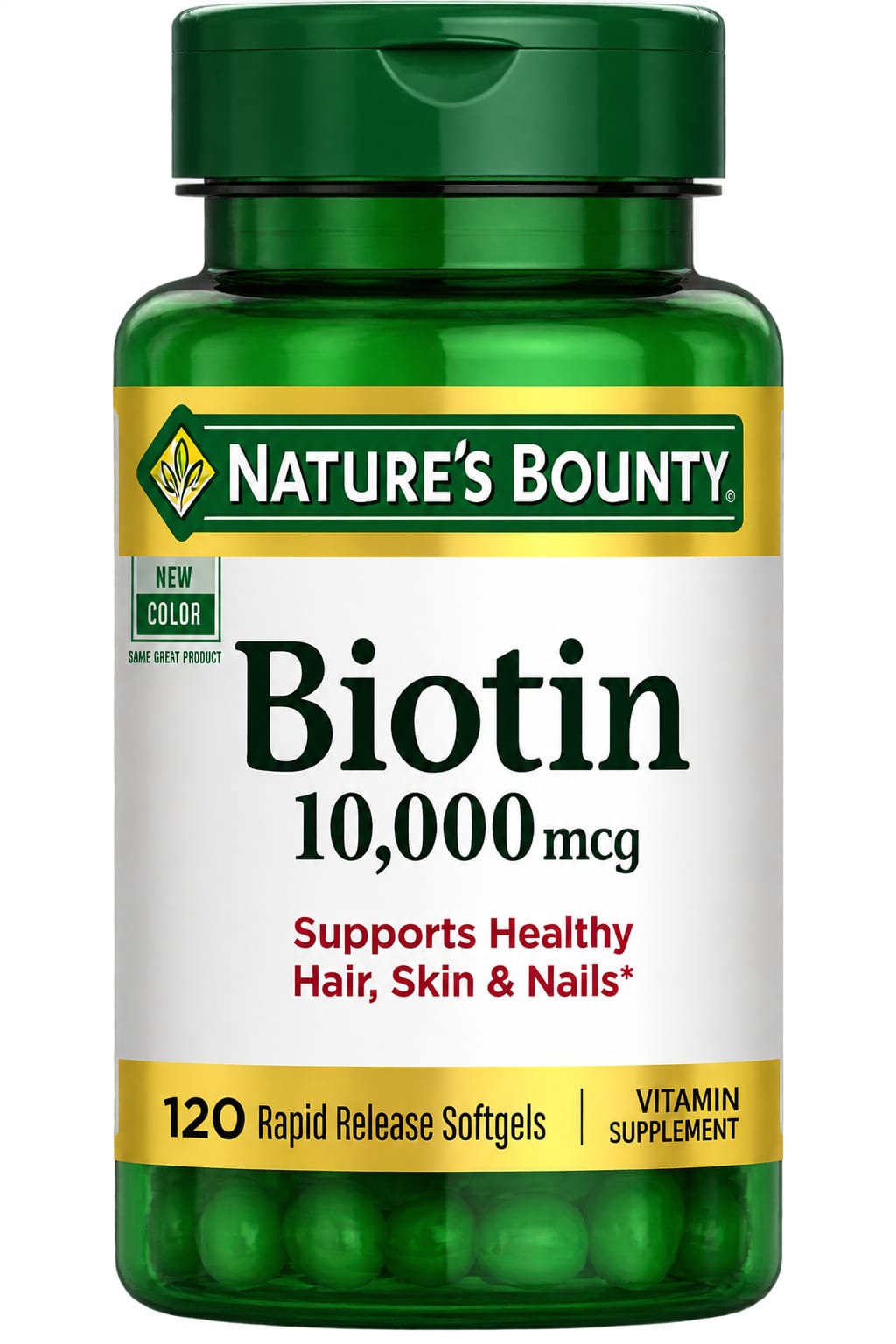
Biotin Tablet contains Biotin (Vitamin B7), a water-soluble vitamin belonging to the Vitamin Supplement class. It supports healthy hair, skin, and nails, and plays a role in turning food into energy. It is available in several forms, including tablets, capsules, chewable tablets, and oral strips, and should be used as directed by a doctor or pharmacist.
What is Biotin Tablet
Biotin is a water-soluble vitamin, also known as vitamin B7 or vitamin H. It is used to support healthy hair, skin, and nails, and plays a role in turning food into energy.
Biotin Tablet uses
- Supporting healthy hair growth
- Reducing hair loss
- Strengthening brittle nails
- Improving skin health and complexion
- Addressing biotin deficiency
- Supporting metabolism of carbohydrates, fats, and proteins
- Supporting healthy hair, skin, and nails
Benefits of Biotin Tablet
- Biotin provides an important source for creating energy as well as maintaining the function of your body as a whole
- May help keep the liver, nervous system, hair, eyes, and other systems healthy
- May be effective in treating certain medical conditions such as hypoglycemia, hyperlipidemia, and glucose control in obese patients with diabetes (when combined with chromium picolinate)
How Biotin Tablet works
Biotin helps the body break down proteins, fats, and carbohydrates, and it helps form fatty acids and glucose that the body uses for fuel.
Biotin Tablet dosage
It is best if this drug is taken with a meal. Chewable tablets should be chewed well before swallowing. Oral-disintegrating tablets should be allowed to dissolve in the mouth; water is not needed. Oral strips should be placed on the tongue and allowed to dissolve. Under-the-tongue (sublingual) tablets should be placed under the tongue and allowed to dissolve. Alternatively, swallow the tablet whole with water. It can be taken with or without food, though for best results, take it in the morning.
If you miss a dose, take it as soon as you think about it, but if it is close to the time for your next dose, skip the missed dose and go back to your normal schedule. Do not take two doses at the same time or extra doses.
| Age group | Dose |
|---|---|
| Infants & Children (0–12 Years) | 5–20 mcg/day (based on age and nutritional needs) |
| Adolescents (13–17 Years) | 25–30 mcg/day |
| Adults (18–64 Years) | 30 mcg/day |
| Older Adults (65+ Years) | 30 mcg/day |
Available forms and strengths
- Tablet
- Capsule, Liquid Filled
- Tablet, Chewable
- Tablet, Disintegrating
- Oral strips
Side effects of Biotin Tablet
Common
- Mild stomach upset
- Nausea
- Diarrhea
Serious
- Rash
- Itching
- Swelling
- Severe dizziness
- Trouble breathing
- Signs of an allergic reaction, like hives, red, swollen, blistered, or peeling skin with or without fever, wheezing, tightness in the chest or throat, trouble breathing, swallowing, or talking, unusual hoarseness, or swelling of the mouth, face, lips, tongue, or throat
Warnings and precautions
- Tell your doctor if you are pregnant or plan on getting pregnant so you can discuss the benefits and risks to you and the baby. Tell your doctor if you are breast-feeding so you can discuss the benefits and risks to you and the baby.
- Avoid taking higher doses without medical advice (kidney)
- Inform doctor before laboratory blood tests (kidney)
- Check for allergies to ingredients before use (liver)
- Avoid combining multiple biotin supplements (liver)
- Use carefully during pregnancy or breastfeeding (alcohol)
- Follow the recommended daily dosage (alcohol)
- Consult doctor if taking long-term supplements (driving)
- Keep away from children to prevent accidental use (driving)
- This drug may affect certain lab tests, so tell all your health care providers and lab workers that you take it.
- High amounts of biotin can cause false positive results in lab tests for thyroid disease.
- You should only take biotin supplements if advised by your doctor, since most people already get enough biotin through their normal diet.
- Supplements are not checked by regulators for purity or safety, so buy from a manufacturer you trust.
Storage
- Store at room temperature in a dry place. Do not store in a bathroom.
- Keep all drugs in a safe place. Keep all drugs out of the reach of children and pets.
- Throw away unused or expired drugs. Do not flush down a toilet or pour down a drain unless you are told to do so. Check with your pharmacist if you have questions about the best way to throw out drugs. There may be drug take-back programs in your area.
- Keep in a cool, dry place.
- Store at room temperature.
- Store away from direct sunlight and moisture.
When to see a doctor
- Get medical help right away if you notice signs of an allergic reaction, such as rash, hives, itching, red or swollen or blistered or peeling skin with or without fever, wheezing, tightness in the chest or throat, trouble breathing, swallowing, or talking, unusual hoarseness, or swelling of the mouth, face, lips, tongue, or throat.
- If you think there has been an overdose, contact your local poison control resources or get medical care right away, and be ready to describe what was taken, how much, and when it happened.
- If your symptoms or health problems do not get better or become worse, call your doctor.
Alternatives
- Multivitamin Tablets
- Keratin Supplements
- Zinc Supplements
Watch the video
FAQs
What is Biotin Tablet used for?
It is used to support healthy hair growth, reduce hair loss, strengthen brittle nails, improve skin health, address biotin deficiency, and support metabolism of carbohydrates, fats, and proteins.
How should Biotin Tablet be taken?
It is best taken with a meal, though it can be taken with or without food; for best results, take it in the morning. Chewable tablets should be chewed well, disintegrating tablets dissolved in the mouth, and oral strips or sublingual tablets placed on or under the tongue to dissolve, or the tablet can be swallowed whole with water.
What is the recommended dosage of Biotin Tablet?
Dosage varies by age: infants and children (0–12 years) need 5–20 mcg/day, adolescents (13–17 years) need 25–30 mcg/day, and adults and older adults (18+) need 30 mcg/day.
What are the side effects of Biotin Tablet?
Common side effects include mild stomach upset, nausea, and diarrhea. Serious side effects include rash, itching, swelling, severe dizziness, trouble breathing, and signs of an allergic reaction.
Can Biotin Tablet affect lab test results?
Yes, this drug may affect certain lab tests, and high amounts of biotin can cause false positive results in lab tests for thyroid disease, so you should inform your doctor and lab workers that you take it.
General information, not medical advice
Your prescriber and the leaflet in your pack know your situation. This page does not.
- Follow your prescriber and the leaflet
- Don't start, stop, or change a dose on your own
- Doses and warnings differ by country and product
Sources
Video
Related medicines
Vitamin B12 Tablet: Uses, Dosage, Side Effects, Precautions and Alternates
Vitamin Supplement
Vitamin B12 Tablet (cyanocobalamin) treats and prevents B12 deficiency and megaloblastic anemia, supporting nerves, blood cells, and DNA production.

Injectafer Injection: Uses, Dosage, Side Effects, Precautions and Alternates
Iron products
Injectafer (ferric carboxymaltose) treats iron deficiency anemia and heart failure-related iron deficiency via IV. Learn uses, dosage, side effects, and