
Safety
General information, not medical advice
Your prescriber and the leaflet in your pack know your situation. This page does not.
- Follow your prescriber and the leaflet
- Don't start, stop, or change a dose on your own
- Doses and warnings differ by country and product
Vitamin B12 Tablet: Uses, Dosage, Side Effects, Precautions and Alternates
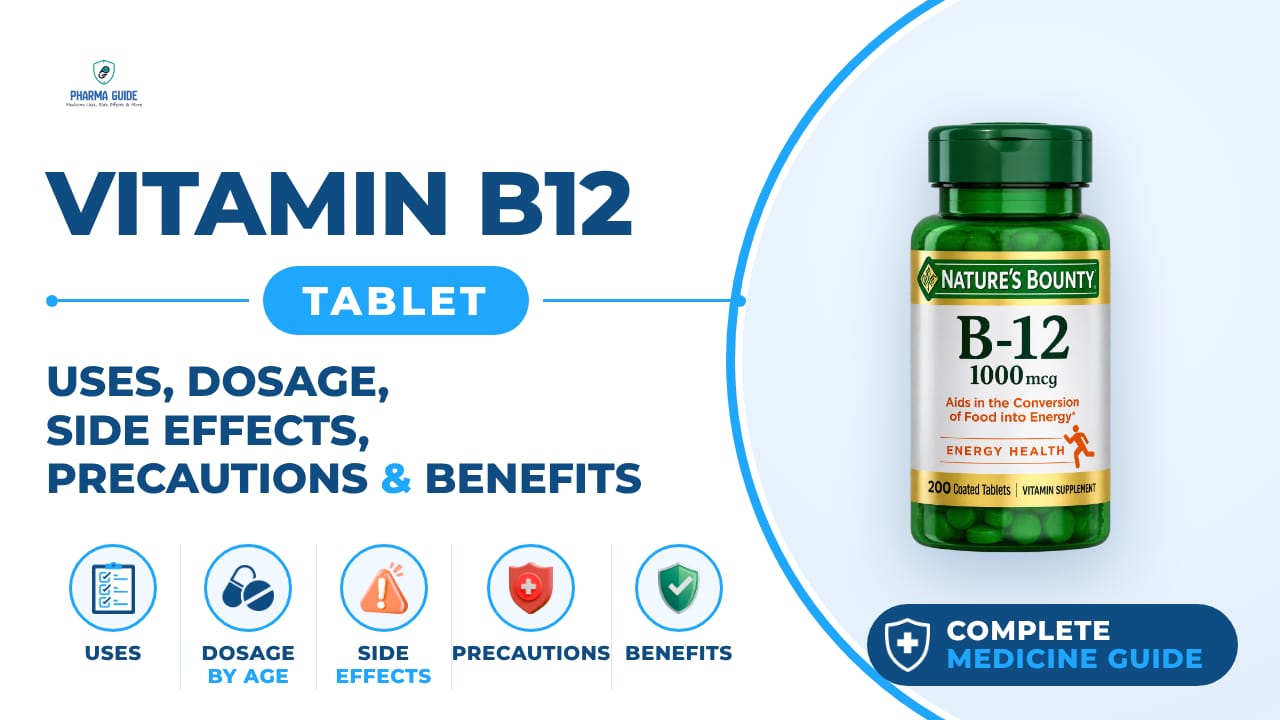
| Generic name | Cyanocobalamin |
|---|---|
| Drug class | Vitamin Supplement |
| Forms | Tablet (swallowed), Sublingual tablet or lozenge (dissolved under the tongue), Injection, Nasal gel spray, Cream (for skin conditions) |
Quick overview
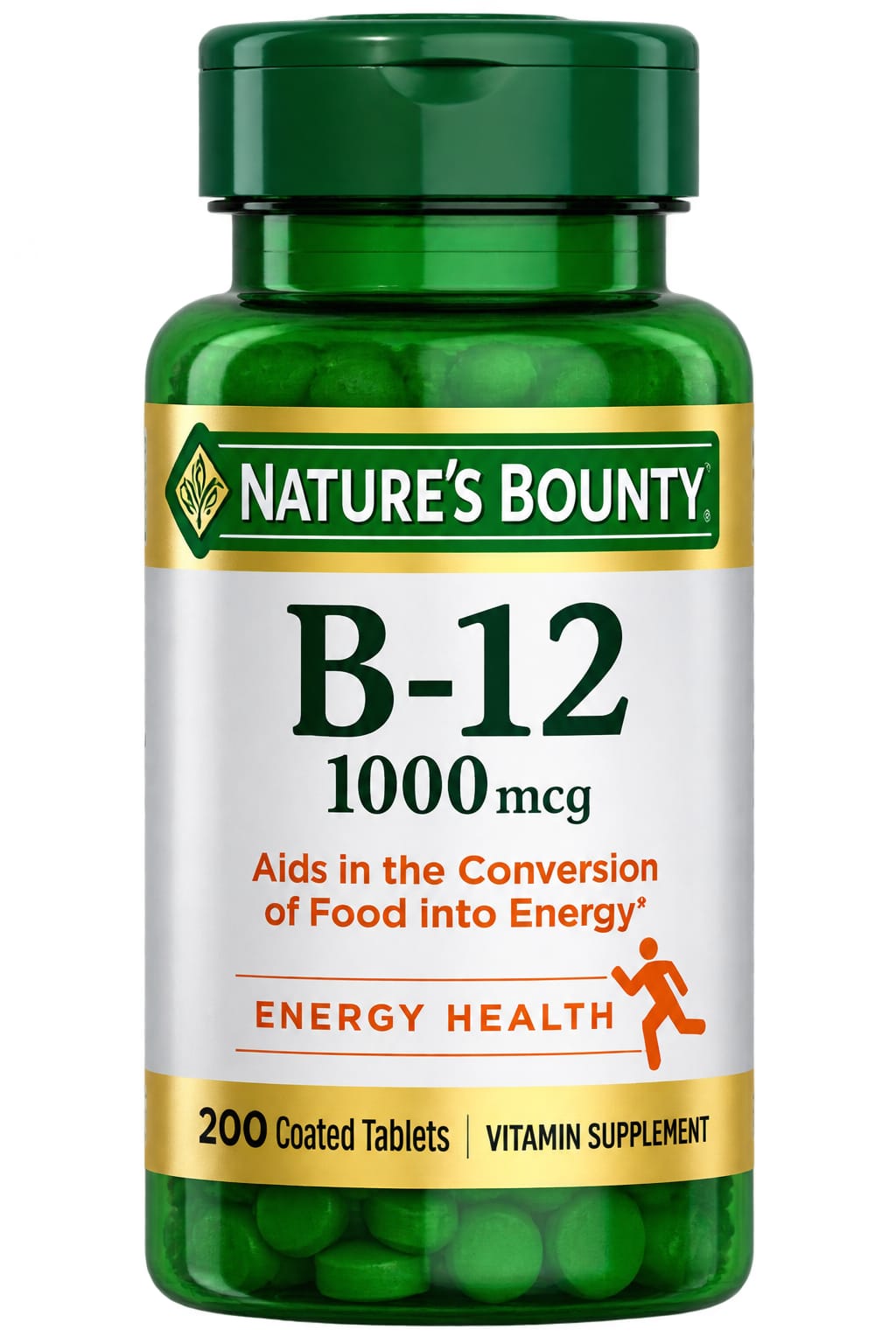
Vitamin B12 Tablet contains cyanocobalamin, a water-soluble vitamin supplement used to treat and prevent vitamin B12 deficiency and related megaloblastic anemia. It supports healthy nerves, healthy blood cells, and DNA production, and is commonly used by people with absorption problems, vegetarians, vegans, and older adults. It is generally considered safe at recommended amounts, including during pregnancy and breastfeeding, but certain health conditions and medicines require caution.
What is Vitamin B12 Tablet
Vitamin B12 is a water-soluble vitamin that the body needs for healthy nerves, healthy blood cells, and making DNA. It is naturally found in animal foods, and is also added to some fortified foods, dietary supplements, and prescription products. The most common form used in tablets is cyanocobalamin, though other forms like methylcobalamin, adenosylcobalamin, and hydroxycobalamin are also used.
Vitamin B12 Tablet uses
- Treating and preventing vitamin B12 deficiency
- Treating megaloblastic anemia caused by low vitamin B12
- Supporting people who cannot absorb enough B12 from food, such as those with pernicious anemia, atrophic gastritis, celiac disease, Crohn's disease, or after stomach/intestinal surgery
- Supporting vegetarians, vegans, and older adults who may not get enough B12 from diet
Benefits of Vitamin B12 Tablet
- Helps keep nerve and blood cells healthy
- Helps the body make DNA
- Helps prevent megaloblastic anemia, a condition where red blood cells are too large and too few to carry oxygen well
- Can improve tiredness, weakness, and nerve symptoms caused by B12 deficiency
How Vitamin B12 Tablet works
Vitamin B12 is needed by the body to help form healthy red blood cells and nerve tissue, and to help make DNA, the genetic material in cells. It is a cofactor for enzymes involved in these processes.
Vitamin B12 Tablet dosage
Vitamin B12 can be taken as a tablet swallowed by mouth, or as a tablet dissolved under the tongue (sublingual); studies show no difference in effectiveness between these forms. Some tablets for people with absorption problems may need to be taken between meals. If you take a vitamin C supplement, take it a couple of hours after your vitamin B12 tablet, since taking them together can reduce how much B12 your body absorbs. People with malabsorption problems, such as pernicious anemia, may not respond well to oral tablets and may need injections instead.
| Age group | Dose |
|---|---|
| Infants 0–6 Months | 0.4 mcg/day |
| Infants 7–12 Months | 0.5 mcg/day |
| Children 1–8 Years | 0.9–1.2 mcg/day |
| Children 9–13 Years | 1.8 mcg/day |
| 14 Years and Above (Adults) | 2.4 mcg/day |
Available forms and strengths
- Tablet (swallowed)
- Sublingual tablet or lozenge (dissolved under the tongue)
- Injection
- Nasal gel spray
- Cream (for skin conditions)
Side effects of Vitamin B12 Tablet
Common
- Mild itching (reported with a skin cream form)
- Nausea or stomach upset
- Diarrhea
- Headache
- Dizziness
- Skin rash or itching
- Mild allergic reactions
- Acne-like skin changes (rare)
- Swelling or redness at allergic reaction sites (rare)
Serious
- Allergic skin reactions such as rash or hives from cobalt sensitivity
- Serious allergic reaction symptoms such as extensive or blistering rash, wheezing, difficulty breathing, or feeling faint
Warnings and precautions
- People allergic or sensitive to cobalt or cobalamin should not use vitamin B12.
- People with Leber's disease, an inherited eye disease, should not take vitamin B12, because it can seriously damage the optic nerve and possibly cause blindness.
- People with megaloblastic anemia should only use vitamin B12 treatment under close medical supervision, as it can have serious side effects.
- Treating a B12 deficiency in someone with polycythemia vera (too many red blood cells) can unmask symptoms of that condition.
- After having a coronary stent placed, avoid combining vitamin B12 with folate and vitamin B6, since this combination may increase the risk of blood vessel narrowing.
- Long-term use of the antibiotic chloramphenicol may reduce the effect of vitamin B12 on new blood cell production, so this combination should be avoided.
- Certain medicines, including acid-reducing drugs (proton pump inhibitors, H2-blockers) and metformin, can lower vitamin B12 levels or absorption over time.
- Vitamin B12 is considered safe for pregnant women when taken by mouth at recommended amounts.
- Pregnant women should not take more than the recommended amount unless advised, since safety of higher doses is unknown.
- Vitamin B12 is considered safe for breastfeeding women at recommended amounts.
- Breastfeeding women should not take more than the recommended daily amount.
- The body normally removes extra vitamin B12 through the kidneys in urine.
- Avoid high doses without medical advice. Inform your doctor if you have kidney disease or allergies.
- Long-term heavy alcohol use can be a cause of low vitamin B12 levels.
- Check B12 levels if using long-term supplements. Take carefully with other vitamin supplements to avoid excess intake.
When to see a doctor
- Get urgent medical help if you notice signs of a serious allergic reaction after taking vitamin B12, such as a widespread or blistering rash, wheezing, trouble breathing, or feeling faint.
- Seek urgent specialist advice if you have anemia along with neurological symptoms such as poor balance, numbness, or vision changes.
- If you are pregnant and have neurological or blood-related symptoms of B12 deficiency, seek urgent advice.
Alternatives
- Methylcobalamin
- Hydroxocobalamin
- B12 Sublingual Tablets
Watch the video
FAQs
What is Vitamin B12 Tablet used for?
It is used to treat and prevent vitamin B12 deficiency, treat megaloblastic anemia caused by low B12, and support people with absorption problems, vegetarians, vegans, and older adults who may not get enough B12 from diet.
What is the recommended dose of Vitamin B12 for adults?
Adults aged 14 years and above need 2.4 mcg per day.
Should Vitamin B12 be taken with vitamin C?
No, taking vitamin C together with vitamin B12 can reduce how much B12 your body absorbs, so vitamin C should be taken a couple of hours after the B12 tablet.
What are the common side effects of Vitamin B12 Tablet?
Common side effects include nausea or stomach upset, diarrhea, headache, dizziness, skin rash or itching, and mild allergic reactions.
Who should avoid taking Vitamin B12 Tablet?
People allergic or sensitive to cobalt or cobalamin should not use it, and people with Leber's disease, an inherited eye disease, should avoid it because it can seriously damage the optic nerve and possibly cause blindness.
General information, not medical advice
Your prescriber and the leaflet in your pack know your situation. This page does not.
- Follow your prescriber and the leaflet
- Don't start, stop, or change a dose on your own
- Doses and warnings differ by country and product
Sources
- https://ods.od.nih.gov/factsheets/VitaminB12-HealthProfessional/
- https://www.rxlist.com/supplements/vitamin_b12.htm
- https://www.medparkhospital.com/en-US/lifestyles/vitamin-b12
- Nottinghamshire Guidelines on the Diagnosis and Management of Vitamin B12 Replacement in Primary Care (2025)
Video
Related medicines
Biotin Tablet: Uses, Dosage, Side Effects, Precautions and Alternates
Vitamin Supplement
Biotin Tablet (Vitamin B7) supports healthy hair, skin, and nails and aids energy metabolism. Learn uses, dosage, side effects, and precautions.

Injectafer Injection: Uses, Dosage, Side Effects, Precautions and Alternates
Iron products
Injectafer (ferric carboxymaltose) treats iron deficiency anemia and heart failure-related iron deficiency via IV. Learn uses, dosage, side effects, and