
Safety
General information, not medical advice
Your prescriber and the leaflet in your pack know your situation. This page does not.
- Follow your prescriber and the leaflet
- Don't start, stop, or change a dose on your own
- Doses and warnings differ by country and product
Bisacodyl Tablet: Uses, Dosage, Side Effects, Precautions and Alternates
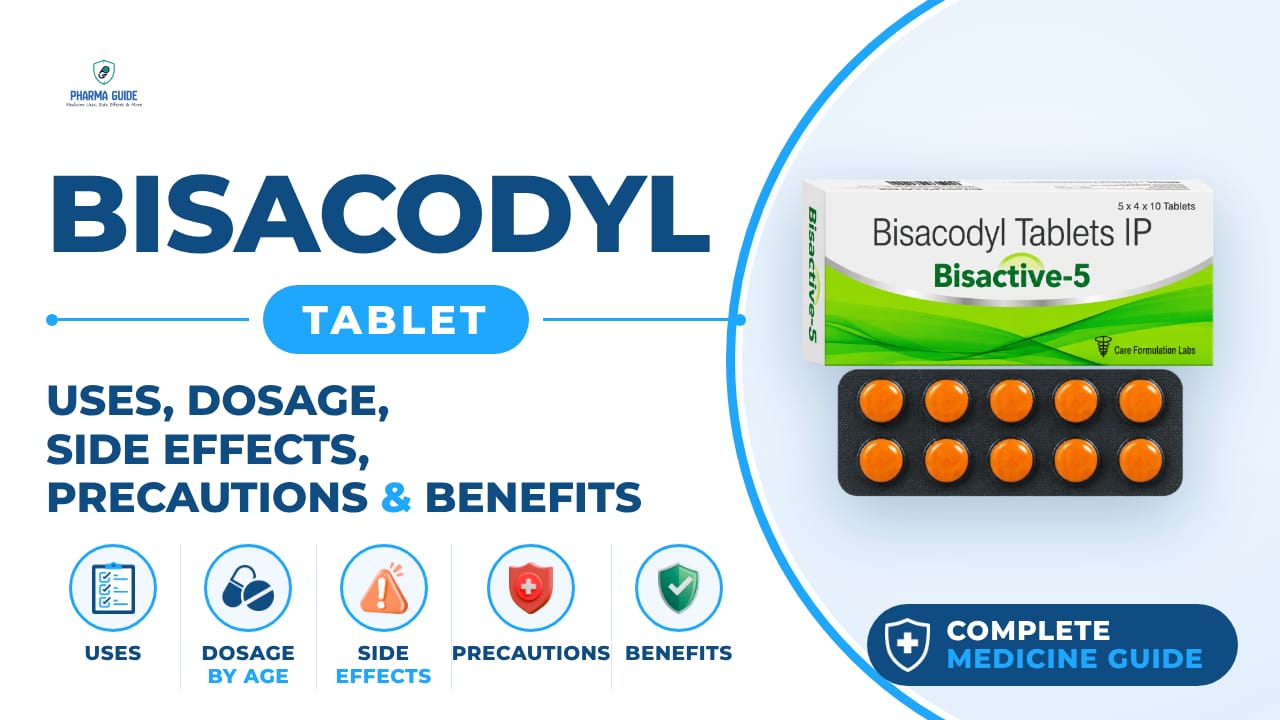
| Generic name | Bisacodyl |
|---|---|
| Drug class | Stimulant laxative |
| Forms | Tablet, Suppository |
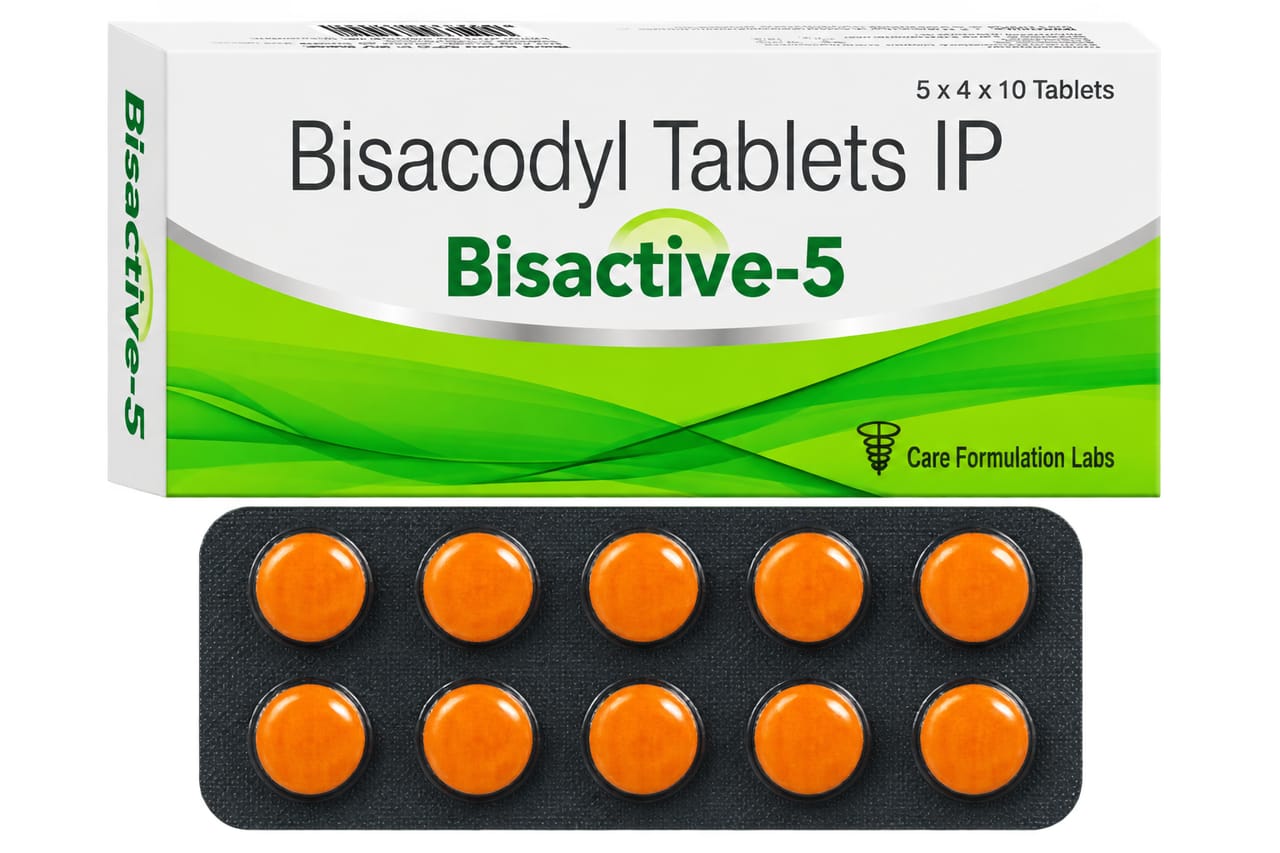
Quick overview
Bisacodyl Tablet is a stimulant laxative used to treat constipation and to empty the bowels before certain medical procedures or surgery. It works by stimulating bowel muscles and helping water build up in the intestines, which softens stool and speeds its passage. It is intended for short-term use and comes in tablet and suppository forms.
What is Bisacodyl Tablet
Bisacodyl is a stool softener and stimulant laxative used to treat constipation. It is also used before certain medical procedures or surgery to empty the bowels.
Bisacodyl Tablet uses
- Bowel preparation
- Constipation
- Relief of occasional constipation
- Preparation for diagnostic procedures, pre- and postoperative treatment, and conditions requiring facilitated defecation
Benefits of Bisacodyl Tablet
- Relieves short-term constipation
- Helps empty the bowels before medical procedures or surgery
How Bisacodyl Tablet works
Bisacodyl stimulates the muscles of the bowel and helps water build up in the intestines, which softens the stool and helps it pass through more quickly.
Bisacodyl Tablet dosage
Take this medicine exactly as instructed by your doctor and do not take more than prescribed. Tablets should be swallowed whole with an adequate amount of liquid; do not crush or chew them.
Do not take the tablet with milk, cheese, or other dairy products, or with antacids; leave a gap of about one hour between these and the tablet, as they can stop the enteric coating from working properly. It is recommended to take the tablets at night so a bowel movement happens the following morning. Do not take within two hours of another medicine, since it may reduce that medicine's effect.
This medicine is meant for short-term relief; if you are still constipated after five days, consult your doctor. It is not recommended for children under 12 years unless a doctor tells you to.
If you miss a dose, take it as soon as you remember; if it is almost time for the next dose, skip the missed one and do not double up. Drink plenty of water, eat fibre-rich food, and exercise regularly for better results.
| Age group | Dose |
|---|---|
| Under 2 years | Do not use unless prescribed |
| 2–9 years | 5 mg once daily under medical advice |
| 10–11 years | 5–10 mg once daily |
| 12 years & older | 5–10 mg once daily |
| Adults | 5–10 mg once daily |
Available forms and strengths
- Tablet
- Suppository
Side effects of Bisacodyl Tablet
Common
- Abdominal cramps
- Stomach discomfort and pain
- Diarrhea
- Nausea and vomiting
- Fainting
- Dizziness
Serious
- Rectal bleeding (blood in stool)
- Allergic reactions such as rash, itching, swelling of the face/tongue/throat, severe dizziness, and breathing difficulty
- Dehydration
- Swelling of the colon (large bowel)
- Electrolyte imbalance with prolonged or excessive use
Warnings and precautions
- Do not use this medicine for more than 5 days without checking with your doctor, and do not use it every day for more than a week without medical advice, since long-term use of any laxative can lead to dependence on it for bowel movements.
- Do not use this medicine if you have inflammatory bowel disease, as it may cause a tear in the wall of the large intestine.
- Do not use this medicine if you have rectal bleeding, since it may cause irritation and a burning feeling.
- Do not use this medicine if you have a blocked intestine, as it may make the condition worse.
- Prolonged, excessive use can cause fluid and electrolyte (mineral) imbalance in the body, including low potassium.
- Do not use this medicine if you have severe abdominal pain with nausea and vomiting, a blocked intestine, acute inflammatory bowel disease, appendicitis, or severe dehydration.
- This medicine should not be used in children and teens under 12 years of age.
- Bisacodyl is generally not recommended during pregnancy. Talk to your doctor before taking it if you are pregnant.
- Bisacodyl is considered safe to use while breastfeeding. It does not appear to pass into breast milk and is very unlikely to affect your baby.
- It is not known how bisacodyl interacts with alcohol. Talk to your doctor before drinking alcohol while taking this medicine.
- You may feel dizzy or faint due to a reaction triggered by abdominal cramping. If this happens, avoid driving or operating machinery.
Storage
- Keep out of the reach of children
- Store tablets at room temperature (15–30°C)
- Store suppositories at room temperature (15–25°C)
When to see a doctor
- Get medical help right away if you have an allergic reaction, such as rash, itching, swelling of the face, lips, mouth, tongue, or throat, severe dizziness, or trouble breathing or swallowing.
- Seek immediate medical attention if you have heavy or excessive rectal bleeding.
- If you take too much of this medicine, contact your doctor, pharmacist, or your local poison control center right away.
- If you are still constipated after using this medicine for several days, or if you have no bowel movement, talk to your doctor.
Alternatives
- Senna
- Lactulose
- Glycerin suppository
Watch the video
FAQs
What is Bisacodyl Tablet used for?
Bisacodyl Tablet is used to treat constipation and to empty the bowels before certain medical procedures or surgery. It helps relieve occasional constipation and prepares the bowel for diagnostic procedures and pre- or postoperative care.
How does Bisacodyl Tablet work?
Bisacodyl stimulates the muscles of the bowel and helps water build up in the intestines, which softens the stool and helps it pass through more quickly.
What is the dosage of Bisacodyl Tablet for adults?
Adults are typically given 5–10 mg once daily. Tablets should be swallowed whole with adequate liquid and not crushed or chewed, and are best taken at night so a bowel movement occurs the following morning.
Can Bisacodyl Tablet be taken with milk or antacids?
No, you should not take the tablet with milk, cheese, or other dairy products, or with antacids. Leave a gap of about one hour between these and the tablet, as they can stop the enteric coating from working properly.
What are the common side effects of Bisacodyl Tablet?
Common side effects include abdominal cramps, stomach discomfort and pain, diarrhea, nausea and vomiting, fainting, and dizziness.
General information, not medical advice
Your prescriber and the leaflet in your pack know your situation. This page does not.
- Follow your prescriber and the leaflet
- Don't start, stop, or change a dose on your own
- Doses and warnings differ by country and product
Sources
Video
Related medicines

Injectafer Injection: Uses, Dosage, Side Effects, Precautions and Alternates
Iron products
Injectafer (ferric carboxymaltose) treats iron deficiency anemia and heart failure-related iron deficiency via IV. Learn uses, dosage, side effects, and

Gliclazide Tablet: Uses, Dosage, Side Effects, Precautions and Alternates
Sulfonylurea (hypoglycemic/antidiabetic agent)
Gliclazide Tablet is a sulfonylurea for type 2 diabetes that boosts insulin release. Learn about dosage, side effects, warnings, and precautions.