
Safety
General information, not medical advice
Your prescriber and the leaflet in your pack know your situation. This page does not.
- Follow your prescriber and the leaflet
- Don't start, stop, or change a dose on your own
- Doses and warnings differ by country and product
Bivalirudin Injection: Uses, Dosage, Side Effects, Precautions and Alternates
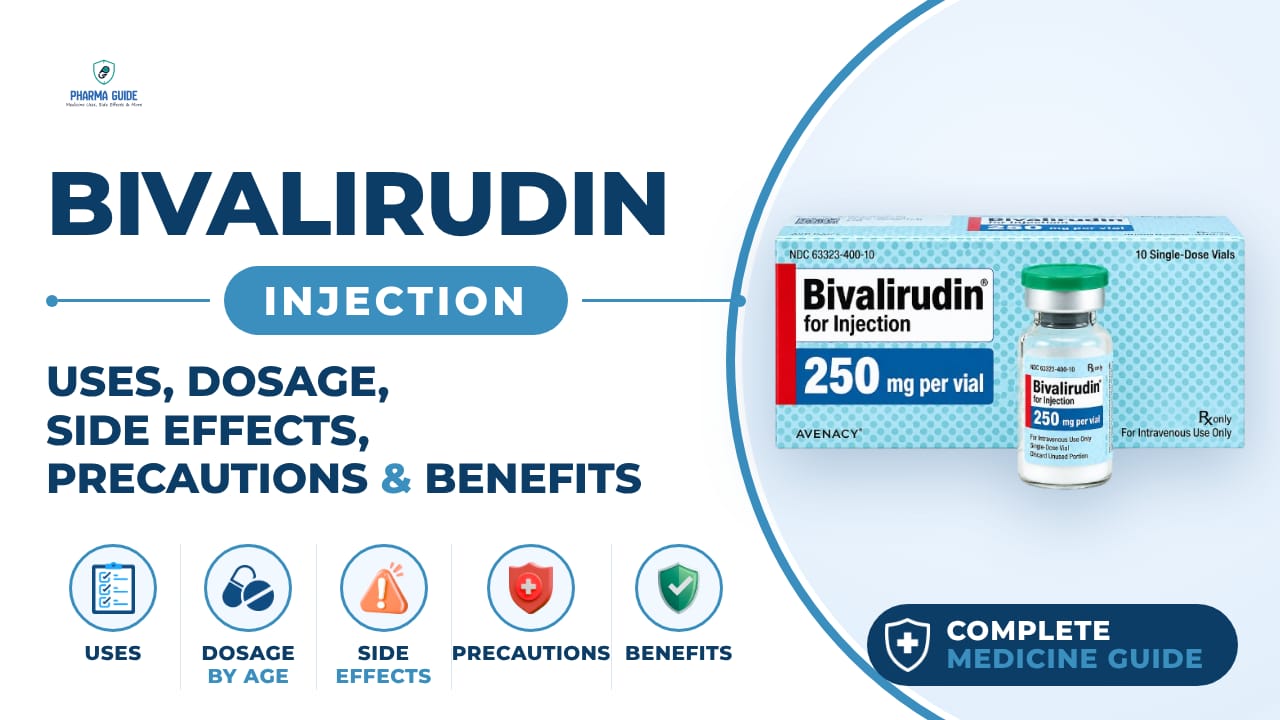
| Generic name | Bivalirudin |
|---|---|
| Drug class | Anticoagulants (direct thrombin inhibitor) |
| Forms | Injection |
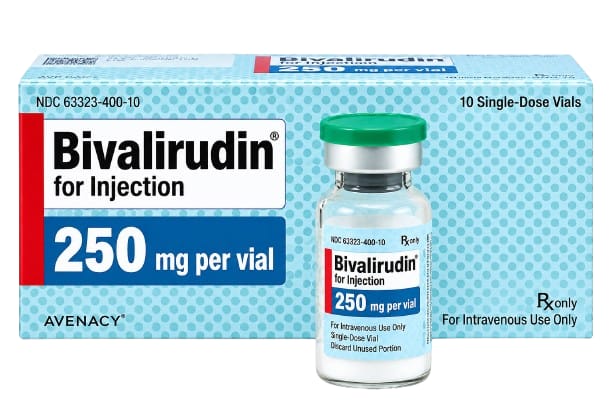
Quick overview
Bivalirudin Injection is an anticoagulant medicine given into a vein to help prevent unwanted blood clots during a heart artery procedure called angioplasty or percutaneous coronary intervention (PCI). It is also used in people with heparin-induced thrombocytopenia (HIT) or HITTS, and in those with moderate to high risk acute coronary syndromes undergoing early invasive treatment. It works by directly blocking thrombin, a protein that starts the clotting process. It is only given in a hospital or clinical setting under medical supervision.
What is Bivalirudin Injection
Bivalirudin is a medicine given into a vein that stops blood from clotting. It is used to help prevent unwanted blood clots during a heart artery procedure called angioplasty or percutaneous coronary intervention (PCI).
Bivalirudin Injection uses
- Used as an anticoagulant in patients undergoing percutaneous coronary intervention (PCI)
- Used in patients with heparin-induced thrombocytopenia (HIT) or heparin-induced thrombocytopenia and thrombosis syndrome (HITTS)
- Used in patients with moderate to high risk acute coronary syndromes undergoing early invasive treatment
Benefits of Bivalirudin Injection
- Helps prevent unwanted blood clotting during angioplasty/PCI, improving blood flow in the heart
- Can be used instead of heparin in patients who cannot tolerate heparin due to low platelet reactions
How Bivalirudin Injection works
A protein called thrombin starts the blood clotting process. Bivalirudin blocks thrombin directly, which stops clots from forming. This effect generally wears off within about an hour or two after the medicine is stopped.
Bivalirudin Injection dosage
This medicine is given by a doctor or nurse directly into a vein, usually as an injection followed by a continuous infusion for the length of the procedure. It is intended to be used together with aspirin. An additional dose may be given if blood clotting tests show it is needed. In patients with certain heart attacks, the infusion may be continued for a period after the procedure. It is only given in a hospital or clinical setting under medical supervision.
Use exactly as prescribed by your doctor or pharmacist.
Available forms and strengths
- Injection
Side effects of Bivalirudin Injection
Common
- Minor bleeding events
- Back pain
- Nausea
- Vomiting
- Indigestion
- Abdominal pain
- Headache
- Generalized pain
- Fever
- Low blood pressure
- Injection site pain
- Nervousness
- Insomnia
- Anxiety
- Pelvic pain
- Urinary retention
- High blood pressure
Serious
- Major bleeding events including bleeding inside the brain or abdomen
- Significant drop in hemoglobin
- Serious allergic reaction (anaphylaxis) with swelling of face, lips, mouth or throat, difficulty breathing, wheezing, itchiness or hives
- Blood clot formation (thrombosis), which may lead to serious or fatal complications such as heart attack
- Pulmonary hemorrhage (bleeding in the lungs)
- Cardiac tamponade (fluid buildup around the heart)
- Fast or pounding heartbeats, fluttering in the chest, shortness of breath, sudden dizziness
- Severe headache, confusion, slurred speech, severe weakness, vomiting, loss of coordination, feeling unsteady
- Serious eye symptoms such as blurred vision, tunnel vision, eye pain or swelling, or seeing halos around lights
- Fainting, dizziness, loss of consciousness
Warnings and precautions
- This medicine increases the risk of bleeding, which can sometimes be serious or life-threatening.
- Do not use this medicine if you have active major bleeding or are allergic to bivalirudin or any of its ingredients.
- In people having a certain type of heart attack (STEMI) treated with PCI, blood clots in the stent have happened more often with this medicine than with heparin, usually within 4 hours. Patients need to be monitored in a hospital for at least 24 hours afterward.
- Using this medicine during a radiation treatment called gamma brachytherapy can increase the risk of blood clots, including fatal cases.
- Taking other blood thinners, such as heparin, warfarin, clot-dissolving medicines, or certain platelet medicines, together with this medicine increases the risk of serious bleeding.
- Elderly patients have a higher chance of bleeding with this medicine.
- This medicine should not be injected into a muscle, only given into a vein.
- There is no information from studies on the use of bivalirudin in pregnant women to know if it could cause harm to the baby. Talk to your doctor if you are pregnant or planning to become pregnant.
- It is not known if bivalirudin passes into breast milk or if it affects a breastfeeding baby. Your doctor will weigh the benefits of breastfeeding against your need for the medicine.
- People with kidney problems may need a lower dose of this medicine, and their blood clotting will be checked more often. People with severe kidney failure or on dialysis should not use this medicine in some cases.
Storage
- This medicine will be stored in the pharmacy or on the ward
- This medicine will be stored below 25°C
- After the powder has been dissolved, the doctor will use the solution as soon as possible
- The dissolved solution can be stored for up to 24 hours at between 2°C and 8°C (the temperature of most standard refrigerators)
- Do not freeze. Do not place in a freezer or freezing compartment of a refrigerator
- Bivalirudin is used for one dose in one patient only. Any remaining contents should be discarded
- Note the expiry date on the pack. Do not use after this expiry date
- Do not receive this medicine if the packaging is torn or shows signs of tampering
- Keep it where young children cannot reach it
- If you no longer need to use this medicine or it is out of date, take it to any pharmacy for safe disposal
When to see a doctor
- Tell your medical team right away if you notice swelling of the face, lips, mouth, or throat that causes trouble swallowing or breathing, tightness in the chest, wheezing, itchiness, or hives — these can be signs of a serious allergic reaction.
- Get medical help immediately for unexplained bleeding at needle sites, blood in urine or stool, bruising, or any bleeding that will not stop.
- Seek urgent care for chest pain that spreads to the neck or shoulder, shortness of breath, or sudden dizziness or fainting, as these could be signs of a serious heart or clotting problem.
- Call your doctor immediately if you notice fast or pounding heartbeats, fluttering in your chest, severe headache, confusion, slurred speech, severe weakness, vomiting, loss of coordination, or feeling unsteady.
Alternatives
- Fondaparinux
- Argatroban
- Heparin
Watch the video
FAQs
What is Bivalirudin Injection used for?
It is used as an anticoagulant during percutaneous coronary intervention (PCI), in patients with heparin-induced thrombocytopenia (HIT) or HITTS, and in moderate to high risk acute coronary syndrome patients undergoing early invasive treatment.
How does Bivalirudin Injection work?
It works by directly blocking thrombin, a protein that starts the blood clotting process, thereby stopping clots from forming. Its effect generally wears off within about an hour or two after the medicine is stopped.
How is Bivalirudin Injection given?
It is given by a doctor or nurse directly into a vein, usually as an injection followed by a continuous infusion for the length of the procedure, and is intended to be used together with aspirin.
What are the common side effects of Bivalirudin Injection?
Common side effects include minor bleeding events, back pain, nausea, vomiting, indigestion, abdominal pain, headache, fever, low blood pressure, injection site pain, nervousness, insomnia, anxiety, and high blood pressure.
Who should not use Bivalirudin Injection?
It should not be used in people with active major bleeding or those allergic to bivalirudin or any of its ingredients, and people with severe kidney failure or on dialysis should not use it in some cases.
General information, not medical advice
Your prescriber and the leaflet in your pack know your situation. This page does not.
- Follow your prescriber and the leaflet
- Don't start, stop, or change a dose on your own
- Doses and warnings differ by country and product
Sources
Video
Related medicines

Injectafer Injection: Uses, Dosage, Side Effects, Precautions and Alternates
Iron products
Injectafer (ferric carboxymaltose) treats iron deficiency anemia and heart failure-related iron deficiency via IV. Learn uses, dosage, side effects, and

Gliclazide Tablet: Uses, Dosage, Side Effects, Precautions and Alternates
Sulfonylurea (hypoglycemic/antidiabetic agent)
Gliclazide Tablet is a sulfonylurea for type 2 diabetes that boosts insulin release. Learn about dosage, side effects, warnings, and precautions.