
Safety
General information, not medical advice
Your prescriber and the leaflet in your pack know your situation. This page does not.
- Follow your prescriber and the leaflet
- Don't start, stop, or change a dose on your own
- Doses and warnings differ by country and product
Blenrep Injection: Uses, Dosage, Side Effects, Precautions and Alternates
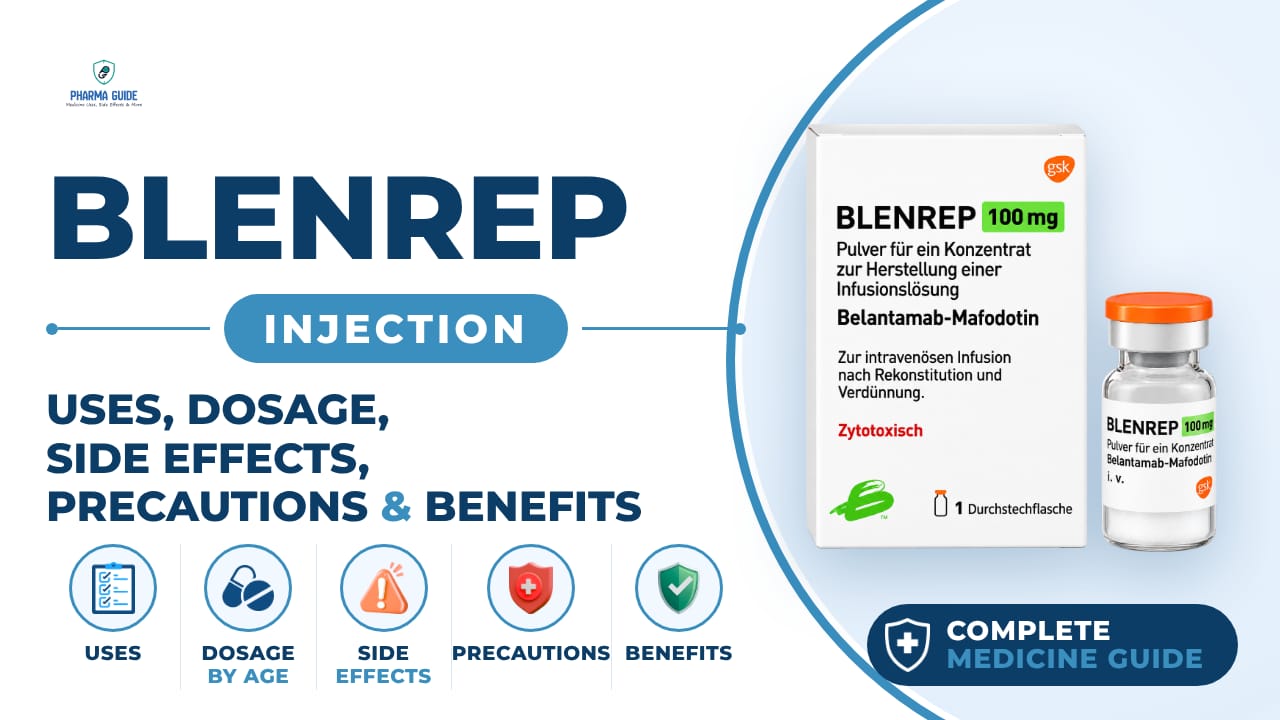
| Generic name | belantamab mafodotin-blmf |
|---|---|
| Drug class | B-cell maturation antigen (BCMA)-directed antibody and microtubule inhibitor conjugate (antibody-drug conjugate) |
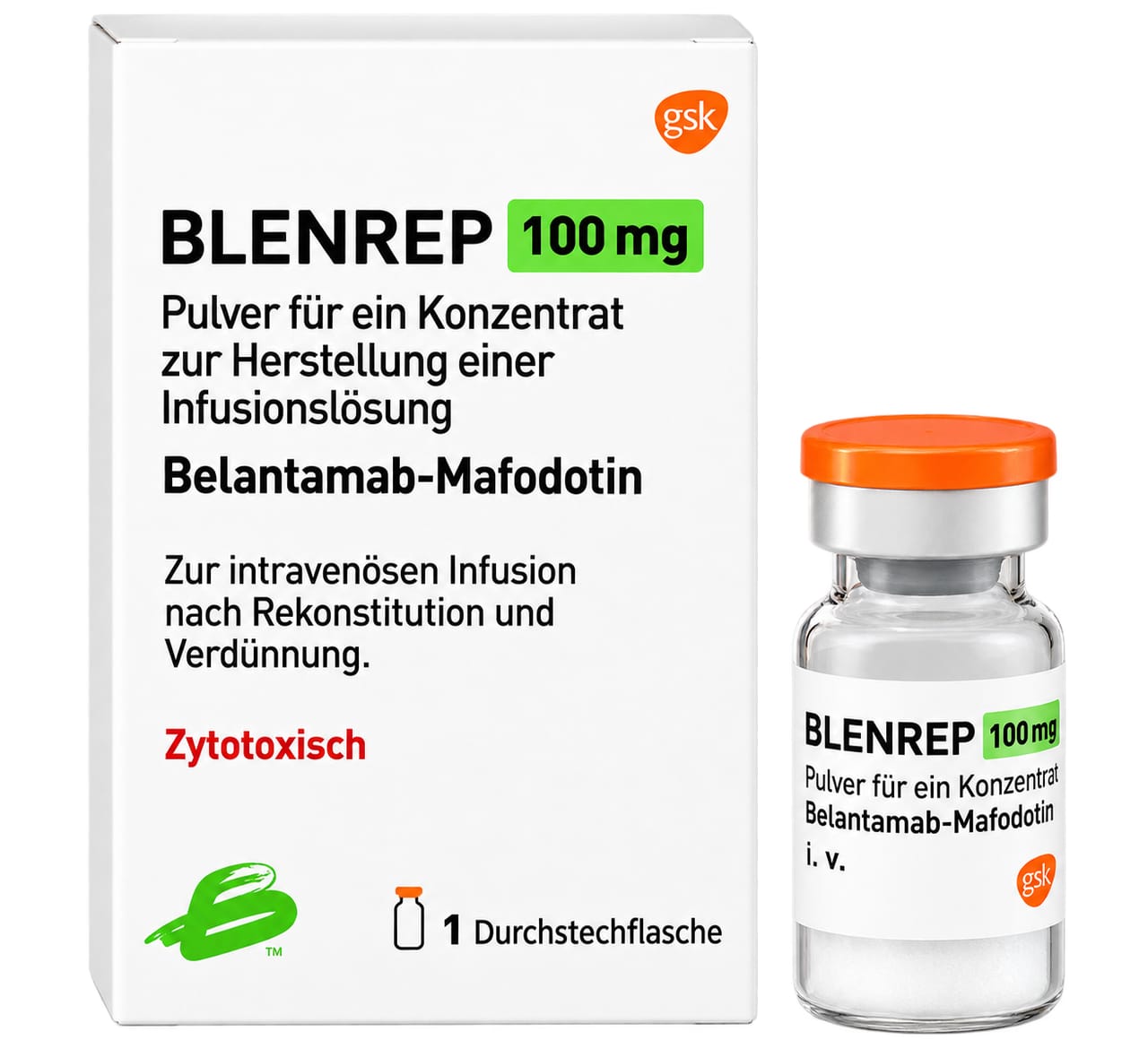
| Forms | Powder for injection (lyophilized powder in a single-dose vial) for reconstitution and dilution before intravenous infusion |
Quick overview
Blenrep Injection (belantamab mafodotin-blmf) is a prescription cancer medicine given by IV infusion to treat adults with multiple myeloma, a cancer of plasma cells in the bone marrow. It is an antibody-drug conjugate that pairs an antibody targeting BCMA on myeloma cells with a cell-killing drug. It is given by a healthcare professional and requires regular eye exams due to risks of eye damage. It is used alone or in combination with other myeloma medicines, depending on prior treatment history.
What is Blenrep Injection
Blenrep is a prescription cancer medicine given by IV infusion. It is an antibody-drug conjugate: an antibody that targets a protein called BCMA on myeloma cells, linked to a cell-killing drug. It is used to treat adults with multiple myeloma, a cancer of plasma cells in the bone marrow.
Blenrep Injection uses
- Treatment of adults with relapsed or refractory multiple myeloma who have received at least 4 prior therapies, including an anti-CD38 monoclonal antibody, a proteasome inhibitor, and an immunomodulatory agent (as a single agent, per US label)
- In combination with bortezomib and dexamethasone for adults with relapsed or refractory multiple myeloma who have received at least one or two prior lines of therapy, including a proteasome inhibitor and an immunomodulatory agent
- In combination with pomalidomide and dexamethasone for adults with relapsed or refractory multiple myeloma who have received at least one prior line of therapy, including lenalidomide
Benefits of Blenrep Injection
- Treats certain relapsed or refractory multiple myelomas
- Targets BCMA on malignant plasma cells
- Delivers a cytotoxic agent directly to targeted cancer cells
- Can help slow disease progression
- Provides an antibody-drug conjugate option after prior multiple-myeloma therapies
How Blenrep Injection works
Blenrep combines an antibody that attaches to a protein called BCMA found on myeloma cells with a cell-killing drug called MMAF. Once the antibody attaches to the cancer cell and is taken inside it, the cell-killing drug is released and disrupts the cell's internal skeleton, stopping it from dividing and causing it to die.
Blenrep Injection dosage
Blenrep is given by a healthcare professional as an intravenous infusion over about 30 minutes. It is usually given once every 3 weeks; when combined with other medicines, a different schedule may apply as directed by your healthcare provider.
You will need an eye exam by an eye specialist before starting treatment, before each dose, and whenever you have new or worsening eye symptoms. Use preservative-free lubricant eye drops at least 4 times a day starting with your first infusion and continuing until the end of treatment. Avoid wearing contact lenses during treatment unless your eye doctor tells you it is okay. Use caution when driving or operating machinery, since this medicine can affect your vision. If you miss an appointment, contact your healthcare provider as soon as possible to reschedule.
| Age group | Dose |
|---|---|
| 18–64 years | 2.5 mg/kg IV once every 3 weeks |
| 65 years and older | 2.5 mg/kg IV once every 3 weeks, with individualized oncology monitoring |
Available forms and strengths
- Powder for injection (lyophilized powder in a single-dose vial) for reconstitution and dilution before intravenous infusion
Side effects of Blenrep Injection
Common
- Eye changes seen on exam (keratopathy)
- Decreased or blurred vision
- Dry eyes
- Sensitivity to light (photophobia)
- Feeling like something is in your eye
- Eye irritation or pain
- Nausea
- Fever
- Fatigue/tiredness
- Infusion-related reactions
- Low platelet counts (thrombocytopenia)
- Diarrhea
- Upper respiratory tract infection
- Changes in liver enzyme blood tests
- Low red and white blood cell counts
Serious
- Severe vision loss and corneal ulcers (including with infection)
- Serious bleeding from low platelet counts (thrombocytopenia), including gastrointestinal or brain bleeding
- Severe infusion-related reactions, including life-threatening reactions
- Serious infections, including pneumonia, sepsis
- Lung inflammation (pneumonitis), including fatal cases
- Harm to an unborn baby (embryo-fetal toxicity)
- Impaired fertility in males and females
Warnings and precautions
- Blenrep can cause damage to the surface of the eye, leading to blurred vision, dry eyes, and in some cases severe vision loss or corneal ulcers. Regular eye exams are required before and during treatment.
- Because of the eye-related risks, this medicine can only be given through a special restricted program that requires prescriber and patient enrollment and eye monitoring.
- This medicine can cause low platelet counts, which can lead to serious bleeding. Blood tests will be done before and during treatment to monitor this.
- Reactions during the infusion can occur and may be serious; you will be monitored during treatment and may receive medicines beforehand to prevent reactions.
- Cases of lung inflammation (pneumonitis), including fatal cases, have occurred with this medicine.
- Blenrep can harm an unborn baby. Your doctor may test for pregnancy before you start treatment.
- Women who can become pregnant should use effective birth control during treatment and for 4 months after the last dose, and men with partners who can become pregnant should use effective birth control during treatment and for 6 months after the last dose.
- It is not known if this medicine passes into breast milk. Because of the risk of serious side effects in a breastfed child, you should not breastfeed during treatment and for 3 months after your last dose.
- No dose adjustment is needed for patients with mild or moderate kidney problems. The right dose has not been established for patients with severe kidney impairment or kidney failure.
- No dose adjustment is needed for mild liver problems. The right dose has not been established for patients with moderate or severe liver impairment.
- This medicine can cause vision changes that may make it harder to drive or use machinery safely. Use caution when driving or operating machinery while being treated with this medicine.
Storage
- Store vials refrigerated at 36°F to 46°F (2°C to 8°C).
- Do not freeze.
- Blenrep is a hazardous drug — follow applicable special handling and disposal procedures.
- This medicine will be stored and handled by your healthcare provider or pharmacy; you will not need to store it yourself.
When to see a doctor
- Get medical help right away if you notice any new or worsening eye symptoms or vision changes, such as blurred vision, severe vision loss, or eye pain.
- Tell your healthcare provider right away if you have signs of bleeding or unusual bruising, which could mean your platelet count is low.
- Seek immediate medical attention for symptoms of an infusion reaction, such as chills, shaking, flushing, rash, shortness of breath, swelling of the lips/tongue/throat/face, dizziness, feeling faint, fever, or a racing heart.
- Tell your doctor right away if you develop new or worsening breathing problems, such as shortness of breath, chest pain, or cough, which could be signs of lung inflammation.
- Tell your healthcare provider right away if you think you might be pregnant during treatment.
Alternatives
- Darzalex Faspro
- Darzalex IV
- Sarclisa (isatuximab)
- Carvykti
Watch the video
FAQs
What is Blenrep Injection used for?
Blenrep treats adults with relapsed or refractory multiple myeloma, either alone after at least 4 prior therapies or in combination with bortezomib/dexamethasone or pomalidomide/dexamethasone after fewer prior therapies.
How is Blenrep given?
Blenrep is given by a healthcare professional as an intravenous infusion over about 30 minutes, usually once every 3 weeks, at a dose of 2.5 mg/kg.
Why do I need eye exams with Blenrep?
Blenrep can cause eye damage, including keratopathy and severe vision loss. You need an eye exam before starting treatment, before each dose, and if you have new or worsening eye symptoms, and must use preservative-free lubricant eye drops throughout treatment.
What are the serious side effects of Blenrep?
Serious side effects include severe vision loss and corneal ulcers, serious bleeding from low platelet counts, severe infusion-related reactions, serious infections, lung inflammation (pneumonitis), and harm to an unborn baby.
Can Blenrep affect fertility or pregnancy?
Yes, Blenrep can harm an unborn baby and may impair fertility in males and females. Effective birth control is needed during treatment and for 4 months after the last dose for women, or 6 months for men with partners who can become pregnant.
General information, not medical advice
Your prescriber and the leaflet in your pack know your situation. This page does not.
- Follow your prescriber and the leaflet
- Don't start, stop, or change a dose on your own
- Doses and warnings differ by country and product
Sources
Video
Related medicines

Injectafer Injection: Uses, Dosage, Side Effects, Precautions and Alternates
Iron products
Injectafer (ferric carboxymaltose) treats iron deficiency anemia and heart failure-related iron deficiency via IV. Learn uses, dosage, side effects, and

Gliclazide Tablet: Uses, Dosage, Side Effects, Precautions and Alternates
Sulfonylurea (hypoglycemic/antidiabetic agent)
Gliclazide Tablet is a sulfonylurea for type 2 diabetes that boosts insulin release. Learn about dosage, side effects, warnings, and precautions.