
Safety
General information, not medical advice
Your prescriber and the leaflet in your pack know your situation. This page does not.
- Follow your prescriber and the leaflet
- Don't start, stop, or change a dose on your own
- Doses and warnings differ by country and product
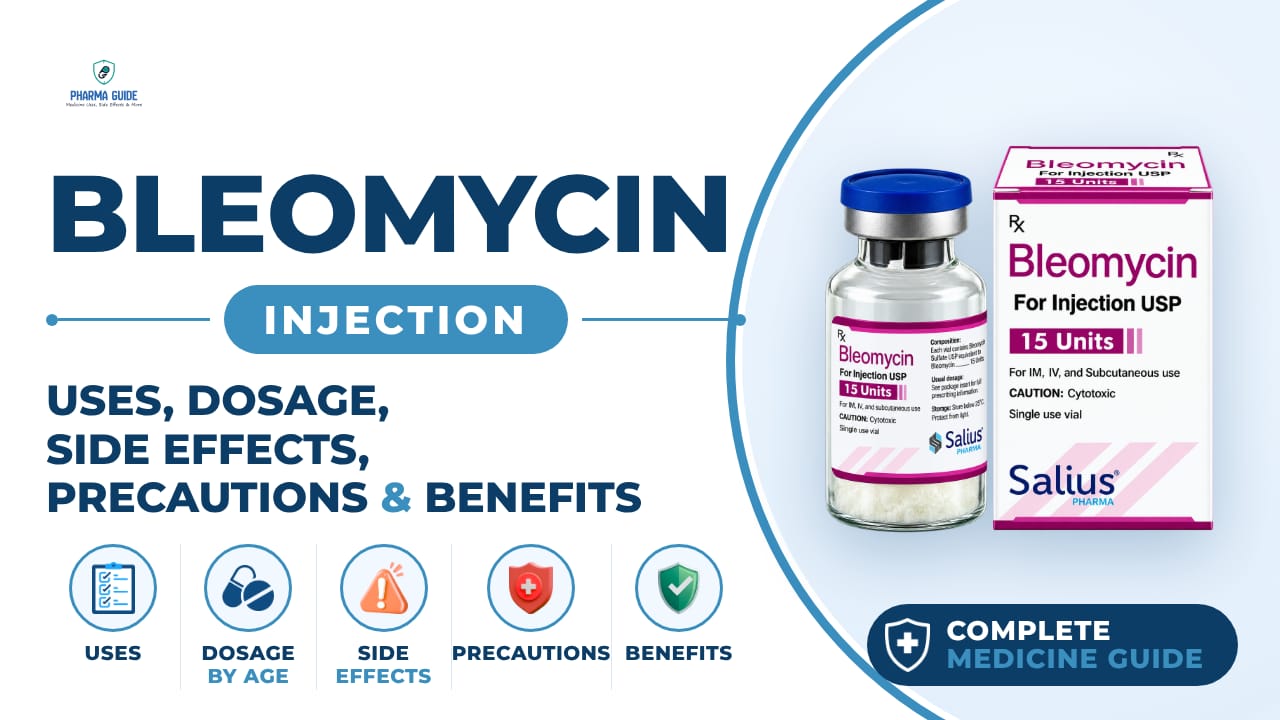
Bleomycin Injection: Uses, Dosage, Side Effects, Precautions and Alternates
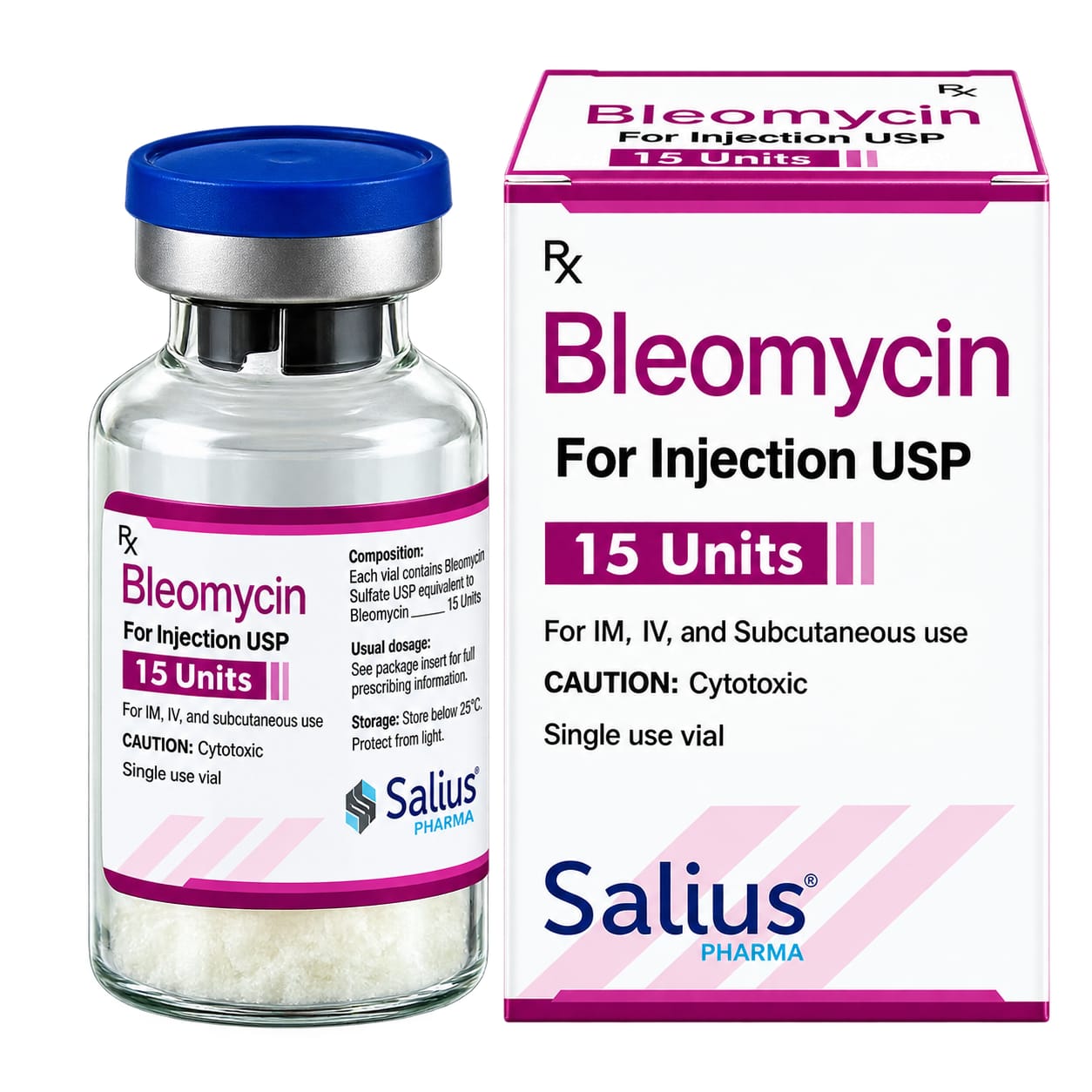
| Generic name | bleomycin sulfate |
|---|---|
| Drug class | Antineoplastic, Antibiotic |
| Forms | Lyophilized powder for injection (15 units per vial), Lyophilized powder for injection (30 units per vial) |
Quick overview
Bleomycin Injection (bleomycin sulfate) is an antineoplastic antibiotic medicine given by injection to treat certain cancers, including head and neck, cervical, vulvar, and penile squamous cell carcinoma, lymphomas, and testicular cancer. It is also used to treat and prevent recurrence of malignant pleural effusion. It works by stopping cancer cells from making DNA, which keeps them from growing and dividing. This medicine must be given under the supervision of a doctor experienced in cancer chemotherapy, with close monitoring of lung, kidney, and liver function.
What is Bleomycin Injection
Bleomycin is a cancer medicine made from a mixture of antibiotic compounds. It belongs to the antineoplastic antibiotic drug class and is given by injection to treat certain cancers and to help stop fluid from building up around the lungs.
Bleomycin Injection uses
- Squamous cell carcinoma of the head and neck, penis, cervix, and vulva
- Hodgkin's disease and non-Hodgkin's lymphoma
- Testicular carcinoma (embryonal cell, choriocarcinoma, and teratocarcinoma)
- Malignant pleural effusion (treatment and prevention of recurrence)
Benefits of Bleomycin Injection
- Can help shrink or control certain cancers, including head and neck, cervical, vulvar, and penile squamous cell cancers, lymphomas, and testicular cancer
- Can act as a sclerosing agent to prevent fluid from building up again around the lungs in malignant pleural effusion
How Bleomycin Injection works
Bleomycin works mainly by stopping cancer cells from making DNA, which keeps them from growing and dividing.
Bleomycin Injection dosage
Bleomycin is given by a healthcare provider as an injection into a vein, muscle, or under the skin, or through a chest tube for fluid around the lungs. It is usually given once or twice a week, depending on the condition being treated. When used for fluid around the lungs, it is usually given only one time through a chest tube.
People with lymphoma are given smaller test doses for the first two treatments to check for a severe reaction before the regular dose is used. Your lung function, kidney function, and liver function may be checked regularly during treatment. Tell your surgeon ahead of time if you are being treated with this medicine, in case you need surgery.
| Age group | Dose |
|---|---|
| Children / adolescents | Oncology-protocol dosing is generally based on body surface area (mg/m² or units/m²) rather than age alone |
| 18–64 years | For several labeled cancers: 0.25–0.50 units/kg (10–20 units/m²) IV, IM, or SC weekly or twice weekly |
Available forms and strengths
- Lyophilized powder for injection (15 units per vial)
- Lyophilized powder for injection (30 units per vial)
Side effects of Bleomycin Injection
Common
- Skin redness, dark streaks, or discoloration
- Fingernail or toenail changes
- Fever, chills, vomiting, not feeling well
- Rash, itching
- Hair loss
- Change in skin color
- Loss of appetite with weight loss
- Pain, redness, or irritation at the injection site
Serious
- Sudden chest pain, shortness of breath, dry cough, tiredness
- A light-headed feeling, feeling like you might pass out
- Loss of appetite, weight loss
- Sudden numbness or weakness on one side of the body, problems with vision or speech
- Blisters or ulcers in your mouth, red or swollen gums, trouble swallowing
- Unusual hardening of your skin
- Swelling, numbness, tingling, or cold feeling in your fingers
- Signs of an allergic reaction: hives; fever, chills, confusion; wheezing, difficult breathing; swelling of your face, lips, tongue, or throat
- Kidney injury: decrease in the amount of urine, swelling of the ankles, hands, or feet
- Liver injury: right upper belly pain, loss of appetite, nausea, light-colored stool, dark yellow or brown urine, yellowing skin or eyes, unusual weakness or fatigue
Warnings and precautions
- This medicine should only be given under the supervision of a doctor experienced in cancer chemotherapy, with proper facilities available to manage complications.
- Lung scarring (pulmonary fibrosis) is the most serious risk of this medicine. It often starts as lung inflammation and can be fatal, especially in older patients or those receiving high total doses, though it can also happen in younger patients on low doses.
- A severe allergic-type reaction with low blood pressure, confusion, fever, chills, and wheezing can occur, usually after the first or second dose, in about 1 in 100 lymphoma patients.
- This medicine must be used with extreme caution in people with significant kidney or lung problems, and patients must be watched closely during and after treatment.
- There is a lifetime maximum amount of this medicine that a person should receive, and your care team will track how much you've had.
- This medicine can harm an unborn baby. Women who could become pregnant should avoid becoming pregnant during treatment, and should use effective birth control.
- It is not known if this medicine passes into breast milk. Because of the risk of serious side effects in nursing babies, breastfeeding should be stopped during treatment.
- People with reduced kidney function should be treated with caution, as this drug is removed from the body by the kidneys and may need a lower dose.
- Liver problems, including worsening liver function test results, have been reported and may occur at any time during treatment.
- Discuss alcohol use with the oncology team, especially during combination chemotherapy.
- Fatigue, weakness, fever, or treatment-related illness may make driving unsafe.
Storage
- Store refrigerated between 2° and 8°C (36° and 46°F)
- Protect from light
- The sterile powder should not be used after the expiration date is reached
- Discard unused portion
- This medication is given in a hospital or clinic. It will not be stored at home.
When to see a doctor
- Get emergency help right away for signs of an allergic reaction, such as hives, swelling of the face, lips, tongue or throat, trouble breathing, or wheezing.
- Call your doctor right away if you have sudden chest pain, shortness of breath, a dry cough, or unusual tiredness.
- Call your doctor right away if you feel light-headed or like you might pass out.
- Call your doctor right away if you have sudden numbness or weakness on one side of your body, or problems with vision or speech.
- Call your doctor right away if you develop signs of kidney problems, such as a decrease in urine or swelling of the ankles, hands, or feet.
- Call your doctor right away if you develop signs of liver problems, such as right upper belly pain, loss of appetite, nausea, light-colored stool, dark urine, or yellowing of the skin or eyes.
Alternatives
- Cisplatin-based chemotherapy
- Etoposide-based chemotherapy
- Vinblastine-containing regimens
Watch the video
FAQs
What is Bleomycin Injection used for?
It is used to treat squamous cell carcinoma of the head and neck, penis, cervix, and vulva; Hodgkin's and non-Hodgkin's lymphoma; testicular carcinoma; and to treat and prevent recurrence of malignant pleural effusion.
How does Bleomycin Injection work?
It works mainly by stopping cancer cells from making DNA, which keeps them from growing and dividing.
How is Bleomycin Injection given?
It is given by a healthcare provider as an injection into a vein, muscle, or under the skin, or through a chest tube for fluid around the lungs, usually once or twice a week depending on the condition, or as a single chest tube dose for pleural effusion.
What is the most serious risk of Bleomycin Injection?
Lung scarring (pulmonary fibrosis) is the most serious risk, which often starts as lung inflammation and can be fatal, especially in older patients or those receiving high total doses.
Can Bleomycin Injection be used during pregnancy or breastfeeding?
No, it can harm an unborn baby, so effective birth control should be used, and breastfeeding should be stopped during treatment since it's not known if it passes into breast milk.
General information, not medical advice
Your prescriber and the leaflet in your pack know your situation. This page does not.
- Follow your prescriber and the leaflet
- Don't start, stop, or change a dose on your own
- Doses and warnings differ by country and product
Sources
Video
Related medicines

Injectafer Injection: Uses, Dosage, Side Effects, Precautions and Alternates
Iron products
Injectafer (ferric carboxymaltose) treats iron deficiency anemia and heart failure-related iron deficiency via IV. Learn uses, dosage, side effects, and

Gliclazide Tablet: Uses, Dosage, Side Effects, Precautions and Alternates
Sulfonylurea (hypoglycemic/antidiabetic agent)
Gliclazide Tablet is a sulfonylurea for type 2 diabetes that boosts insulin release. Learn about dosage, side effects, warnings, and precautions.