
Safety
General information, not medical advice
Your prescriber and the leaflet in your pack know your situation. This page does not.
- Follow your prescriber and the leaflet
- Don't start, stop, or change a dose on your own
- Doses and warnings differ by country and product
Bonine Chewable Tablet: Uses, Dosage, Side Effects, Precautions and Alternates
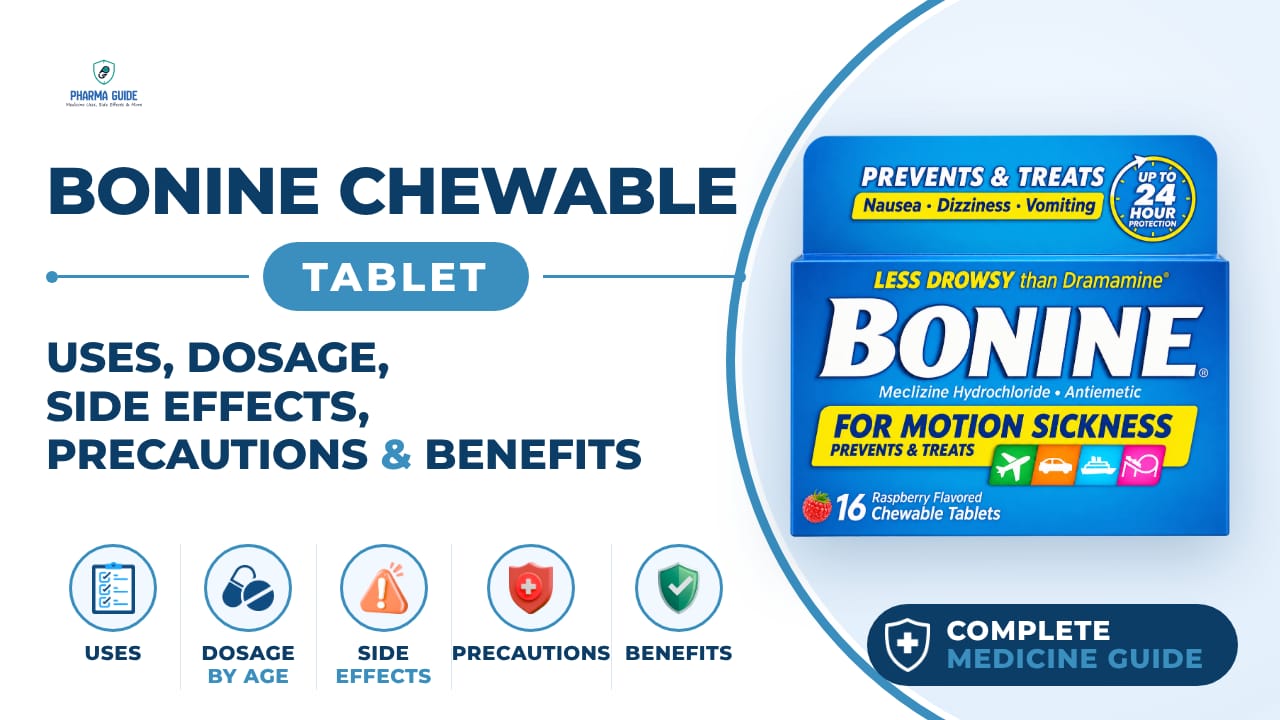
| Generic name | meclizine |
|---|---|
| Drug class | Anticholinergic antiemetics |
| Forms | chewable tablet |
Quick overview
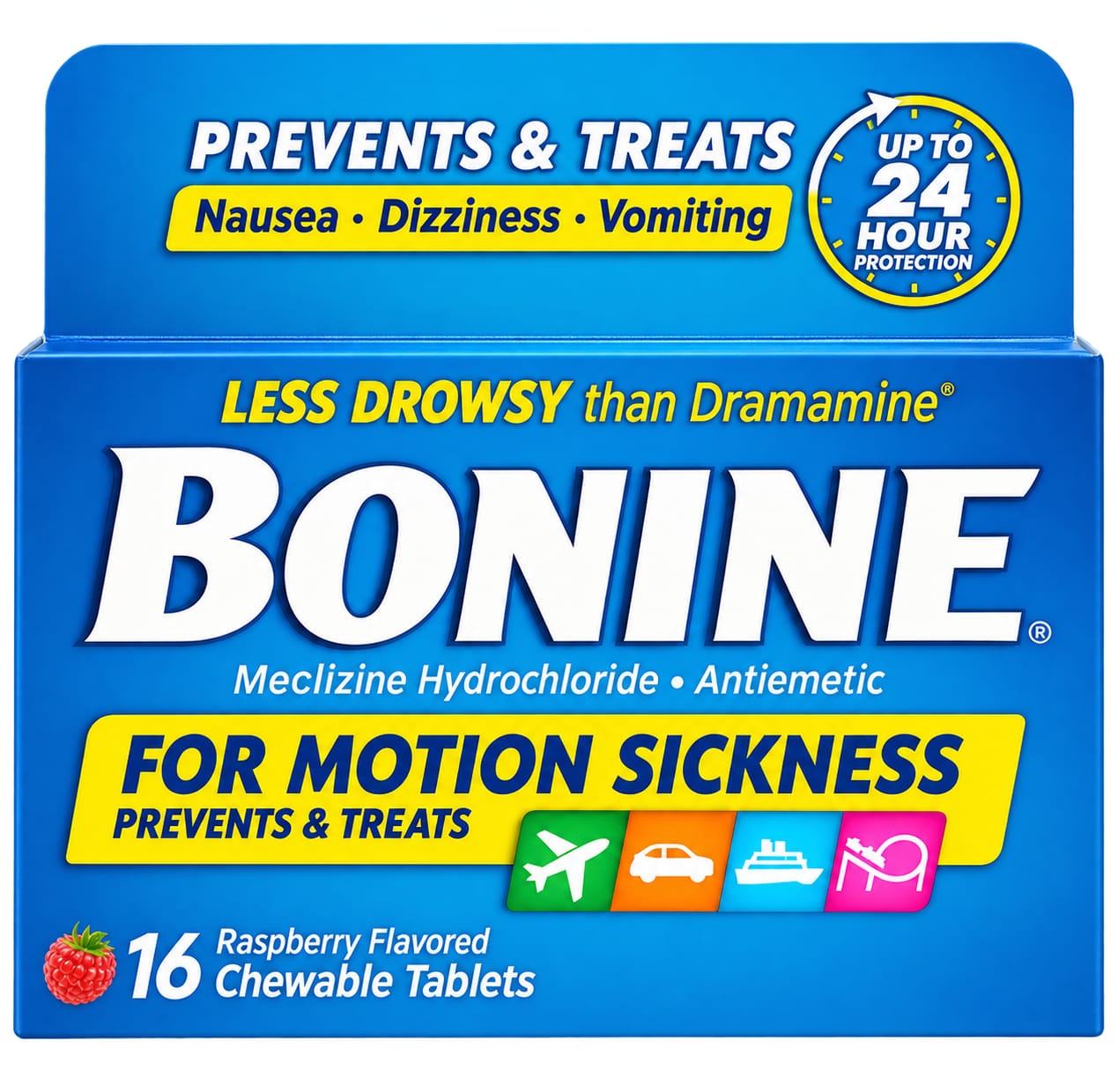
Bonine Chewable Tablet contains meclizine, an anticholinergic antiemetic. It is used to treat or prevent nausea, vomiting, and dizziness caused by motion sickness, and to treat symptoms of vertigo in adults. It works by blocking certain signals in the brain and inner ear that trigger these symptoms. It is available as a chewable tablet.
What is Bonine Chewable Tablet
Bonine is a chewable tablet medicine containing meclizine. It is used to treat or prevent nausea, vomiting, and dizziness caused by motion sickness, and to treat symptoms of vertigo in adults.
Bonine Chewable Tablet uses
- Treat or prevent nausea, vomiting and dizziness caused by motion sickness in adults and children aged 12 years and older
- Treat symptoms of vertigo (dizziness or spinning sensation) caused by disease that affects your inner ear, in adults
Benefits of Bonine Chewable Tablet
- Prevents and treats nausea, vomiting, and dizziness caused by motion sickness no matter what mode of transportation you're on
- Can also be used for treatment of symptoms of vertigo caused by disease that affects your inner ear and cyber sickness
How Bonine Chewable Tablet works
Bonine (meclizine) is an antihistamine. It blocks certain signals in the brain and inner ear that trigger nausea, dizziness, and vomiting, helping prevent and relieve motion sickness.
Bonine Chewable Tablet dosage
Follow all directions on your prescription label and read all medication guides or instruction sheets. Use the medicine exactly as directed. You must chew the chewable tablet before you swallow it.
To prevent motion sickness, take Bonine about 1 hour before you travel or anticipate having motion sickness. You may take this medicine once every 24 hours while you are traveling, to further prevent motion sickness.
To treat vertigo, you may need to take Bonine several times daily. Follow your doctor's instructions.
Do not give Bonine to anyone younger than 12 years old without medical advice.
| Age group | Dose |
|---|---|
| Under 12 years | Not recommended |
| 12–60 years | 25 mg, once/day |
| 60+ years | 25 mg, once/day |
Available forms and strengths
- Chewable tablet
Side effects of Bonine Chewable Tablet
Common
- Drowsiness
- Dry mouth
- Headache
- Vomiting
- Feeling tired
- Blurred vision (rare)
Serious
- Signs of an allergic reaction: hives, difficult breathing, swelling of your face, lips, tongue, or throat
- Cough
- Difficulty swallowing
- Dizziness
- Drowsiness
- Fast heartbeat
- Hives, itching, skin rash
- Puffiness or swelling of the eyelids or around the eyes, face, lips, or tongue
- Tightness in the chest
- Unusual tiredness or weakness
- Vomiting
Warnings and precautions
- Do not use Bonine if you are allergic to it.
- Do not give Bonine to anyone younger than 12 years old without medical advice.
- Tell your doctor if you have or have ever had glaucoma; breathing problems such as asthma, emphysema, or chronic bronchitis; an enlarged prostate or urination problems; recently used alcohol, sedatives, or tranquilizers; or liver or kidney disease.
- Using Bonine with other drugs that make you drowsy can worsen this effect. Ask your doctor before using opioid medication, a sleeping pill, a muscle relaxer, or medicine for anxiety or seizures.
- This medicine will add to the effects of alcohol and other CNS depressants. Check with your medical doctor or dentist before taking any of these while you or your child are using this medicine.
- Tell your doctor if you are pregnant or breastfeeding.
- Avoid drinking alcohol. Drinking alcohol with this medicine can cause side effects.
- Avoid driving or hazardous activity until you know how Bonine will affect you. Your reactions could be impaired.
Storage
- Store at 20–25°C.
- Keep in a cool, dry place.
- Protect from heat and direct sunlight.
- Keep the container tightly closed.
- Keep out of reach of children.
When to see a doctor
- Get emergency medical help if you have signs of an allergic reaction: hives, difficult breathing, swelling of your face, lips, tongue, or throat.
- Check with your doctor immediately if you have cough, difficulty swallowing, dizziness, drowsiness, fast heartbeat, hives, itching, skin rash, puffiness or swelling of the eyelids or around the eyes, face, lips, or tongue, tightness in the chest, unusual tiredness or weakness, or vomiting.
- If you think you have taken too much of this medicine, seek emergency medical attention or contact your local poison control center right away.
Alternatives
- Promethazine
- Dimenhydrinate
- Dramamine
Watch the video
FAQs
What is Bonine Chewable Tablet used for?
It is used to treat or prevent nausea, vomiting, and dizziness caused by motion sickness, and to treat symptoms of vertigo caused by inner ear disease in adults.
How does Bonine Chewable Tablet work?
Bonine contains meclizine, an antihistamine that blocks certain signals in the brain and inner ear that trigger nausea, dizziness, and vomiting.
How should I take Bonine Chewable Tablet?
You must chew the tablet before swallowing. To prevent motion sickness, take it about 1 hour before traveling, and you may repeat once every 24 hours while traveling. For vertigo, you may need to take it several times daily as directed by your doctor.
Can children take Bonine Chewable Tablet?
No, Bonine should not be given to anyone younger than 12 years old without medical advice.
What are the common side effects of Bonine Chewable Tablet?
Common side effects include drowsiness, dry mouth, headache, vomiting, feeling tired, and rarely blurred vision.
General information, not medical advice
Your prescriber and the leaflet in your pack know your situation. This page does not.
- Follow your prescriber and the leaflet
- Don't start, stop, or change a dose on your own
- Doses and warnings differ by country and product
Sources
Video
Related medicines
Dramamine Tablet: Uses, Dosage, Side Effects, Precautions and Alternates
Anticholinergic antiemetics
Dramamine Tablet (dimenhydrinate) treats and prevents nausea, vomiting, and dizziness from motion sickness. Learn dosage, side effects, and precautions.

Injectafer Injection: Uses, Dosage, Side Effects, Precautions and Alternates
Iron products
Injectafer (ferric carboxymaltose) treats iron deficiency anemia and heart failure-related iron deficiency via IV. Learn uses, dosage, side effects, and