
Safety
General information, not medical advice
Your prescriber and the leaflet in your pack know your situation. This page does not.
- Follow your prescriber and the leaflet
- Don't start, stop, or change a dose on your own
- Doses and warnings differ by country and product
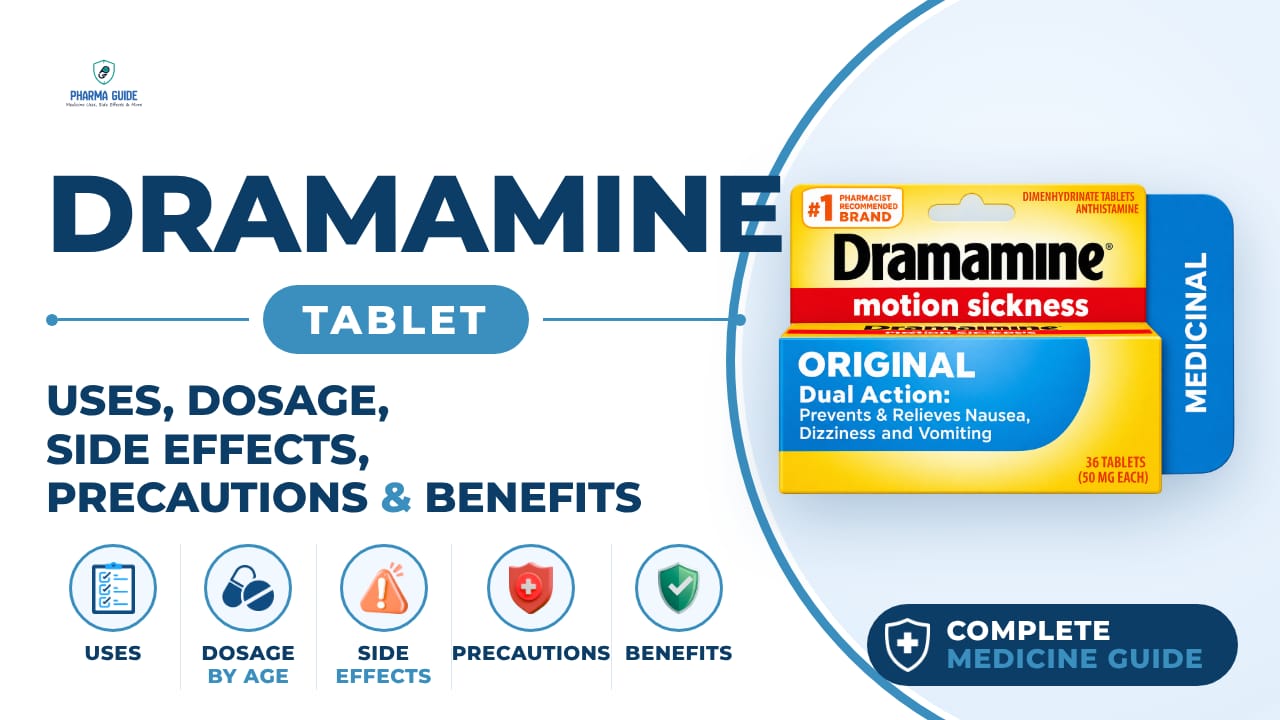
Dramamine Tablet: Uses, Dosage, Side Effects, Precautions and Alternates
| Generic name | dimenhydrinate |
|---|---|
| Drug class | Anticholinergic antiemetics |
| Forms | Chewable tablet, Tablet, Capsule, Liquid/syrup, Injection |
Quick overview
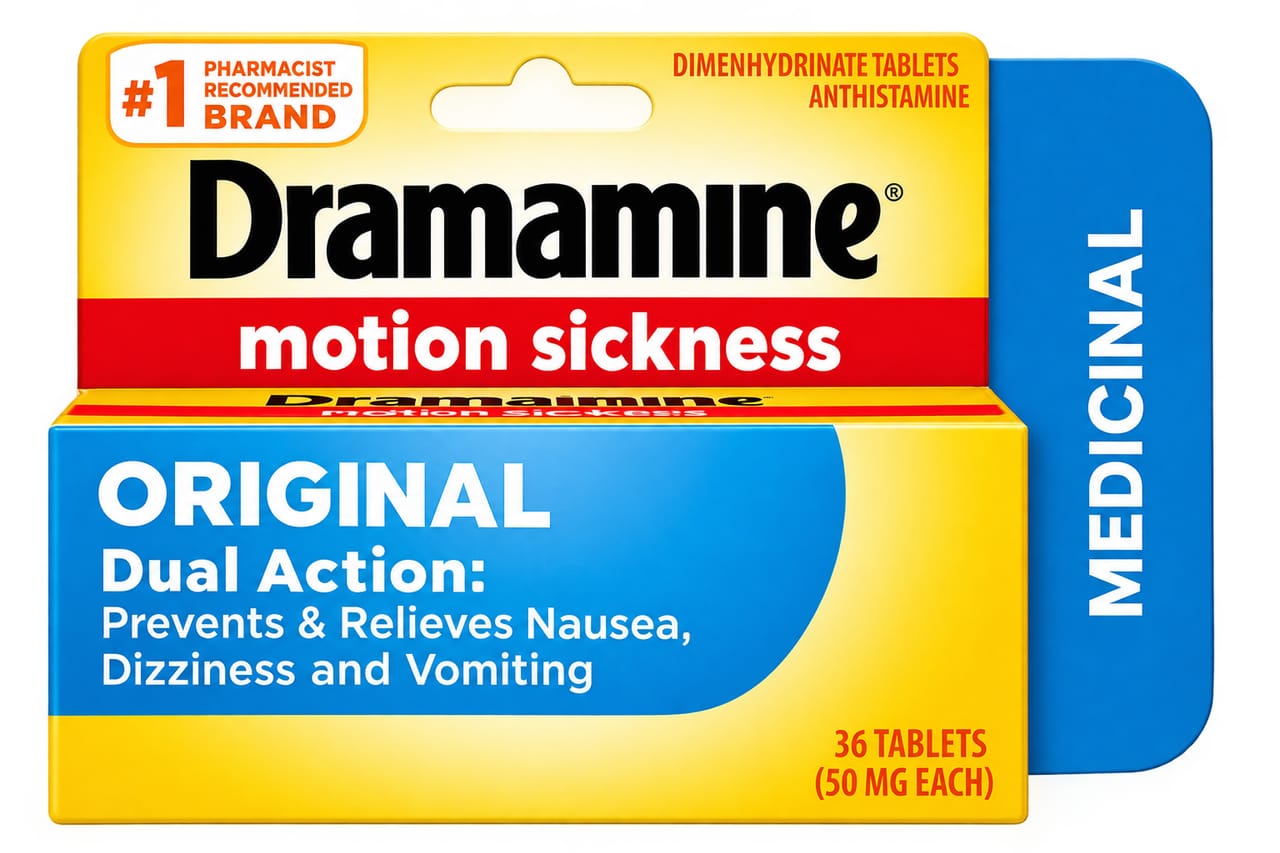
Dramamine Tablet (dimenhydrinate) is an over-the-counter antihistamine from the anticholinergic antiemetic drug class. It is used in adults and children at least 2 years old to treat or prevent nausea, vomiting, and dizziness caused by motion sickness. It works by blocking histamine and calming signals from the inner ear and brain that trigger nausea. It is available in several forms, including chewable tablets, tablets, capsules, liquid, and injection.
What is Dramamine Tablet
Dramamine is an over-the-counter antihistamine medicine used in adults and children at least 2 years old to treat or prevent nausea, vomiting, and dizziness caused by motion sickness.
Dramamine Tablet uses
- Prevent and treat nausea caused by motion sickness
- Prevent and treat vomiting caused by motion sickness
- Prevent and treat dizziness caused by motion sickness
Benefits of Dramamine Tablet
- Helps prevent and reduce symptoms of motion sickness
- Reduces nausea and vomiting during travel
- Helps relieve dizziness
- Reduces stomach discomfort related to motion sickness
- Helps lower overall discomfort during travel
How Dramamine Tablet works
Dramamine blocks a body chemical called histamine. It may also calm the inner ear and block certain brain chemicals that trigger nausea and vomiting, which helps your body keep its sense of balance.
Dramamine Tablet dosage
Use exactly as directed on the label, or as your doctor prescribes, and do not use more often or in larger amounts than directed. For best results, take it 30 to 60 minutes before traveling or before any activity that may cause motion sickness. Chewable tablets must be chewed or crushed completely before swallowing — do not swallow them whole.
If you miss a dose and are on a regular schedule, skip the missed dose; do not take two doses at once. People 65 and older may react more strongly and may need a smaller dose, so check with a healthcare provider. Do not give this medicine to a child without medical advice.
| Age group | Dose |
|---|---|
| Under 2 years | Not recommended |
| 2–6 years | 12.5–25 mg, once/day |
| 7–12 years | 25–50 mg, once/day |
| 13–60 years | 50–100 mg, once/day |
| 60+ years | 50 mg, once/day |
Available forms and strengths
- Chewable tablet
- Tablet
- Capsule
- Liquid/syrup
- Injection
Side effects of Dramamine Tablet
Common
- Drowsiness
- Dizziness
- Dry mouth, nose, or throat
- Blurred vision
- Headache
- Loss of appetite or upset stomach
- Nervousness, restlessness, or trouble sleeping (especially in children)
- Constipation
- Thicker mucus in the lungs
- Confusion
Serious
- Signs of an allergic reaction such as hives, difficulty breathing, or swelling of the face, lips, tongue, or throat
- Severe drowsiness
- Wheezing, trouble breathing, or a severe or worsening cough
- Blurred vision, eye pain or redness, or seeing halos around lights
- Painful or difficult urination or trouble passing urine
- Racing heart, fever, or general ill feeling
- Swollen lymph nodes or throat tightness
- Severe confusion or hallucinations, especially at high doses
Warnings and precautions
- Do not use this medicine if you are allergic to it. Ask a doctor or pharmacist before use if you have an enlarged prostate or trouble urinating, breathing problems like emphysema or chronic bronchitis, glaucoma, or if you recently used alcohol, sedatives, or tranquilizers.
- The chewable tablet may contain phenylalanine, so tell your doctor if you have phenylketonuria (PKU). Do not give this medicine to a child without medical advice.
- Using this medicine with other drugs that cause drowsiness, such as opioids, sleeping pills, muscle relaxers, sedatives, tranquilizers, or anxiety or seizure medicine, can worsen drowsiness, so check with a doctor first.
- At high doses, this medicine can cause severe confusion, a feeling of extreme well-being, and hallucinations; some people misuse it this way, which can be dangerous.
- If you are pregnant, ask a doctor before using this medicine. It is not known for certain how this medicine could affect pregnancy or an unborn baby.
- This medicine passes into breast milk, so ask a doctor before using it if you are breastfeeding.
- Tell your care team if you have liver disease before taking this medicine.
- Avoid drinking alcohol while taking this medicine, since it can make drowsiness and other side effects worse.
- Avoid driving or doing anything that requires full alertness until you know how this medicine affects you, since it can cause dizziness or drowsiness that may lead to falls or accidents.
Storage
- Store at room temperature away from moisture and heat
- Store at room temperature between 68°F and 77°F (20°C and 25°C)
- Do not use if the packet is torn
- Get rid of any unused medication after the expiration date
- Take unused or expired medication to a medication take-back program when possible, or follow label/package instructions for disposal in household trash, mixed with something like cat litter or coffee grounds, sealed in a bag
When to see a doctor
- Get emergency medical help right away if you have signs of an allergic reaction, such as hives, trouble breathing, or swelling of the face, lips, tongue, or throat
- Call your doctor right away if you have severe drowsiness, wheezing or trouble breathing, a severe or worsening cough, blurred vision, eye pain or redness, seeing halos around lights, or painful or difficult urination
- Stop using this medicine and get help right away if you cannot empty your bladder or have trouble urinating
- Seek immediate medical care if you have severe confusion, severe eye pain, or hallucinations
- If you think you have taken too much of this medicine, get medical help or contact a poison control center right away
Alternatives
- Ondansetron
- Diphenhydramine
- Meclizine
Watch the video
FAQs
What is Dramamine Tablet used for?
Dramamine Tablet is used to prevent and treat nausea, vomiting, and dizziness caused by motion sickness in adults and children at least 2 years old.
How does Dramamine Tablet work?
Dramamine blocks histamine and may calm the inner ear and block certain brain chemicals that trigger nausea and vomiting, helping the body keep its sense of balance.
When should I take Dramamine Tablet for motion sickness?
For best results, take it 30 to 60 minutes before traveling or before any activity that may cause motion sickness.
What are the common side effects of Dramamine Tablet?
Common side effects include drowsiness, dizziness, dry mouth, nose, or throat, blurred vision, headache, loss of appetite or upset stomach, constipation, and nervousness or trouble sleeping, especially in children.
Can children take Dramamine Tablet?
Dramamine can be used in children at least 2 years old, with dosing based on age group, but it should not be given to a child without medical advice, and it is not recommended for children under 2.
General information, not medical advice
Your prescriber and the leaflet in your pack know your situation. This page does not.
- Follow your prescriber and the leaflet
- Don't start, stop, or change a dose on your own
- Doses and warnings differ by country and product
Sources
Video
Related medicines
Bonine Chewable Tablet: Uses, Dosage, Side Effects, Precautions and Alternates
Anticholinergic antiemetics
Bonine Chewable Tablet contains meclizine and treats motion sickness and vertigo symptoms. Learn uses, dosage, side effects, and warnings.

Injectafer Injection: Uses, Dosage, Side Effects, Precautions and Alternates
Iron products
Injectafer (ferric carboxymaltose) treats iron deficiency anemia and heart failure-related iron deficiency via IV. Learn uses, dosage, side effects, and