
Safety
General information, not medical advice
Your prescriber and the leaflet in your pack know your situation. This page does not.
- Follow your prescriber and the leaflet
- Don't start, stop, or change a dose on your own
- Doses and warnings differ by country and product
Boostrix Injection: Uses, Dosage, Side Effects, Precautions and Alternates
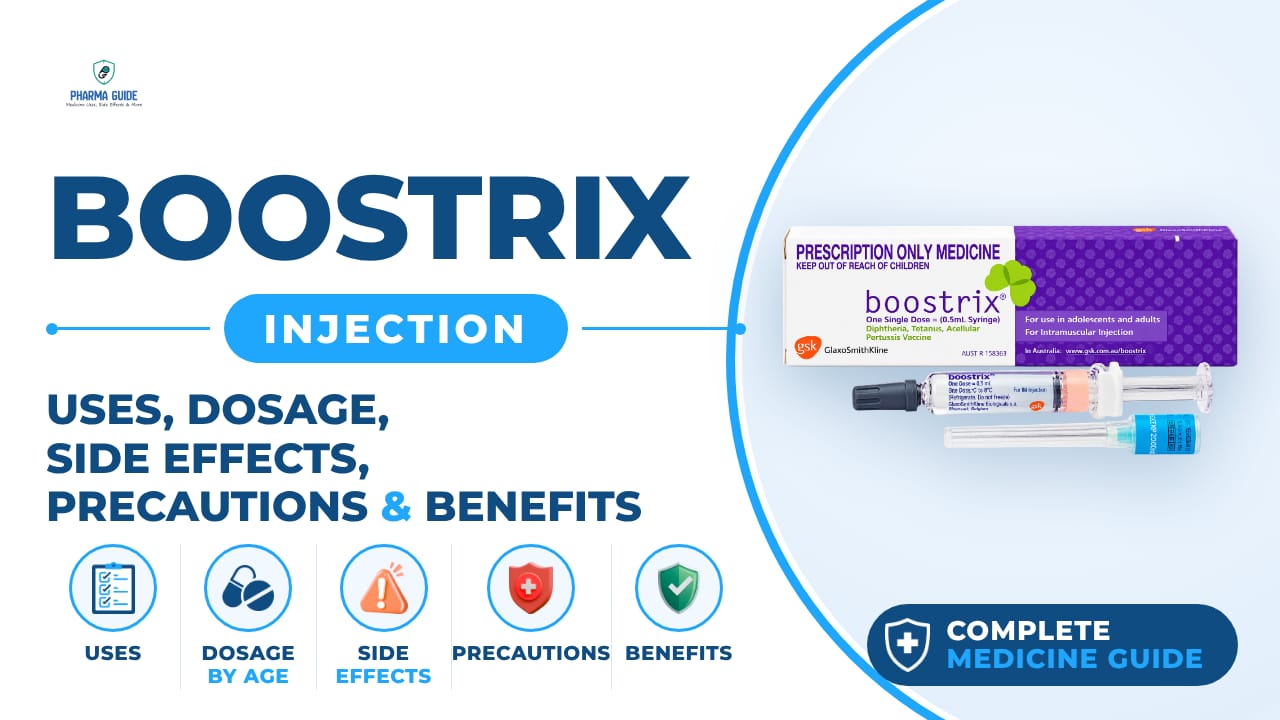
| Generic name | Tetanus toxoid, reduced diphtheria toxoid, and acellular pertussis vaccine (Tdap) |
|---|---|
| Drug class | Vaccine combinations |
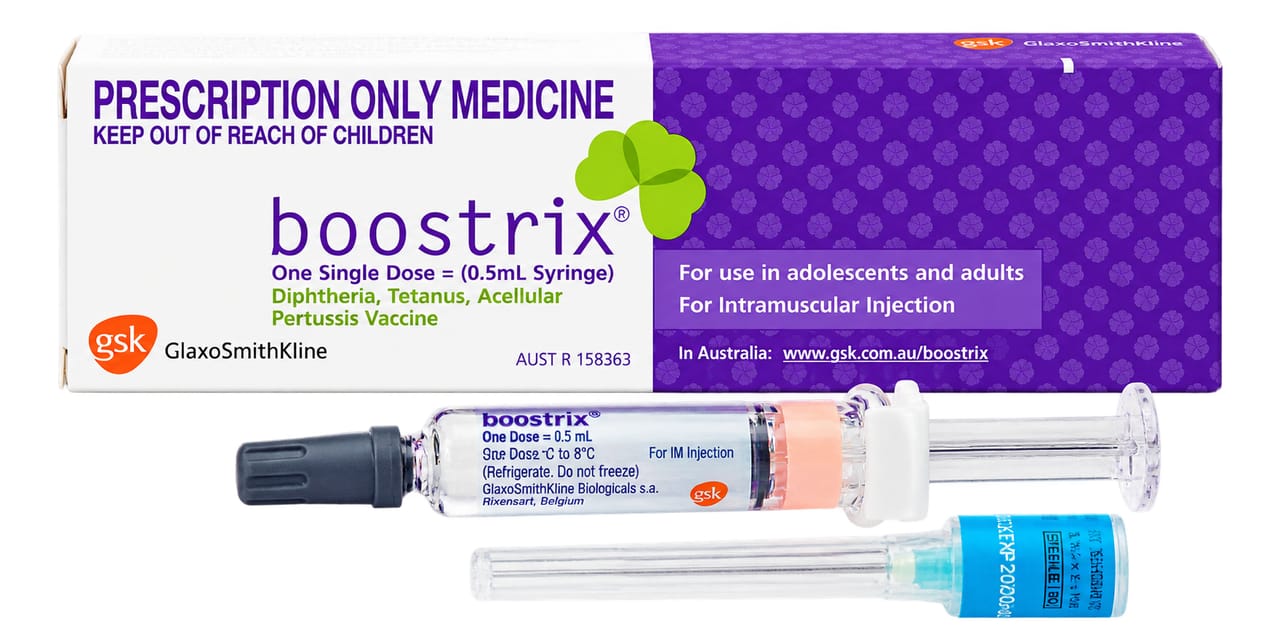
| Forms | Injection (suspension for injection), Prefilled syringe |
Quick overview
Boostrix is a vaccine containing tetanus toxoid, reduced diphtheria toxoid, and acellular pertussis components (Tdap). It is given as a booster shot to help the body build protection against tetanus, diphtheria, and pertussis (whooping cough). It is given by injection into the muscle of the upper arm and is used in adolescents, adults, older adults, and during pregnancy according to national vaccination schedules.
What is Boostrix Injection
Boostrix is a vaccine that contains non-infectious parts of the bacteria that cause diphtheria, tetanus, and pertussis (whooping cough). It is used as a booster shot to help the body build protection against these three serious diseases.
Boostrix Injection uses
- Booster immunization against tetanus, diphtheria, and pertussis in people aged 10 years and older (in the US) or 4 years and older (in Australia)
- Given during the second or third trimester of pregnancy to help protect newborn babies from pertussis before they receive their own infant vaccinations
- Given for tetanus protection after a wound that may be prone to tetanus infection
- Used as part of national childhood immunization schedules (such as at 11 years of age) as a booster after earlier childhood vaccines
Benefits of Boostrix Injection
- Helps protect against tetanus.
- Helps protect against diphtheria.
- Helps protect against pertussis (whooping cough).
- Boosts immunity in people who were previously vaccinated against these diseases.
- During pregnancy, vaccination can help provide passive protection to the newborn against pertussis in the first months of life.
- Helps reduce the risk of serious complications caused by tetanus, diphtheria, and whooping cough.
How Boostrix Injection works
Boostrix works by exposing the body to small, non-infectious pieces of the bacteria that cause diphtheria, tetanus, and pertussis. This causes the immune system to make its own protective antibodies against these diseases. It cannot cause the diseases itself, and it will not treat an infection that has already started in the body.
Boostrix Injection dosage
Boostrix is given by a doctor or nurse as a shot into the muscle of the upper arm. It should never be given into a vein. It is usually given as a single booster dose, so a missed dose is unlikely. It has been used with other vaccines given at the same time, as long as separate syringes and different injection sites are used.
| Age group | Dose |
|---|---|
| Under 10 years | Use depends on the country-specific authorization and vaccination schedule |
| 10–17 years | 0.5 mL IM as a single dose when Tdap vaccination/booster is indicated |
| 18–64 years | 0.5 mL IM as a single dose according to the recommended Tdap schedule |
| 65+ years | 0.5 mL IM when Tdap vaccination is indicated |
| Pregnancy | 0.5 mL IM during each pregnancy, with timing determined by the national vaccination program |
Available forms and strengths
- Injection (suspension for injection)
- Prefilled syringe
Side effects of Boostrix Injection
Common
- Mild pain, swelling, or redness where the shot was given
- Headache
- Tiredness or sleepiness
- Body aches, joint stiffness, or muscle ache
- Mild nausea, vomiting, or diarrhea
- Fever
- Loss of appetite (in children)
- Irritability (in children)
- Flu-like symptoms such as sore throat, runny nose, cough, and chills
- Swollen glands in the neck, armpit, or groin
- Dizziness or excessive sweating
Serious
- Signs of a severe allergic reaction: hives, difficulty breathing, swelling of the face, lips, tongue, mouth, or throat
- Numbness, weakness, or tingling in the feet and legs
- Problems with walking or coordination
- Sudden pain in the arms or shoulders
- A light-headed feeling, like you might faint, or actual fainting
- Vision problems or ringing in the ears
- Seizures (with or without fever)
- Severe pain, redness, swelling, or bleeding where the shot was given
- High fever (more than 39°C or over 104°F)
- Large swelling of the injected arm or leg
- Unusual weakness
Warnings and precautions
- Do not receive Boostrix if you have ever had a life-threatening allergic reaction to a vaccine containing tetanus, diphtheria, or pertussis.
- Do not receive Boostrix if you had a brain-related neurologic disorder within 7 days after a previous pertussis vaccine.
- People with a severe infection and fever should wait until they are better before getting the vaccine; minor colds are not usually a problem.
- Tell your doctor about other vaccines or medicines that weaken the immune system, since these may affect when or whether you can receive Boostrix.
- Certain past reactions to vaccines, such as a very high fever, fainting, severe injection-site reactions, seizure disorders, or Guillain-Barré syndrome, mean you may not be able to receive Boostrix.
- Boostrix may be given during the second or third trimester of pregnancy to help protect the baby from whooping cough in the first months of life. A doctor should decide whether it is needed during pregnancy, and pregnant women may be listed on a registry to track outcomes.
- It is not known whether the vaccine passes into breast milk, but no harmful effects have been seen in breastfed babies whose mothers were vaccinated. Tell your doctor if you are breastfeeding.
- No specific dose adjustment is normally required for kidney function. People with significant kidney disease or weakened immunity should discuss vaccination with their healthcare provider.
- No specific liver-related dose adjustment is normally required.
- Talk with your doctor about alcohol use before receiving Boostrix.
- Boostrix is unlikely to affect your ability to drive or use machines, but be careful until you know how the vaccine affects you.
Storage
- Store refrigerated at 2–8°C (36–46°F).
- Keep in the original packaging to protect from light.
- Do not freeze; discard the vaccine if it has been frozen.
- Keep refrigerated until ready for administration.
- Do not use after the expiry date or if proper storage conditions were not maintained.
- Keep securely stored and out of reach of children.
When to see a doctor
- Get emergency medical help right away if you notice signs of a severe allergic reaction, such as swelling of the face, lips, tongue, or throat, difficulty breathing, or hives.
- Call your doctor right away if within 7 days of the shot you have numbness, weakness or tingling in your feet or legs, trouble walking, sudden arm or shoulder pain, feeling faint, vision problems, ringing in the ears, seizures, or severe reactions where the shot was given.
- Contact a doctor immediately or go to the emergency department if you notice a fever above a certain level, crying for 3 hours or more, collapse, periods of unconsciousness, or seizures.
Alternatives
- Repevax (Tdap-IPV)
- Revaxis (Td-IPV)
- Tenivac (Td)
- Td Vaccine
- Adacel (Tdap)
Watch the video
FAQs
What is Boostrix Injection used for?
Boostrix is used as a booster immunization against tetanus, diphtheria, and pertussis in adolescents and adults, during pregnancy to protect newborns from pertussis, and for tetanus protection after certain wounds.
How is Boostrix given?
Boostrix is given by a doctor or nurse as a 0.5 mL injection into the muscle of the upper arm, usually as a single booster dose. It should never be given into a vein.
Can Boostrix be given during pregnancy?
Yes, Boostrix may be given during the second or third trimester of pregnancy to help protect the baby from whooping cough in the first months of life, as decided by a doctor.
What are the common side effects of Boostrix?
Common side effects include mild pain, swelling, or redness at the injection site, headache, tiredness, body aches, fever, nausea, and flu-like symptoms.
How should Boostrix be stored?
Boostrix should be stored refrigerated at 2–8°C, kept in its original packaging to protect from light, and never frozen.
General information, not medical advice
Your prescriber and the leaflet in your pack know your situation. This page does not.
- Follow your prescriber and the leaflet
- Don't start, stop, or change a dose on your own
- Doses and warnings differ by country and product
Sources
Video
Related medicines
MMR Vaccine Injection: Uses, Dosage, Side Effects, Precautions and Alternates
Vaccine combinations
MMR Vaccine Injection protects against measles, mumps, and rubella. Learn about dosage, side effects, warnings, and when to see a doctor.

Injectafer Injection: Uses, Dosage, Side Effects, Precautions and Alternates
Iron products
Injectafer (ferric carboxymaltose) treats iron deficiency anemia and heart failure-related iron deficiency via IV. Learn uses, dosage, side effects, and