
Safety
General information, not medical advice
Your prescriber and the leaflet in your pack know your situation. This page does not.
- Follow your prescriber and the leaflet
- Don't start, stop, or change a dose on your own
- Doses and warnings differ by country and product
MMR Vaccine Injection: Uses, Dosage, Side Effects, Precautions and Alternates
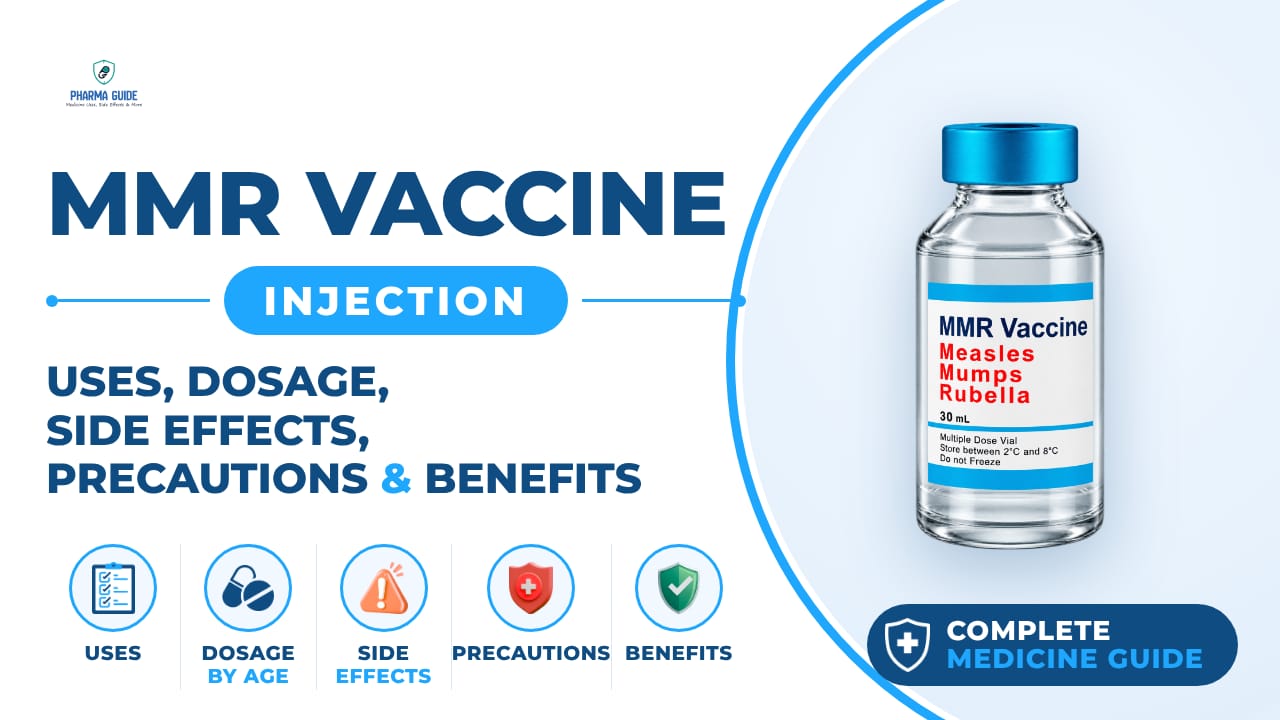
| Generic name | Measles, mumps, and rubella (MMR) vaccine |
|---|---|
| Drug class | Vaccine combinations |
| Forms | Subcutaneous powder for injection |
Quick overview
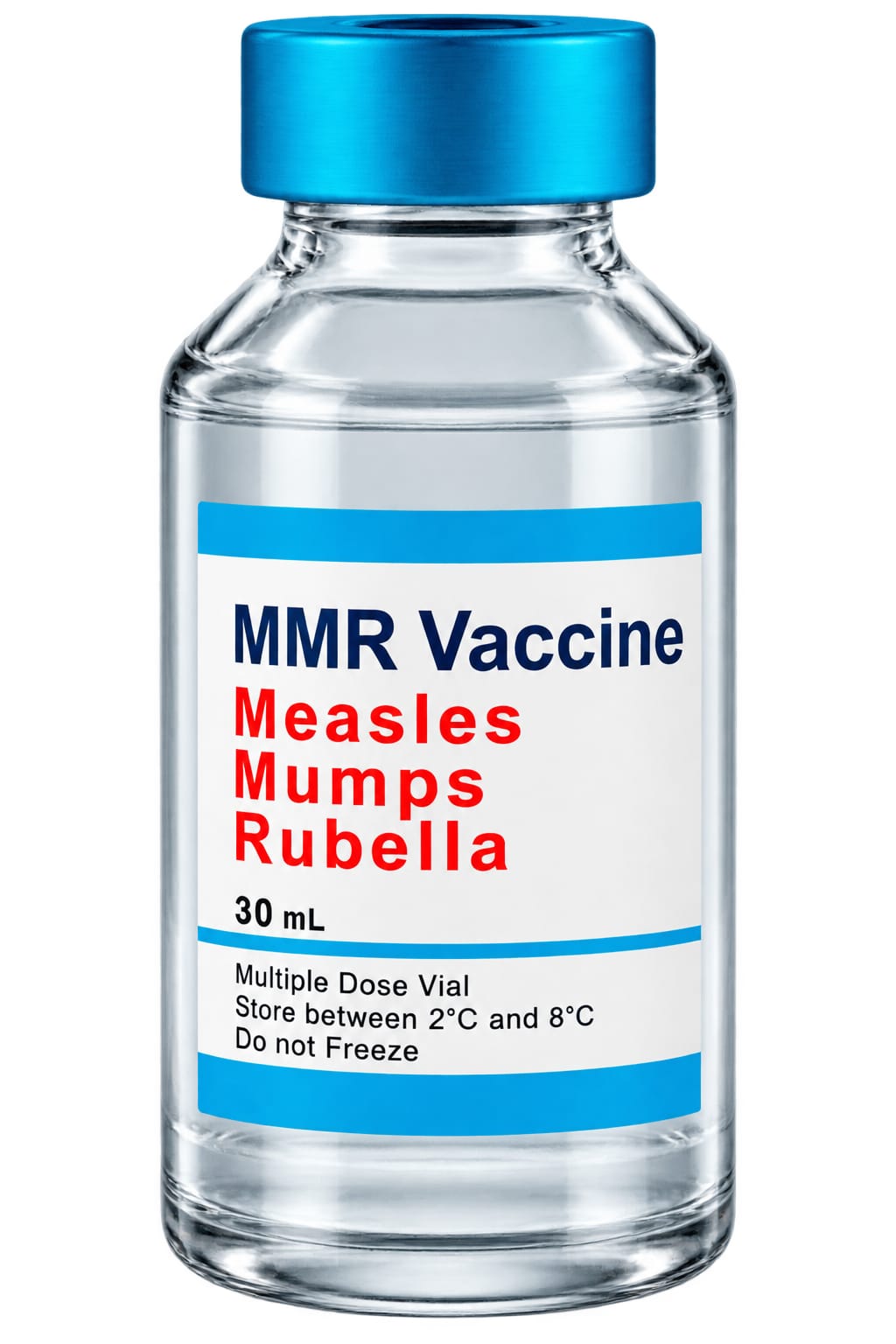
MMR Vaccine Injection is a live vaccine combination that protects against measles, mumps, and rubella (German measles). It is given to prevent these infections before exposure and is not used to treat an existing infection. It is recommended for people 12 months of age and older, and sometimes for infants 6 to 11 months old in special situations such as travel or outbreaks. Most people need two doses, given at least one month apart, for full protection.
What is MMR Vaccine Injection
The MMR vaccine is a live vaccine that protects against three infections: measles, mumps, and rubella. It contains small amounts of weakened measles, mumps, and rubella viruses, which are too weak to cause disease but strong enough to trigger immunity.
MMR Vaccine Injection uses
- Helps protect against measles, mumps, and rubella (German measles)
- Used to protect people from these diseases before they are exposed to them; it will not treat an infection you already have
- Recommended for people 12 months of age and older, and sometimes for infants 6 to 11 months old in special situations like travel or outbreaks
Benefits of MMR Vaccine Injection
- Two doses give long-lasting protection against measles, mumps, and rubella
- Getting vaccinated also helps protect people who can't be vaccinated, such as unborn babies, newborns, and people with weakened immune systems
- Vaccinated people who still get mumps usually have much milder symptoms
- Helped make measles, mumps, and rubella far less common than before vaccination programs began
How MMR Vaccine Injection works
The vaccine contains weakened forms of the three viruses. It trains your immune system to recognize and remember measles, mumps, and rubella, so if you're exposed to them later, your body can fight them off quickly.
MMR Vaccine Injection dosage
The vaccine is given as an injection into the upper arm or thigh, usually by a doctor or nurse in a clinic or GP surgery. Most people need two doses, given at least one month apart, for full protection. Children usually get their first dose around 12 to 15 months of age and the second dose before starting school.
If you have a high temperature or feel very unwell on the day of your appointment, wait until you feel better before getting the vaccine. You can still get the vaccine if you only have a minor cold. Avoid becoming pregnant for one month after getting the vaccine. Tell any doctor treating you that you've had this vaccine, since it can affect tuberculosis skin test results for several weeks.
| Age group | Dose |
|---|---|
| Infants Under 6 Months | Not routinely recommended |
| 6–11 Months | 0.5 mL injection in special situations as advised |
| 12 Months and Above | 0.5 mL injection (first dose) |
| Children & Adolescents | 2 doses of 0.5 mL according to vaccination schedule |
| Adults (18+ Years) | 0.5 mL injection if vaccination is needed or immunity is lacking |
Available forms and strengths
- Subcutaneous powder for injection
Side effects of MMR Vaccine Injection
Common
- Fever
- Mild rash or raised, blotchy rash
- Pain, swelling, or redness at the injection site
- Temporary stiffness or pain in the joints, especially in teens and adult women
- Swollen glands around the cheeks, neck, and jaw
- Not feeling hungry
Serious
- High fever, especially soon after the vaccine
- Red, tender bumps under the skin
- Feeling light-headed, like you might pass out
- Easy bruising or bleeding
- New or worsening cough, trouble breathing
- Problems with balance or muscle movement
- Seizures (febrile seizures), most commonly 6 to 11 days after vaccination
- Severe headache, change in behavior or consciousness, or difficulty walking
- Serious allergic reaction (anaphylaxis) causing hives, difficulty breathing, or swelling of the face, lips, tongue, or throat
- Low platelet count (very rare)
- Swelling in the cheeks or neck (very rare)
Warnings and precautions
- Do not get this vaccine again if you've had a life-threatening allergic reaction to a previous dose of this vaccine or any vaccine containing measles, mumps, and rubella.
- Do not get this vaccine if you have a life-threatening allergy to gelatin or neomycin, active untreated tuberculosis, or a weak immune system caused by disease or certain medicines, chemotherapy, or radiation.
- The vaccine may need to be delayed or avoided if you have an egg allergy, seizures or a family history of seizures, a low platelet count, immune system problems, or if you've recently received immune globulin or a blood or plasma transfusion.
- If you're getting other live vaccines, they should be given at the same time as MMR or spaced one month apart.
- This vaccine is not suitable for people who are pregnant, have a weakened immune system, or have had a serious allergic reaction to any of its ingredients, including gelatine or neomycin.
- Research has found no link between the MMR vaccine and autism.
- You should not get the MMR vaccine if you are pregnant, and you should avoid becoming pregnant for one month after getting it.
- Ask your doctor whether it's safe to breastfeed after getting this vaccine. Inform your healthcare provider about any previous severe allergic reaction to MMR vaccine components.
- Inform your healthcare provider if you recently received blood products or immune globulin.
- Inform your doctor about any history of low platelet counts or bleeding disorders. Keep a record of all vaccine doses received.
Storage
- Store between +2°C to +8°C.
- Store in original packaging in order to protect from light.
- Do not freeze.
- After reconstitution, the vaccine should be administered promptly or stored between +2°C to +8°C and used within 8 hours of reconstitution. If not used after this time it should be discarded.
- Equipment used for immunisation, including used vials, ampoules, or discharged vaccines in a syringe or applicator, should be disposed of safely in a UN-approved puncture-resistant "sharps" box, according to local authority regulations.
When to see a doctor
- Get emergency medical help right away if you notice signs of a serious allergic reaction, such as hives, difficulty breathing, or swelling of the face, lips, tongue, or throat.
- Call your doctor right away if you notice a high fever, red tender bumps under the skin, feeling faint, easy bruising or bleeding, a new or worsening cough or trouble breathing, problems with balance or muscle movement, a seizure, or a severe headache with changes in behavior, consciousness, or difficulty walking.
- If you or your child feel very unwell after the vaccine and you're worried it isn't normal, talk to your doctor or nurse, or call the NHS 111 service.
- If swollen glands or fever last longer than 2 to 3 days, or you feel very unwell, talk to your doctor or nurse, or call NHS 111.
Alternatives
- MMRV Vaccine
- Measles Vaccine
- Rubella Vaccine
Watch the video
FAQs
How many doses of MMR Vaccine Injection are needed?
Most people need two doses, given at least one month apart, for full protection. Children usually get their first dose around 12 to 15 months of age and the second dose before starting school.
Can I get MMR Vaccine Injection if I am pregnant?
No, you should not get the MMR vaccine if you are pregnant, and you should avoid becoming pregnant for one month after getting it.
What are the common side effects of MMR Vaccine Injection?
Common side effects include fever, mild rash or raised blotchy rash, pain, swelling, or redness at the injection site, temporary joint stiffness or pain, swollen glands around the cheeks, neck, and jaw, and not feeling hungry.
Does the MMR vaccine cause autism?
No, research has found no link between the MMR vaccine and autism.
Who should not get the MMR Vaccine Injection?
You should not get this vaccine if you've had a life-threatening allergic reaction to a previous dose or to gelatin or neomycin, have active untreated tuberculosis, or have a weakened immune system caused by disease, certain medicines, chemotherapy, or radiation.
General information, not medical advice
Your prescriber and the leaflet in your pack know your situation. This page does not.
- Follow your prescriber and the leaflet
- Don't start, stop, or change a dose on your own
- Doses and warnings differ by country and product
Sources
Video
Related medicines
Boostrix Injection: Uses, Dosage, Side Effects, Precautions and Alternates
Vaccine combinations
Boostrix is a Tdap booster vaccine protecting against tetanus, diphtheria, and pertussis. Learn about its uses, dosage, side effects, and precautions.

Injectafer Injection: Uses, Dosage, Side Effects, Precautions and Alternates
Iron products
Injectafer (ferric carboxymaltose) treats iron deficiency anemia and heart failure-related iron deficiency via IV. Learn uses, dosage, side effects, and