
Safety
General information, not medical advice
Your prescriber and the leaflet in your pack know your situation. This page does not.
- Follow your prescriber and the leaflet
- Don't start, stop, or change a dose on your own
- Doses and warnings differ by country and product
Bosulif Tablet: Uses, Dosage, Side Effects, Precautions and Alternates
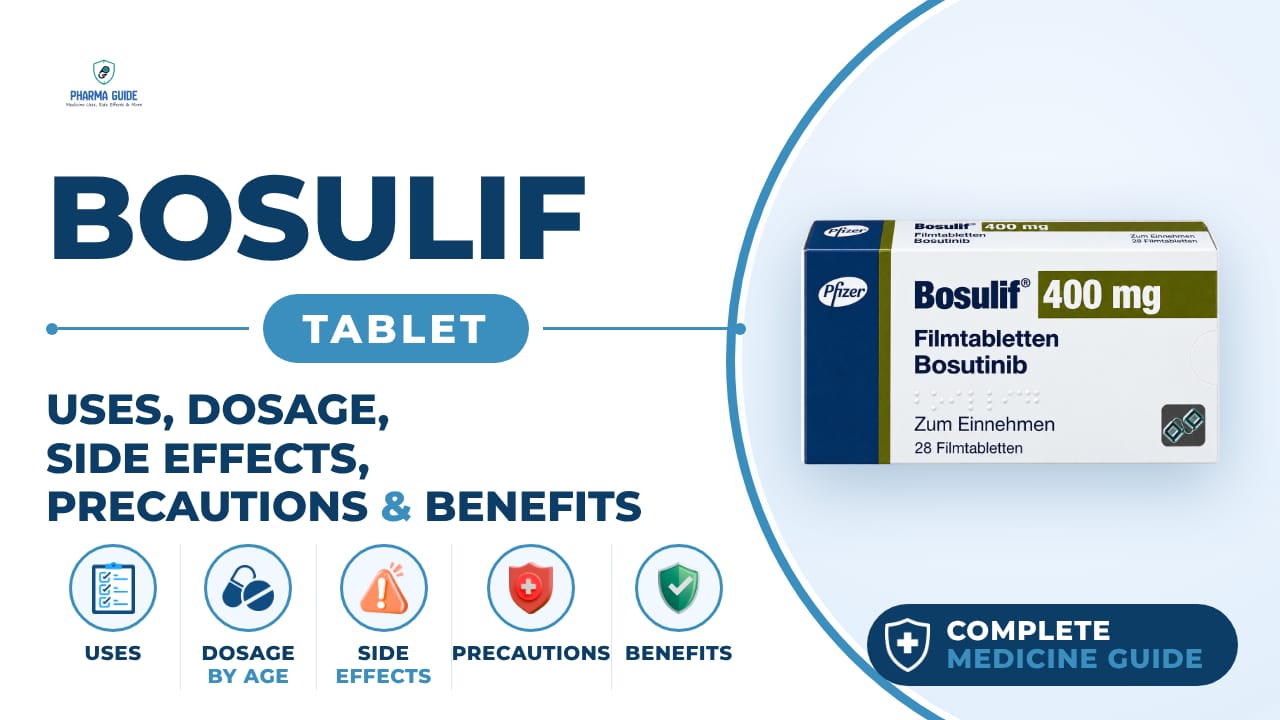
| Generic name | bosutinib |
|---|---|
| Drug class | BCR-ABL tyrosine kinase inhibitors |
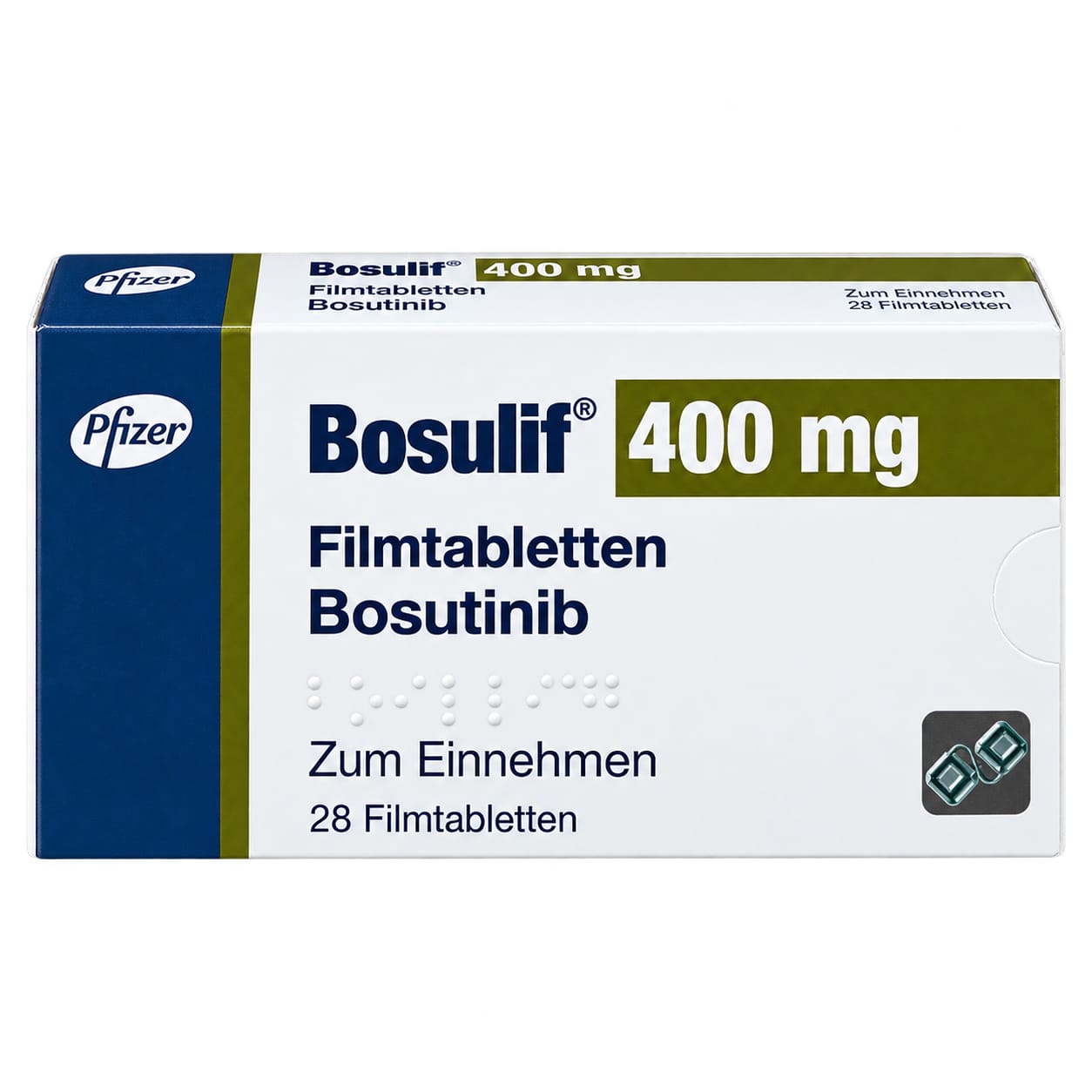
| Forms | oral tablets (100 mg, 400 mg, 500 mg), oral capsules (50 mg, 100 mg) |
Quick overview
Bosulif Tablet contains bosutinib, a BCR-ABL tyrosine kinase inhibitor. It is a prescription medicine used to treat chronic myelogenous leukemia (CML) in adults and children aged 1 year and older. It works by blocking an abnormal protein that causes CML cells to grow and multiply. It is available as oral tablets and oral capsules in several strengths.
What is Bosulif Tablet
Bosulif is a prescription medicine that contains bosutinib. It is used to treat a type of blood cancer called chronic myelogenous leukemia (CML).
Bosulif Tablet uses
- Treats chronic myelogenous leukemia (CML) in adults and children aged 1 year and older, including newly diagnosed cases and cases that did not respond to or could not tolerate other treatments
- Treats adults with accelerated or blast phase Philadelphia chromosome-positive CML that is resistant or intolerant to prior treatment
Benefits of Bosulif Tablet
- Can help achieve major molecular and cytogenetic responses, helping to manage abnormal white blood cell production in the bone marrow
- Treats Philadelphia chromosome-positive chronic myeloid leukemia (Ph+ CML)
- Blocks abnormal BCR-ABL tyrosine kinase activity
- Helps slow growth of leukemia cells
- Provides an oral targeted-therapy option
- Can be used in certain patients previously treated with other CML therapies
How Bosulif Tablet works
Bosulif blocks an abnormal protein called BCR-ABL that causes CML cells to grow and multiply. It also blocks other related proteins. This slows or stops the growth of cancer cells.
Bosulif Tablet dosage
Take it once per day with food, at the same time each day. Swallow tablets whole; do not crush, chew, or break them. If a tablet is crushed or broken, avoid letting the medicine touch your skin; wash with soap and water if it does, and ask your pharmacist how to safely dispose of it.
If you have trouble swallowing capsules, they can be opened and mixed with room-temperature applesauce or yogurt; swallow the whole mixture right away without chewing and do not store it for later use; take it with a full meal. Do not mix the medicine with other foods. Wear gloves when giving the tablets or capsules to a child.
Do not take this medicine within 2 hours of an antacid or H2 blocker; talk to your doctor if you take a proton pump inhibitor. Avoid grapefruit, grapefruit juice, and grapefruit supplements while taking this medicine.
If you miss a dose, take it as soon as you remember, but skip it if it has been more than 12 hours since the missed dose; do not take two doses at once. If you are mixing the medicine with applesauce or yogurt and do not finish the mixture, do not prepare another dose; wait until your next scheduled dose.
Use exactly as prescribed by your doctor or pharmacist.
Available forms and strengths
- Oral tablets (100 mg, 400 mg, 500 mg)
- Oral capsules (50 mg, 100 mg)
Side effects of Bosulif Tablet
Common
- Diarrhea
- Stomach pain
- Vomiting
- Nausea
- Rash
- Fatigue
- Liver dysfunction
- Headache
- Fever
- Decreased appetite
- Respiratory tract infection
- Constipation
- Dizziness
- Cough
- Itching
- Swelling (fluid retention)
- Reduced appetite
- Joint pain
- Back pain
- Shortness of breath
- Flu
Serious
- Severe or ongoing nausea, vomiting, stomach pain, or diarrhea
- Blood in your stools
- Urinating more or less than usual
- Feeling light-headed or short of breath
- Heart problems - swelling, rapid weight gain, feeling short of breath
- Low blood cell counts - fever, chills, tiredness, flu-like symptoms, mouth sores, skin sores, easy bruising, unusual bleeding, pale skin, cold hands and feet
- Liver problems - upper stomach pain, loss of appetite, dark urine, clay-colored stools, jaundice (yellowing of the skin or eyes)
- Swelling or fluid build-up in the lungs - anxiety, sweating, pain when you breathe, feeling short of breath while lying down, wheezing, gasping for breath, cough with foamy mucus, chest pain, fast or uneven heart rate
- Allergic reaction - hives, itching, dizziness, back pain, joint pain, difficulty breathing, swelling of your face, lips, tongue, or throat
- Kidney problems that can lead to kidney failure
- High blood pressure
Warnings and precautions
- This medicine may cause severe diarrhea and other digestive side effects. Tell your doctor if you have intolerable symptoms, as your dose may need to be adjusted or the medicine stopped.
- This medicine can lower blood cell counts, raising the risk of infection or bleeding. Call your doctor if you notice unusual bruising, bleeding, or signs of infection like fever, chills, or body aches.
- This medicine can increase the risk of liver problems. Stop taking it and call your doctor right away if you have fever, easy bruising or bleeding, shortness of breath, yellowing of the skin or eyes, swelling, rapid weight gain, blood in your stools, or severe ongoing vomiting, stomach pain, or diarrhea.
- This medicine can increase the risk of fluid retention, heart problems, and kidney problems. Tell your doctor about swelling, rapid weight gain, shortness of breath, irregular heart rate, weak pulse, or fainting.
- Do not break or crush the tablets. The medicine from a crushed or broken tablet can be dangerous if it touches your skin.
- Avoid grapefruit and grapefruit juice while taking this medicine, as they can change how the medicine works and increase side effects.
- This medicine can harm an unborn baby and should not be used during pregnancy.
- Women who could become pregnant should have a pregnancy test before starting treatment and use effective birth control during treatment and for 2 weeks after the last dose.
- Do not breastfeed while taking this medicine and for 2 weeks after the last dose.
- If you have kidney problems, talk with your doctor before taking this medicine. It can cause kidney damage, and your doctor will monitor your kidney function during treatment.
- If you have liver disease, talk with your doctor before taking this medicine, as it may cause liver damage. Your doctor will check your liver function with blood tests during treatment.
- Drinking alcohol is not known to interact directly with this medicine, but alcohol can cause similar side effects such as diarrhea, nausea, headache, and liver problems, which could get worse if combined.
- This medicine may cause dizziness and can affect your ability to safely drive or operate machinery. Use caution until you know how it affects you.
Storage
- Store at room temperature 20°C to 25°C (68°F to 77°F) away from moisture and heat.
- Store in the original container at room temperature away from light and moisture.
- Do not store in the bathroom.
- Keep the drying agent (desiccant) in the bottle if you are using the tablet form of this medication.
- Tightly close the bottle when not in use.
- Keep all medications away from children and pets.
- Do not flush medications down the toilet or pour them into a drain unless instructed to do so.
- Properly discard this product when it is expired or no longer needed. Consult your pharmacist or local waste disposal company.
When to see a doctor
- Get emergency medical help if you have signs of an allergic reaction such as hives, itching, dizziness, back pain, joint pain, difficulty breathing, or swelling of your face, lips, tongue, or throat.
- Stop taking this medicine and call your doctor right away if you have severe or ongoing nausea, vomiting, stomach pain, or diarrhea; blood in your stools; urinating more or less than usual; feeling light-headed or short of breath; signs of heart problems like swelling or rapid weight gain; signs of low blood cell counts like fever, chills, tiredness, mouth sores, easy bruising, or unusual bleeding; signs of liver problems like upper stomach pain, loss of appetite, dark urine, or yellowing of the skin or eyes; or signs of fluid in the lungs like anxiety, wheezing, or chest pain.
- If you think you have taken too much of this medicine, seek emergency medical attention or contact your local poison control center right away.
Alternatives
- Asciminib
- Ponatinib
- Dasatinib
- Imatinib
Watch the video
FAQs
What is Bosulif Tablet used for?
Bosulif is a prescription medicine containing bosutinib, used to treat chronic myelogenous leukemia (CML) in adults and children aged 1 year and older, including newly diagnosed cases and cases resistant to or intolerant of other treatments.
How should I take Bosulif Tablet?
Take it once per day with food at the same time each day. Swallow tablets whole without crushing, chewing, or breaking them. Avoid grapefruit and grapefruit juice, and do not take it within 2 hours of an antacid or H2 blocker.
What are the common side effects of Bosulif Tablet?
Common side effects include diarrhea, stomach pain, vomiting, nausea, rash, fatigue, liver dysfunction, headache, fever, decreased appetite, cough, joint pain, and swelling due to fluid retention.
What precautions should I take while using Bosulif Tablet?
This medicine can cause severe diarrhea, lower blood cell counts, and increase the risk of liver, heart, and kidney problems. It should not be used during pregnancy, and women should use effective birth control during treatment and for 2 weeks after the last dose. Avoid breastfeeding during this period as well.
What should I do if I miss a dose of Bosulif Tablet?
If you miss a dose, take it as soon as you remember, but skip it if more than 12 hours have passed since the missed dose. Do not take two doses at once.
General information, not medical advice
Your prescriber and the leaflet in your pack know your situation. This page does not.
- Follow your prescriber and the leaflet
- Don't start, stop, or change a dose on your own
- Doses and warnings differ by country and product
Sources
Video
Related medicines
Sprycel Tablet: Uses, Dosage, Side Effects, Precautions and Alternates
BCR-ABL tyrosine kinase inhibitors
Sprycel Tablet (dasatinib) treats Ph+ CML and ALL by blocking abnormal proteins that cause cancer cell growth. Learn uses, dosage, side effects, and warnings.

Injectafer Injection: Uses, Dosage, Side Effects, Precautions and Alternates
Iron products
Injectafer (ferric carboxymaltose) treats iron deficiency anemia and heart failure-related iron deficiency via IV. Learn uses, dosage, side effects, and