
Safety
General information, not medical advice
Your prescriber and the leaflet in your pack know your situation. This page does not.
- Follow your prescriber and the leaflet
- Don't start, stop, or change a dose on your own
- Doses and warnings differ by country and product
Sprycel Tablet: Uses, Dosage, Side Effects, Precautions and Alternates
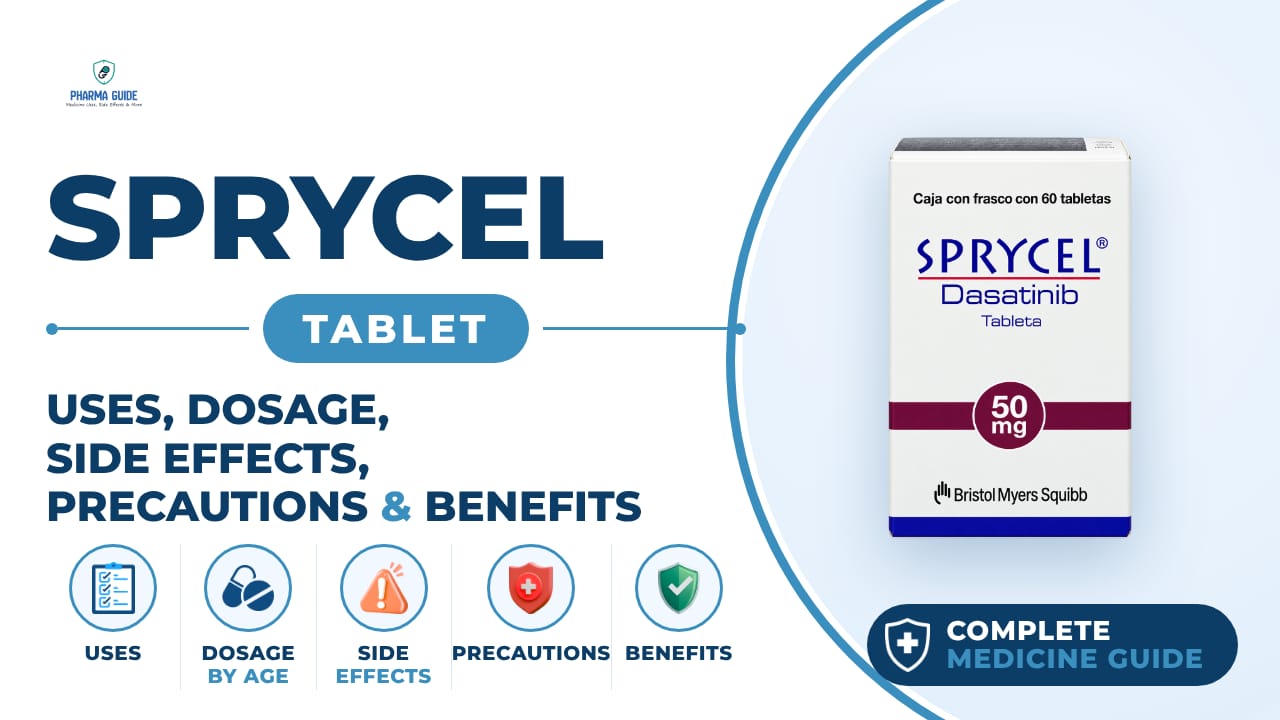
| Generic name | dasatinib |
|---|---|
| Drug class | BCR-ABL tyrosine kinase inhibitors |
| Forms | Tablet |
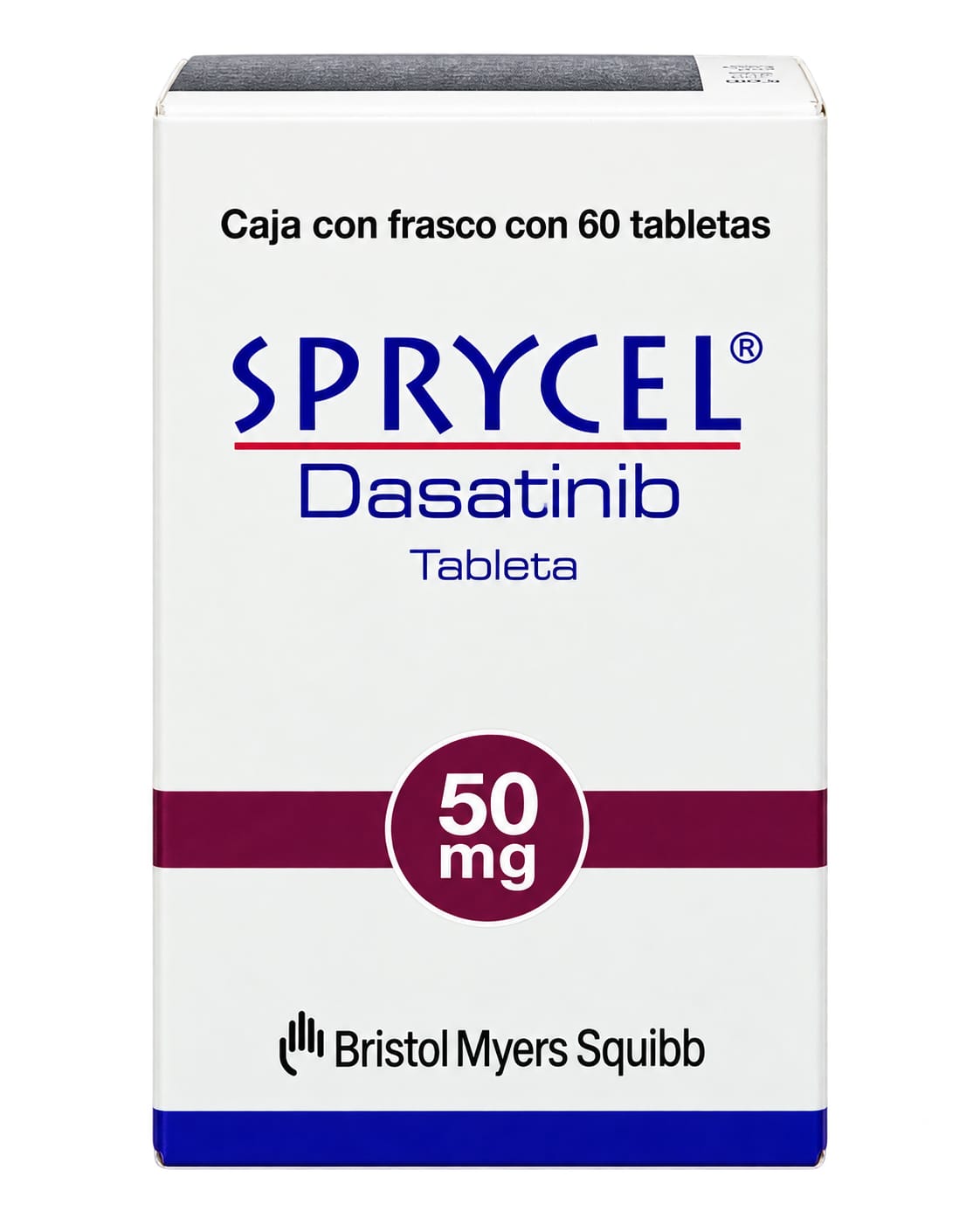
Quick overview
Sprycel Tablet (dasatinib) is a cancer medicine belonging to the BCR-ABL tyrosine kinase inhibitor class. It is used in adults and children to treat certain types of Philadelphia chromosome-positive blood cancers, including chronic myeloid leukemia and acute lymphoblastic leukemia. Sprycel works by blocking an abnormal protein that causes cancer cells to grow, helping the body make healthy blood cells again. It is available as a tablet and carries specific warnings around blood cell counts, lung problems, and bleeding risk.
What is Sprycel Tablet
Sprycel is a cancer medicine that slows the growth and spread of cancer cells in the body. It is used in adults and children to treat certain types of blood cancer.
Sprycel Tablet uses
- Treats adults and children (ages 1 year and older) with newly diagnosed Philadelphia chromosome-positive (Ph+) chronic myeloid leukemia (CML) in the chronic phase, or when other treatments like imatinib no longer work or cause severe side effects
- Treats adults and children with Ph+ acute lymphoblastic leukemia (ALL) who are resistant or intolerant to previous therapies, or newly diagnosed Ph+ ALL in children when combined with chemotherapy
Benefits of Sprycel Tablet
- Slows or stops the growth and spread of leukemia cells
- Allows healthy blood cell production to resume
How Sprycel Tablet works
Sprycel blocks an abnormal protein that tells cancer cells to grow and multiply. This causes the leukemia cells to die and helps the body make healthy blood cells again.
Sprycel Tablet dosage
Take Sprycel exactly as prescribed by your doctor and follow all directions on your prescription label. You may take it with or without food; if it upsets your stomach, take it with food. Take it at the same time each day.
Swallow the tablet whole; do not crush, chew, or break it. If your child cannot swallow the tablet whole, talk with your healthcare provider. Do not take a pill that has been accidentally broken, as the medicine can be dangerous if it gets in your eyes, mouth, nose, or on your skin. Wear rubber gloves while handling a broken tablet, and a pregnant woman should not handle a broken pill.
Avoid grapefruit and grapefruit juice while taking this medicine. Avoid taking an antacid within 2 hours before or after you take this medicine.
If you miss a dose, take it as soon as you can, but skip it if it is almost time for your next dose; do not take two doses at one time. Do not change your dose or stop using this medicine without your doctor's advice.
| Age group | Dose |
|---|---|
| 1–17 years, 10 to <20 kg | 40 mg once daily |
| 1–17 years, 20 to <30 kg | 60 mg once daily |
| 1–17 years, 30 to <45 kg | 70 mg once daily |
| 1–17 years, ≥45 kg | 100 mg once daily |
| Adults – chronic-phase CML | 100 mg once daily |
Available forms and strengths
- Tablet
Side effects of Sprycel Tablet
Common
- Diarrhea, nausea, vomiting, and stomach pain
- Headache, dizziness, and fatigue
- Skin rash
- Mild to moderate fluid retention or swelling
- Muscle or joint pain
- Pain in your hands or feet
- Breathing problems
Serious
- Low blood cell counts: can cause anemia, increased risk of infections, or severe bleeding/bruising
- Severe fluid retention: fluid buildup around the lungs (pleural effusion), heart, or abdomen
- Cardiovascular issues: heart rhythm changes (QT prolongation), heart attack, or heart failure
- Pulmonary arterial hypertension: high blood pressure in the arteries of the lungs
- Liver damage
- Severe skin reactions
- Tumor lysis syndrome
- Stroke symptoms: sudden numbness or weakness of the face, arm, or leg, trouble speaking, confusion, trouble walking, loss of balance, severe headache, or change in vision
- Allergic reaction: hives, difficult breathing, swelling of the face or throat
Warnings and precautions
- This medicine can lower blood cells that help your body fight infection and help your blood clot, which can lead to easier bleeding or infection. Call your doctor if you notice unusual bruising or bleeding, or signs of infection like fever, chills, or body aches.
- Some people using this medicine have developed a rare but serious lung condition called pulmonary arterial hypertension (PAH), which can be life-threatening if not treated promptly. Talk to your doctor about your personal risk.
- Avoid grapefruit and grapefruit juice, as they can interact with this medicine and increase the risk of side effects.
- This medicine may increase the risk of severe or fatal bleeding, especially if used together with blood thinners or other medicines that prevent blood clots.
- This medicine can pass into body fluids such as urine, stool, and vomit. Caregivers should wear rubber gloves when cleaning up body fluids, handling contaminated trash or laundry, or changing diapers, and wash their hands before and after removing gloves.
- This medicine may affect growth in children. Tell your doctor if your child is not growing at a normal rate while taking it.
- This medicine may harm an unborn baby. You may need a pregnancy test before starting, and you should use effective birth control while taking it and for at least 30 days after your last dose.
- It is not known whether this medicine passes into breast milk or could harm a nursing baby. You should not breastfeed while taking it and for at least 2 weeks after your last dose.
- Kidney function and overall treatment status should be monitored during oncology care.
- Tell your doctor if you have liver disease before taking this medicine, since dose adjustments may be needed. Liver function should be monitored; significant impairment requires specialist assessment.
- Discuss alcohol use with the oncology team, particularly if liver problems occur.
Storage
- Store at room temperature away from moisture and heat.
- Store at room temperature between 20 and 25 degrees C (68 and 77 degrees F). Get rid of any unused medication after the expiration date.
- Take the medication to a medication take-back program, or if not possible, mix it with cat litter, dirt, or coffee grounds, seal it in a bag, and put it in the trash.
When to see a doctor
- Get emergency help right away if you have signs of an allergic reaction such as hives, difficulty breathing, or swelling of your face or throat, or signs of a severe skin reaction such as fever, sore throat, burning eyes, or a red/purple skin rash with blistering and peeling.
- Call your doctor right away if you have symptoms of pulmonary arterial hypertension, such as chest pain, feeling tired or short of breath even with mild activity, swelling in your feet, lower legs, or midsection, blue-colored lips or skin, or feeling light-headed like you might pass out.
- Call your doctor at once if you have severe ongoing nausea, vomiting, or diarrhea, severe headaches, extreme tiredness, or muscle or joint pain.
- Call your doctor at once if you have signs of liver problems, such as loss of appetite, upper right side stomach pain, tiredness, itching, dark urine, clay-colored stools, or yellowing of the skin or eyes.
- Call your doctor at once if you notice signs of bleeding, such as blood in your urine, bloody or tarry stools, coughing up blood, vomit that looks like coffee grounds, confusion, headache, or problems with speech.
- Call your doctor at once if you have signs of low blood cell counts, such as fever, chills, tiredness, flu-like symptoms, mouth sores, skin sores, pale skin, cold hands and feet, or feeling light-headed.
- Call your doctor at once if you have signs of tumor cell breakdown, such as tiredness, weakness, muscle cramps, nausea, vomiting, diarrhea, fast or slow heart rate, or tingling in your hands, feet, or around your mouth.
- If you think you have taken too much of this medicine, contact a poison control center or go to an emergency room right away.
Alternatives
- Asciminib
- Ponatinib
- Bosutinib
- Imatinib
Watch the video
FAQs
What is Sprycel Tablet used for?
Sprycel is used to treat adults and children with Philadelphia chromosome-positive chronic myeloid leukemia (CML) and Philadelphia chromosome-positive acute lymphoblastic leukemia (ALL), including newly diagnosed cases and those resistant or intolerant to other therapies.
How does Sprycel Tablet work?
Sprycel blocks an abnormal protein that tells cancer cells to grow and multiply, causing leukemia cells to die and helping the body make healthy blood cells again.
Can I eat grapefruit while taking Sprycel?
No, you should avoid grapefruit and grapefruit juice while taking Sprycel, as they can interact with the medicine and increase the risk of side effects.
What are the serious side effects of Sprycel Tablet?
Serious side effects include low blood cell counts, severe fluid retention around the lungs, heart, or abdomen, heart rhythm changes, pulmonary arterial hypertension, liver damage, severe skin reactions, tumor lysis syndrome, and stroke symptoms.
How should Sprycel tablets be taken?
Take Sprycel exactly as prescribed, with or without food, at the same time each day. Swallow the tablet whole without crushing, chewing, or breaking it, and avoid taking an antacid within 2 hours before or after your dose.
General information, not medical advice
Your prescriber and the leaflet in your pack know your situation. This page does not.
- Follow your prescriber and the leaflet
- Don't start, stop, or change a dose on your own
- Doses and warnings differ by country and product
Sources
Video
Related medicines
Bosulif Tablet: Uses, Dosage, Side Effects, Precautions and Alternates
BCR-ABL tyrosine kinase inhibitors
Bosulif Tablet (bosutinib) treats chronic myelogenous leukemia by blocking BCR-ABL protein. Learn about its uses, dosage, side effects, and precautions.

Injectafer Injection: Uses, Dosage, Side Effects, Precautions and Alternates
Iron products
Injectafer (ferric carboxymaltose) treats iron deficiency anemia and heart failure-related iron deficiency via IV. Learn uses, dosage, side effects, and