
Safety
General information, not medical advice
Your prescriber and the leaflet in your pack know your situation. This page does not.
- Follow your prescriber and the leaflet
- Don't start, stop, or change a dose on your own
- Doses and warnings differ by country and product
Brilinta Tablet: Uses, Dosage, Side Effects, Precautions and Alternates
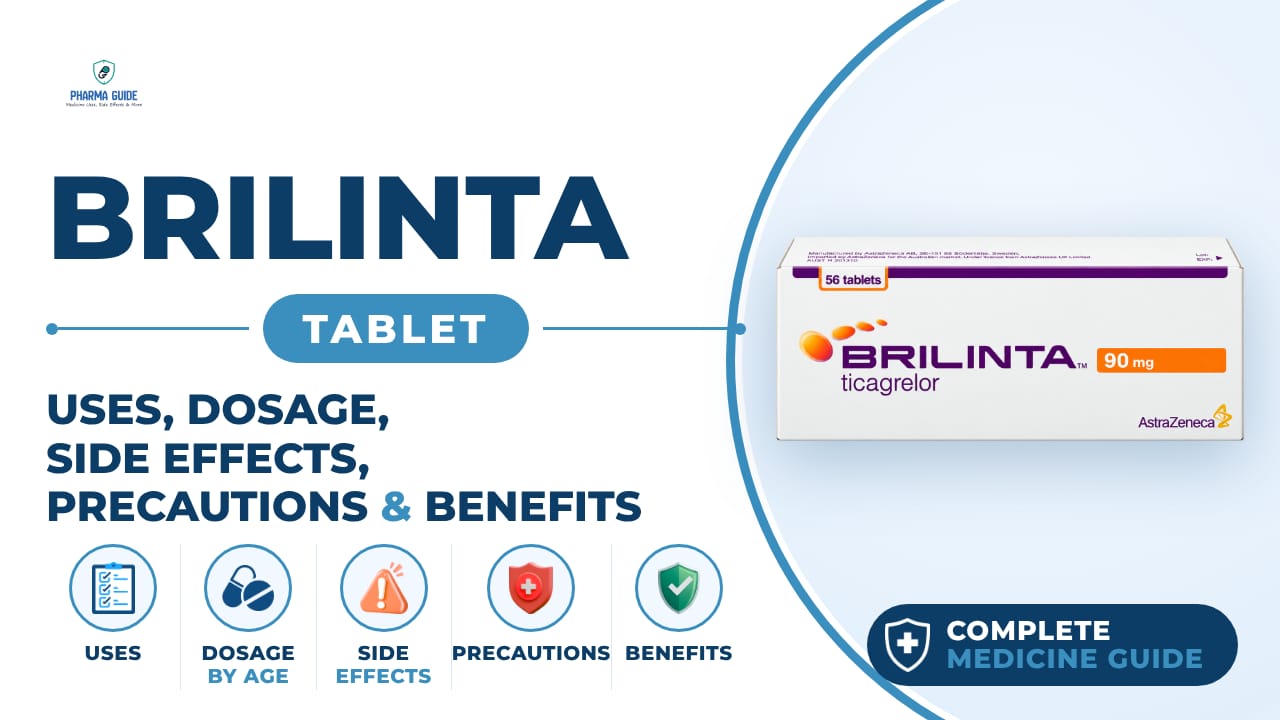
| Generic name | ticagrelor |
|---|---|
| Drug class | antiplatelet (P2Y12 platelet inhibitor) |
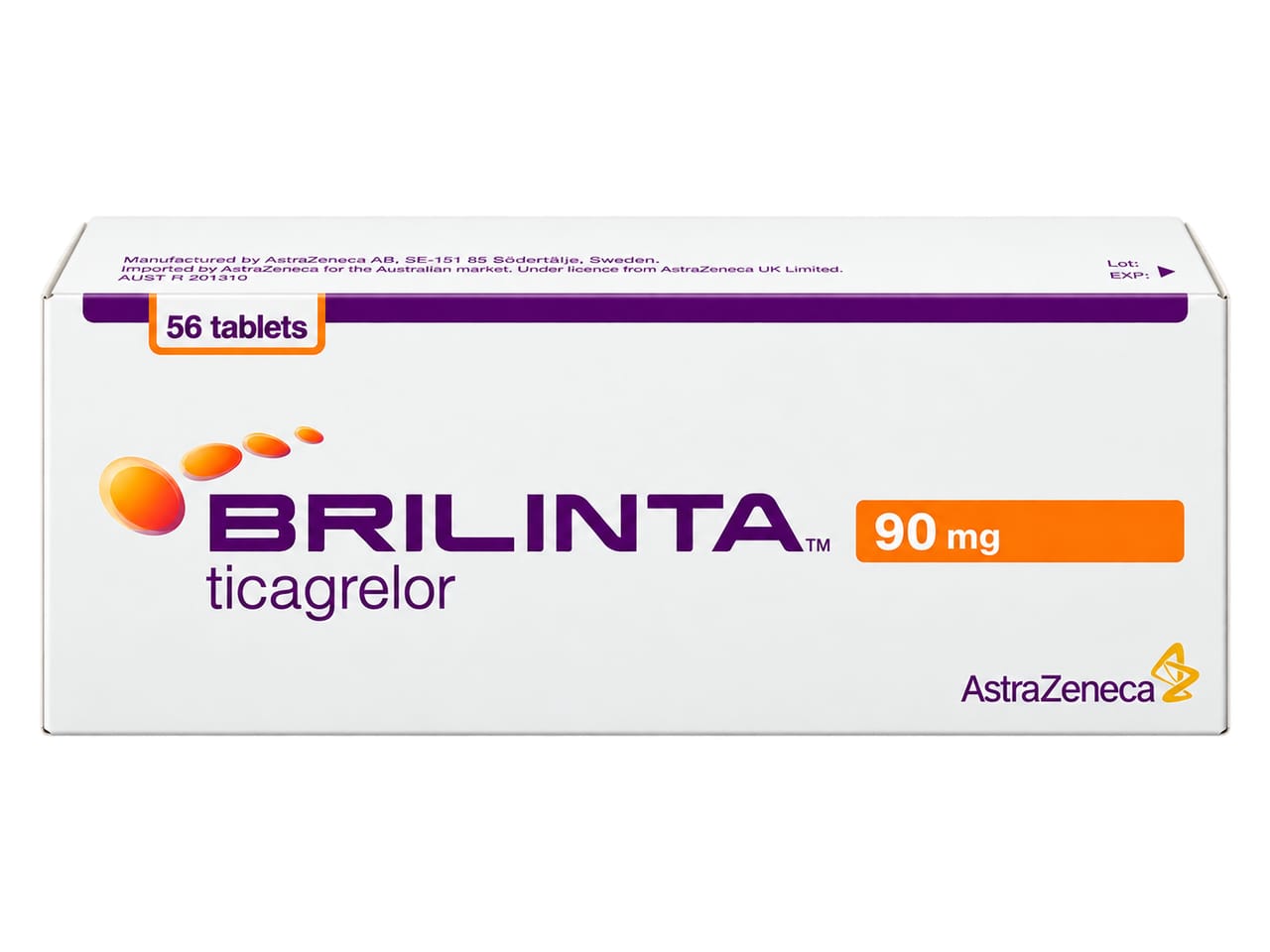
| Forms | Film-coated tablet (60 mg), Film-coated tablet (90 mg) |
Quick overview
Brilinta Tablet contains the active drug ticagrelor, an antiplatelet medicine from the P2Y12 platelet inhibitor class. It is a prescription medicine used in adults to help prevent dangerous blood clots that can cause heart attacks and strokes, and it is usually taken together with a low dose of aspirin. Brilinta works by stopping platelets from sticking together, which lowers the risk of clots forming in arteries or stents.
What is Brilinta Tablet
Brilinta is a prescription medicine that contains the active drug ticagrelor. It is used in adults to help prevent dangerous blood clots that can cause heart attacks and strokes, and it is usually taken together with a low dose of aspirin.
Brilinta Tablet uses
- Reducing the risk of cardiovascular death, heart attack, and stroke in people with acute coronary syndrome (ACS) or a history of heart attack
- Reducing the rate of blood clots forming in coronary stents placed after treatment for ACS
- Reducing the risk of a first heart attack or stroke in people with coronary artery disease who are at high risk but have not had one before
- Reducing the risk of stroke in people having a stroke caused by a blocked blood vessel or a transient ischemic attack (TIA)
Benefits of Brilinta Tablet
- Clot Prevention: Reduces platelet aggregation and formation of harmful blood clots
- Heart Attack Prevention: Helps reduce cardiovascular events in appropriate patients with acute coronary syndrome or previous myocardial infarction
- Stent Protection: Helps reduce the risk of stent thrombosis after certain coronary interventions
- Stroke Prevention: Used in selected patients with acute ischemic stroke or high-risk TIA
How Brilinta Tablet works
Brilinta attaches to a receptor on platelets (blood cells that help clotting) called the P2Y12 ADP-receptor. By blocking this receptor, it stops platelets from being activated and sticking together, which lowers the chance of a harmful clot forming in an artery or stent.
Brilinta Tablet dosage
Brilinta can be taken with or without food. Swallow the tablet whole. Take your doses at set times each day, about 12 hours apart. Take Brilinta together with a low daily dose of aspirin, not more than 100 mg a day. If you have trouble swallowing tablets, they can be crushed, mixed with water, and drunk right away; rinse the glass with more water and drink that too to get the full dose. If you miss a dose, take your next dose at its scheduled time; do not take two doses at once to make up for a missed one. Do not stop taking Brilinta without talking to your doctor first.
| Age group | Dose |
|---|---|
| Under 18 Years | Safety and effectiveness are not established; use only under specialist supervision |
| 18–64 Years | 180 mg loading dose, then 90 mg twice daily for the first year after ACS; 60 mg twice daily after 1 year |
| Older Adults (65+ Years) | Same adult regimen; dose individualized according to indication and bleeding risk |
Available forms and strengths
- Film-coated tablet (60 mg)
- Film-coated tablet (90 mg)
Side effects of Brilinta Tablet
Common
- Shortness of breath
- Bruising more easily than usual
- Nosebleeds
- Dizziness
- Headache
- Nausea
- Diarrhea or digestive disturbances
- Constipation
- Rash, stinging, or itching
- Bleeding gums
Serious
- Major or fatal bleeding, including internal bleeding or blood in stool/urine
- Bleeding inside the brain or skull, which can cause stroke-like symptoms
- Abnormally slow heart rate (bradycardia), which may cause fainting
- Severe allergic reaction, including swelling of the face, lips, tongue, or throat and trouble breathing
- Signs of a blood clotting problem called thrombotic thrombocytopenic purpura (TTP), such as fever, purplish skin spots, yellowing of skin or eyes, and confusion
Warnings and precautions
- Brilinta, like other antiplatelet medicines, can cause serious bleeding that is sometimes fatal.
- Do not use Brilinta if you have active abnormal bleeding or a history of bleeding inside the brain.
- Brilinta should not be started in people who are about to have emergency heart bypass surgery (CABG).
- If bleeding happens, it should usually be managed without stopping Brilinta, because stopping the drug raises the risk of heart problems.
- Taking more than 100 mg of aspirin a day with Brilinta can make Brilinta less effective, so this should be avoided.
- Stopping Brilinta on your own increases the risk of heart attack, stroke, and death; always talk to your doctor before stopping.
- People with a history of slow heart rate problems not protected by a pacemaker may be at higher risk of dangerously slow heart rhythms with Brilinta.
- It isn't known for certain whether Brilinta is safe during pregnancy. Animal studies showed harm to the fetus, so Brilinta should only be used in pregnancy if your doctor decides the benefit outweighs the possible risk.
- It isn't known if Brilinta passes into breast milk in humans. You and your doctor should decide together whether you will take Brilinta or breastfeed, as both at the same time is not recommended without medical advice.
- No dose change is needed for people with kidney problems, though people on dialysis have not been studied.
- Brilinta should be avoided in people with severe liver problems because it can increase the amount of the drug in the blood.
- Caution is needed for moderate liver impairment, but no dose change is needed for mild liver impairment.
- Avoid drinking excessive amounts of alcohol while taking Brilinta, since both alcohol and Brilinta can increase bleeding risk, and using them together may raise the risk of serious bleeding further.
- Brilinta usually does not affect your ability to drive or use machines, but be careful if you feel dizzy or confused while taking it.
Storage
- Store at room temperature between 68°F to 77°F (20°C to 25°C)
- Keep BRILINTA and all medicines out of the reach of children
- Do not store above 30°C
- Do not use the medicine after the expiry date (exp. date) that appears on the package
When to see a doctor
- Get medical help right away if you have severe bleeding that won't stop, pink, red, or brown urine, vomit that looks like blood or coffee grounds, or black or bloody stools.
- Contact your doctor if you have new, unexpected, or severe shortness of breath, especially if it happens at rest.
- Seek urgent care if you notice sudden numbness or weakness in the face, arm, or leg, sudden confusion or trouble speaking, sudden trouble walking, or a sudden severe headache, as these can be signs of bleeding in the brain or a stroke.
- Tell your doctor right away if you have signs of a severe allergic reaction, such as swelling of the face, lips, tongue, or throat, or trouble breathing or speaking.
Alternatives
- Clopidogrel
- Prasugrel
- Aspirin
Watch the video
FAQs
What is Brilinta Tablet used for?
Brilinta is used to reduce the risk of cardiovascular death, heart attack, and stroke in people with acute coronary syndrome or a history of heart attack, to reduce clotting in coronary stents, to lower the risk of a first heart attack or stroke in high-risk coronary artery disease patients, and to reduce stroke risk after a stroke caused by a blocked vessel or TIA.
How should I take Brilinta Tablet?
Brilinta can be taken with or without food, swallowed whole, about 12 hours apart, together with a low daily aspirin dose not exceeding 100 mg. If you have trouble swallowing, the tablet can be crushed and mixed with water. Do not double up if you miss a dose, and don't stop taking it without consulting your doctor.
What are the common side effects of Brilinta Tablet?
Common side effects include shortness of breath, easy bruising, nosebleeds, dizziness, headache, nausea, diarrhea or digestive issues, constipation, rash or itching, and bleeding gums.
Can I drink alcohol while taking Brilinta?
Excessive alcohol should be avoided while taking Brilinta because both alcohol and the medicine can increase bleeding risk, and combining them may raise the risk of serious bleeding further.
What are the alternatives to Brilinta Tablet?
Alternatives mentioned include clopidogrel, prasugrel, and aspirin.
General information, not medical advice
Your prescriber and the leaflet in your pack know your situation. This page does not.
- Follow your prescriber and the leaflet
- Don't start, stop, or change a dose on your own
- Doses and warnings differ by country and product
Sources
Video
Related medicines
Ticagrelor Tablet: Uses, Dosage, Side Effects, Precautions and Alternates
antiplatelet, P2Y12 platelet inhibitor
Ticagrelor Tablet is a prescription antiplatelet medicine taken with aspirin to help prevent heart attacks, strokes, and blood clots. Learn dosage and side
Clopidogrel Tablet: Uses, Dosage, Side Effects, Precautions and Alternates
Antiplatelet (P2Y12 platelet inhibitor)
Clopidogrel Tablet is an antiplatelet medicine that helps prevent blood clots, heart attack, and stroke. Learn uses, dosage, side effects, and precautions.