
Safety
General information, not medical advice
Your prescriber and the leaflet in your pack know your situation. This page does not.
- Follow your prescriber and the leaflet
- Don't start, stop, or change a dose on your own
- Doses and warnings differ by country and product
Clopidogrel Tablet: Uses, Dosage, Side Effects, Precautions and Alternates
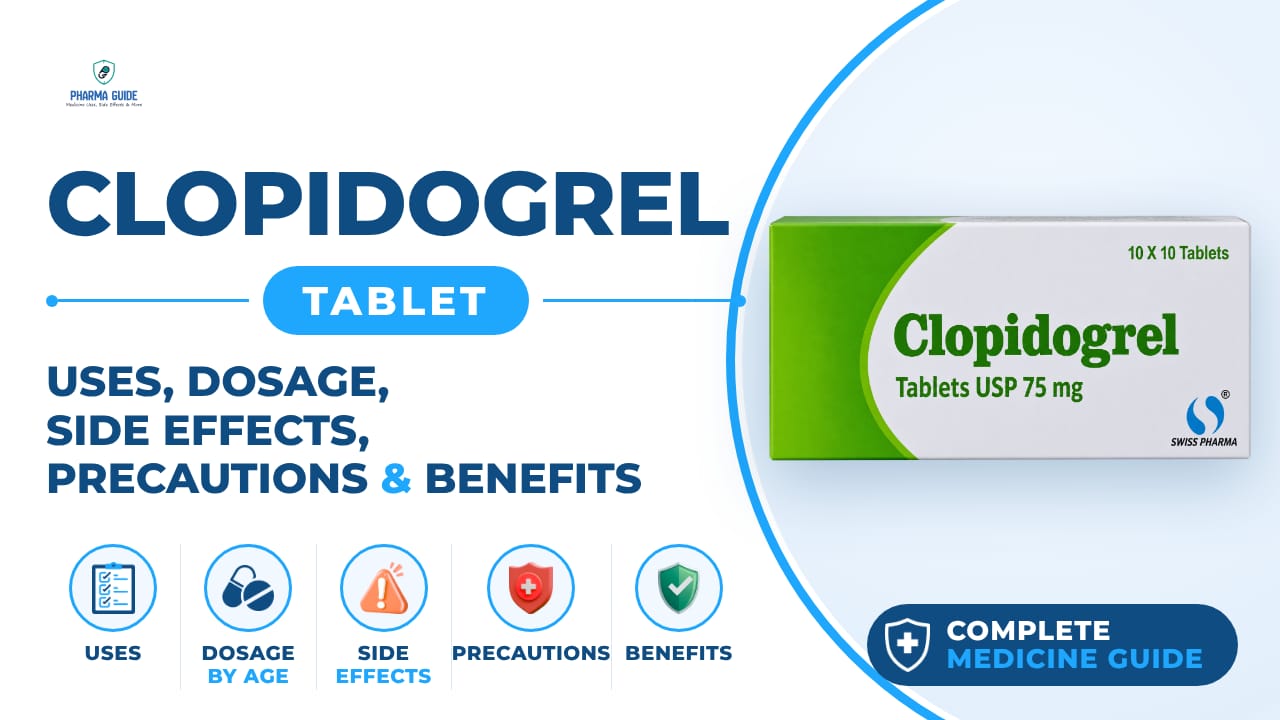
| Generic name | Clopidogrel |
|---|---|
| Drug class | Antiplatelet (P2Y12 platelet inhibitor) |
| Forms | Tablet |
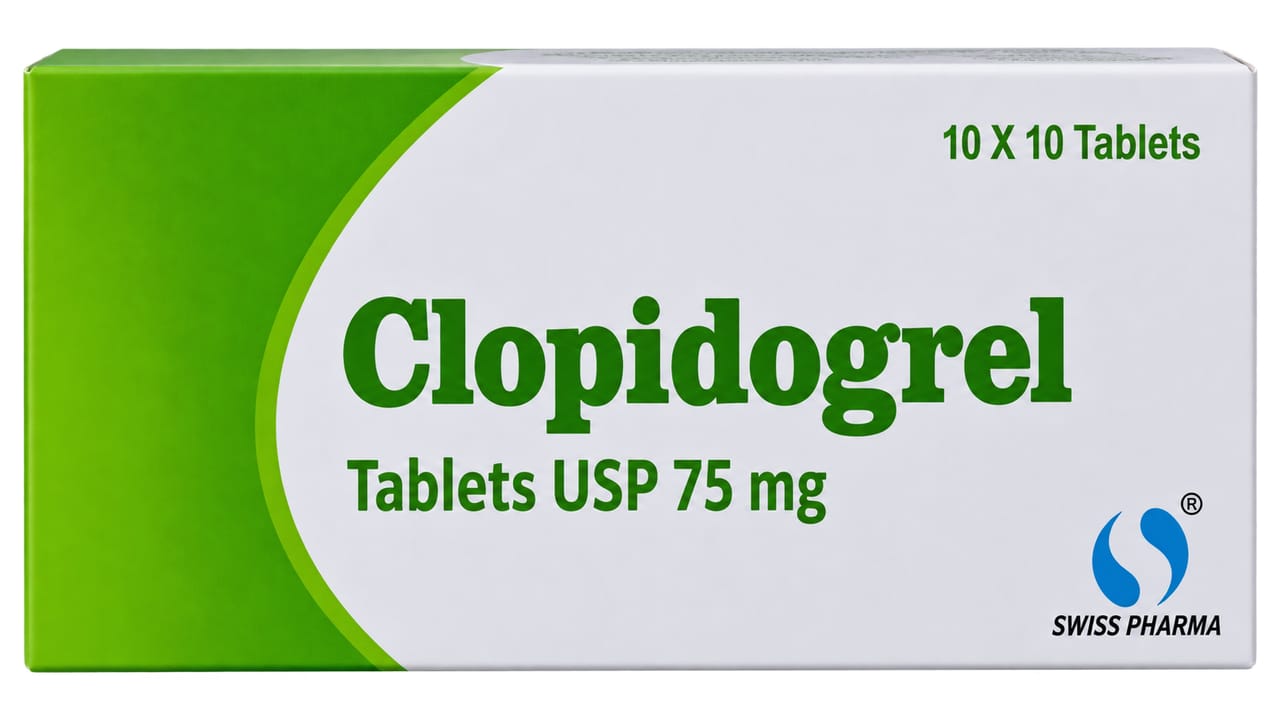
Quick overview
Clopidogrel Tablet is a prescription antiplatelet medicine that helps prevent blood clots by keeping platelets from sticking together. It is used to lower the risk of heart attack, stroke, or other clot-related problems, including after a heart attack, stroke, certain heart surgeries, or in acute coronary syndrome and peripheral arterial disease. It is sometimes used together with aspirin or for people with atrial fibrillation.
What is Clopidogrel Tablet
Clopidogrel is a prescription medicine that helps prevent blood clots by keeping platelets in the blood from sticking together. It is used to lower the risk of heart attack, stroke, or other clot-related problems. It belongs to a drug class called antiplatelets, specifically a P2Y12 platelet inhibitor.
Clopidogrel Tablet uses
- Prevent heart attack, stroke, or blood clots
- Used after a heart attack, stroke, or certain heart surgeries
- Used in acute coronary syndrome (a condition where blood flow to the heart is blocked)
- Used in people with peripheral arterial disease (poor circulation in the legs)
- Used together with aspirin in some cases
- Sometimes used to prevent blood clots in people with atrial fibrillation (irregular heartbeat)
Benefits of Clopidogrel Tablet
- Helps prevent harmful blood clots from forming.
- Reduces the risk of heart attack and stroke in appropriate patients.
- Commonly used after a heart attack or ischemic stroke to help prevent another event.
- Used in peripheral artery disease to reduce clot-related cardiovascular complications.
- Often prescribed after coronary stent placement, usually with aspirin, to help prevent the stent from becoming blocked.
- Helps reduce complications in acute coronary syndrome, such as unstable angina or certain types of heart attack.
How Clopidogrel Tablet works
Clopidogrel stops platelets, a type of blood cell, from sticking together to form clots that could cause a heart attack or stroke.
Clopidogrel Tablet dosage
Take by mouth with a glass of water. You may take it with or without food. If it upsets your stomach, take it with food. Take it at the same time every day and at regular intervals; do not take it more often than directed. Swallow the tablet whole; do not crush, chew, or cut it. Do not stop taking it unless your care team tells you to. Talk to your care team about use in children; special care may be needed. Continue taking it even if you feel well, since it only works while you keep taking it.
| Age group | Dose |
|---|---|
| Under 18 years | Safety/effectiveness not established; specialist use only |
| 18–64 years – Recent MI/stroke or PAD | 75 mg once daily |
| 18–64 years – Acute coronary syndrome | Usually 300 mg loading dose, then 75 mg once daily; regimen depends on ACS/PCI setting |
| 65+ years | Usually 75 mg once daily; assess bleeding risk and interacting medicines |
Available forms and strengths
- Tablet
Side effects of Clopidogrel Tablet
Common
- Diarrhea
- Headache
- Itchy skin
- Excessive tiredness
- Dizziness
- Nausea, vomiting
- Stomach pain
- Nosebleed
- Bruising
Serious
- Allergic reactions—skin rash, itching, hives, swelling of the face, lips, tongue, or throat
- Bleeding—bloody or black, tar-like stools, red or dark brown urine, vomiting blood or material that looks like coffee grounds, small red or purple spots on the skin, unusual bleeding or bruising
- Thrombotic thrombocytopenic purpura (TTP)—purple spots on the skin or inside the mouth, pale skin, yellowing skin or eyes, unusual weakness or fatigue, fever, fast or irregular heartbeat, confusion, change in vision, trouble speaking, trouble walking
- Sudden numbness or weakness of the face, arm, or leg, trouble speaking, confusion, trouble walking, loss of balance or coordination, severe headache, or change in vision
- Bleeding in the eye
- Seizures
- Difficulty breathing or swallowing
- Swelling of the face, throat, tongue, lips, eyes, hands, feet, ankles, or lower legs
Warnings and precautions
- Some people have a genetic difference that affects a liver enzyme needed to activate clopidogrel, making it less effective at preventing blood clots. Doctors may test for this and prescribe a different medicine if needed.
- Clopidogrel can cause serious, sometimes life-threatening bleeding.
- Tell your doctors and dentists you are taking this medicine before any surgery or dental work, since you may need to stop taking it for a short time beforehand.
- This medicine can cause a severe allergic reaction. Do not take it again if you have ever had an allergic reaction to it.
- Do not stop taking this medicine without your doctor's permission, since stopping early increases the risk of heart attack or stroke, and if you have a stent, it raises the risk of a clot forming in it.
- You should not take this medicine if you have active bleeding, such as a stomach ulcer or bleeding in the brain.
- Studies have not shown that clopidogrel causes birth defects, but having a heart attack or stroke during pregnancy is very dangerous. Your doctor will help weigh the risks.
- It is unclear whether clopidogrel passes into breast milk, so talk to your doctor if you plan to breastfeed.
- People with kidney disease may have a higher risk of the medicine not working as well and a higher risk of stomach bleeding.
- No dose change is needed for people with liver problems, but tell your doctor if you have or have had liver disease.
- Drinking alcohol can raise your risk of bleeding while taking this medicine.
Storage
- Store at room temperature of 59 to 86 degrees F (15 to 30 degrees C).
- Keep out of the reach of children and pets.
- Throw away any unused medication after the expiration date.
- Store the medicine in a closed container at room temperature, away from heat, moisture, and direct light. Keep from freezing.
- Do not keep outdated medicine or medicine no longer needed.
- Ask your healthcare professional how you should dispose of any medicine you do not use.
- Do not flush this medication down the toilet. Use a medicine take-back program.
When to see a doctor
- Get emergency help right away if you have sudden numbness or weakness of the face, arm, or leg, trouble speaking, confusion, trouble walking, loss of balance, severe headache, or vision changes — these can mean your condition has worsened.
- Contact your doctor right away for signs of serious bleeding, such as black or bloody stools, blood in urine, vomiting blood or material that looks like coffee grounds, or unusual bruising.
- Seek care right away for signs of a rare but serious blood condition called TTP, including purple skin spots, yellowing skin or eyes, tiredness, fever, fast heartbeat, or confusion.
- Get medical help right away for signs of a severe allergic reaction, such as swelling of the face, lips, tongue, or throat, or trouble breathing.
- If you think you have taken too much of this medicine, contact your doctor or a poison control center right away, or go to the nearest emergency room if symptoms are severe.
Alternatives
- Cangrelor
- Ticlopidine
- Prasugrel
- Ticagrelor
- Aspirin
Watch the video
FAQs
What is Clopidogrel Tablet used for?
It is used to lower the risk of heart attack, stroke, or other clot-related problems, including after a heart attack, stroke, or certain heart surgeries, and in acute coronary syndrome and peripheral arterial disease. It is sometimes used with aspirin or in people with atrial fibrillation.
How does Clopidogrel Tablet work?
Clopidogrel stops platelets, a type of blood cell, from sticking together to form clots that could cause a heart attack or stroke.
What is the usual dosage of Clopidogrel Tablet?
Adults with recent MI, stroke, or PAD usually take 75 mg once daily. For acute coronary syndrome, a 300 mg loading dose is often given followed by 75 mg once daily, depending on the ACS/PCI setting. Older adults (65+) usually take 75 mg once daily with assessment of bleeding risk.
What are the common side effects of Clopidogrel Tablet?
Common side effects include diarrhea, headache, itchy skin, excessive tiredness, dizziness, nausea, vomiting, stomach pain, nosebleed, and bruising.
Can I stop taking Clopidogrel Tablet on my own?
No, you should not stop taking it without your doctor's permission, since stopping early increases the risk of heart attack or stroke, and if you have a stent, it raises the risk of a clot forming in it.
General information, not medical advice
Your prescriber and the leaflet in your pack know your situation. This page does not.
- Follow your prescriber and the leaflet
- Don't start, stop, or change a dose on your own
- Doses and warnings differ by country and product
Sources
Video
Related medicines
Ticagrelor Tablet: Uses, Dosage, Side Effects, Precautions and Alternates
antiplatelet, P2Y12 platelet inhibitor
Ticagrelor Tablet is a prescription antiplatelet medicine taken with aspirin to help prevent heart attacks, strokes, and blood clots. Learn dosage and side
Brilinta Tablet: Uses, Dosage, Side Effects, Precautions and Alternates
antiplatelet (P2Y12 platelet inhibitor)
Brilinta Tablet (ticagrelor) helps prevent heart attacks and strokes by stopping blood clots. Learn its uses, dosage, side effects, and precautions.