
Safety
General information, not medical advice
Your prescriber and the leaflet in your pack know your situation. This page does not.
- Follow your prescriber and the leaflet
- Don't start, stop, or change a dose on your own
- Doses and warnings differ by country and product
Ticagrelor Tablet: Uses, Dosage, Side Effects, Precautions and Alternates
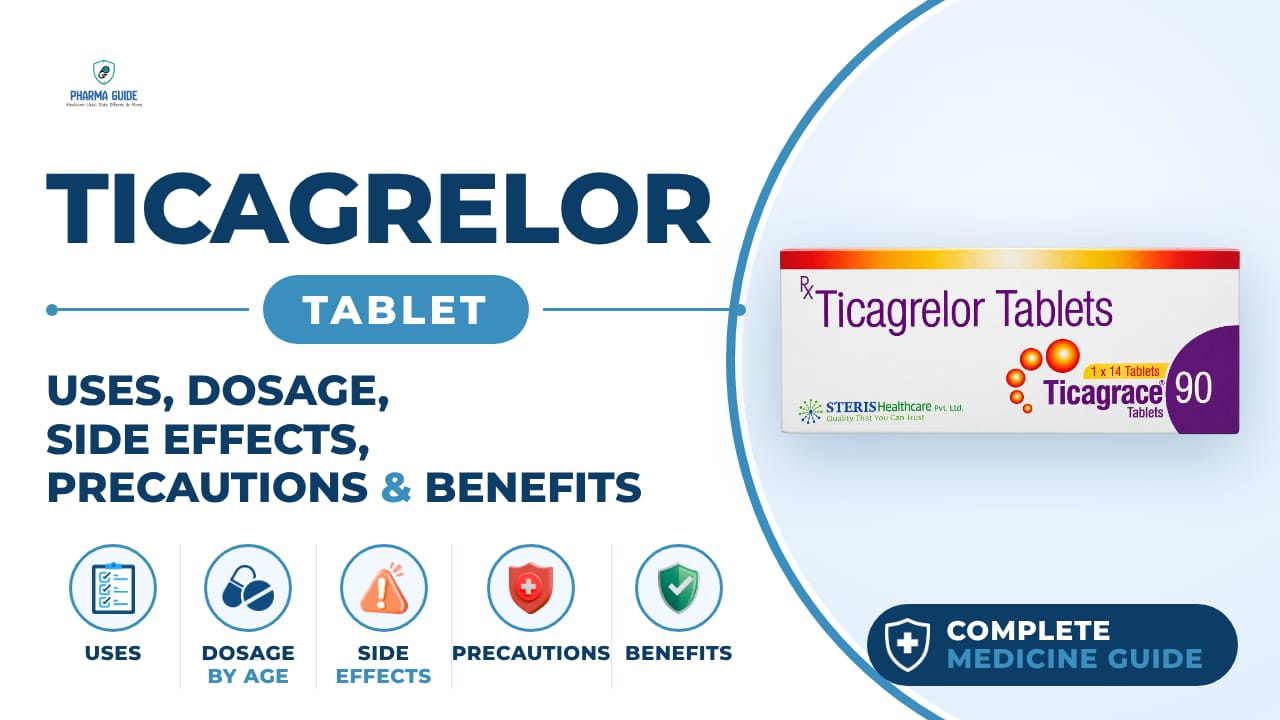
| Generic name | ticagrelor |
|---|---|
| Drug class | antiplatelet, P2Y12 platelet inhibitor |
| Forms | tablet |
Quick overview
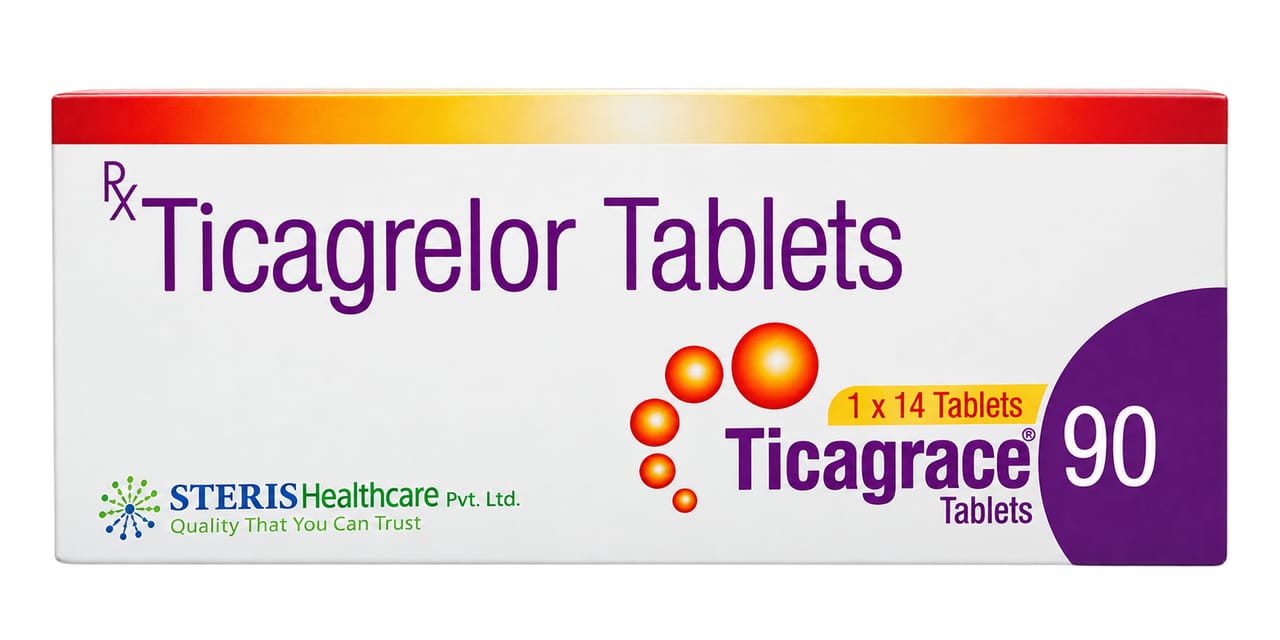
Ticagrelor Tablet (generic name: ticagrelor) is a prescription antiplatelet medicine from the P2Y12 platelet inhibitor class. It is usually taken along with aspirin, unless a doctor says otherwise, to help prevent heart attacks, strokes, and blood clots in people with certain heart and blood vessel conditions. It works by stopping platelets from sticking together, which can also raise the risk of serious bleeding.
What is Ticagrelor Tablet
Ticagrelor is a prescription blood-thinning medicine used along with aspirin (unless your doctor tells you otherwise) to help prevent heart attacks, strokes, and blood clots in people with certain heart and blood vessel conditions.
Ticagrelor Tablet uses
- Lower the risk of death, heart attack, and stroke in people with acute coronary syndrome (ACS) or a history of heart attack
- Lower the risk of blood clots in a stent for people treated with stents for ACS
- Lower the risk of a first heart attack or stroke in people with coronary artery disease (CAD) who are at high risk
- Lower the risk of stroke in people having an acute ischemic stroke or a mini-stroke (TIA)
Benefits of Ticagrelor Tablet
- Helps prevent blood clots in the arteries.
- Reduces the risk of heart attack.
- Helps reduce the risk of stroke.
- Helps prevent clot formation after coronary stent placement.
- Improves blood flow by preventing platelets from sticking together.
How Ticagrelor Tablet works
Ticagrelor stops blood platelets from sticking together, which lowers the chance of a harmful blood clot blocking a blood vessel in the heart or brain. This effect can also raise the risk of serious bleeding.
Ticagrelor Tablet dosage
Take exactly as prescribed by your doctor. It is usually taken together with aspirin, unless your doctor tells you otherwise. It can be taken with or without food, at the same time each day, twice a day. If you cannot swallow the tablet whole, you may crush it and mix it with water, drink all the water right away, then refill the glass with water, stir, and drink it all again. It can also be given through certain nasogastric (NG) tubes if instructed by your doctor. If you miss a dose, take your next dose at its scheduled time; do not take two doses at the same time unless your doctor tells you to.
| Age group | Dose |
|---|---|
| Under 18 years | Not recommended |
| 18–60 years | 90 mg, twice/day |
| 60+ years | 90 mg, twice/day |
Available forms and strengths
- Tablet
Side effects of Ticagrelor Tablet
Common
- Bruising and bleeding more easily
- Nose bleeds
- Bleeding that takes longer than usual to stop
- Shortness of breath or other breathing problems
- Headache
- Dizziness
- Constipation or diarrhea
- Indigestion
- Nausea
- Skin rash and itching
- Joint pain and swelling
- Lightheadedness
- Blurred vision
- Increased blood uric acid levels
Serious
- Severe or uncontrolled bleeding
- Pink, red, or brown urine
- Vomiting blood or vomit that looks like coffee grounds
- Red or black, tarry stools
- Coughing up blood or blood clots
- Severe allergic reactions (breathing problems, swelling of face/lips/mouth/tongue/throat, hives, trouble swallowing)
- Slow or irregular heartbeat (bradycardia)
- Irregular breathing patterns when asleep or awake, such as speeding up, slowing down, or short pauses in breathing
- Seizures
- Yellow eyes or skin
- Change in mental status, difficulty speaking, or paralysis
Warnings and precautions
- Ticagrelor can cause serious, sometimes fatal, bleeding, including internal bleeding that may need a blood transfusion or surgery.
- Do not stop taking ticagrelor without talking to your doctor first. Stopping too soon, especially if you have a stent, raises the risk of a blood clot, heart attack, or death.
- Your doctor may have you stop taking ticagrelor 5 days before surgery to lower bleeding risk, and will tell you when to restart it afterward. Do not take ticagrelor if you have a history of bleeding in the brain, are currently bleeding, or are allergic to it. This medicine may raise your risk of breathing problems such as shortness of breath, sleep apnea, and irregular breathing patterns.
- Ticagrelor may cause a slower than normal heartbeat (bradycardia).
- It is not known if ticagrelor will harm an unborn baby. Talk with your doctor if you are pregnant or planning to become pregnant to decide if you should take it.
- It is not known if ticagrelor passes into breast milk. Breastfeeding is not recommended while taking this medicine; talk to your doctor about the best way to feed your baby.
- Ticagrelor may cause an increase in creatinine levels, so your kidney function should be checked periodically after starting treatment.
- Ticagrelor should not be used if you have severe liver problems, and should be used with caution if you have moderate liver problems, since the medicine may build up in your body.
- It is not known for certain how alcohol affects ticagrelor, but both alcohol and this medicine can increase bleeding risk, so it's best to limit alcohol and check with your doctor.
- This medicine may cause dizziness and blurred vision. Do not drive or operate machinery if you have symptoms that affect your alertness.
Storage
- Store at room temperature between 68°F to 77°F (20°C to 25°C)
- Can be exposed to temperatures between 59°F to 86°F (15°C to 30°C) for shorter periods, such as during transport
- Store in a cool, dry place, in a tightly closed container
- Keep from freezing
- Keep out of the reach of children
- Do not keep outdated medicine or medicine no longer needed
- Ask your healthcare professional how you should dispose of any medicine you do not use
When to see a doctor
- Call your healthcare provider right away if you have severe or uncontrolled bleeding, pink/red/brown urine, vomit that looks like blood or coffee grounds, red or black tarry stools, or you cough up blood or blood clots.
- Tell your provider about new, worsening, or unexpected shortness of breath at rest, at night, or during activity.
- Tell your provider if you notice irregular breathing patterns while asleep or awake, such as speeding up, slowing down, or short pauses in breathing.
- Get help right away for signs of a serious allergic reaction, such as breathing problems, swelling of the face/lips/mouth/tongue/throat, trouble swallowing, hives, or severe dizziness.
- Call your doctor right away if you have lightheadedness, dizziness, fainting, confusion, weakness, chest pain, or shortness of breath, which may be signs of a slow heartbeat.
Alternatives
- Cangrelor
- Prasugrel
- Clopidogrel
Watch the video
FAQs
What is Ticagrelor Tablet used for?
It is used to lower the risk of death, heart attack, and stroke in people with acute coronary syndrome or a history of heart attack, to lower the risk of blood clots in a stent, to lower the risk of a first heart attack or stroke in people with coronary artery disease at high risk, and to lower the risk of stroke in people having an acute ischemic stroke or mini-stroke (TIA).
How is Ticagrelor Tablet taken?
It is usually taken together with aspirin, unless your doctor says otherwise, with or without food, at the same time each day, twice a day. The usual dose for adults is 90 mg twice a day. It is not recommended for people under 18 years.
What are the common side effects of Ticagrelor Tablet?
Common side effects include bruising and bleeding more easily, nosebleeds, bleeding that takes longer to stop, shortness of breath, headache, dizziness, constipation or diarrhea, indigestion, nausea, skin rash and itching, joint pain and swelling, lightheadedness, blurred vision, and increased blood uric acid levels.
Can I stop taking Ticagrelor Tablet on my own?
No, you should not stop taking ticagrelor without talking to your doctor first, since stopping too soon, especially if you have a stent, raises the risk of a blood clot, heart attack, or death.
What are the alternatives to Ticagrelor Tablet?
Alternatives mentioned include cangrelor, prasugrel, and clopidogrel.
General information, not medical advice
Your prescriber and the leaflet in your pack know your situation. This page does not.
- Follow your prescriber and the leaflet
- Don't start, stop, or change a dose on your own
- Doses and warnings differ by country and product
Sources
Video
Related medicines
Clopidogrel Tablet: Uses, Dosage, Side Effects, Precautions and Alternates
Antiplatelet (P2Y12 platelet inhibitor)
Clopidogrel Tablet is an antiplatelet medicine that helps prevent blood clots, heart attack, and stroke. Learn uses, dosage, side effects, and precautions.
Brilinta Tablet: Uses, Dosage, Side Effects, Precautions and Alternates
antiplatelet (P2Y12 platelet inhibitor)
Brilinta Tablet (ticagrelor) helps prevent heart attacks and strokes by stopping blood clots. Learn its uses, dosage, side effects, and precautions.