
Safety
General information, not medical advice
Your prescriber and the leaflet in your pack know your situation. This page does not.
- Follow your prescriber and the leaflet
- Don't start, stop, or change a dose on your own
- Doses and warnings differ by country and product
Brivaracetam Tablet: Uses, Dosage, Side Effects, Precautions and Alternates
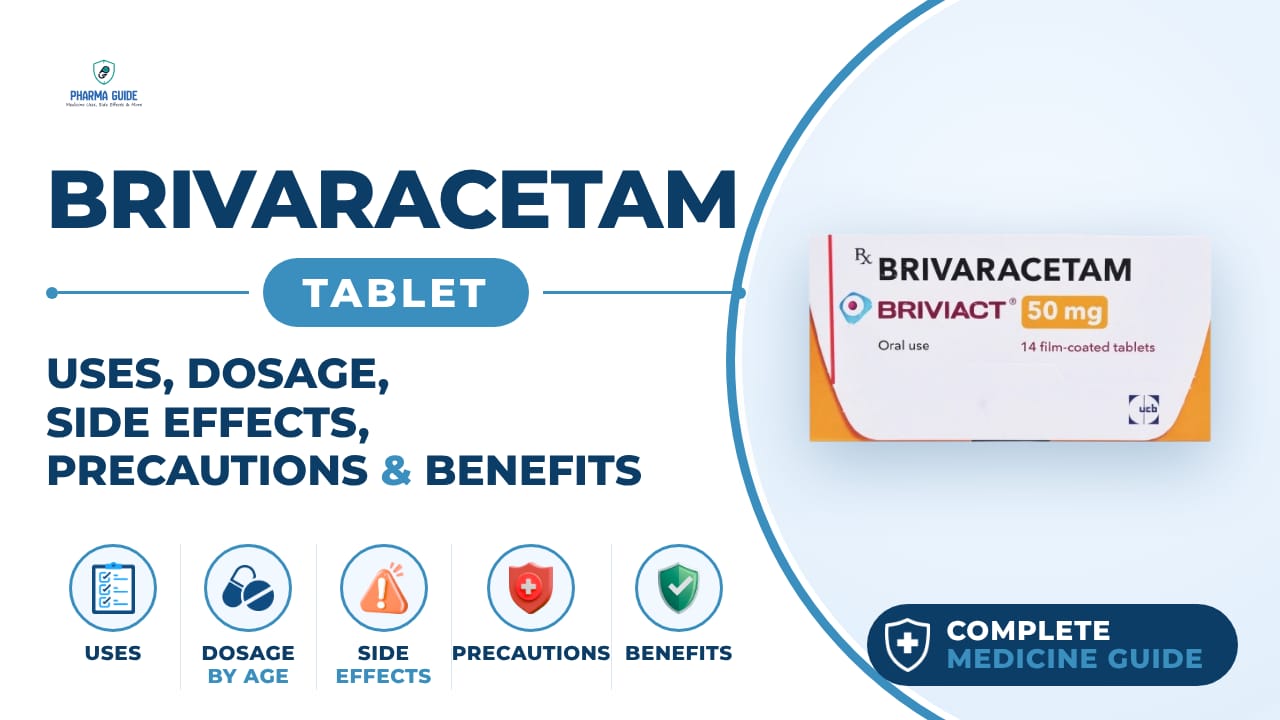
| Generic name | brivaracetam |
|---|---|
| Drug class | Pyrrolidine anticonvulsant (SV2A ligand) |
| Forms | Oral tablet, Oral solution, Injection for intravenous use |
Quick overview
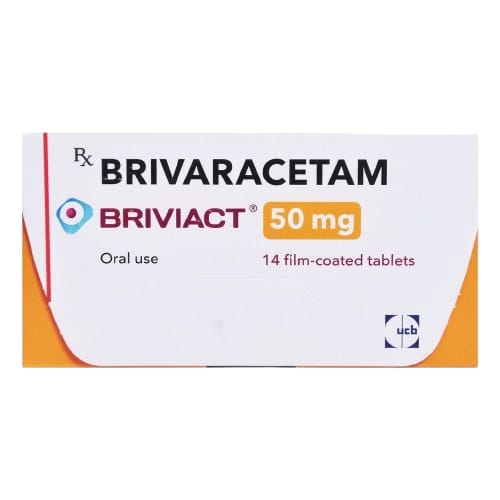
Brivaracetam Tablet (generic: brivaracetam) is a pyrrolidine-class anticonvulsant sold under the brand name Briviact. It is a prescription medicine used to treat partial-onset (focal) seizures in adults and children 1 month of age and older, often alongside other seizure medicines. It is also a federally controlled substance because it can be abused or lead to dependence.
What is Brivaracetam Tablet
Brivaracetam is a prescription anti-epileptic (anticonvulsant) medicine used to treat partial onset (focal) seizures. It is sold under the brand name Briviact and is also a federally controlled substance because it can be abused or lead to dependence.
Brivaracetam Tablet uses
- Treats partial-onset (focal) seizures in adults and children 1 month of age and older
- Often used together with other seizure medicines to improve seizure control
Benefits of Brivaracetam Tablet
- Helps control partial-onset seizures
- May reduce seizure frequency
- May help prevent seizures from spreading
- May improve daily activities when seizures are controlled
- Supports long-term seizure management
How Brivaracetam Tablet works
Brivaracetam works in the brain by attaching to a protein called SV2A that helps nerve cells communicate. This helps balance the brain's electrical activity and can stop the sudden bursts of electrical activity that cause seizures.
Brivaracetam Tablet dosage
Take the tablets with or without food. Swallow the tablets whole with a liquid; do not split, chew, or crush them. Take the medicine at around the same times every day, usually twice a day. Keep taking the medicine even if you feel well; it controls seizures but does not cure the condition. Do not stop taking this medicine suddenly without talking to your doctor, since stopping suddenly can cause seizures that will not stop. If you miss a dose, take it as soon as you remember, but skip it if it is almost time for your next dose; do not take two doses at once.
| Age group | Dose |
|---|---|
| Under 18 years | Not recommended |
| 18–64 years | 50 mg, twice/day |
| 65+ years | 50 mg, twice/day |
Available forms and strengths
- Oral tablet
- Oral solution
- Injection for intravenous use
Side effects of Brivaracetam Tablet
Common
- Sleepiness (somnolence)
- Dizziness
- Feeling tired (fatigue)
- Nausea and vomiting
- Constipation
Serious
- Suicidal thoughts or actions
- New or worsening depression, anxiety, agitation, or irritability
- Aggressive, angry, or violent behavior
- Hallucinations or delusions (psychotic symptoms)
- Serious allergic reaction: swelling of face, lips, tongue, or throat; difficulty breathing
- Severe skin reactions such as Stevens-Johnson syndrome or toxic epidermal necrolysis (rash with blistering or peeling skin, sores in the mouth)
- Problems with balance and coordination
- Seizures that will not stop (status epilepticus) if the medicine is stopped suddenly
Warnings and precautions
- This medicine can increase the risk of suicidal thoughts or actions, even in a small number of people. Watch for new or worsening depression, anxiety, agitation, or unusual changes in mood or behavior.
- Do not stop taking this medicine suddenly without talking to your doctor first, because this can cause seizures that do not stop.
- This medicine can cause serious skin reactions, including rash with blistering or peeling skin. Stop the medicine and get medical help right away if this happens.
- This medicine can cause serious allergic reactions, including swelling of the face, lips, tongue, or throat, and trouble breathing.
- This medicine can be habit-forming and is a controlled substance; do not take more than prescribed, and do not share it with others.
- It is not known if this medicine will harm an unborn baby. Tell your doctor right away if you become pregnant, and do not start or stop the medicine on your own since seizure control is important during pregnancy.
- This medicine passes into breast milk. Talk to your doctor about the best way to feed your baby if you are taking this medicine.
- No dose change is usually needed for mild to moderate kidney problems, but this medicine is not recommended for people on dialysis because it hasn't been studied in that group.
- People with liver problems may need a lower dose because the body processes the drug differently, leading to higher levels in the blood.
- Ask your doctor about drinking alcohol while taking this medicine, since alcohol can make side effects like drowsiness and impaired coordination worse.
- Do not drive or operate machinery until you know how this medicine affects you, since it can cause drowsiness, dizziness, and problems with coordination.
Storage
- Store at room temperature away from moisture and heat
- Keep the medication in the container it came in, tightly closed, and out of reach of children
- Do not store in the bathroom
- Dispose of unneeded medication through a medicine take-back program rather than flushing it down the toilet
When to see a doctor
- Call your doctor right away if you have thoughts of suicide or dying, new or worse depression, feel agitated or restless, have trouble sleeping, feel unusually aggressive or angry, or notice any other unusual changes in mood or behavior
- Get emergency medical help right away if you have signs of a serious allergic reaction, such as swelling of your face, lips, tongue, or throat, or difficulty breathing
- Call your doctor right away if you develop a rash, skin blistering, sores in the mouth, or hives, since this could be a sign of a serious skin reaction
- If you take too much of this medicine, call your local poison control center or go to the nearest emergency room right away
Alternatives
- Oxcarbazepine
- Lacosamide
- Levetiracetam
Watch the video
FAQs
What is Brivaracetam Tablet used for?
It is used to treat partial-onset (focal) seizures in adults and children 1 month of age and older, often alongside other seizure medicines.
How should I take Brivaracetam Tablet?
Take the tablets with or without food, swallowing them whole with a liquid. Do not split, chew, or crush them. Take the medicine at around the same times every day, usually twice a day.
What is the typical dose of Brivaracetam Tablet for adults?
For adults aged 18-64 and those 65 and older, the typical dose is 50 mg twice a day. It is not recommended for those under 18 years.
What are the common side effects of Brivaracetam Tablet?
Common side effects include sleepiness, dizziness, fatigue, nausea, vomiting, and constipation.
Can I stop taking Brivaracetam Tablet suddenly?
No, you should not stop taking this medicine suddenly without talking to your doctor, as it can cause seizures that will not stop.
General information, not medical advice
Your prescriber and the leaflet in your pack know your situation. This page does not.
- Follow your prescriber and the leaflet
- Don't start, stop, or change a dose on your own
- Doses and warnings differ by country and product
Sources
Video
Related medicines

Injectafer Injection: Uses, Dosage, Side Effects, Precautions and Alternates
Iron products
Injectafer (ferric carboxymaltose) treats iron deficiency anemia and heart failure-related iron deficiency via IV. Learn uses, dosage, side effects, and

Gliclazide Tablet: Uses, Dosage, Side Effects, Precautions and Alternates
Sulfonylurea (hypoglycemic/antidiabetic agent)
Gliclazide Tablet is a sulfonylurea for type 2 diabetes that boosts insulin release. Learn about dosage, side effects, warnings, and precautions.