
Safety
General information, not medical advice
Your prescriber and the leaflet in your pack know your situation. This page does not.
- Follow your prescriber and the leaflet
- Don't start, stop, or change a dose on your own
- Doses and warnings differ by country and product
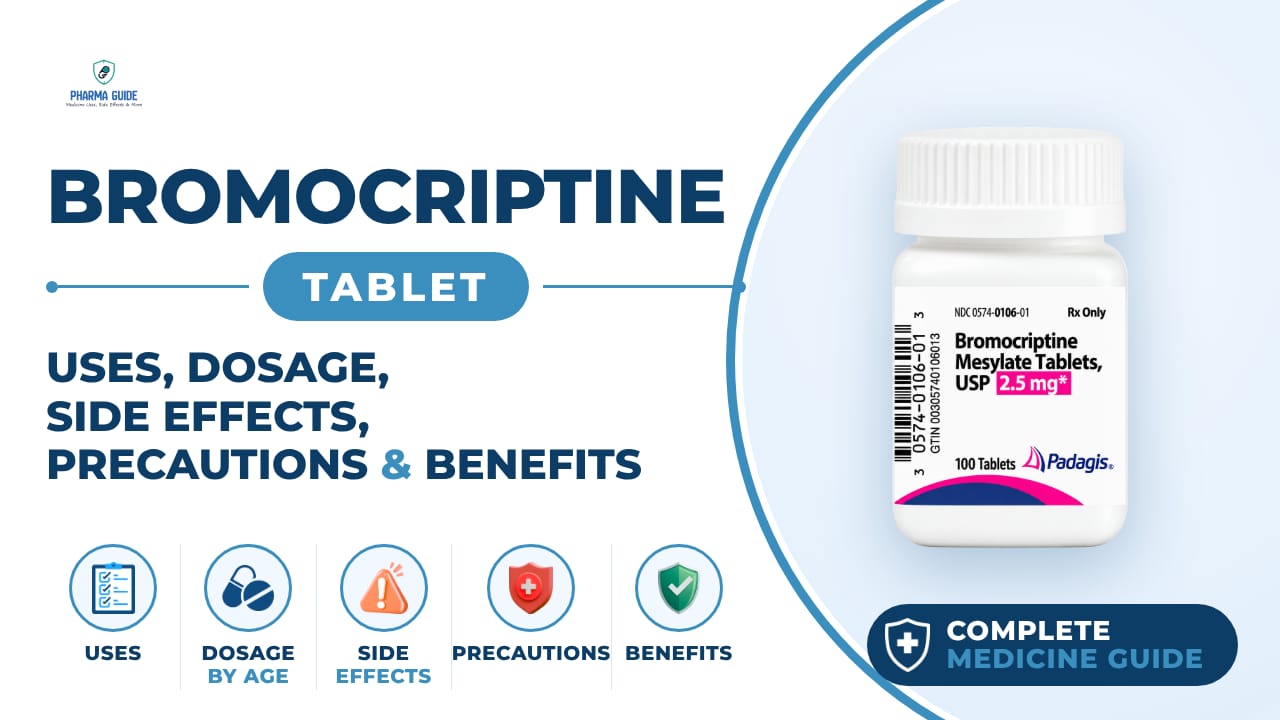
Bromocriptine Tablet: Uses, Dosage, Side Effects, Precautions and Alternates
| Generic name | Bromocriptine mesylate |
|---|---|
| Drug class | Ergot derivative / dopamine receptor agonist |
| Forms | Oral tablet, Capsule |
Quick overview
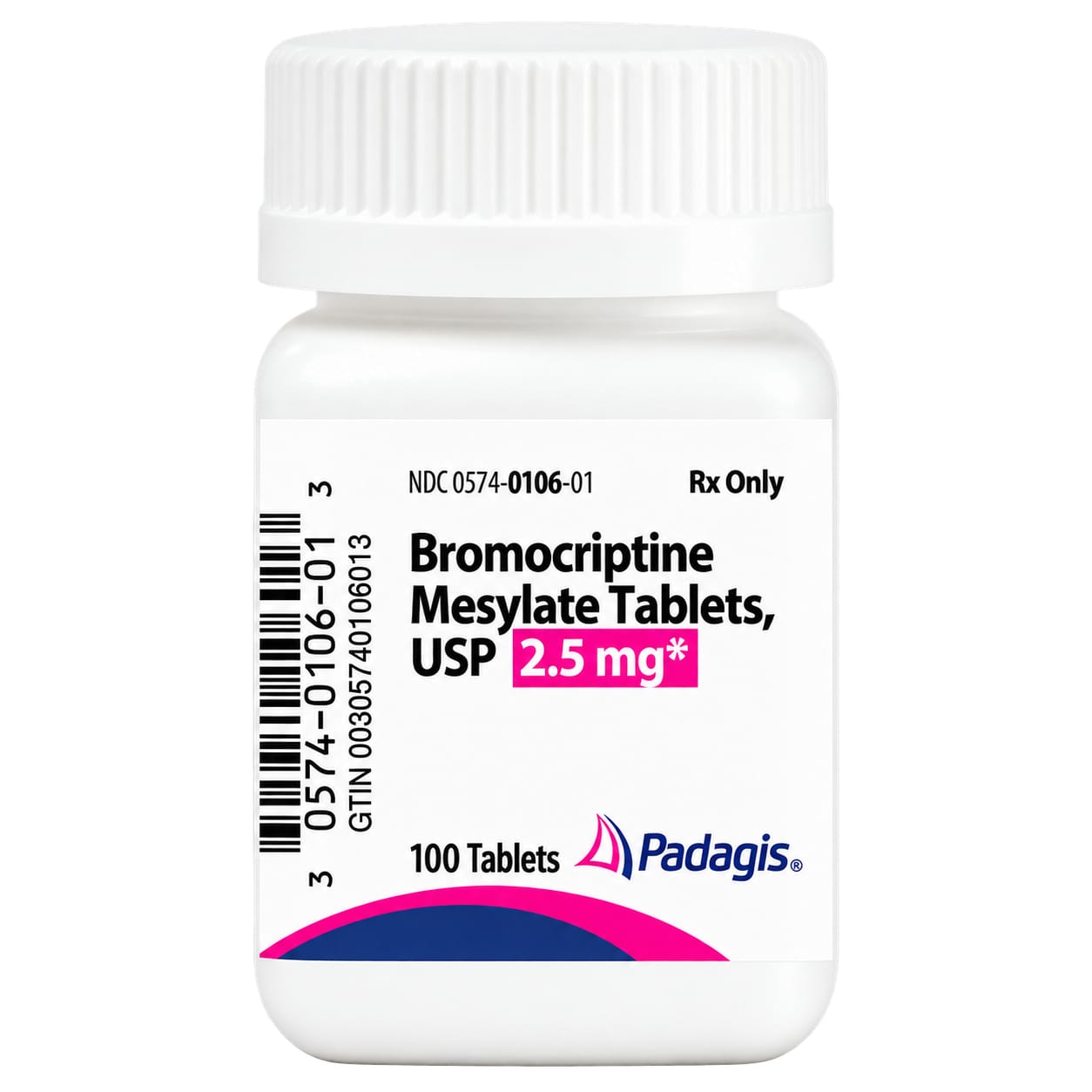
Bromocriptine Tablet (bromocriptine mesylate) is a prescription ergot derivative and dopamine receptor agonist taken by mouth. It is available as the brand-name drugs Parlodel and Cycloset, as well as a generic, and is often used along with other medications, surgery, or radiation. It is used for Parkinson's disease, conditions caused by high prolactin levels, prolactin-producing pituitary tumors, acromegaly, and blood sugar management in type 2 diabetes (Cycloset).
What is Bromocriptine Tablet
Bromocriptine is a prescription tablet taken by mouth. It is available as the brand-name drugs Parlodel and Cycloset, and also as a generic drug. It is often used along with other medications, or with surgery or radiation, to treat certain conditions.
Bromocriptine Tablet uses
- Helps reduce symptoms of Parkinson's disease (does not cure it)
- Treats conditions caused by high levels of the hormone prolactin, including lack of menstrual periods, nipple discharge, infertility, and hypogonadism
- Can help shrink prolactin-producing pituitary tumors
- Treats acromegaly, a condition caused by too much growth hormone in the body
- Helps manage blood sugar levels in people with type 2 diabetes (Cycloset brand)
Benefits of Bromocriptine Tablet
- Reduces excess prolactin levels, which helps restore menstrual cycles and reduce milk production problems
- Lowers growth hormone levels in acromegaly
- Stimulates brain receptors involved in movement, helping ease Parkinson's disease symptoms
- Helps control blood sugar in type 2 diabetes
How Bromocriptine Tablet works
Bromocriptine acts like dopamine, a brain chemical involved in movement and hormone control. This lowers prolactin and growth hormone levels, and in diabetes helps the body use blood sugar more effectively.
Bromocriptine Tablet dosage
Take with food, as this can help reduce nausea. Take at the time(s) of day recommended by your doctor; this depends on the condition being treated. For hyperprolactinemia, it is usually taken once a day with food. For acromegaly, it is usually taken once a day at bedtime with food. For Parkinson's disease, it is usually taken twice a day with meals. Cycloset is usually taken once a day with food within 2 hours of waking in the morning.
Take at around the same time(s) every day, following your prescription label exactly. The tablet can be cut or crushed. Do not stop taking this medicine suddenly without talking to your doctor, as this can cause withdrawal symptoms or worsen your condition.
If you miss a dose, take it as soon as you remember, but if it is almost time for your next dose, skip the missed dose and continue your regular schedule — never take two doses at once.
| Age group | Dose |
|---|---|
| Under 11 years | Safety and effectiveness are not established for the labeled indications |
| 11–17 years | For prolactin-secreting adenomas: start 1.25–2.5 mg once daily; usual recommended range 2.5–10 mg/day, specialist-directed |
| 18–64 years | For hyperprolactinemia: start 1.25–2.5 mg once daily; usual range 2.5–15 mg/day |
| 65–74 years | No specific age-based adjustment; usually individualized cautiously based on condition and tolerance |
Available forms and strengths
- Oral tablet
- Capsule
Side effects of Bromocriptine Tablet
Common
- Nausea
- Headache
- Stomach upset
- Dizziness or lightheadedness
- Drowsiness
- Feeling faint or fainting
- Suddenly falling asleep
- Vomiting
- Diarrhea
- Constipation
- Stomach cramps
- Heartburn
- Loss of appetite
- Weakness
- Tiredness
- Difficulty falling asleep or staying asleep
- Depression
- Runny or stuffy nose
Serious
- Heart attack (chest pain, shortness of breath, discomfort in upper body, pain in arms, back, neck or jaw)
- Stroke (weakness in one part or side of the body, slurred speech, trouble walking, confusion, severe headache, changes in vision)
- Pulmonary fibrosis or lung scarring (trouble breathing, cough, tiredness, unexplained weight loss, aching muscles or joints, changes in shape of fingers or toes)
- Seizures
- Watery nasal discharge
- Numbness, tingling, or pain in fingers, especially in cold weather
- Black and tarry stools, bloody vomit, or vomit that looks like coffee grounds
- Swelling of the feet, ankles, or lower legs
- Hallucinations (seeing or hearing things that aren't there)
- Allergic reaction (skin rash, swelling of the tongue or throat, itching, hives)
- Intense urges to gamble, spend money, binge-eat, or increased sexual urges that are hard to control
- High blood pressure, especially after recently giving birth
Warnings and precautions
- Talk with your doctor if you are pregnant or planning to become pregnant. Bromocriptine (Parlodel) should usually be stopped once pregnancy is diagnosed, though in some cases your doctor may decide to continue it to control a tumor. Serious birth defects can occur if you take this medication during pregnancy without medical guidance.
- This medicine should not be used while breastfeeding, as it may pass into breast milk and cause side effects in the nursing child.
- It isn't known how safe or effective this medicine is for people with kidney disease. Talk with your doctor about whether it's safe for you.
- It isn't known how safe or effective this medicine is for people with liver disease, and liver problems may cause the drug to build up in the body. Talk with your doctor about whether it's safe for you.
- Drinking alcohol while taking this medicine can make drowsiness and dizziness worse. Ask your doctor about safe alcohol use while taking this drug.
- This medicine can cause sudden drowsiness or make you fall asleep without warning. Do not drive or operate machinery until you know how it affects you.
- When you first start taking this medicine, you may have drops in blood pressure that cause dizziness or fainting, especially when standing up after sitting or lying down. Move slowly when changing positions to help prevent this.
- In rare cases, this medicine can cause heart attack, stroke, or seizures. This risk may be higher in women who have just given birth and are taking the drug to reduce milk production, or in people with poorly controlled high blood pressure.
- This medicine may cause intense urges to gamble, spend money uncontrollably, binge-eat, or have increased sexual urges that are hard to control. Tell your doctor right away if this happens.
- If you have recently given birth, you should not take this medicine, as it can cause serious and life-threatening problems including high blood pressure, heart attack, seizures, stroke, and psychosis.
- Do not take this medicine again if you've ever had an allergic reaction to it, as doing so could be fatal.
- People with a history of psychosis, cardiovascular disease, or certain sugar intolerances (such as galactose intolerance or severe lactase deficiency) should discuss the risks of this medicine with their doctor, as it may worsen these conditions or should not be used at all.
Storage
Keep this medication in the container it came in, tightly closed, and out of reach of children. Store it at room temperature and away from light, excess heat, and moisture (not in the bathroom).
Dispose of unneeded medications in a way so that pets, children, and other people cannot take them. Do not flush this medication down the toilet. Use a medicine take-back program.
Store at room temperature between 20 and 25 degrees C (68 and 77 degrees F). Protect from light. Keep container tightly closed. Get rid of any unused medication after the expiration date.
When to see a doctor
- Get emergency help right away if you have symptoms of a heart attack, such as chest pain, shortness of breath, or discomfort in your upper body.
- Get emergency help right away if you have symptoms of a stroke, such as weakness on one side of the body or slurred speech.
- Call your doctor right away if you have signs of lung scarring, such as trouble breathing, cough, tiredness, unexplained weight loss, aching joints, or changes in the shape of your fingers or toes.
- Call your doctor or local poison control center right away if you have an allergic reaction with skin rash or swelling of the tongue or throat. If symptoms are severe, get emergency help immediately.
- If you think you've taken too much of this medicine, contact poison control or your doctor right away. Get emergency help immediately if symptoms are severe.
- Call your doctor if you develop new or worsening intense urges to gamble, spend money, or engage in sexual activity that are hard to control.
- Call your doctor immediately if you have fainting, severe headache, blurred vision, slow or difficult speech, weakness or numbness in an arm or leg, chest pain, or seizures.
Alternatives
- Cabergoline
- Quinagolide where available
- Pramipexole
Watch the video
FAQs
What is Bromocriptine Tablet used for?
It is used to reduce Parkinson's disease symptoms, treat conditions caused by high prolactin levels, shrink prolactin-producing pituitary tumors, treat acromegaly, and help manage blood sugar in type 2 diabetes (Cycloset brand).
How should I take Bromocriptine Tablet?
Take it with food to help reduce nausea, at the time of day recommended by your doctor based on your condition. For hyperprolactinemia it's usually once daily with food, for acromegaly once daily at bedtime with food, for Parkinson's disease twice daily with meals, and Cycloset once daily within 2 hours of waking.
What are the common side effects of Bromocriptine Tablet?
Common side effects include nausea, headache, stomach upset, dizziness, drowsiness, fainting, vomiting, diarrhea, constipation, stomach cramps, heartburn, loss of appetite, weakness, tiredness, trouble sleeping, depression, and runny or stuffy nose.
Can I take Bromocriptine Tablet while pregnant or breastfeeding?
Bromocriptine should usually be stopped once pregnancy is diagnosed, though in some cases a doctor may continue it to control a tumor. Serious birth defects can occur if taken during pregnancy without medical guidance, and it should not be used while breastfeeding since it may pass into breast milk.
What serious risks are linked to Bromocriptine Tablet?
Serious risks include heart attack, stroke, pulmonary fibrosis, seizures, hallucinations, allergic reactions, intense urges to gamble or spend money, and high blood pressure, especially in women who have recently given birth.
General information, not medical advice
Your prescriber and the leaflet in your pack know your situation. This page does not.
- Follow your prescriber and the leaflet
- Don't start, stop, or change a dose on your own
- Doses and warnings differ by country and product
Sources
Video
Related medicines

Injectafer Injection: Uses, Dosage, Side Effects, Precautions and Alternates
Iron products
Injectafer (ferric carboxymaltose) treats iron deficiency anemia and heart failure-related iron deficiency via IV. Learn uses, dosage, side effects, and

Gliclazide Tablet: Uses, Dosage, Side Effects, Precautions and Alternates
Sulfonylurea (hypoglycemic/antidiabetic agent)
Gliclazide Tablet is a sulfonylurea for type 2 diabetes that boosts insulin release. Learn about dosage, side effects, warnings, and precautions.