
Safety
General information, not medical advice
Your prescriber and the leaflet in your pack know your situation. This page does not.
- Follow your prescriber and the leaflet
- Don't start, stop, or change a dose on your own
- Doses and warnings differ by country and product
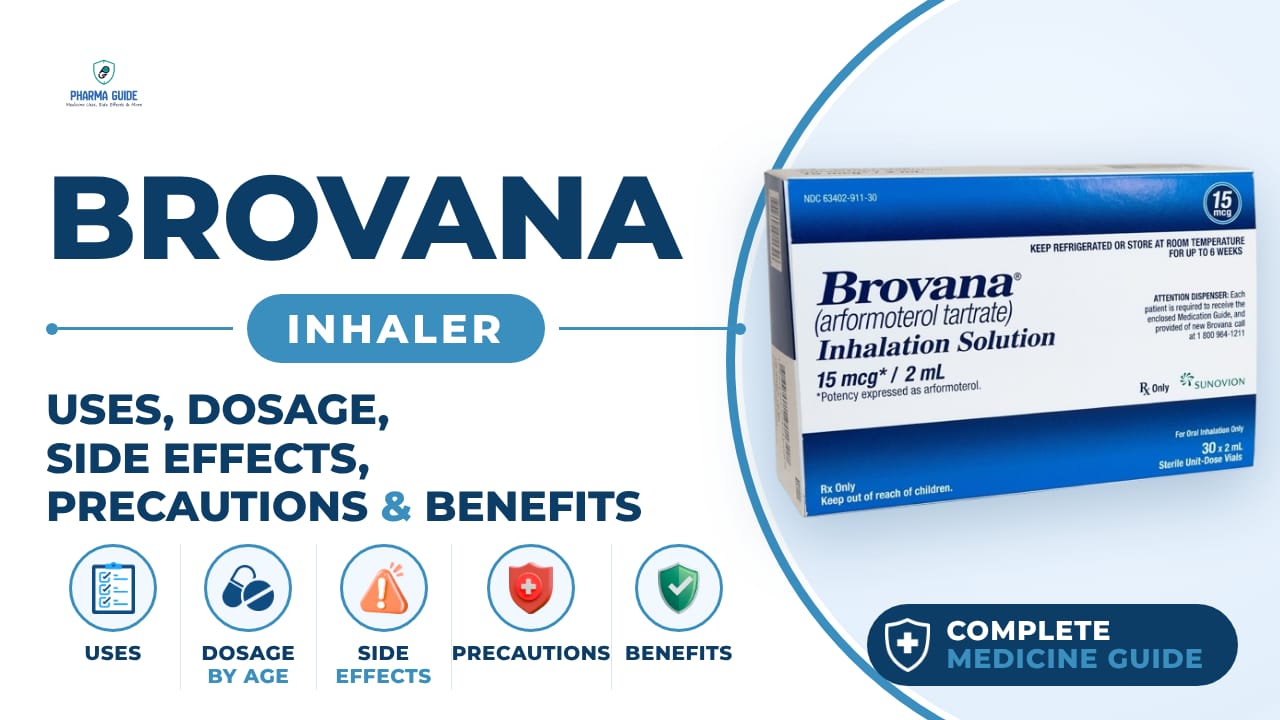
Brovana Inhaler: Uses, Dosage, Side Effects, Precautions and Alternates
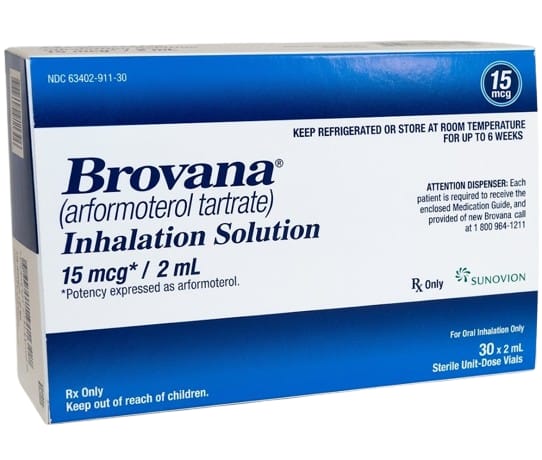
| Generic name | arformoterol tartrate |
|---|---|
| Drug class | Long-acting beta2-adrenergic agonist (LABA) |
| Forms | Inhalation solution (liquid) for use in a jet nebulizer, in single-use vials |
Quick overview
Brovana Inhaler (arformoterol tartrate) is a long-acting beta2-adrenergic agonist used for the long-term treatment of chronic obstructive pulmonary disease (COPD), including chronic bronchitis and emphysema. It is a liquid solution breathed in through a nebulizer and is not approved for asthma, sudden breathing attacks, or use in children. It works gradually to relax airway muscles, keeping airways open for more than 12 hours.
What is Brovana Inhaler
Brovana is a brand-name prescription medicine used for the long-term treatment of chronic obstructive pulmonary disease (COPD), which includes chronic bronchitis and emphysema. It is a liquid solution that you breathe in through a nebulizer. It is not used for sudden breathing attacks and is not approved for asthma or for use in children.
Brovana Inhaler uses
- Chronic obstructive pulmonary disease (COPD)
- Chronic bronchitis associated with COPD
- Emphysema associated with COPD
- Long-term maintenance of airway opening
- Ongoing management of COPD-related breathing difficulties
Benefits of Brovana Inhaler
- Helps relax airway muscles so breathing becomes easier
- Improves lung function (measured by FEV1) compared to placebo
- Can improve breathing and keep airways relaxed for more than 12 hours
- May lower the chance of hospital stays from worsening COPD symptoms
How Brovana Inhaler works
Brovana relaxes the muscles around your airways so they open up and stay open, making it easier to breathe. It works over a long period rather than acting quickly.
Brovana Inhaler dosage
Use Brovana only by breathing it in through a jet nebulizer connected to an air compressor; never swallow or inject it. Take one dose in the morning and one dose in the evening, about 12 hours apart. Do not use it to treat sudden breathing problems; keep a fast-acting rescue inhaler on hand for that. Each treatment takes about 5 to 10 minutes to breathe in fully.
You can use a face mask or a mouthpiece; with a mask you can breathe through your nose or mouth, but with a mouthpiece you must breathe through your mouth. Do not mix Brovana with other medicines in the nebulizer.
If you miss a dose, skip it and take your next dose at the regular time; do not use two doses at once. Do not stop using Brovana suddenly without talking to your doctor, as this may make your condition worse. Brovana is not approved for use in anyone younger than 18 years old.
| Age group | Dose |
|---|---|
| Under 18 years | Not recommended |
| 18–64 years | 15 mcg, twice/day |
| 65+ years | 15 mcg, twice/day |
Available forms and strengths
- Inhalation solution (liquid) for use in a jet nebulizer, in single-use vials
Side effects of Brovana Inhaler
Common
- Pain, including chest or back pain
- Diarrhea
- Leg cramps
- Shortness of breath
- Skin rash
- Sinus congestion or stuffy nose
- Flu-like symptoms, such as fever
- Lung or chest congestion
- Swelling in the legs or arms
Serious
- Allergic reactions: hives, swelling of the face, lips, tongue, or throat, trouble breathing
- Heart-related effects: increased blood pressure or heart rate, chest pain, irregular heartbeat
- Sudden worsening trouble breathing (bronchospasm) right after using the medicine
- High blood sugar (hyperglycemia): increased thirst, frequent urination, dry mouth, feeling tired
- Low potassium levels (hypokalemia): muscle cramps, weakness, irregular heartbeat, tingling or numbness
- Bronchitis (lung infection): cough with mucus, tiredness, fever
- Peripheral edema: swelling and warmth or tightness in arms or legs
Warnings and precautions
- Long-acting beta2-agonist medicines like Brovana may increase the risk of asthma-related death; Brovana should never be used to treat asthma.
- Brovana is not a rescue medicine and will not work fast enough to treat a sudden bronchospasm attack.
- Brovana should not be started in people whose COPD is quickly getting worse, since this can be a life-threatening situation.
- Do not use Brovana together with any other long-acting beta2-agonist medicine, as this raises the risk of serious side effects.
- Using more than the recommended dose of Brovana can cause life-threatening side effects, including possible heart attack or death.
- Brovana can sometimes cause a sudden worsening of breathing (paradoxical bronchospasm) that can be life-threatening; stop the medicine right away if this happens.
- It is not known if Brovana is safe during pregnancy. Studies in animals at very high doses showed some birth defects and developmental problems, but there are no adequate studies in pregnant women. It should be used during pregnancy only if the benefit outweighs the risk, and should not be used during labor unless your doctor says to.
- It is not known if Brovana passes into human breast milk. It was found in milk in an animal study. Talk to your doctor before using Brovana if you are breastfeeding.
- No dose adjustment is needed for kidney problems, since drug levels were similar in people with kidney impairment compared to those without it.
- Brovana is broken down by the liver, so people with liver problems may process it more slowly and should be watched closely by their doctor, even though no dose change is required.
- There are no known interactions between Brovana and alcohol, but drinking alcohol may raise the risk of lung infections like pneumonia and may increase the risk of sudden breathing trouble. Ask your doctor how much alcohol is safe for you during treatment.
Storage
- Store Brovana in the refrigerator between 36°F and 46°F (2° to 8°C)
- Protect the medication from heat and light, and keep it in the foil pouch until ready to use
- After opening the foil pouch, put unused vials back into the pouch and store them there
- Use opened vials right away
- Unopened foil pouches can be stored at room temperature (68°F to 77°F / 20°C to 25°C) for a maximum of 6 weeks
- If kept at room temperature and not used within 6 weeks, throw out the medication
- Do not use if the solution is not clear and colorless
- Do not use after the expiration date on the label
- Dispose of unused medicine safely to prevent children, pets, or others from taking it by accident
When to see a doctor
- Get emergency help right away if you have signs of a serious allergic reaction, such as hives, trouble breathing, or swelling of the face, lips, tongue, or throat.
- Call your doctor right away if you have tremors, nervousness, chest pain, or fast or pounding heartbeats.
- Call your doctor if you have wheezing, choking, or other breathing problems after using this medicine, or if your breathing problems get worse.
- Seek medical attention if your breathing problems get worse quickly or if you think your medications are not working as well as before.
- Watch for signs of high blood sugar, such as increased thirst, more frequent urination, dry mouth, or a fruity breath odor, and tell your doctor.
- Watch for signs of low potassium, such as leg cramps, constipation, irregular heartbeats, fluttering in the chest, numbness or tingling, or muscle weakness, and tell your doctor.
- If you think you've taken too much Brovana, get emergency medical help or call a poison control center right away, since an overdose can be fatal.
Alternatives
- Foradil
- Serevent
- Perforomist
Watch the video
FAQs
What is Brovana Inhaler used for?
Brovana is a prescription medicine used for the long-term treatment of chronic obstructive pulmonary disease (COPD), including chronic bronchitis and emphysema. It is not used for asthma, sudden breathing attacks, or in children.
How is Brovana Inhaler used?
Brovana is a liquid solution breathed in through a jet nebulizer connected to an air compressor, taken once in the morning and once in the evening, about 12 hours apart. Each treatment takes about 5 to 10 minutes.
What is the dosage of Brovana for adults?
Adults aged 18 to 64 and those 65 and older take 15 mcg twice a day. Brovana is not recommended for anyone younger than 18 years old.
What are the serious side effects of Brovana Inhaler?
Serious side effects include allergic reactions, heart-related effects like increased blood pressure or irregular heartbeat, sudden worsening breathing trouble, high blood sugar, low potassium levels, bronchitis, and peripheral edema.
How should Brovana Inhaler be stored?
Brovana should be stored in the refrigerator between 36°F and 46°F, protected from heat and light in its foil pouch. Unopened pouches can be kept at room temperature for up to 6 weeks, and opened vials should be used right away.
General information, not medical advice
Your prescriber and the leaflet in your pack know your situation. This page does not.
- Follow your prescriber and the leaflet
- Don't start, stop, or change a dose on your own
- Doses and warnings differ by country and product
Sources
Video
Related medicines

Injectafer Injection: Uses, Dosage, Side Effects, Precautions and Alternates
Iron products
Injectafer (ferric carboxymaltose) treats iron deficiency anemia and heart failure-related iron deficiency via IV. Learn uses, dosage, side effects, and

Gliclazide Tablet: Uses, Dosage, Side Effects, Precautions and Alternates
Sulfonylurea (hypoglycemic/antidiabetic agent)
Gliclazide Tablet is a sulfonylurea for type 2 diabetes that boosts insulin release. Learn about dosage, side effects, warnings, and precautions.