
Safety
General information, not medical advice
Your prescriber and the leaflet in your pack know your situation. This page does not.
- Follow your prescriber and the leaflet
- Don't start, stop, or change a dose on your own
- Doses and warnings differ by country and product
Brufen Tablet: Uses, Dosage, Side Effects, Precautions and Alternates
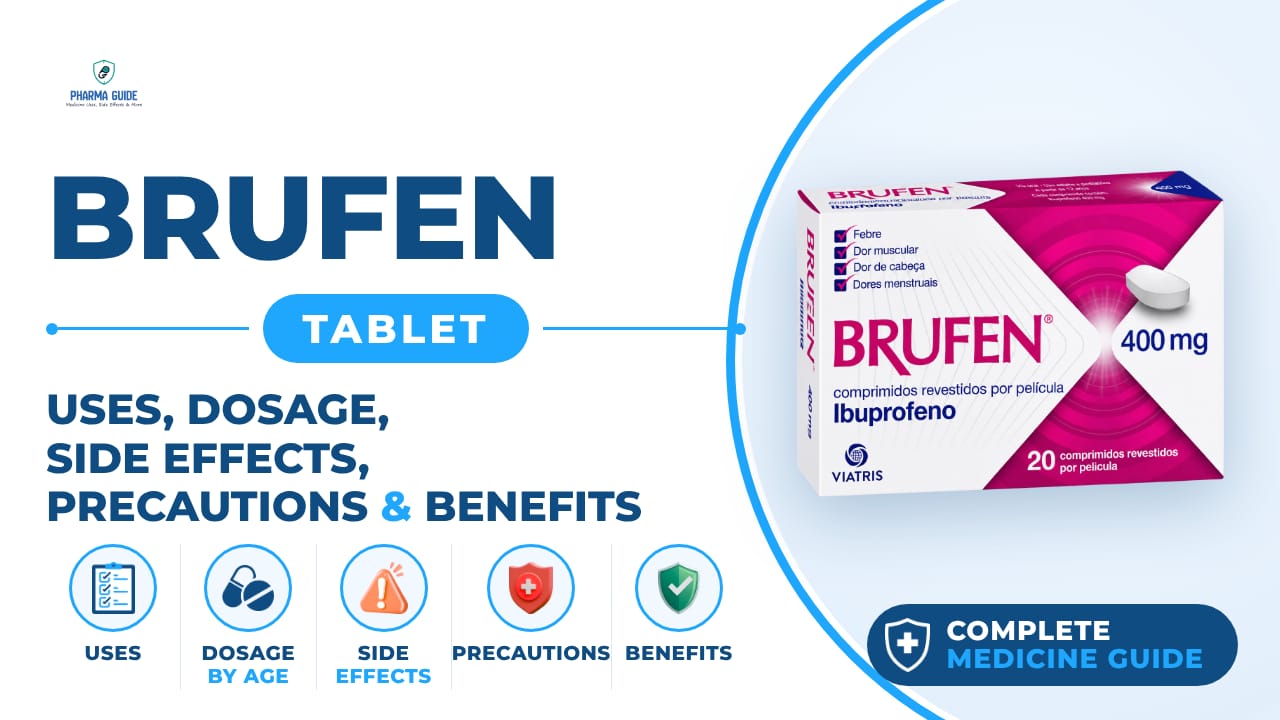
| Generic name | Ibuprofen |
|---|---|
| Drug class | NSAID (non-steroidal anti-inflammatory drug) |
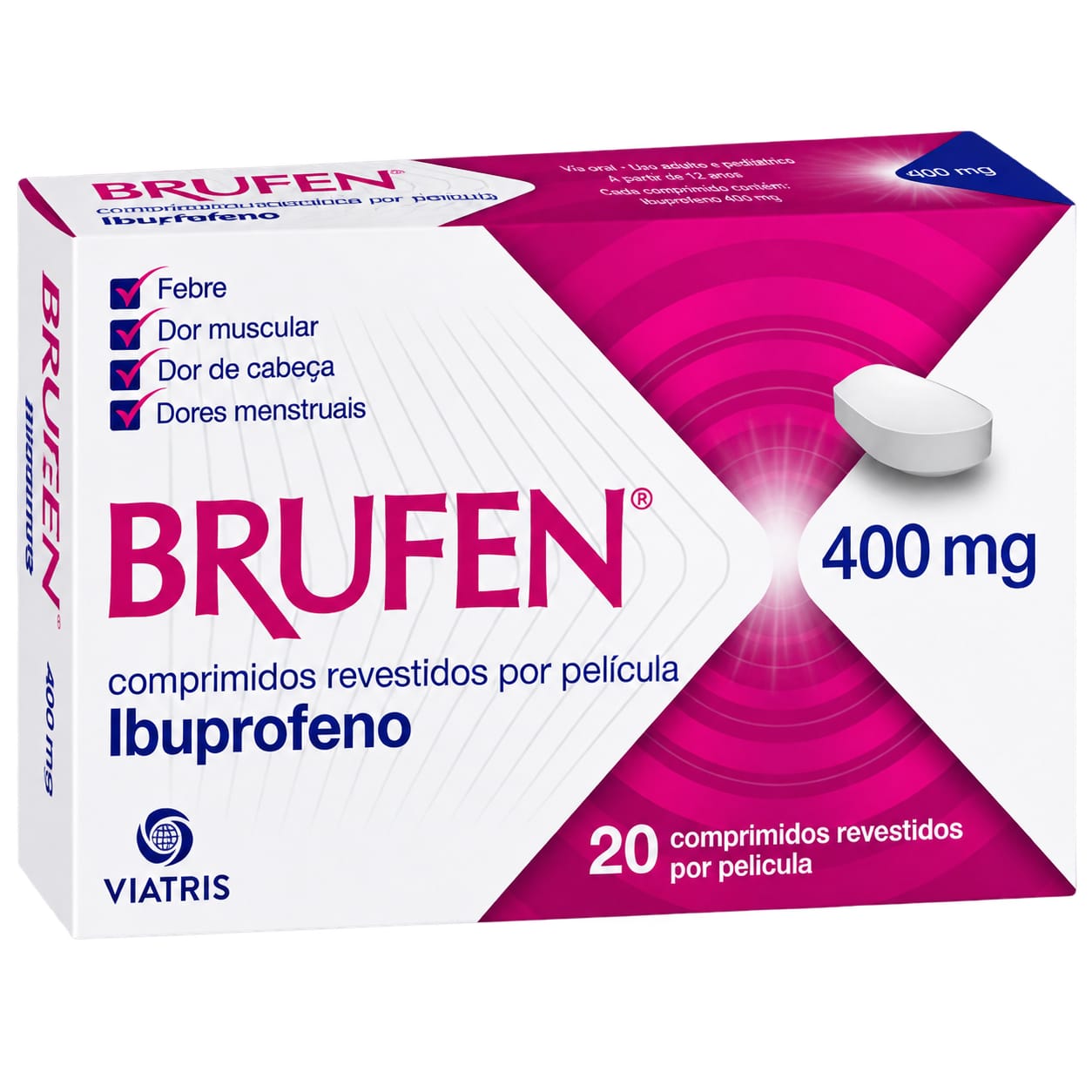
| Forms | Film-coated tablet |
Quick overview
Brufen Tablet contains ibuprofen, a non-steroidal anti-inflammatory drug (NSAID) that relieves pain, reduces inflammation and can lower fever. It is used for conditions such as headaches, muscle and bone injuries, arthritis and period pain, among others. While it eases symptoms, it does not cure the underlying condition. It should be used exactly as directed, with attention to important warnings around the stomach, kidneys, liver, heart and pregnancy.
What is Brufen Tablet
Brufen contains the active ingredient ibuprofen and belongs to a group of medicines called non-steroidal anti-inflammatory drugs (NSAIDs). It relieves pain and reduces inflammation (swelling, redness or soreness), and it can also lower fever. Although it eases symptoms, it does not cure your condition.
Brufen Tablet uses
- Headaches, including migraine headache
- Muscle and bone injuries such as sprains and strains
- Lower back pain
- Dental pain
- Menstrual cramps (period pain)
- Pain after surgery or operations
- Different types of arthritis, including rheumatoid arthritis, osteoarthritis and juvenile rheumatoid arthritis
- Ankylosing spondylitis
- Frozen shoulder, bursitis, tendonitis and tenosynovitis
- Fever (high temperature)
Benefits of Brufen Tablet
- Relieves pain and reduces inflammation
- Helps control pain, swelling and stiffness in arthritis
- Lowers fever
- Helps you feel more comfortable
How Brufen Tablet works
Ibuprofen works by blocking an enzyme called cyclo-oxygenase, which lowers the amount of prostaglandins your body makes. Prostaglandins are chemicals that cause inflammation and pain, so reducing them eases pain and swelling.
Brufen Tablet dosage
Take Brufen with or straight after food with a full glass of water; this may help reduce the chance of an upset stomach. Swallow the tablets whole with plenty of fluid; do not chew, break, crush or suck them, to avoid mouth and throat irritation. Take the exact amount your doctor tells you to, no more and no less, and take it regularly at the same time each day. Do not take Brufen for longer than your doctor tells you to.
If you miss a dose, take it as soon as you remember; if it is almost time for your next dose, skip the missed dose. Do not take a double dose to make up for a missed one. Brufen usually begins to work within a few hours, but it may take several weeks to feel the full effect. Tablets are not suitable for children under 12 years of age.
| Age group | Dose |
|---|---|
| Under 12 years | Tablet dosing is generally not preferred; use a child-specific formulation and weight-based dose under medical guidance |
| 12–17 years | 200–400 mg every 4–6 hours as needed; maximum usually 1,200 mg/day for OTC use |
| 18–64 years | 200–400 mg every 4–6 hours as needed; maximum 1,200 mg/day for OTC use |
| 65+ years | 200–400 mg every 4–6 hours when appropriate; use the lowest effective dose and seek medical advice, especially for regular use |
Available forms and strengths
- Film-coated tablet
Side effects of Brufen Tablet
Common
- Nausea or vomiting
- Loss of appetite
- Heartburn or pain in the upper stomach
- Indigestion (dyspepsia)
- Diarrhoea, constipation, wind (flatulence) or cramps
- Headache
- Dizziness
- Drowsiness or sleepiness
- Rash
- Fatigue
- Buzzing or ringing in the ears
Serious
- Severe pain or tenderness in the stomach
- Vomiting blood or material that looks like coffee grounds
- Bleeding from the back passage, black sticky stools or bloody diarrhoea
- Unusual bruising or bleeding, or reddish/purplish blotches under the skin
- Signs of anaemia such as tiredness, breathlessness and looking pale
- Yellowing of the skin or eyes (jaundice)
- Swelling of the face, lips or tongue causing difficulty swallowing or breathing
- Asthma, wheezing or shortness of breath
- Severe blisters and bleeding of the lips, eyes, mouth, nose and genitals (Stevens-Johnson syndrome)
- Fever with stiff neck, headache, nausea and vomiting (aseptic meningitis)
- Eye problems such as blurred vision or sore red eyes
- Fast or irregular heartbeats (palpitations)
- Signs of frequent or worrying infection such as fever, chills or sore throat
- Small increased risk of heart attack or stroke, especially at high doses
Warnings and precautions
- Do not take Brufen if you are allergic to ibuprofen or to aspirin or any other NSAID medicine. Do not take Brufen if you have a stomach or duodenal ulcer, a history of ulcers, or have vomited blood or had bleeding from the back passage. Do not take Brufen if you have severe heart failure, severe liver disease or severe kidney disease. Do not take other pain or anti-inflammatory medicines (including aspirin, other NSAIDs or other ibuprofen products) while taking Brufen without first telling your doctor.
- Use the lowest effective dose for the shortest time needed. High doses (2400 mg a day) may carry a small increased risk of heart attack or stroke. Brufen may hide the signs of an infection, which could make you think you are better when you are not. Tell your doctor if you get an infection while taking it. Tablets are not suitable for children under 12 years of age.
- Like most NSAIDs, Brufen is not recommended during pregnancy. It may affect your developing baby and may impair female fertility. It must not be used in the last trimester of pregnancy. During the first and second trimesters it should only be used if clearly needed, at the lowest dose for the shortest time. Tell your doctor straight away if you become pregnant while taking it.
- Brufen passes into breast milk in very low amounts and may affect your baby. Like most NSAIDs, it should be avoided while breastfeeding if possible. Talk to your doctor if you are breastfeeding or plan to breastfeed.
- Brufen is contraindicated in patients with severe kidney disease. Use caution if you have impaired kidney function or are dehydrated, as Brufen can reduce blood flow to the kidneys and may cause kidney failure. The lowest effective dose should be used for the shortest time and kidney function monitored.
- Brufen is contraindicated in patients with severe liver disease. If liver function is impaired, the dose should be assessed individually and kept as low as possible for the shortest time.
- Tell your doctor if you drink alcohol. Brufen can cause dizziness, headache and stomach problems, and drinking alcohol while taking it might make these side effects worse.
- Brufen may cause dizziness or light-headedness, drowsiness or blurred vision in some people. If you have any of these symptoms, do not drive, operate machinery or do anything else that could be dangerous until you know how it affects you.
Storage
- Keep the tablets in a cool, dry place where the temperature stays below 25°C.
- Protect from moisture.
- Store in the original package.
- Do not store in the bathroom, near a sink, in the car or on window sills.
- Keep it where young children cannot reach it.
- If you no longer need the medicine or it is out of date, take it to any pharmacy for safe disposal.
- Do not use after the expiry date.
When to see a doctor
- If you think you have taken too much Brufen, get urgent medical help even if you feel well. Call your local poison control center, contact your doctor, or go to your nearest hospital emergency department.
- Stop taking Brufen and tell your doctor immediately or go to your nearest hospital emergency department if you notice very serious side effects such as vomiting blood, bleeding from the back passage, swelling of the face, lips or tongue, difficulty breathing, or severe skin blistering.
- Call your doctor straight away if you notice serious side effects such as severe stomach pain, bleeding or bruising easily, jaundice, or severe headache.
Alternatives
- Naproxen
- Diclofenac
- Aceclofenac
- Mefenamic Acid
- Piroxicam
- Ketorolac
- Paracetamol (Acetaminophen)
Watch the video
FAQs
What is Brufen Tablet used for?
Brufen is used for headaches, muscle and bone injuries, lower back pain, dental pain, period pain, pain after surgery, different types of arthritis, ankylosing spondylitis, frozen shoulder and fever.
How should I take Brufen Tablet?
Take Brufen with or straight after food with a full glass of water, swallowing tablets whole without chewing, breaking or crushing them. Take the exact dose your doctor advises, regularly at the same time each day, and not for longer than directed.
What is the dosage of Brufen for adults?
For adults aged 18-64, the usual dose is 200-400 mg every 4-6 hours as needed, with a maximum of 1,200 mg per day for OTC use.
What are the serious side effects of Brufen Tablet?
Serious side effects include severe stomach pain, vomiting blood, black sticky or bloody stools, unusual bruising or bleeding, jaundice, swelling of the face lips or tongue, difficulty breathing, severe skin blistering, and a small increased risk of heart attack or stroke.
Can Brufen Tablet be taken during pregnancy?
Brufen is not recommended during pregnancy, must not be used in the last trimester, and should only be used in the first and second trimesters if clearly needed, at the lowest dose for the shortest time.
General information, not medical advice
Your prescriber and the leaflet in your pack know your situation. This page does not.
- Follow your prescriber and the leaflet
- Don't start, stop, or change a dose on your own
- Doses and warnings differ by country and product
Sources
Video
Related medicines

Diclofenac Sodium Injection: Uses, Dosage, Side Effects, Precautions and Alternates
NSAID (non-steroidal anti-inflammatory drug)
Diclofenac Sodium Injection is an NSAID given by healthcare professionals for acute pain and inflammation. Learn uses, dosage, side effects, and precautions.

Injectafer Injection: Uses, Dosage, Side Effects, Precautions and Alternates
Iron products
Injectafer (ferric carboxymaltose) treats iron deficiency anemia and heart failure-related iron deficiency via IV. Learn uses, dosage, side effects, and