
Safety
General information, not medical advice
Your prescriber and the leaflet in your pack know your situation. This page does not.
- Follow your prescriber and the leaflet
- Don't start, stop, or change a dose on your own
- Doses and warnings differ by country and product
Budesonide + Formoterol Inhaler: Uses, Dosage, Side Effects, Precautions and Alternates
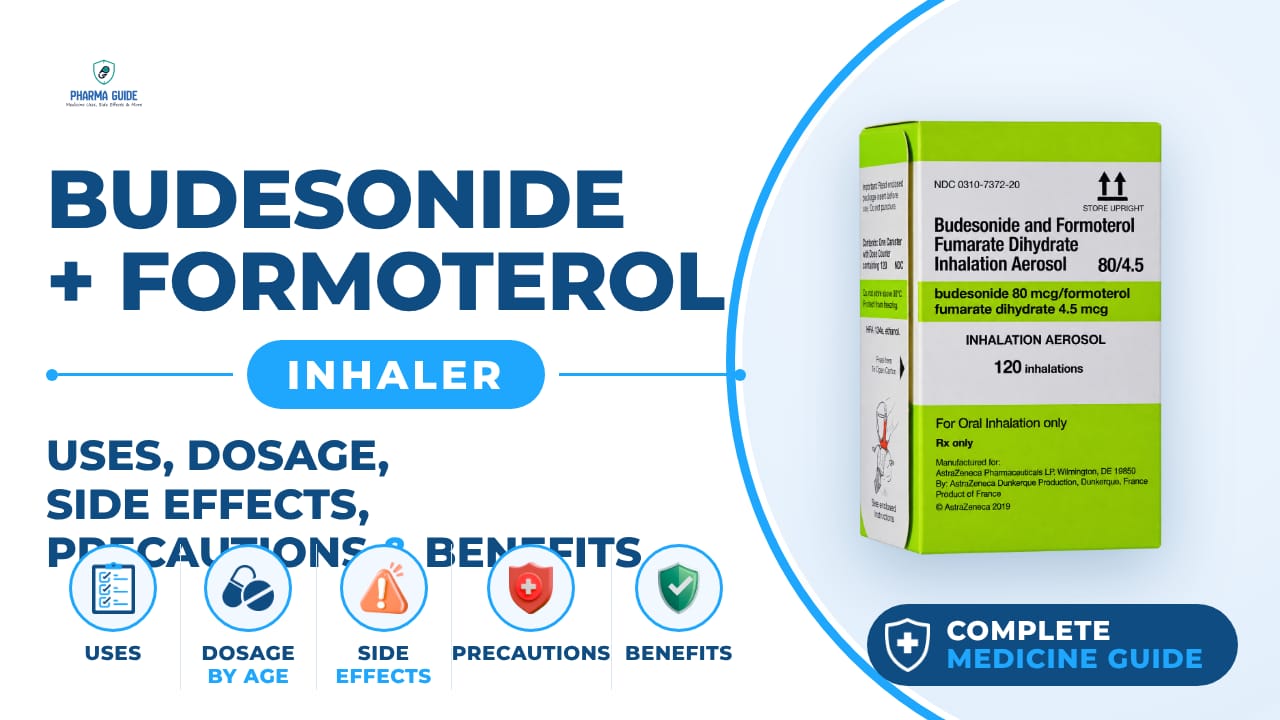
| Generic name | Budesonide and formoterol |
|---|---|
| Drug class | Corticosteroid (steroid) combined with a long-acting beta agonist (LABA) bronchodilator |
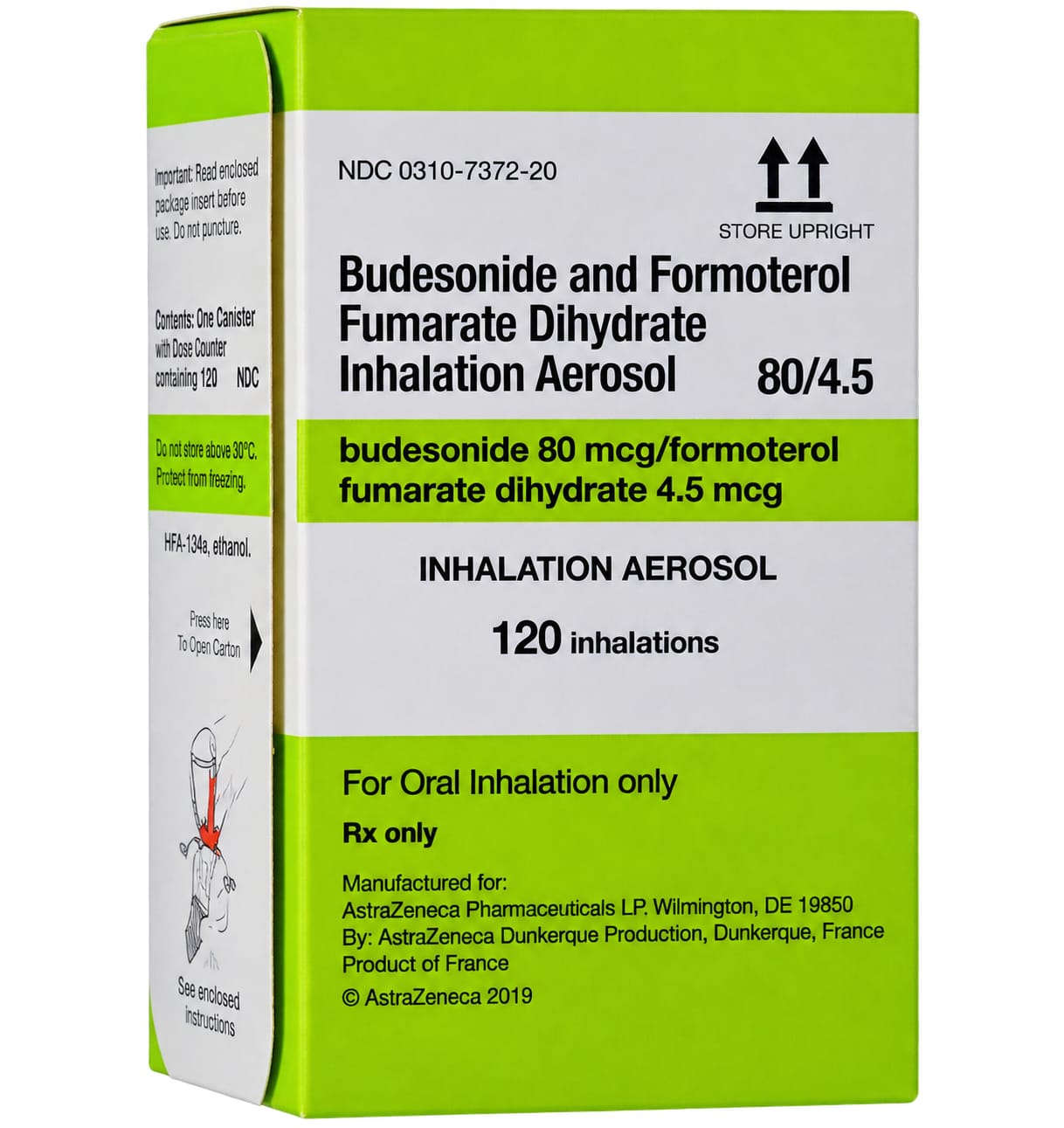
| Forms | Aerosol inhaler (metered dose inhaler) |
Quick overview
Budesonide + Formoterol Inhaler combines a corticosteroid (budesonide) with a long-acting beta agonist bronchodilator (formoterol). It is used daily to prevent and control asthma symptoms and for long-term maintenance treatment of chronic obstructive pulmonary disease (COPD), including chronic bronchitis and emphysema. It is not for relieving a sudden asthma attack or COPD flare-up that has already started. The inhaler is taken by mouth, usually twice daily about 12 hours apart.
What is Budesonide + Formoterol Inhaler
This medicine is an inhaler that combines two drugs: budesonide, a steroid that reduces swelling in the airways, and formoterol, a long-acting bronchodilator that relaxes and opens the air passages in the lungs. It is used to prevent and control symptoms of asthma and to treat chronic obstructive pulmonary disease (COPD), including chronic bronchitis and emphysema.
Budesonide + Formoterol Inhaler uses
- Helps control and prevent asthma symptoms and improve lung function, usually when other asthma medicines have not worked well enough
- Long-term maintenance treatment of chronic obstructive pulmonary disease (COPD), including chronic bronchitis and emphysema
- Prevents and treats difficulty breathing, wheezing, shortness of breath, coughing, and chest tightness caused by asthma
Benefits of Budesonide + Formoterol Inhaler
- Reduces inflammation in the lungs that can trigger asthma attacks
- Opens the bronchial tubes to make breathing easier
- Reduces the number of COPD flare-ups
How Budesonide + Formoterol Inhaler works
Budesonide is a steroid that reduces swelling in the airways to prevent asthma attacks. Formoterol is a long-acting bronchodilator that relaxes and opens the air passages in the lungs, making it easier to breathe.
Budesonide + Formoterol Inhaler dosage
This medicine is inhaled through the mouth using an inhaler; some forms need shaking well before use. It must be used every day at regularly spaced doses to help prevent asthma attacks; it does not relieve an asthma attack that has already started. Doses are usually taken in the morning and evening, about 12 hours apart.
Continue to use this medicine even if you feel well; do not stop without talking to your doctor, since symptoms may return. Rinse your mouth with water after each use and spit it out; do not swallow the rinse water, as this helps prevent mouth or throat infections and hoarseness.
If you were using a short-acting rescue inhaler regularly, your doctor may tell you to stop using it regularly but keep it on hand for sudden asthma symptoms. Before first use, or if the inhaler has not been used for 7 days or more or has been dropped, it needs to be primed by spraying into the air away from the face and shaking first.
If a child is using the inhaler, watch them each time to make sure they are using it the right way. Do not use this inhaler together with any other inhaled medicine for asthma or COPD.
| Age group | Dose |
|---|---|
| Under 6 Years | Use only if prescribed by a doctor |
| 6–11 Years | 80/4.5 mcg: 1–2 inhalations twice daily (as prescribed) |
| 12 Years and Above | 80/4.5 mcg or 160/4.5 mcg: 1–2 inhalations twice daily |
| Adults (18–64 Years) | 160/4.5 mcg: 1–2 inhalations twice daily depending on condition |
Available forms and strengths
- Aerosol inhaler (metered dose inhaler)
- 80/4.5 mcg
- 160/4.5 mcg
Side effects of Budesonide + Formoterol Inhaler
Common
- Sore throat, hoarseness, or throat irritation
- Stuffy or runny nose
- Headache
- Back pain or muscle aches
- Cough
- Dry mouth
- Change in taste
- Tremors or shaking
- Trouble sleeping
- Nervousness
- Stomach discomfort
Serious
- Signs of allergic reaction such as hives, rash, itching, or swelling of the face, lips, tongue, or throat
- White patches or sores in the mouth or throat (thrush)
- Fast, pounding, or irregular heartbeat, fainting, chest pain, or tiredness
- Burning, tingling, or numbness in the hands or feet
- Fever, chills, cough, difficulty breathing, or change in color of mucus you cough up (signs of infection or pneumonia)
- Signs of low adrenal gland function: fatigue, muscle weakness, weight loss, decreased appetite, nausea, or vomiting
- Wheezing or trouble breathing that gets worse right after using the inhaler (paradoxical bronchospasm)
- Vision changes, blurred vision, eye pain, or seeing halos around lights
- Slower growth in children
Warnings and precautions
- This medicine is not for relieving a sudden asthma attack or a sudden COPD flare-up that has already started; a different fast-acting medicine should be used for that.
- Do not use this inhaler with other medicines that contain long-acting beta agonists, such as arformoterol, formoterol, indacaterol, olodaterol, salmeterol, or vilanterol.
- Although this medicine reduces the number of asthma episodes, it may increase the chance of a severe asthma attack when one does occur.
- Using too much of this medicine, or using it for a long time, can raise the risk of adrenal gland problems.
- This medicine may cause a sudden worsening of breathing (paradoxical bronchospasm), which can be life-threatening.
- Long-term use may lower bone mineral density, which can lead to weak bones or osteoporosis.
- This medicine may slow growth in children who use it long-term.
- You may become more prone to infections while using this medicine, including chickenpox and measles.
- Tell your doctor if you are pregnant, plan to become pregnant, or if you become pregnant while using this medicine. There isn't enough research on the effects of this medicine during breastfeeding, so the possible benefits should be weighed against the possible risks; tell your doctor if you are breastfeeding.
- Rinse your mouth after each use to reduce the risk of oral thrush. This medicine should be used with caution in people with liver disease, because the effects may last longer since the body removes the medicine more slowly. Inform your doctor if you have heart disease, high blood pressure, thyroid problems, or diabetes.
Storage
- Store the canister at room temperature, away from heat and direct light
- Do not freeze
- Do not keep this medicine inside a car where it could be exposed to extreme heat or cold
- Do not poke holes in the canister or throw it into a fire, even if the canister is empty
- Keep out of the reach of children
- Do not keep outdated medicine or medicine no longer needed
- Ask your healthcare professional how you should dispose of any medicine you do not use
- Store the inhaler with the mouthpiece down
- Throw away the inhaler 3 months after the inhaler has been removed from the pouch or when the dose counter reaches "0" or in the red zone, whichever comes first
- Do not use or store near heat or flame
- Keep this medication in the container it came in, tightly closed, and out of reach of children
- Store it at room temperature and away from sunlight, excess heat and moisture (not in the bathroom)
- Dispose of unneeded medications in a way so that pets, children, and other people cannot take them; do not flush this medication down the toilet; use a medicine take-back program
When to see a doctor
- Get medical help right away if your symptoms do not improve after a few days of use, get worse, or if your fast-acting rescue inhaler seems to be working less well and you need it more often.
- Get medical care right away if you have chest pain or tightness, decreased urine output, swelling of the face, fingers, feet, or lower legs, irregular heartbeat, extreme fatigue, or trouble breathing.
- Call your doctor right away if you notice blurred vision, difficulty reading, seeing halos around lights, or any other change in vision.
- Tell your doctor right away if you or your child develop white patches in the mouth or throat, or pain when eating or swallowing, which could be a fungal infection.
- Check with your doctor right away if you or your child develop a cough, difficulty breathing, or wheezing, since this could be a serious reaction to the medicine.
- If you think you have taken too much of this medicine, contact a poison control center or emergency room right away.
Alternatives
- Fluticasone + Salmeterol
- Fluticasone + Vilanterol
- Mometasone + Formoterol
Watch the video
FAQs
What is Budesonide + Formoterol Inhaler used for?
It is used to prevent and control asthma symptoms and for long-term maintenance treatment of COPD, including chronic bronchitis and emphysema. It is not for relieving a sudden asthma attack or COPD flare-up already in progress.
How often should Budesonide + Formoterol Inhaler be used?
It is usually taken twice daily, about 12 hours apart, such as in the morning and evening, and should be used every day even if you feel well.
Why should I rinse my mouth after using this inhaler?
Rinsing your mouth with water and spitting it out after each use helps prevent mouth or throat infections, such as oral thrush, and hoarseness.
What are the serious side effects of Budesonide + Formoterol Inhaler?
Serious side effects include allergic reactions, oral thrush, fast or irregular heartbeat, signs of infection or pneumonia, low adrenal gland function, paradoxical bronchospasm, vision changes, and slower growth in children.
Can Budesonide + Formoterol Inhaler be used with other asthma medicines?
No, it should not be used with other inhaled medicines for asthma or COPD, including other medicines containing long-acting beta agonists like salmeterol or vilanterol.
General information, not medical advice
Your prescriber and the leaflet in your pack know your situation. This page does not.
- Follow your prescriber and the leaflet
- Don't start, stop, or change a dose on your own
- Doses and warnings differ by country and product
Sources
Video
Related medicines

Injectafer Injection: Uses, Dosage, Side Effects, Precautions and Alternates
Iron products
Injectafer (ferric carboxymaltose) treats iron deficiency anemia and heart failure-related iron deficiency via IV. Learn uses, dosage, side effects, and

Gliclazide Tablet: Uses, Dosage, Side Effects, Precautions and Alternates
Sulfonylurea (hypoglycemic/antidiabetic agent)
Gliclazide Tablet is a sulfonylurea for type 2 diabetes that boosts insulin release. Learn about dosage, side effects, warnings, and precautions.