
Safety
General information, not medical advice
Your prescriber and the leaflet in your pack know your situation. This page does not.
- Follow your prescriber and the leaflet
- Don't start, stop, or change a dose on your own
- Doses and warnings differ by country and product
Budesonide Inhaler: Uses, Dosage, Side Effects, Precautions and Alternates
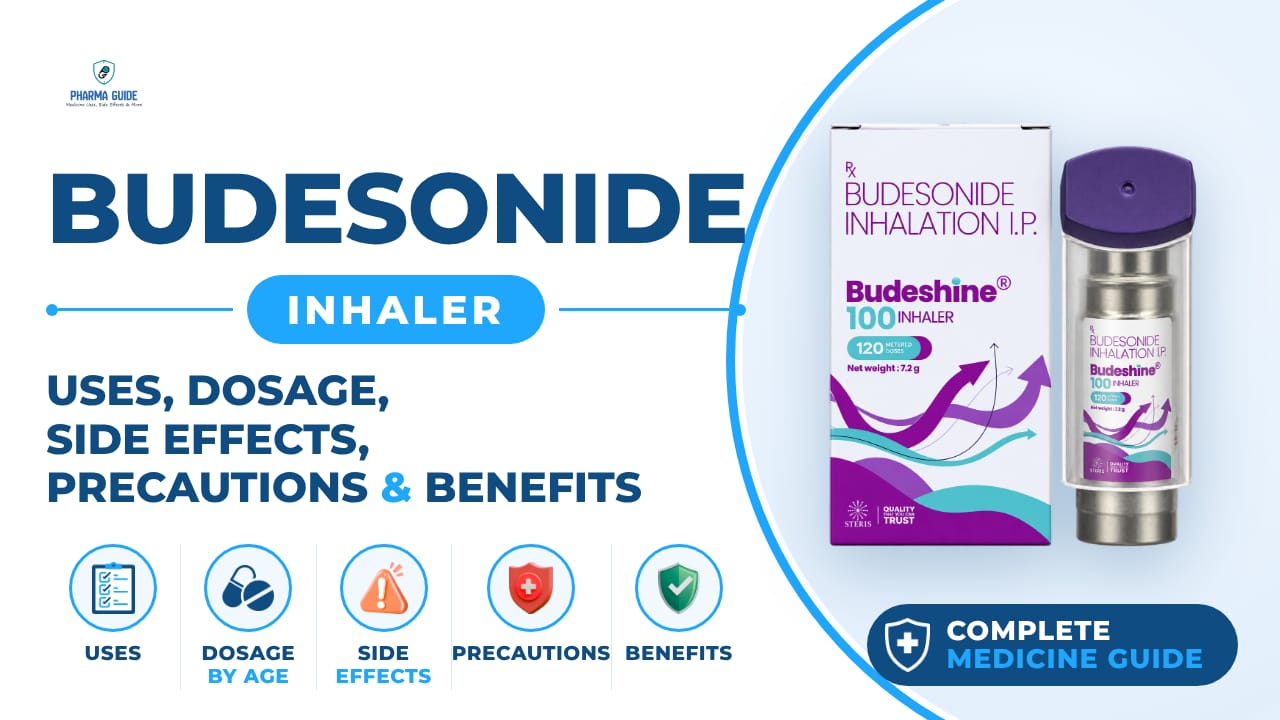
| Generic name | Budesonide |
|---|---|
| Drug class | Steroid inhaler (inhaled corticosteroid) |
| Forms | Inhaler, Inhalation suspension (for use with a nebulizer) |
Quick overview
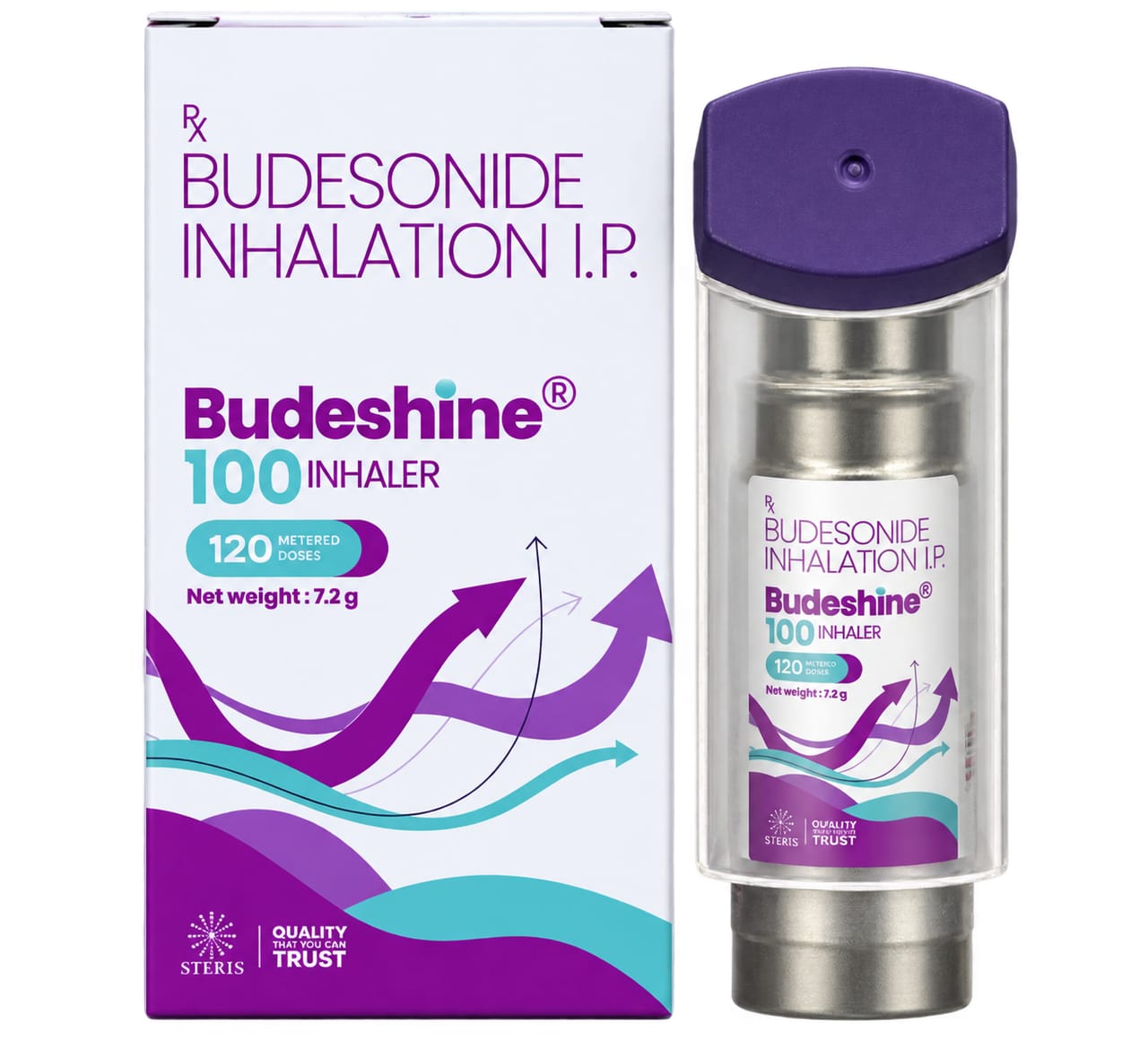
Budesonide Inhaler (generic name: Budesonide) is a steroid inhaler from the inhaled corticosteroid class. It is breathed in every day to reduce and prevent swelling and inflammation in the lungs, helping to control symptoms such as breathlessness in asthma and chronic obstructive pulmonary disease (COPD). It works mainly in the lungs, with very little medicine spreading to the rest of the body. It is not for treating a sudden asthma attack, so a fast-acting reliever inhaler should always be carried separately.
What is Budesonide Inhaler
Budesonide inhaler is a steroid medicine you breathe in every day to reduce and prevent swelling and inflammation in the lungs. It is often called a "controller" inhaler because it helps control symptoms like breathlessness from asthma or chronic obstructive pulmonary disease (COPD).
Budesonide Inhaler uses
- Helps control symptoms such as breathlessness in asthma
- Helps control chronic obstructive pulmonary disease (COPD), a lung disease that makes breathing harder as it gets worse
- Maintenance treatment of asthma
Benefits of Budesonide Inhaler
- Reduces and prevents swelling and inflammation in the lungs
- Works mainly in the lungs, so very little medicine spreads through the rest of the body compared with steroid pills
- Can make daily breathing easier when used regularly as prescribed
How Budesonide Inhaler works
Budesonide is a steroid that reduces inflammation in the airways. It has strong effects locally in the lungs but only weak effects on the rest of the body, because it is broken down quickly by the liver.
Budesonide Inhaler dosage
Use your Budesonide inhaler every day to control your condition, unless otherwise informed by your healthcare professional. This medicine will not stop an asthma attack that has already started, so always carry a fast-acting reliever inhaler for sudden breathlessness. Rinse your mouth with water and spit it out after each use to help prevent mouth infections and hoarseness. You can also brush your teeth after using the inhaler to help reduce these effects. Using a spacer device can help reduce throat-related side effects.
If you forget a dose, take it as soon as you remember, then continue with your next dose at the usual time; do not take two doses to make up for a missed one. Do not stop using this medicine suddenly without talking to your doctor; it may need to be reduced slowly if you have been using it for a long time. Keep using this medicine even if you feel well, unless your doctor tells you to stop.
| Age group | Dose |
|---|---|
| Under 6 Years | Use only if prescribed by a doctor (dose depends on condition and inhaler strength) |
| 6–11 Years | Usually 1–2 inhalations daily (as prescribed) |
| 12+ Years (Adults & Teens) | Usually 1–2 inhalations once or twice daily (as prescribed) |
Available forms and strengths
- Inhaler
- Inhalation suspension (for use with a nebulizer)
Side effects of Budesonide Inhaler
Common
- Throat irritation, dry or sore throat, or hoarse voice
- Oral thrush (fungal infection in the mouth, seen as white patches)
- Coughing
- Increased chance of lung infection
- Common cold-type symptoms, nose or throat irritation
- Upset stomach, nausea
- Headache
Serious
- Signs of an allergic reaction, including rash, hives, itching, swollen face/eyes/lips/tongue, wheezing, tightness in chest or throat, or trouble breathing, swallowing, or talking
- Signs of infection such as fever, chills, very sore throat, ear or sinus pain, cough, more or discolored mucus, pain when peeing, mouth sores, or wounds that will not heal
- Signs of adrenal insufficiency such as severe upset stomach or vomiting, severe dizziness or passing out, muscle weakness, feeling very tired, mood changes, decreased appetite, or weight loss
- Signs of Cushing's syndrome, such as weight gain in the upper back or belly, moon face, severe headache, or slow healing
- Changes in eyesight, such as blurred vision or a cloudy lens, which can be signs of glaucoma or cataracts
- Slowed growth in children with long-term use
- Weak bones (osteoporosis) with long-term use, especially at higher doses
- Serious allergic reaction (anaphylaxis)
Warnings and precautions
This inhaler will not stop an asthma attack that has already started because it takes longer to work. Always carry a fast-acting reliever inhaler for sudden breathlessness. This medicine is not meant for treating a sudden asthma attack. Use a fast-acting rescue inhaler instead for sudden symptoms.
Tell your doctor if you take oral antifungal medicines such as itraconazole or ketoconazole, as they can interact with this medicine. If you have been using this medicine for many weeks, talk with your doctor before stopping. You may need to reduce the dose slowly rather than stopping suddenly.
Avoid being near people with chickenpox or measles if you haven't had these illnesses before, since this medicine can make these infections more serious. Long-term use may raise the chance of weak bones, cataracts, or glaucoma. Your doctor may want to monitor you for these. This medicine may affect growth in children and teens in some cases, so they may need regular growth checks.
Tell your doctor if you are pregnant or planning to become pregnant, so the benefits and risks can be discussed. Tell your doctor if you are breastfeeding, since budesonide can pass into breast milk in small amounts.
Rinse your mouth with water after each use to reduce the risk of oral thrush. Use the inhaler regularly as prescribed; do not stop suddenly without medical advice. Do not use for immediate relief during a sudden breathing attack unless it is a combination inhaler prescribed for that purpose.
People with liver problems should use this medicine with caution because impaired liver function may cause the medicine to build up in the body.
Avoid contact with eyes when using the inhaler. Inform your doctor if you have a history of tuberculosis, fungal infections, or other lung infections. Tell your doctor about all other medicines you are taking, especially other steroid medicines. Use with caution if you have liver problems or reduced immune function.
Keep the inhaler clean and store it properly according to the product instructions. Seek medical advice if breathing symptoms worsen or become difficult to control. Keep away from children and use only as directed.
Storage
- Store in a cool and dry place, away from direct sunlight
- Keep this medication away from children
- Pack this medication into a black trash bag and seal it tightly before throwing into the rubbish chute or bin
- For controller inhalers with a dose counter, check the dose counter and change the canister once the dose counter indicates zero [000] doses
- For controller inhalers without a dose counter, mark the date of opening and based on the dosing regimen, throw away when the doses are used up
When to see a doctor
- Call your doctor right away if your breathing problems get worse, if your rescue inhaler doesn't work as well as before, or if you need to use it more often than usual
- If you notice swelling of the face, eyes, lips or tongue, difficulty breathing, or itchy rashes over the whole body, stop the medicine and see a doctor immediately
- Get emergency medical help if your lips, mouth, throat or tongue suddenly swell, if you have severe trouble breathing, or if your skin turns blue, grey or pale, or if you become very confused, drowsy, or faint
- Get medical help right away if you have very bad breathing problems, wheezing, or coughing that gets worse right after using this drug
- If you think you have taken too much of this medicine, contact your healthcare provider or local poison control right away
Alternatives
- Fluticasone Inhaler
- Beclomethasone Inhaler
- Flunisolide Inhaler
Watch the video
FAQs
What is Budesonide Inhaler used for?
It is used to help control symptoms such as breathlessness in asthma and to help control chronic obstructive pulmonary disease (COPD), as well as for maintenance treatment of asthma.
Can Budesonide Inhaler stop an asthma attack?
No, it will not stop an asthma attack that has already started because it takes longer to work. A fast-acting reliever inhaler should always be carried for sudden breathlessness.
How should I use Budesonide Inhaler to avoid side effects?
Rinse your mouth with water and spit it out after each use to help prevent mouth infections and hoarseness. You can also brush your teeth afterward, and using a spacer device can help reduce throat-related side effects.
What should I do if I miss a dose?
Take it as soon as you remember, then continue with your next dose at the usual time. Do not take two doses to make up for a missed one.
Can I stop using Budesonide Inhaler suddenly?
No, you should not stop using this medicine suddenly without talking to your doctor, as it may need to be reduced slowly if you have been using it for a long time.
General information, not medical advice
Your prescriber and the leaflet in your pack know your situation. This page does not.
- Follow your prescriber and the leaflet
- Don't start, stop, or change a dose on your own
- Doses and warnings differ by country and product
Sources
- https://www.healthhub.sg/medication-devices-and-treatment/medications/budesonide-inhaler
- https://www.nhs.uk/medicines/budesonide-inhalers/side-effects-of-budesonide-inhalers/
- https://www.mrmed.in/molecule/budesonide
- UpToDate Lexidrug Patient Education: Budesonide (Oral Inhalation)
- FDA Prescribing Information: Budesonide Inhalation Suspension
- Teva-Budesonide Product Monograph, Teva Canada Limited
Video
Related medicines

Injectafer Injection: Uses, Dosage, Side Effects, Precautions and Alternates
Iron products
Injectafer (ferric carboxymaltose) treats iron deficiency anemia and heart failure-related iron deficiency via IV. Learn uses, dosage, side effects, and

Gliclazide Tablet: Uses, Dosage, Side Effects, Precautions and Alternates
Sulfonylurea (hypoglycemic/antidiabetic agent)
Gliclazide Tablet is a sulfonylurea for type 2 diabetes that boosts insulin release. Learn about dosage, side effects, warnings, and precautions.