
Safety
General information, not medical advice
Your prescriber and the leaflet in your pack know your situation. This page does not.
- Follow your prescriber and the leaflet
- Don't start, stop, or change a dose on your own
- Doses and warnings differ by country and product
Buprenorphine Patch: Uses, Dosage, Side Effects, Precautions and Alternates
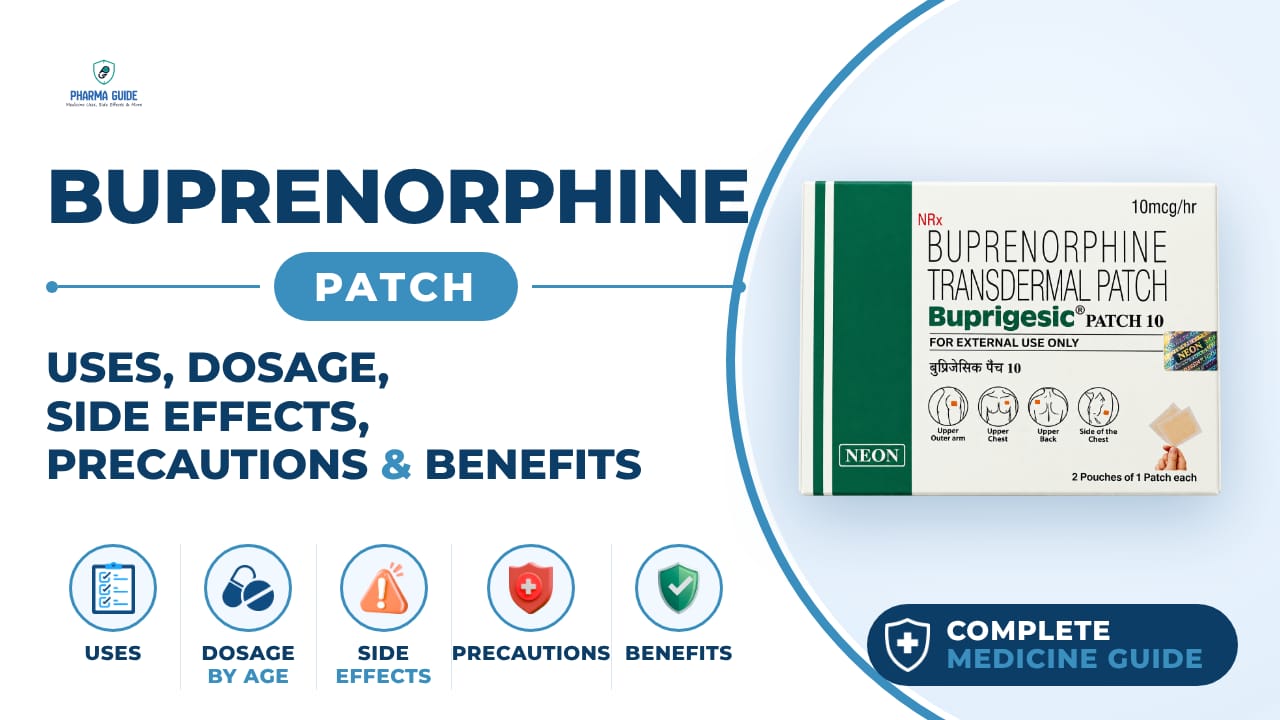
| Generic name | buprenorphine |
|---|---|
| Drug class | opioid analgesic (strong painkiller) |
| Forms | transdermal patch, sublingual tablet or film, injection (quick-release and modified-release) |
Quick overview
Buprenorphine Patch (generic name: buprenorphine) is a strong opioid analgesic that is applied to the skin and releases medicine slowly over 7 days. It is used to treat long-lasting, moderate pain or chronic pain that needs a strong painkiller. It works by changing how the brain and nervous system sense and respond to pain.
What is Buprenorphine Patch
Buprenorphine Patch is a strong opioid painkiller that is stuck onto the skin. It releases medicine slowly through the skin over 7 days to treat long-lasting, moderate pain or chronic pain that needs a strong painkiller.
Buprenorphine Patch uses
- Relief of severe and persistent pain
- Management of chronic (long-term) pain requiring a strong painkiller
- Short-term treatment of severe pain (other buprenorphine forms)
- Treatment of opioid dependence (other buprenorphine forms, not the patch)
Benefits of Buprenorphine Patch
- Provides long-lasting pain relief
- Delivers medicine continuously through the skin
- Can reduce the need for frequent oral pain medicines
- Used for persistent moderate-to-severe pain when continuous opioid treatment is appropriate
- Provides relatively steady drug exposure
How Buprenorphine Patch works
The patch releases buprenorphine slowly through the skin into the blood. It works by changing how the brain and nervous system sense and respond to pain, blocking pain signals between the body and the brain.
Buprenorphine Patch dosage
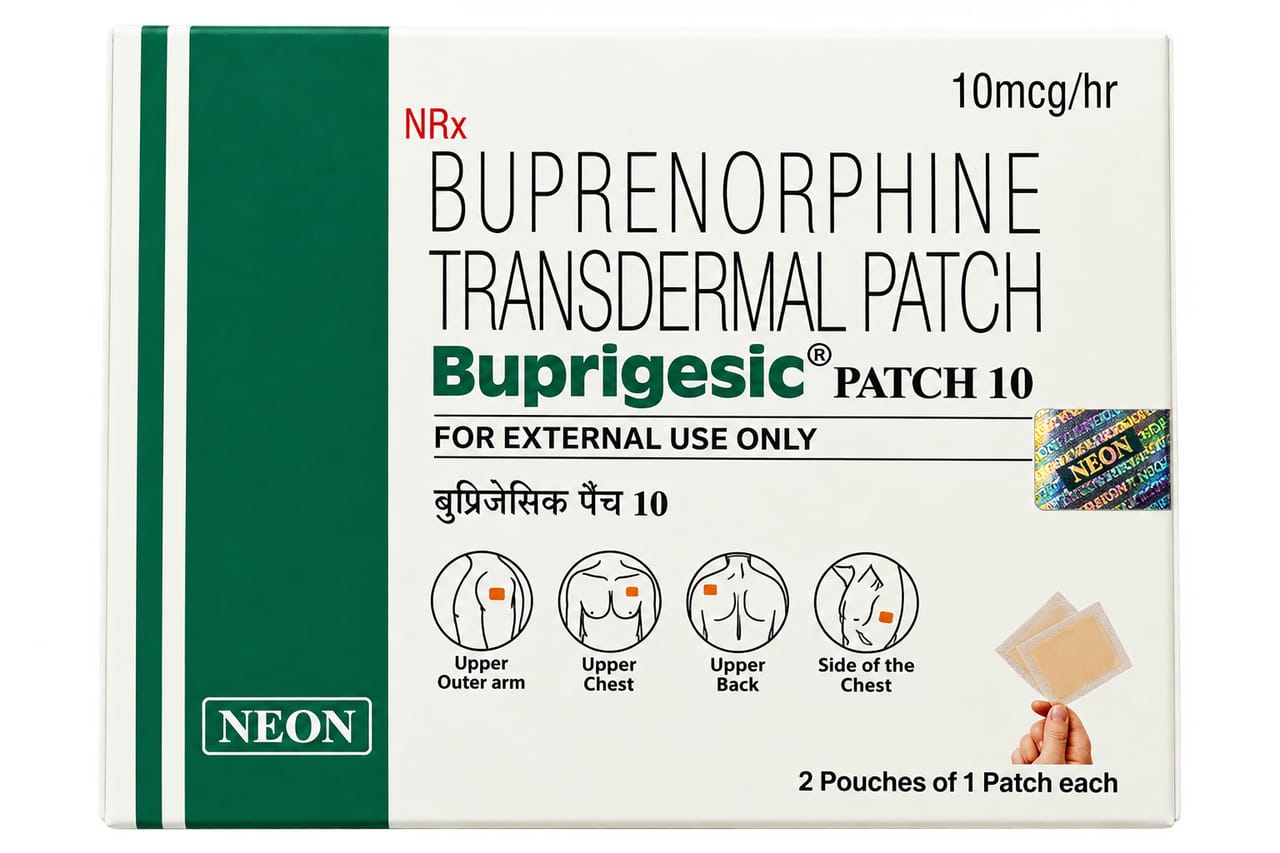
Apply the patch to dry, clean, non-irritated, hairless skin on the upper arm, outer arm, upper chest, upper back, or side of the chest. Do not use soap, alcohol, oil, or lotion on the skin before applying the patch. Press the patch firmly against the skin for about 30 seconds, making sure the edges stick well.
Wear the patch continuously for 7 days, then replace it with a new one at the same time of day. Remove the old patch before applying a new one and place the new patch on a different area of skin. Wait 3 to 4 weeks before using the same skin site again.
Do not cut or divide the patch. Do not apply more than two patches at the same time unless told to by your doctor. Do not expose the patch or surrounding skin to direct heat sources such as heating pads, electric blankets, heat lamps, saunas, hot tubs, or hot baths. You may shower, bathe, or swim while wearing the patch.
Do not stop using the patch suddenly without talking to your doctor, as this can cause withdrawal symptoms. Adults and elderly patients generally use the same dosing schedule, changing the patch every seventh day. People with liver disease may be monitored more closely because the patch's effects and duration of action may be affected. No dose change is generally needed for people with kidney disease.
| Age group | Dose |
|---|---|
| 18–64 years | Common starting strengths include 5 mcg/hour or 10 mcg/hour, depending on prior opioid exposure and pain severity |
| 65–74 years | Usually started cautiously, often with a lower patch strength and close monitoring |
Available forms and strengths
- Transdermal patch
- Sublingual tablet or film
- Injection (quick-release and modified-release)
Side effects of Buprenorphine Patch
Common
- Headache
- Dizziness
- Drowsiness
- Constipation
- Feeling or being sick (nausea, vomiting)
- Itchy skin, redness
- Rash, itching, inflammation, or swelling of the skin at the patch site
- Loss of appetite
- Dry mouth
- Tiredness, weakness
- Sweating
- Difficulty sleeping
- Decreased sexual desire
Serious
- Difficulty breathing, shortness of breath, extreme drowsiness, fainting, or loss of consciousness
- Chest pain or changes in heartbeat
- Agitation, hallucinations, fever, sweating, confusion, fast heartbeat, shivering, severe muscle stiffness or twitching, loss of coordination, or diarrhea (signs of serotonin syndrome)
- Sudden wheeziness, difficulty breathing, swelling of the eyelids, face, or lips, rash or itching covering the whole body (allergic reaction)
- Unusual snoring or long pauses in breathing during sleep
- New or increased pain, or pain from touch or ordinary tasks
- Seizures or convulsions
Warnings and precautions
- The patch can cause serious or life-threatening breathing problems, especially in the first 24 to 72 hours of treatment or after a dose increase.
- This medicine can be habit-forming even when used exactly as prescribed, and misuse can lead to serious harm.
- Combining this patch with alcohol, other sedating medicines, or street drugs increases the risk of dangerous breathing problems, extreme sleepiness, or coma.
- Never use a patch that is cut, damaged, or altered, as this can release too much medicine at once.
- Exposing the patch to heat (hot baths, saunas, heating pads, fever) can cause too much medicine to be absorbed at once.
- This medicine can cause serious harm or death if used accidentally by someone else, especially a child, so it must be stored safely.
- Do not stop using the patch suddenly without talking to your doctor, as this can cause withdrawal symptoms.
- You should not use this patch if you are pregnant, as there is not enough experience of its use in pregnancy, and regular use can cause the baby to have withdrawal symptoms after birth.
- You should not breastfeed while using this patch, because the medicine passes into breast milk and may stop milk from forming properly.
- No dose change is usually needed for people with kidney disease or on dialysis.
- If you have liver disease, the patch's effects and how long it lasts in your body may be different, so your doctor will monitor you more closely.
- Drinking alcohol while wearing the patch can make side effects worse, make you feel unwell, and affect your reaction time.
- The patch can affect your ability to react quickly, especially when starting treatment, after a dose increase, or if you take other sedating medicines. Do not drive or operate machinery if you feel dizzy, drowsy, or have blurred vision, and avoid driving for 24 hours after removing a patch.
Storage
- Keep this medicine out of the sight and reach of children
- Do not use the patch after the expiry date on the carton and sachet
- Busiete 5 and 10 micrograms/hour patches: do not store above 25°C
- Busiete 20 micrograms/hour patch: does not require special storage conditions
- Do not use the patch if the sachet seal is broken
- Used patches must be folded over on themselves with the adhesive layer inwards, and discarded safely
- Do not throw away medicines via wastewater or household waste; ask your pharmacist how to dispose of unused medicine
When to see a doctor
- If someone is not breathing or cannot be woken, get emergency help right away.
- Call your doctor immediately or get emergency care if you have trouble breathing, shortness of breath, extreme drowsiness, fainting, or loss of consciousness.
- Remove the patch and tell your doctor immediately if you get sudden wheezing, trouble breathing, swelling of the eyelids, face, or lips, or a widespread rash or itching.
- Tell your doctor immediately if you develop a fever while wearing the patch.
- If your breathing becomes shallow and weak, take the patch off and seek medical help right away.
- If you think you have used too much medicine, remove all patches and contact your doctor or hospital right away.
Alternatives
- Ibuprofen
- Naproxen
Watch the video
FAQs
How long does a Buprenorphine Patch last?
The patch is worn continuously for 7 days, then replaced with a new one at the same time of day, placed on a different area of skin.
Can I shower while wearing a Buprenorphine Patch?
Yes, you may shower, bathe, or swim while wearing the patch, but you should avoid exposing it to direct heat sources like hot baths, saunas, or heating pads.
Can I cut a Buprenorphine Patch to adjust the dose?
No, you should never cut or divide the patch, as a cut, damaged, or altered patch can release too much medicine at once.
Is it safe to drink alcohol while using a Buprenorphine Patch?
No, combining the patch with alcohol increases the risk of dangerous breathing problems, extreme sleepiness, or coma, and can make side effects worse.
Can I drive after using a Buprenorphine Patch?
You should avoid driving for 24 hours after removing a patch, and not drive or operate machinery if you feel dizzy, drowsy, or have blurred vision.
General information, not medical advice
Your prescriber and the leaflet in your pack know your situation. This page does not.
- Follow your prescriber and the leaflet
- Don't start, stop, or change a dose on your own
- Doses and warnings differ by country and product
Sources
Video
Related medicines

Injectafer Injection: Uses, Dosage, Side Effects, Precautions and Alternates
Iron products
Injectafer (ferric carboxymaltose) treats iron deficiency anemia and heart failure-related iron deficiency via IV. Learn uses, dosage, side effects, and

Gliclazide Tablet: Uses, Dosage, Side Effects, Precautions and Alternates
Sulfonylurea (hypoglycemic/antidiabetic agent)
Gliclazide Tablet is a sulfonylurea for type 2 diabetes that boosts insulin release. Learn about dosage, side effects, warnings, and precautions.