
Safety
General information, not medical advice
Your prescriber and the leaflet in your pack know your situation. This page does not.
- Follow your prescriber and the leaflet
- Don't start, stop, or change a dose on your own
- Doses and warnings differ by country and product
Bupropion Tablet: Uses, Dosage, Side Effects, Precautions and Alternates
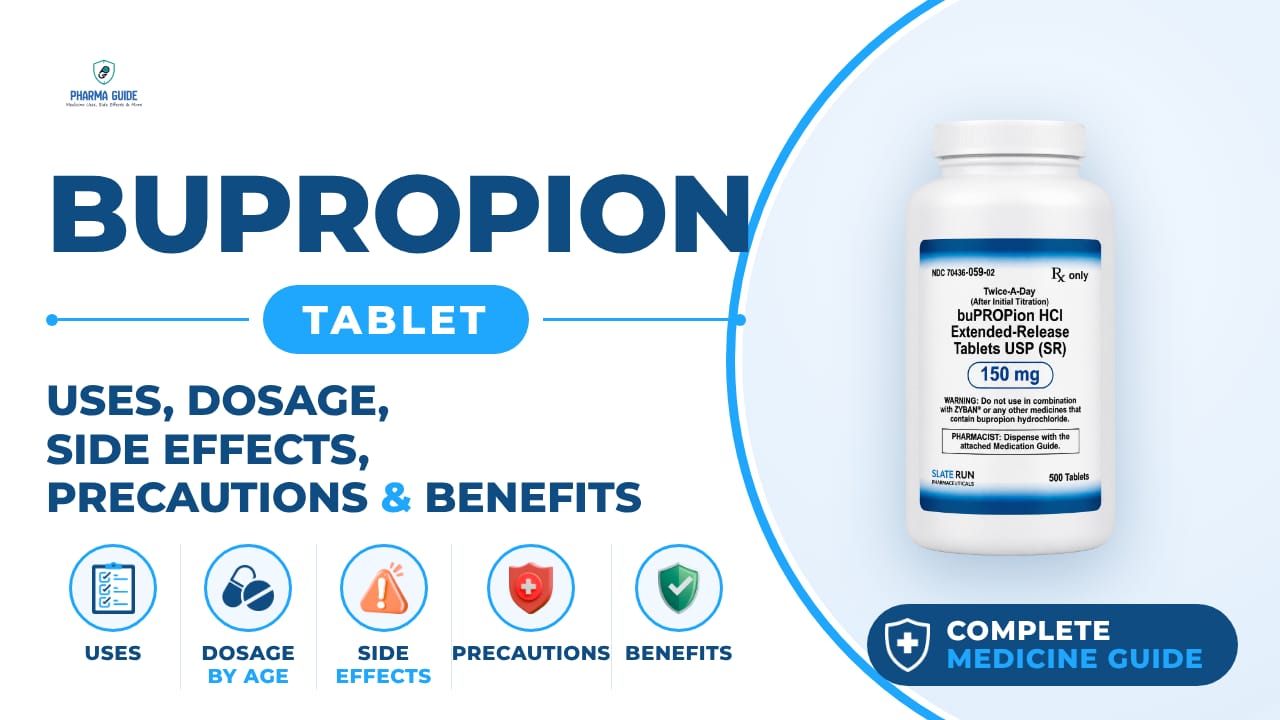
| Generic name | bupropion |
|---|---|
| Drug class | Miscellaneous antidepressants, Smoking cessation agents |
| Forms | Tablet, Tablet, Extended Release, 24 HR, Tablet, Extended Release, 12 HR, Sustained-release tablet |
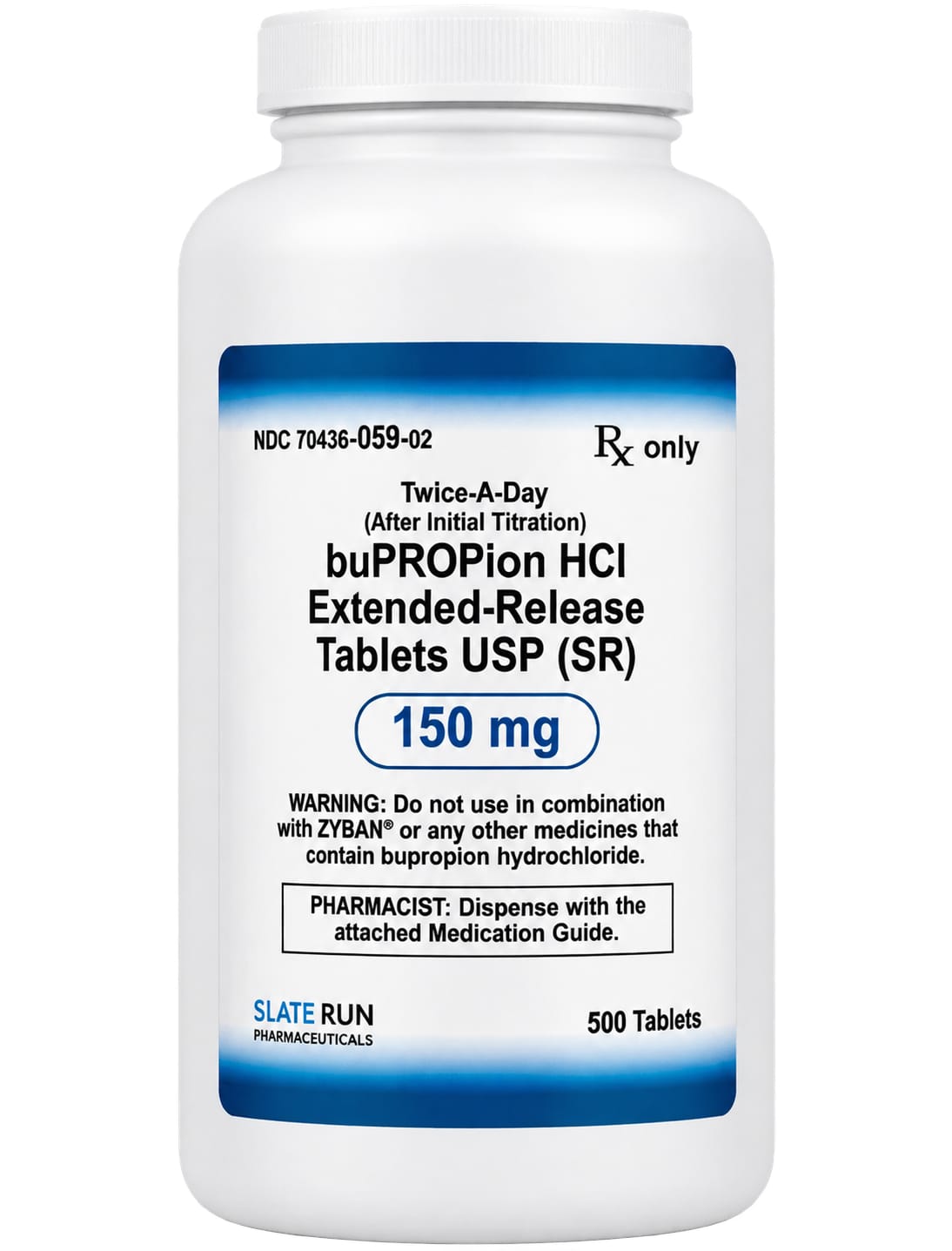
Quick overview
Bupropion Tablet (generic name: bupropion) is an antidepressant medicine belonging to the class of miscellaneous antidepressants and smoking cessation agents. It is used to treat major depressive disorder and seasonal affective disorder, to help people stop smoking, and, in combination with naltrexone as a separate product, for weight management. It works by changing the levels of certain brain chemicals that affect mood, motivation, and reward.
What is Bupropion Tablet
Bupropion is an antidepressant medicine used to treat depression and seasonal affective disorder. It also supports smoking cessation and weight management (when combined with naltrexone).
Bupropion Tablet uses
- Major depressive disorder (MDD)
- Seasonal affective disorder (SAD)
- Helping people stop smoking
- Weight management (in combination with naltrexone, as a separate product)
Benefits of Bupropion Tablet
- Improves mood regulation and reduces nicotine cravings
- Helps relieve persistent low mood, loss of interest, and other symptoms of depression
- Helps prevent recurrent depressive episodes associated with seasonal changes
- Depression Symptom Support: Helps improve mood and reduce symptoms of depression
- Energy and Motivation Support: May help improve interest, activity level, and motivation
- Helps reduce nicotine cravings and withdrawal symptoms to support quitting smoking
How Bupropion Tablet works
Bupropion works by changing the levels of certain brain chemicals, mainly noradrenaline and dopamine, which affect mood, motivation, and reward. This also helps reduce nicotine cravings when used for quitting smoking.
Bupropion Tablet dosage
Take bupropion exactly as prescribed by your doctor and follow all directions on your prescription label. Do not crush, chew, or break tablets; swallow the tablet whole. Take bupropion with food if it upsets your stomach. If you have trouble falling asleep or staying asleep, do not take your dose too close to bedtime.
Your doctor will likely start you on a low dose and gradually increase it. It may take several weeks before you feel the full benefit; keep taking it even if you feel well, and do not stop without talking to your doctor.
If you are taking it to help you quit smoking, you may keep smoking for about a week after starting, then set a quit date during your second week of treatment. A nicotine replacement product may be started on the same day you quit smoking, if your doctor prescribes one. Do not use more than one bupropion-containing product at the same time.
If you miss a dose, skip it and take your next dose at the regular time; do not double up.
| Age group | Dose |
|---|---|
| Under 18 Years | Use only if prescribed by a specialist |
| Adults (18–64 Years) | Initial dose: 150 mg once daily; may increase based on condition and formulation |
| Older Adults (65+ Years) | Lower starting dose may be required; adjusted based on response and medical condition |
Available forms and strengths
- Tablet
- Tablet, Extended Release, 24 HR
- Tablet, Extended Release, 12 HR
- Sustained-release tablet
Side effects of Bupropion Tablet
Common
- Dry mouth, sore throat, stuffy nose
- Ringing in the ears
- Blurred vision
- Nausea, vomiting, stomach pain, loss of appetite, constipation
- Sleep problems (insomnia)
- Tremors, sweating, feeling anxious or nervous
- Fast heartbeats
- Confusion, agitation, hostility
- Rash
- Weight loss
- Increased urination
- Headache, dizziness, muscle or joint pain
Serious
- Signs of an allergic reaction: hives, itching, fever, swollen glands, difficult breathing, swelling of face or throat
- Severe skin reaction: fever, sore throat, burning eyes, skin pain, red or purple skin rash with blistering and peeling
- Seizures (convulsions)
- Confusion, unusual changes in mood or behavior
- Blurred vision, tunnel vision, eye pain or swelling, or seeing halos around lights
- Fast or irregular heartbeats
- Manic episode: racing thoughts, increased energy, reckless behavior, extreme happiness or irritability, talking more than usual, severe sleep problems
- New or worsening depression, thoughts of self-harm or suicide
- Signs of a serious liver problem: pain or tenderness in the upper stomach, pale stools, dark urine, loss of appetite, nausea, unusual tiredness or weakness, or yellow eyes or skin
- Severely high blood pressure, especially with nicotine replacement products
Warnings and precautions
Do not take bupropion if you have a seizure disorder, an eating disorder, or have suddenly stopped using alcohol, seizure medicine, or sedatives, because of an increased risk of seizures. Do not take two medicines that both contain bupropion at the same time. Do not use bupropion within 14 days before or after using an MAO inhibitor, as this can cause a dangerous interaction.
Some young people up to age 24 may have thoughts of suicide when first starting this medicine. Watch closely for changes in mood or symptoms and report anything new or worsening to the doctor. Mental health can change unexpectedly with this medicine, including new or worsening depression and suicidal thoughts, especially at the start of treatment or when the dose changes.
This medicine may cause seizures, especially in people with certain medical conditions or when combined with certain drugs. Bupropion can cause mild pupil dilation, which may trigger an angle-closure glaucoma attack in people prone to it. Taking too much of this medicine increases your chance of having a seizure, and an overdose can be fatal. Do not stop this medicine suddenly without your doctor's advice, since stopping abruptly can cause unpleasant withdrawal symptoms.
Talk to your doctor if you are pregnant or planning to become pregnant. It is not known whether bupropion will harm an unborn baby. Tell your doctor right away if you become pregnant, and do not start or stop the medicine without your doctor's advice.
Tell your doctor if you are breastfeeding or plan to breastfeed. Bupropion passes into breast milk, and there have been reports of seizures in breastfed infants.
People with kidney disease should use bupropion with caution, since the medicine may build up in the body because it is removed more slowly. People with liver disease, especially cirrhosis, should use bupropion with caution, as the effects may be stronger because the medicine is removed more slowly from the body.
Drinking alcohol with bupropion may increase the risk of seizures. Alcohol should be limited or avoided if possible, and people who drink heavily should not stop suddenly after starting this medicine, since that can also cause seizures.
Bupropion may affect your thinking or reactions, or cause dizziness or reduced alertness, so be careful when driving or operating machinery.
Storage
- Store at room temperature, 20° to 25°C (68° to 77°F)
- Keep this medicine dry and out of the light
- Store the medicine in a closed container at room temperature, away from heat, moisture, and direct light
- Keep from freezing
- Keep out of the reach of children
- Do not keep outdated medicine or medicine no longer needed
- Ask your healthcare professional how you should dispose of any medicine you do not use
When to see a doctor
- Get emergency medical help for signs of a serious allergic reaction, such as hives, itching, fever, swollen glands, trouble breathing, or swelling of the face or throat
- Call your doctor right away if you have a seizure, confusion, unusual mood or behavior changes, vision problems, fast or irregular heartbeats, or signs of a manic episode
- Tell your doctor right away about new or worsening depression, thoughts of harming yourself, extreme worry, agitation, panic attacks, trouble sleeping, aggressive behavior, irritability, acting without thinking, or severe restlessness
- Seek emergency medical help right away if you think you have taken too much of this medicine, since overdose can be fatal
- Check with your doctor right away if you notice signs of a serious liver problem, such as upper stomach pain, pale stools, dark urine, loss of appetite, unusual tiredness, or yellowing of the skin or eyes
- Check with your doctor right away if you have blurred vision, eye pain, or any other change in vision during or after treatment
Alternatives
- Sertraline
- Escitalopram
- Mirtazapine
Watch the video
FAQs
What is Bupropion Tablet used for?
It is used to treat major depressive disorder and seasonal affective disorder, to help people stop smoking, and, combined with naltrexone as a separate product, for weight management.
How does Bupropion Tablet work?
It works by changing the levels of certain brain chemicals, mainly noradrenaline and dopamine, which affect mood, motivation, and reward, and this also helps reduce nicotine cravings.
What is the typical adult dose of Bupropion Tablet?
For adults 18–64 years, the initial dose is 150 mg once daily, which may be increased based on condition and formulation. Older adults may need a lower starting dose.
What are the serious side effects of Bupropion Tablet?
Serious side effects include seizures, allergic reactions, severe skin reactions, confusion, manic episodes, vision problems, fast or irregular heartbeats, liver problems, and new or worsening depression or suicidal thoughts.
Can I drink alcohol while taking Bupropion Tablet?
Drinking alcohol with bupropion may increase the risk of seizures, so alcohol should be limited or avoided, and heavy drinkers should not stop suddenly after starting this medicine.
General information, not medical advice
Your prescriber and the leaflet in your pack know your situation. This page does not.
- Follow your prescriber and the leaflet
- Don't start, stop, or change a dose on your own
- Doses and warnings differ by country and product
Sources
Video
Related medicines

Injectafer Injection: Uses, Dosage, Side Effects, Precautions and Alternates
Iron products
Injectafer (ferric carboxymaltose) treats iron deficiency anemia and heart failure-related iron deficiency via IV. Learn uses, dosage, side effects, and

Gliclazide Tablet: Uses, Dosage, Side Effects, Precautions and Alternates
Sulfonylurea (hypoglycemic/antidiabetic agent)
Gliclazide Tablet is a sulfonylurea for type 2 diabetes that boosts insulin release. Learn about dosage, side effects, warnings, and precautions.