
Safety
General information, not medical advice
Your prescriber and the leaflet in your pack know your situation. This page does not.
- Follow your prescriber and the leaflet
- Don't start, stop, or change a dose on your own
- Doses and warnings differ by country and product
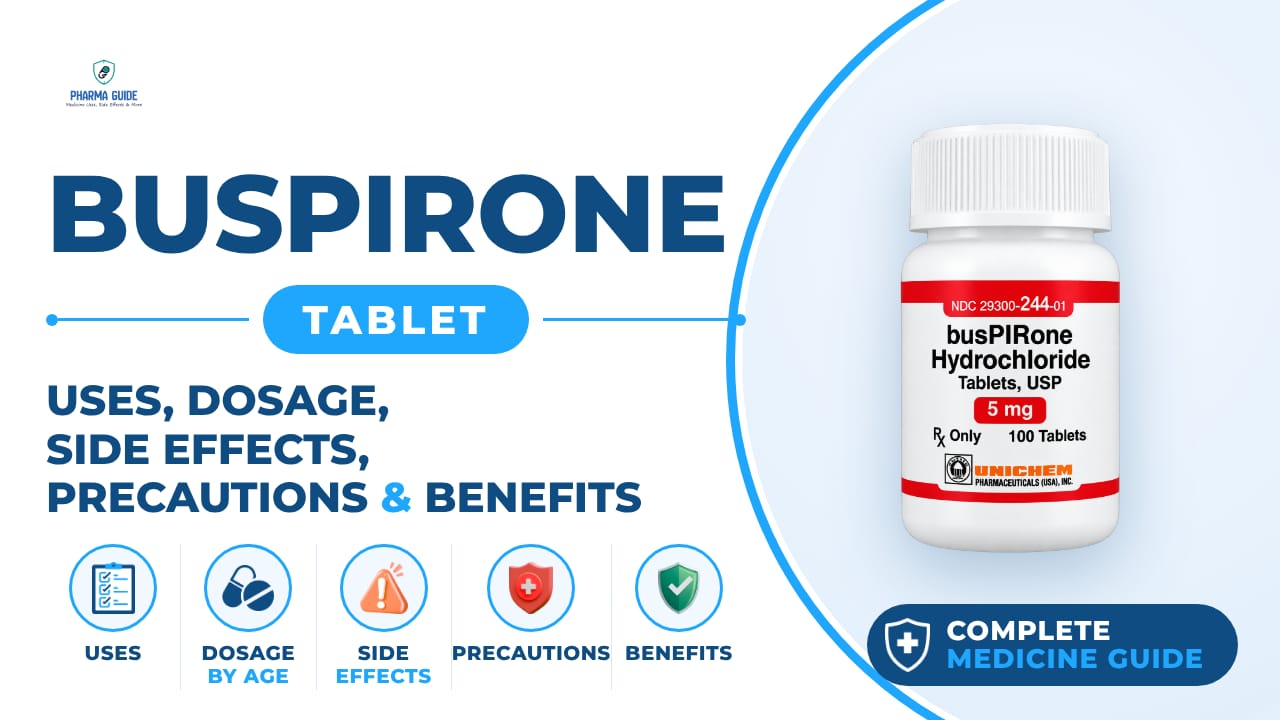
Buspirone Tablet: Uses, Dosage, Side Effects, Precautions and Alternates
| Generic name | buspirone hydrochloride |
|---|---|
| Drug class | Anxiolytic (antianxiety medication) |
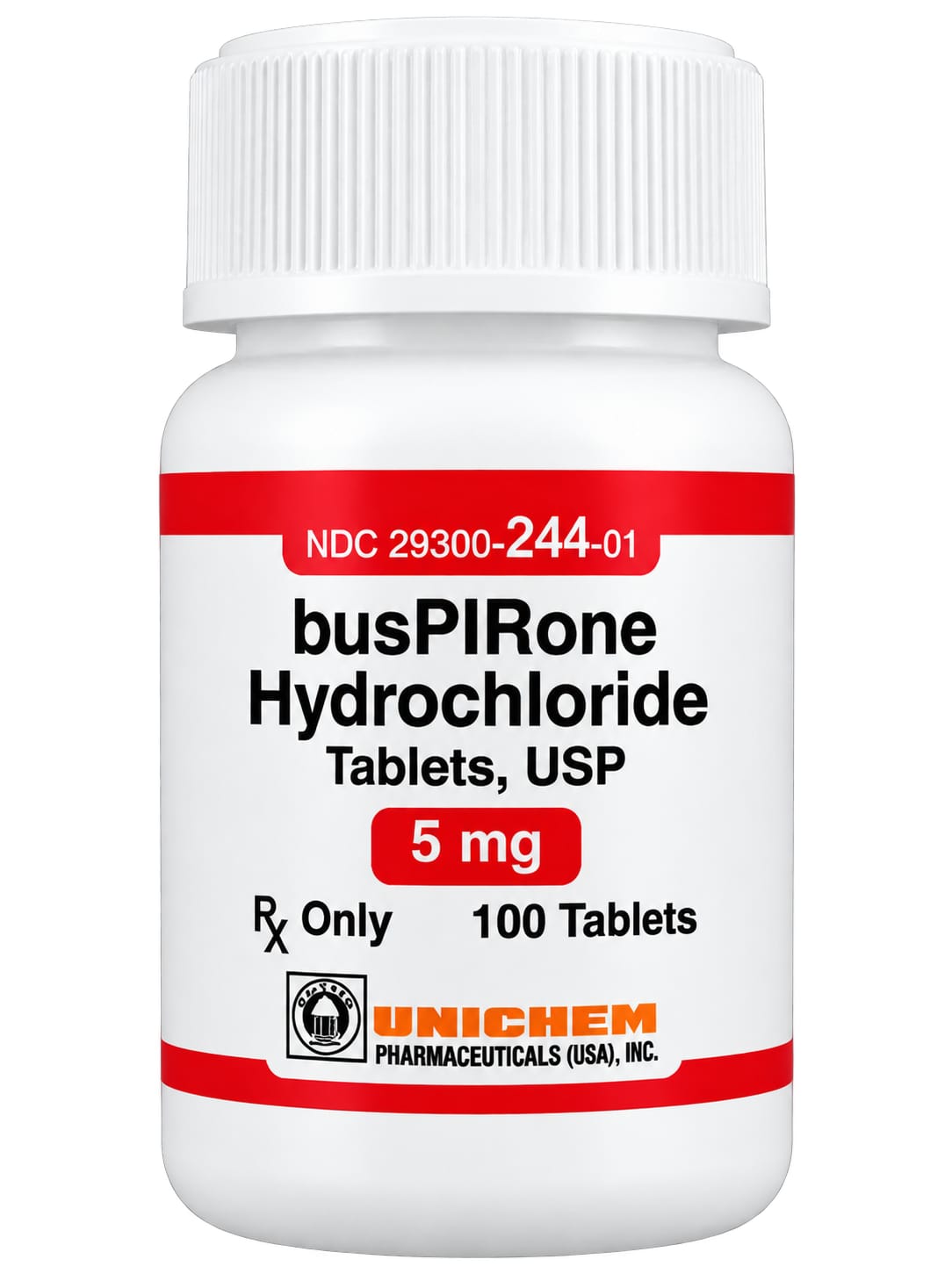
| Forms | Tablet |
Quick overview
Buspirone Tablet (buspirone hydrochloride) is a prescription anxiolytic medicine used for short-term relief of anxiety symptoms in adults with Generalized Anxiety Disorder. It works by affecting serotonin, a brain chemical involved in mood regulation, and is not a controlled substance. It carries a much lower risk of dependency and withdrawal compared with other anti-anxiety medications.
What is Buspirone Tablet
Buspirone is a prescription medicine used to relieve anxiety. It affects chemicals in the brain that may be unbalanced in people with anxiety and is not a controlled substance.
Buspirone Tablet uses
- Short-term relief of symptoms of anxiety, including fear, tension, irritability, dizziness, and pounding heartbeat, in adults with Generalized Anxiety Disorder
Benefits of Buspirone Tablet
- Taken by mouth
- Tablets can be broken or cut at the score lines if needed, for dose adjustment or easier swallowing
- May be an option for people who can't tolerate SSRIs or SNRIs
- Much lower risk of dependency and withdrawal symptoms than other anti-anxiety medications
How Buspirone Tablet works
Buspirone is thought to work by affecting serotonin, a brain chemical that helps regulate mood, though its exact mechanism is not fully understood.
Buspirone Tablet dosage
Take it consistently either always with food or always without food, because food changes how your body absorbs the medicine. Tablets may have score lines that let you break or cut them into smaller pieces for a more personalized dose or if you have trouble swallowing; use a pill cutter to do this safely. Swallow the tablet with a glass of water and do not chew it.
If switching from a benzodiazepine, that medicine should usually be tapered down gradually rather than stopped suddenly. If you miss a dose, take it as soon as you remember, but skip it if it's almost time for your next dose; do not take a double dose. It may take several weeks before you notice improvement, so keep taking it as prescribed even if you don't feel better right away.
| Age group | Dose |
|---|---|
| Under 18 Years | Not routinely recommended unless prescribed by a doctor |
| Adults (18–64 Years) | Usually 7.5 mg twice daily or 5 mg three times daily; may increase up to 60 mg/day |
| Older Adults (65+ years) | Usually same adult dosage; adjusted based on response and health condition |
Available forms and strengths
- Tablet
Side effects of Buspirone Tablet
Common
- Dizziness
- Drowsiness
- Nausea
- Headache
- Nervousness
- Feeling tired
- Dry mouth
- Trouble sleeping
- Lightheadedness
- Diarrhea
- Restlessness or unusual excitement
- Blurred vision
- Sweating or clamminess
- Decreased concentration
- Muscle pain, spasms, cramps, or stiffness
- Ringing in the ears
- Nightmares or vivid dreams
Serious
- Serotonin syndrome: fast heart rate, fever, dizziness, sweating, shakiness, muscle stiffness, uncoordinated movement, seizures, hallucinations, coma
- Chest pain
- Confusion
- Fast or pounding heartbeat
- Incoordination
- Mental depression
- Muscle weakness
- Numbness, tingling, pain, or weakness in the hands or feet
- Skin rash or hives
- Sore throat
- Stiffness of the arms or legs
- Uncontrolled movements of the body
- Allergic reaction: hives, difficulty breathing, swelling of face, lips, tongue, or throat
- Extrapyramidal symptoms: tremors, slurred speech, muscle spasm of the neck, shoulders or body, restlessness, rigid muscles
Warnings and precautions
- The safety of buspirone during pregnancy has not been established.
- It should only be used if the potential benefits outweigh the possible risks to the unborn baby.
- Buspirone passes into milk in animal studies, and it's not known if it's safe for a nursing baby, so it generally should not be used while breastfeeding unless the benefits outweigh the risks.
- Buspirone should be used carefully in people with kidney problems, and it should not be used in those with severe kidney impairment.
- Buspirone should be used carefully in people with liver problems, and it should not be used in those with severe liver impairment.
- It's best to avoid alcohol while taking buspirone, since alcohol can worsen side effects like drowsiness, dizziness, and headaches.
- Buspirone can make you drowsy or dizzy, so avoid driving or using machinery until you know how the medicine affects you.
- Buspirone can cause serotonin syndrome, a rare but serious condition from too much serotonin in the brain, especially when combined with other medications that raise serotonin levels.
- Buspirone should not be taken with monoamine oxidase inhibitors (MAOIs) because the combination can cause very high blood pressure and raise the risk of serotonin syndrome.
- Wait at least 14 days between stopping one and starting the other.
- Buspirone will not prevent or relieve withdrawal symptoms if you stop taking a benzodiazepine too quickly, since it works differently from those medications.
- Buspirone can make some people feel more sleepy or make it harder to concentrate or react quickly, so avoid driving or activities that need alertness until you know how it affects you.
- Stopping buspirone suddenly, lowering the dose too fast, or switching medicines can cause severe or life-threatening withdrawal symptoms.
- Taking buspirone with opioid medicines can cause severe drowsiness, breathing problems, coma, and death.
- There have been reports of falls and fractures among users of this class of medicine due to sedation, dizziness, and loss of balance, with higher risk in elderly or debilitated patients or those taking other sedatives or alcohol.
Storage
- Store at room temperature (15°-30°C) in tight, light-resistant containers.
- Keep out of reach and sight of children.
- TEVA-BUSPIRONE should never be disposed of in household trash. Disposal via a pharmacy take back program is recommended.
When to see a doctor
- Get emergency help right away if you have signs of an allergic reaction, such as difficulty breathing, hives, or swelling of the face, lips, tongue, or throat.
- Call your doctor right away if you notice signs of serotonin syndrome, such as fast heart rate, fever, sweating, shivering, muscle stiffness or twitching, loss of coordination, agitation, hallucinations, nausea, vomiting, or diarrhea.
- Seek emergency care if you think you or someone else has taken too much buspirone, even if there are no symptoms yet.
- Tell your doctor right away if you experience symptoms of withdrawal after changing or stopping treatment, including severe confusion, hallucinations, seizures, or thoughts of suicide.
- Call your doctor immediately if you have chest pain, shortness of breath, or feel like you might pass out.
Alternatives
- Hydroxyzine
- Fluoxetine
- Duloxetine
Watch the video
FAQs
What is Buspirone Tablet used for?
It is used for short-term relief of anxiety symptoms, including fear, tension, irritability, dizziness, and pounding heartbeat, in adults with Generalized Anxiety Disorder.
Is Buspirone a controlled substance?
No, Buspirone is not a controlled substance and carries a much lower risk of dependency and withdrawal symptoms compared with other anti-anxiety medications.
How should Buspirone Tablet be taken?
It should be taken consistently either always with food or always without food, swallowed with a glass of water, and not chewed. Tablets may be broken or cut at score lines if needed.
How long does it take for Buspirone to work?
It may take several weeks before you notice improvement, so it's important to keep taking it as prescribed even if you don't feel better right away.
Can Buspirone cause serotonin syndrome?
Yes, Buspirone can cause serotonin syndrome, a rare but serious condition from too much serotonin in the brain, especially when combined with other medications that raise serotonin levels.
General information, not medical advice
Your prescriber and the leaflet in your pack know your situation. This page does not.
- Follow your prescriber and the leaflet
- Don't start, stop, or change a dose on your own
- Doses and warnings differ by country and product
Sources
- GoodRx: https://www.goodrx.com/buspirone/what-is
- Teva Canada Product Monograph including Patient Medication Information, TEVA-BUSPIRONE, Buspirone Hydrochloride Tablets
- Drugs.com: https://www.drugs.com/buspirone.html
- New Zealand Data Sheet: Buspirone (Orion) tablets
- MedlinePlus: https://medlineplus.gov/druginfo/meds/a688005.html
- UK Package leaflet: Buspirone Hydrochloride 5 mg tablets (Viatris)
Video
Related medicines

Injectafer Injection: Uses, Dosage, Side Effects, Precautions and Alternates
Iron products
Injectafer (ferric carboxymaltose) treats iron deficiency anemia and heart failure-related iron deficiency via IV. Learn uses, dosage, side effects, and

Gliclazide Tablet: Uses, Dosage, Side Effects, Precautions and Alternates
Sulfonylurea (hypoglycemic/antidiabetic agent)
Gliclazide Tablet is a sulfonylurea for type 2 diabetes that boosts insulin release. Learn about dosage, side effects, warnings, and precautions.